The Stop Button
blogging by Andrew Wickliffe
Category: 1970
-

El Topo means “The Mole.” There’s some opening text explaining it, but it’s not until the film's second half where the title really makes sense. There are some earlier nods—the nameless protagonist (played by director Jodorowsky) starts the film telling his son to bury his childhood. Then later, Jodorowsky will magically find just what he…
-
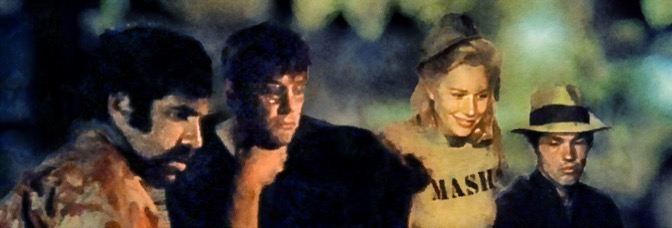
MASH is timelessly white liberal. There’s even a lovable Southerner (Tom Skerritt) who knows in that science way Black folks are just folks, but he still wants to be a dick about it. And his white male Northeastern elitist friends, Donald Sutherland and Elliot Gould, are totally fine with that bigotry because, you know, it’s…
-

Joe is a story of white male friendship. The Joe in the title is Peter Boyle, a racist working-class Vietnam vet. The film doesn’t open with Boyle though, it begins with Susan Sarandon. She’s a rich girl turned hippie who’s slumming with a drug-dealing boyfriend (Patrick McDermott) in the Village. The “prologue” (for the entirety…
-

Maybe I shouldn’t have complained so much about Gardner Fox. After approximately a year off (or just appearing as a guest star in Batman or Detective and not getting an Omnibus reprint), Batgirl’s started getting backups in Detective. Gil Kane came back to do the pencils, but with Murphy Anderson on the inks and—outside the…
-
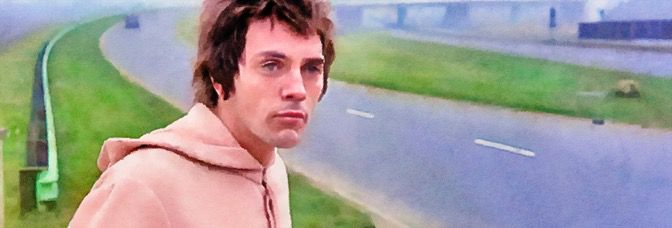
Part sci-fi, mostly drama gem about a thirty-year old man (Terence Stamp) who’s been in a coma since birth. Modern medical science allows surgeon Robert Vaughan to wake him up, but Stamp’s regular doctor (Nigel Davenport) has some unscientific (in the name of science, of course) “childrearing” expectations, leading to tragedy. Exquisite performance from Stamp.…
-
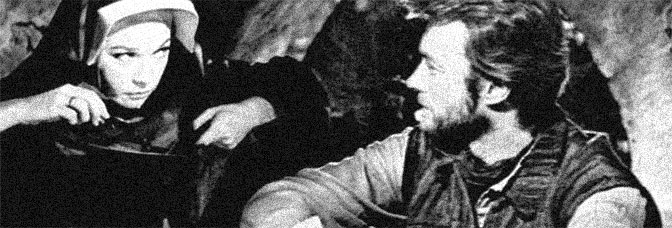
Two Mules for Sister Sara opens playfully. Then it gets serious. Then it gets playful. Then it gets serious. Then it gets playful. Director Siegel never lets it keep one tone for too long, not until the end, when he shows what happens when you take it all too seriously. After a hundred minutes of…
-

There’s a handful of good things about The Dunwich Horror. They can’t overcome the bad things, but they’re still pretty neat. The script, at least for a while, is fairly nimble. There’s a lot of bad exposition from old dudes Ed Begley and Lloyd Bochner, but the younger folks do quite a bit better. See,…
-

Little Big Man is episodic. It has to be. Director Penn knows he can’t reveal the tragedy of the film right off because it’d be unbearable but he also can’t avoid it. The film starts in a bookend with an incredibly aged Dustin Hoffman beginning to recount the story; he do so out of anger.…
-
Even with all the obvious symbolism in The Resurrection of Broncho Billy, a lot of it is still quite good. About half of Rokos’s shots are excellent and Nick Castle’s photography is great. The shots of movie cowboy-wannabe Johnny Crawford walking through downtown L.A. are magnificent. The short doesn’t work for a number of reasons;…
-

Tantalizing Disaster is magnificent and wondrous, but it’s kind of dumb. Director Kamler is most enthusiastic about shapes, patterns and small movements. The film concerns a cosmic ball bouncing on some cosmic stairs. Inside the cosmic ball is a big, gelatinous fat guy in a fedora. He’s got on a striped shirt. The striped shirt…
-

While it did start the seventies disaster genre, Airport barely qualifies. The first hour of the film is excruciating soap opera melodrama—airport chief Burt Lancaster is stuck in a loveless marriage with harpy Dana Wynter, so he’s got a flirtation going with widowed Jean Seberg. His sister, played by Barbara Hale, is stuck in a…
-

It’s another issue where Thomas has a short present action (here a couple days) and makes it a full read. Well, actually, a couple days is only a short present action in the seventies and eighties. Anyway… this issue Conan gets taken into bondage by some giants. Windsor-Smith draws them sort of as abominable snowmen.…
-
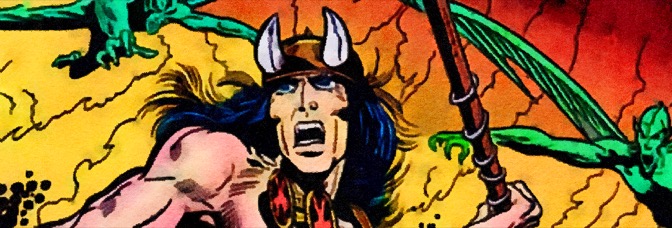
Thomas and Windsor-Smith are off to a great start. Windsor-Smith’s art is, of course, not as finished as he’s become, but he does have some amazing panels. Oddly, when he’s at his lesser, he resembles an unintentional Mike Ploog (especially in the faces—but sharp compared to Ploog’s roundedness). It’s very strange. The story introduces Conan…
-
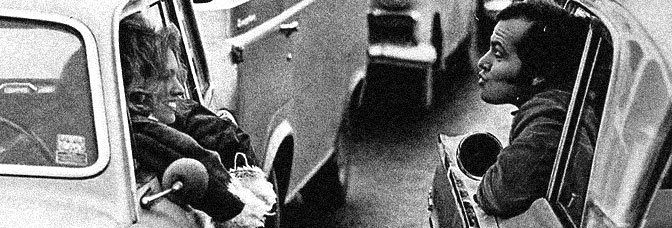
About half way into Five Easy Pieces, the film really hasn’t given any clue as to what it’s going to be. It’s an incredibly complex character study, both in its approach to the narrative and in terms of Jack Nicholson’s protagonist. The beginning of the film, set in the oil fields of Southern California, ends…
-

Colossus is a pre-disaster movie, in the Irwin Allen sense. It has a lot in common with films like The Andromeda Strain and The Satan Bug. The problem is established and then the film’s story is an attempt to resolve it. It’s a little less character-oriented than the Allen disaster formula–Colosuss doesn’t have much lead-in,…
-

Count Yorga, Vampire is a retelling of Dracula, modernizing it to the then-contemporary 1970 and changing the locale to Los Angeles. It’s also incredibly low budget–not so low budget it has bad acting (its acting is actually the strong-point)–but it has blacked out windows on houses and cars (so night scenes can be shot at…
-

Deliberate, somehow endless–it clocks in at ninety-five–Tristana is something of an anti-Buñuel or, at least, I was expecting something a little more uncanny. Tristana is so normal, it’s something of a surprise (the film occasionally seems ready to leap into the surreal, but it remains grounded throughout). But it’s very boring, in that good way…
-

I can’t remember–if I ever have–seeing a film where the main character goes through more changes than in Investigation of a Citizen Above Suspicion. Actually, he doesn’t change, but the truth keeps getting more and more revealed to the viewer, making him more and more different. First he’s a smart bad guy, then he’s a…
-

On rare occasion, I watch (and on even rarer occasion, finish watching) an utter dreg of a film. A film so bad I misuse the word dregs, which apparently–since it refers to a liquid form–must be used as a plural. Beneath the Planet of the Apes is just such a film. Immediately, with its use…
 The Stop Button