Category: 1958
-
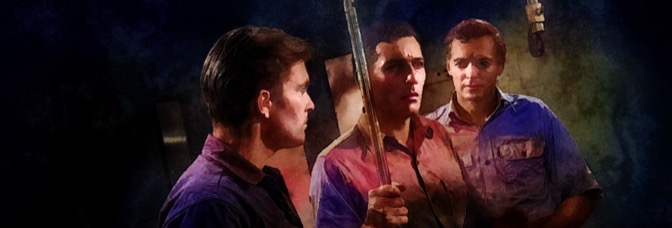
Not to be overly pedantic, but the title should be Nights of the Blood Beast. While the “Blood Beast” part is a little complicated, the film does take place over a couple nights. Two Nights and Four Days of the Blood Beast. The Beast is a space monster. Maybe. It’s definitely a space creature, but…
-
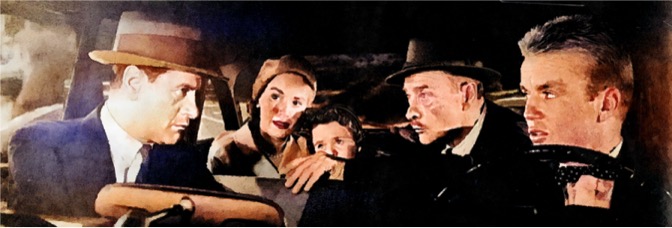
The Lineup is a spin-off of a TV series, an adaptation of a radio show. What is the difference between spin-off and adaptation? The movie has some of the same actors as the TV show, while the radio show didn’t share stars with the TV series. The movie came out before the series was even…
-
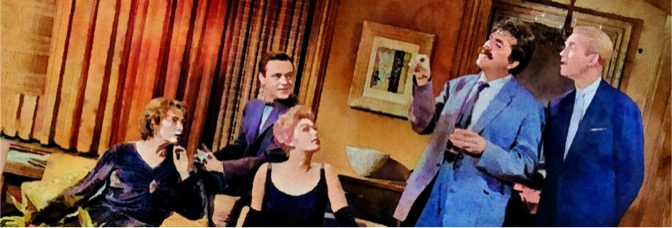
Bell, Book and Candle has three problems. The first involves Kim Novak and James Stewart’s May-September romance, which I’ll take couple jabs at in a bit. The second two problems are with the plotting, either in John Van Druten’s original stage play or Daniel Taradish’s screenplay. In the third act, Candle forgets its supporting cast…
-
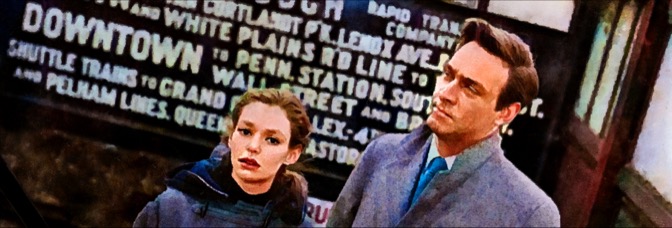
Conservatively, Stage Struck has six endings. They start about fifty-eight minutes into the film, which runs ninety-five minutes. Actually, wait, there are probably—conservatively—seven. I forgot how many there are mid-third act before the actual (ending-laden) finale. For a while, the false endings add to the film’s charm. Maybe if the third act hadn’t reduced lead…
-
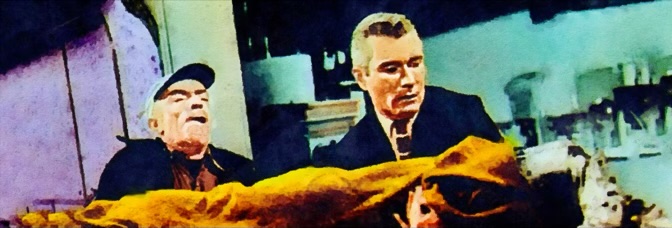
Frankenstein’s Daughter ought to be good camp. If the rest of the movie could keep up with Donald Murphy (as Doctor “Frank”), it’d be something to behold. Because Murphy gives it his all opening to close, seemingly more aware of the picture than the picture’s aware of itself. Though he’s never quite good—he’s better than…
-

Twenty minute short about country girl Yane Barry moving to Paris and wanting to party all the time, much to the chagrin of her friends and family. Co-written by François Truffaut, it’s most interesting as a New Wave oddity and passive sixties misogyny. DVD (R3).Continue reading →
-

Pretty good but should be a lot better considering the stars and director WWII submarine picture. Clark Gable is the commander who strong-arms his way onto Burt Lancaster’s boat to take it on a Captain Ahab suicide mission against a very successful Japanese destroyer. Good acting from the leads (almost great from Lancaster) and nice…
-
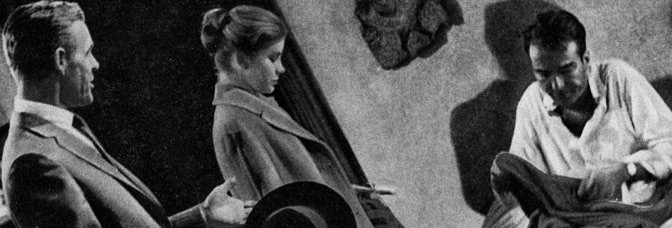
The most frustrating thing about Lonelyhearts is Donehue’s direction. While not a television production, Donehue directs it like one. He’ll have these shots of star Montgomery Clift baring his soul to girlfriend Dolores Hart and Donehue will stick with Clift, no reaction shot on Hart much less letting her hear the whole thing. Of course,…
-
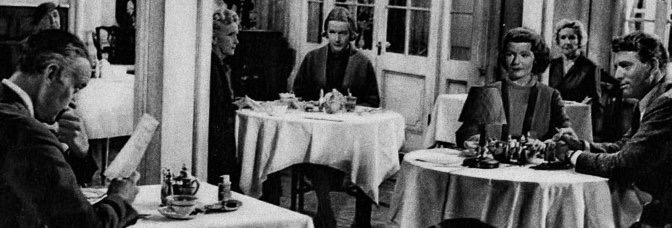
Despite taking place in a very English hotel with very English residents–all of them long-term residents, not temporary guests–Separate Tables hinges almost entirely on the Americans. Burt Lancaster is one such American. He’s a regular resident (even ostensibly engaged to manager Wendy Hiller; they’re definitely carrying on illicitly anyway). And Rita Hayworth is the other…
-
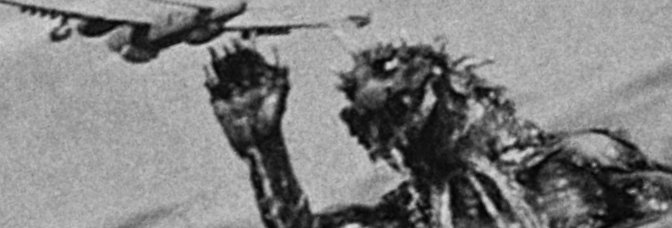
The only thing more tedious and lethargic than the first half of Varan is the second half of Varan. The first half has a motley crew of lepidopterologists awakening a giant monster. The second half has these lepidopterologists consulting with the military to destroy said monster. Not sure why the military thinks a bunch of…
-

Vertigo is a nightmare. It starts with James Stewart recovering from a nightmare only to find himself in another one. Kim Novak finds herself trapped in a similar nightmare. There’s a lot of beauty in the nightmare, but it’s still a nightmare. And nightmares get worse before anyone wakes up. In Vertigo, both Stewart and…
-
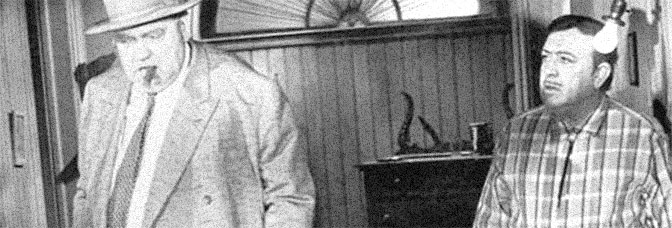
Touch of Evil is a visceral experience. Welles’s long takes and long sequences–in particular, the opening tracking shot, the apartment interrogation scene and the oil field interrogation at the end, these sequences depend on the viewer’s understanding of geography. Welles and cinematographer Russell Metty brilliantly establish the setting; then Welles does whatever he can to…
-
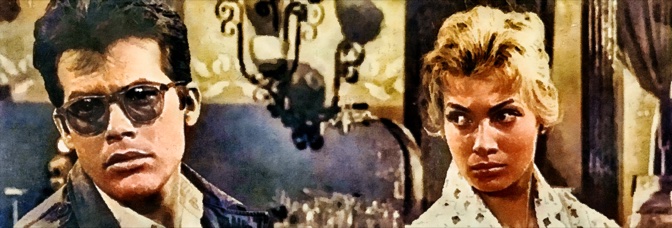
Ashes and Diamonds is unexpectedly on the nose. There’s even a scene where protagonist Zbigniew Cybulski taps his nose; I had no idea it meant director Wajda was going to go for not just narrative obviousness in the third act, but also visual obviousness. In just a few minutes, Wajda and co-screenwriter Jerzy Andrzejewski (adapting…
-
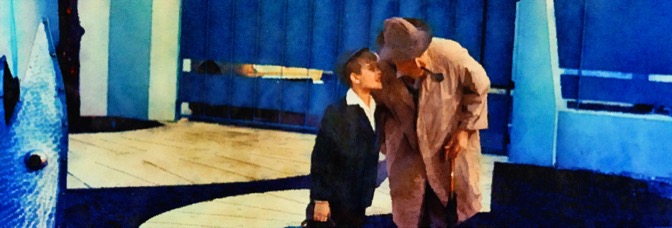
Mon Oncle has a concerning amount of narrative. Way too much of the film is about Jean-Pierre Zola and Adrienne Servantie’s bourgeois ultra-modern couple fretting over their son’s affection for his uncle, played by writer-director Tati. Tati’s protagonist does not live in the automated home of Zola and Servantie, but in a quainter, more traditional…
-

It’s hard to describe what’s wrong with Rally ’Round the Flag, Boys!; not because its ailments are mysterious but because the sentence is just a little problematic. Rally is a light handling of what should be a mature comedy. It deals with big issues–fifties suburban malaise and boredom, not to mention a strange post-war animosity…
-

What better way to capitalize on the success of TV’s “The Adventures of Superman” with a kid’s show recasting the characters as dogs. What’s strangest about “The Adventures of Superpup”–not surprisingly, it never went past pilot–isn’t the Little People in gigantic dog helmets (no, “Superpup” isn’t a cartoon), but how it handles the Superman mythos.…
-
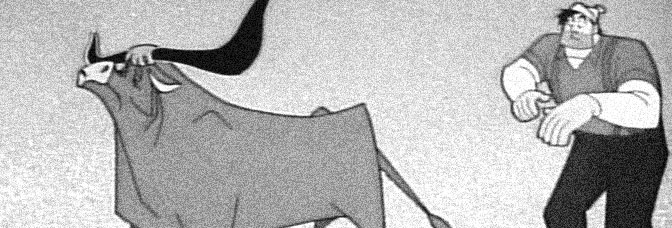
The beginning of Paul Bunyan is cute. It’s little Paul Bunyan (though a giant) growing up in Maine. Very cute. The song, which later becomes annoying, is well-used. Director Clark’s direction is pretty good throughout, though once Paul’s enormous ox, Babe, enters the picture, Clark loses control of the perspective. But that slip isn’t the…
-
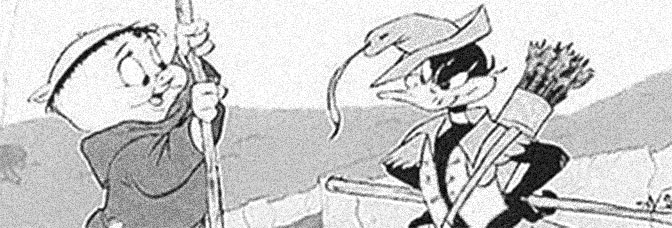
Robin Hood Daffy is an unappealing mix of pointless, dumb and bewildering. Besides Porky beating up Daffy (Porky’s Friar Tuck, Daffy’s apparently Robin–more on that one in a bit), Jones’s gags all seem recycled from a Wile E. Coyote cartoon. It’s Daffy swinging around to disastrous result. It’s never clear if Daffy’s actually Robin Hood…
-
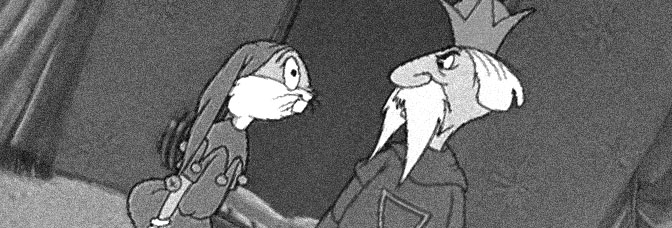
Besides Mel Blanc’s voice work, there’s nothing to recommend Knighty Knight Bugs. Actually, even with his voice work, there’s nothing to recommend it. It’s just the only good thing about the cartoon. Bugs, as a medieval jester, has to go get a sword. Yosemite Sam has the sword. Bugs gets it. The cartoon’s act structure…
-

I don’t get it. I haven’t seen a Road Runner cartoon since I was a kid, but watching Hook, Line and Stinker, I couldn’t figure out the appeal. Oh, Jones’s direction is outstanding and the animation is great, but it’s a long series of gags. They’re not laugh out loud funny, but some of them…
-
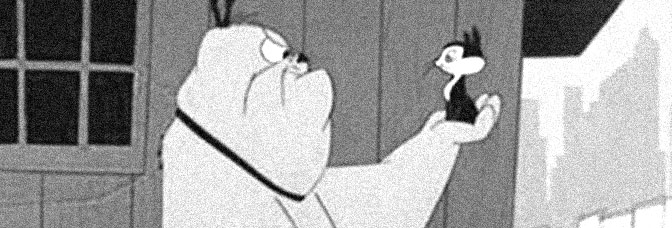
Cat Feud is almost too precious for its own good. In fact, the precious nature is what gets it into most of its trouble. The cartoon concerns a tough construction site guard dog who gets all mushy inside when he finds an adorable kitten. Trouble comes in the form of a stray cat, who is…
-
I watched It! The Terror from Beyond Space because I understood it’s widely considered (look at that passive voice) a precursor to Alien. Any such connection is tenuous at best. I also thought Ray Harryhausen did the special effects. No, no, he did not. If It! were a production of a middle school theater department–I…
-
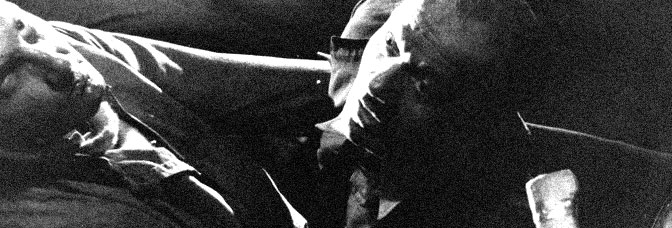
The importance of the director, in cinema, used to be a topic of discussion for me. It hasn’t been lately, because it’s hard to find good examples of well-scripted, well-acted, but terribly directed motion pictures. Thank goodness for The Trollenberg Terror and Quentin Lawrence. Lawrence might be the most boring bad director I’ve ever seen.…
-
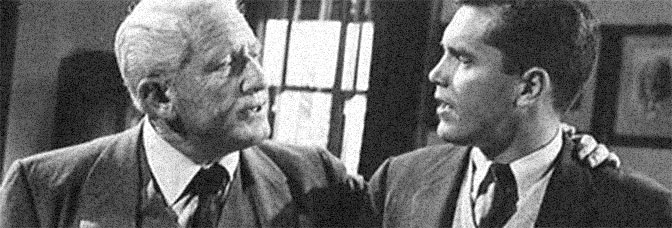
While the title refers to politics, The Last Hurrah also, unfortunately in some cases, provided to be the last hurrah of a number of fine actors as well. It’s a fitting–I can’t remember the word. It isn’t eulogy and tribute seems intentional. I don’t know if Ford knew he was making the last film like…
 The Stop Button