The Stop Button
blogging by Andrew Wickliffe
Category: 1954
-
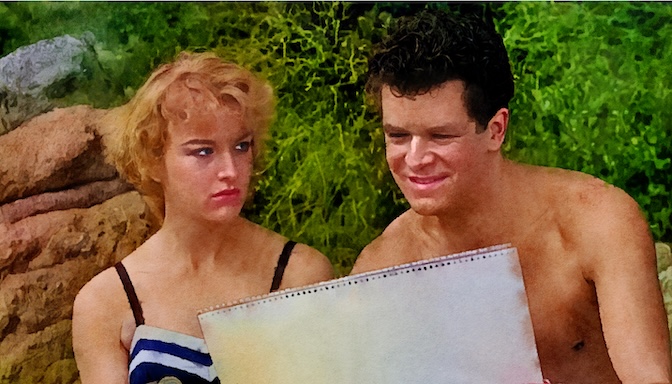
Monster from the Ocean Floor’s a low-budget creature feature; tourist Anne Kimbell becomes convinced there’s an irradiated sea monster off the coast of her Mexican vacation village. Her pseudo-beau, Stuart Wade, is convinced she’s wrong. He’s a marine biologist. His boss, played by Dick Pinner in an (eventually) absolutely delightful turn, thinks Wade ought to…
-
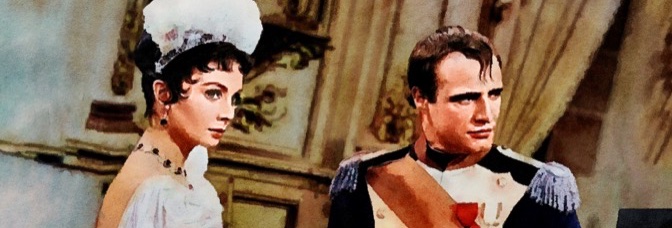
With some notable omissions (paramours, they’re French, after all), Désirée is shockingly historically accurate. Napoleon really did have an ex-girlfriend named Désirée, who ended up the queen of Sweden, her husband his former general and then adversary. The film gets big and little details right. On its face, Désirée is just a resplendent CinemaScope melodrama.…
-

Them! combines Atomic Age giant monster sci-fi and “by the book” police procedural, with a little (too little) war action thrown in. Nine years after the atomic bomb tests in New Mexico, residual radiation has caused common desert ants to grow to enormous sizes. In their hunt for sugar, these ants quickly have become carnivores,…
-

Singular character study about reluctant but ace Korean War flier William Holden and the people around him. The film toggles between Holden, devoted and uninformed wife Grace Kelly, and admiral Fredric March, who’s taken an interest in Holden’s career. Rambunctious helicopter rescue pilot Mickey Rooney also figures in. Great acting, direction, writing (Valentine Davies adapting…
-
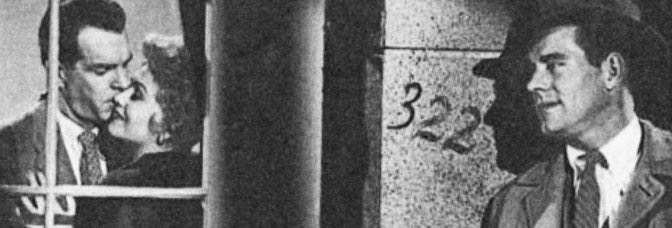
As far as suspension of disbelief goes, nothing in Pushover compares to the second scene of the film, when twenty-one year-old Kim Novak makes goggly-eyes over forty-eight year-old Fred MacMurray. Both actors handle it straight, which is impressive on its own, but clearly MacMurray realizes how lucky he’s got it. Turns out he’s a cop…
-
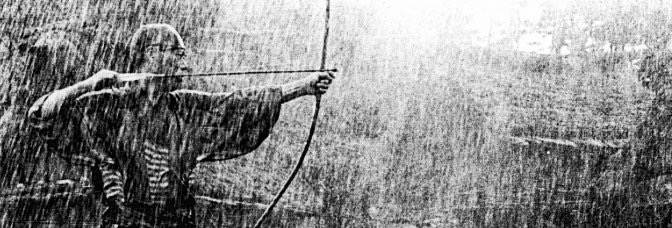
Seven Samurai is about a farming village, under imminent threat of bandits raiding and stealing their crop–and possibly doing much worse–who decides to hire samurai to defend them. They send four men–Fujiwara Kamatari, Kosugi Yoshio, Tsuchiya Yoshio, and Hidari Bokuzen–to town to hire the samurai. They can’t pay them, but they can feed them. The…
-

The first half hour of Naked Alibi–the film runs just under ninety minutes so the entire first third–is separate from the remainder. Set in a small city (shot on the backlot, but rather well thanks to Russell Metty’s glorious photography), chief of detectives Sterling Hayden has been getting a lot of heat over police brutality.…
-

The Dark, Dark Hours is the story of two desperate beatnik gunmen who just pulled a job and one of them took a bullet. They need a doctor and they find Ronald Reagan. The beatniks are James Dean and Jack Simmons. Simmons is the shot one. Dean’s the moody one whose undoubtedly tragic life has…
-

I’m a Fool gets off to a somewhat promising, somewhat precarious start. Eddie Albert is an onscreen narrator–precarious–talking about his younger days–his younger self played by James Dean–promising. Dean is leaving his small-town for the booming metropolis of Sandusky, Ohio, where he hopes to find a good job and a better future. The (television) play…
-

Rear Window is an absurdly good time. It’s breathtakingly produced and the set is a marvel on its own, but it’s also an absurdly good time. You’ve got Thelma Ritter chastising James Stewart not just for peeping, she also chastises him for not being serious enough about Grace Kelly. How could it not be an…
-

I’m sure there’s got to be some examples of well-written “Red Scare” screenplays, but Suddenly isn’t one of them. Writer Richard Sale’s got a lot of opinion about the dirty Commies, he just never gets the opportunity to have any one character fully blather it out. They’re too busy blathering out patriotic platitudes while being…
-
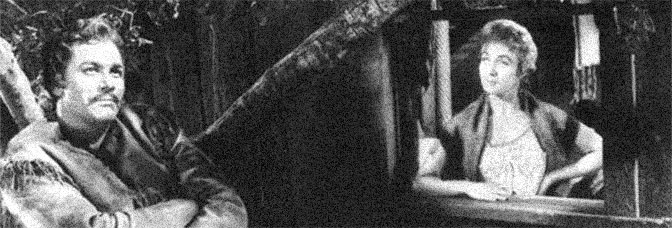
Seven Brides for Seven Brothers is a lot of fun. The songs are always pretty good, with some standouts and the dance numbers are fantastic (ditto the choreographed fight sequences–director Donen and cinematographer George J. Folsey shoot it all beautifully), and the cast is likable. But there’s not much ambition for the film. Based on…
-
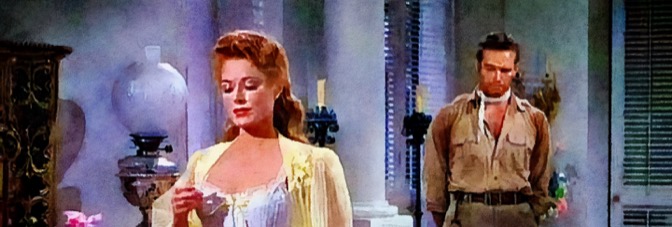
If there are faults with The Naked Jungle, ones not the result of having to follow the Hays Code–which the film skirts thanks to Ben Maddow and Ranald MacDougall’s excellent dialogue, Eleanor Parker’s fantastic, intelligent performance and Charlton Heston’s brute force approach–they fall on director Haskin. The film is well-directed with Parker and Heston’s character…
-

On the Waterfront is relentlessly grim until the strangest moment in the finale. As the film finally reaches the point of savage, physical violence–it opens with the implication, but not the visualization of such violence–a supporting character (familiar but mostly background) makes a wisecrack. Until that point in the film, director Kazan forcibly pushes even…
-

Baby Buggy Bunny opens with its weakest sequence–a bank robbery. The perpetrator is a baby-sized thug who gets away by throwing on a bonnet and hopping in a carriage. Clearly there are some Baby Herman connections, especially later on when the robber and Bugs Bunny start battling. Bugs gets involved thanks to a runaway baby…
-

Godzilla is a peculiar picture. It’s intensely serious, with director Honda never letting the viewer get a moment’s relief. This approach is all throughout the film, which opens with a documentary feel. Honda and co-screenwriter Murata Takeo set up their main characters quickly and without a lot of fanfare–Takarada Akira and Kôchi Momoko’s first scene…
-

For a while it seems like the third act of Garden of Evil will make up for the rest of the film’s problems. Or at least give it somewhere to excel. Sadly, director Hathaway and screenwriter Frank Fention inexplicably tack on a terrible coda–tying into the title no less–and effectively wash away any advances they’ve…
-

So why not turn The Shadow into an amateur detective procedural? Haas’s pilot for a “Shadow” television series is a good reason, though it’s inexplicable why someone would want to turn it into such a thing. Not the procedural part, but the amateur detective part. Peter Barry’s script recasts Lamont Cranston (played by an ineffectual…
-
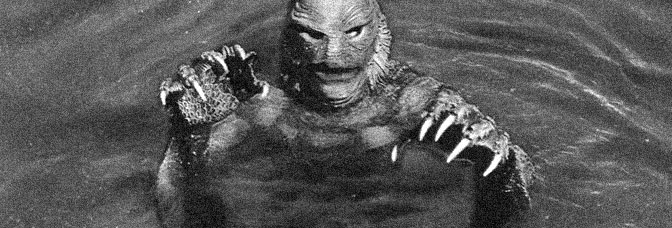
Almost all of Creature from the Black Lagoon is a compelling mix of science fiction, workplace drama and horror. The Creature makes a great “villain” because there’s nothing human about him (except maybe his fixation on leading lady Julie Adams) so it’s possible to both fear him and to understand leading man Richard Carlson’s scientific…
-

Social Lion is such a truly awful cartoon, one would need to sit with pencil and paper to make notes on every moronic detail in its six minutes. Director Jack Kinney–brother to co-writer Dick Kinney, who, with Milt Schaffer, writes a lousy story–doesn’t have bad ideas, particularly during the Africa scenes. The animation is bad,…
-

Wild Wife is easily McKimson’s best cartoon (of those I’ve seen, anyway). I was going to start by talking about McKimson as an unlikely feminist, since Wife mostly concerns a housewife whose male chauvinist pig husband berates her for not getting enough done. The cartoon then flashes back to show exactly how full her day…
-

If someone was unfamiliar with Donald Duck–and missed the opening titles, which imply Dragon Around is a Donald Duck cartoon–he or she might read the ending as Chip and Dale killing Donald Duck. And Donald Duck definitely deserves it. Initially, the chipmunks confuse Donald’s power shovel for a dragon, but then the viewer learns Donald…
-

I feel like By Word of Mouse should be better. It turns out it’s a Sylvester cartoon–not without good gags–but the concept deserves more. A German mouse heads to the U.S. to visit a relation; free market capitalism–well, American consumerism, wows him and the two cousins find a professor (also a mouse) to explain it…
-
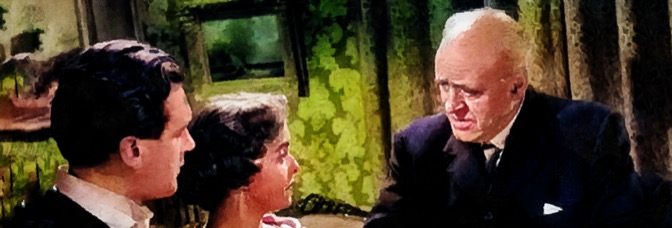
For the majority of An Inspector Calls, I thought Alastair Sim’s delicate, thoughtful performance was out of place. The film’s incredibly melodramatic and contrived. After the twist ending… well, I’m pretty sure it’s still melodramatic and contrived, but it gives the impression of having an escape clause. Regardless of title, it is not a mystery.…
-

In Grand Canyonscope, Donald Duck is the typical disrespectful, annoying American tourist. What’s funny about the cartoon is how–in 1954–it was one in every bunch of tourists… whereas now it’s the inverse. The cartoon’s in CinemaScope and director Nichols uses the width to mixed effect. There are some great iconic frames of the Grand Canyon,…
-
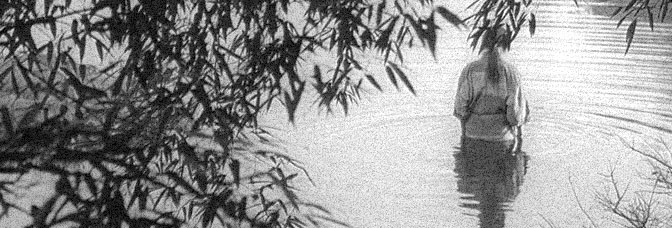
Sansho the Bailiff is one of cinema’s most depressing pieces. I don’t think, after about twenty minutes into the film, there’s a single positive moment. Good things happen–occasionally–but they only lead to bad things (or the revelation of bad things). The film opens with an epigraph, establishing the time period and some basics. It also…
-
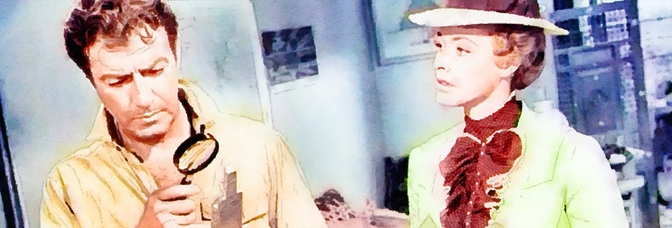
Middling adventure picture about archeologist Robert Taylor searching Egypt for proof of the Biblical Joseph. Wrapped up in the pursuit are unhappily married Carlos Thompson and Eleanor Parker. It’s only a matter of time before Taylor seduces Parker away from Thompson (who’s awful). Bad script and direction from Pirosh. Taylor’s great but there’s only so…
 The Stop Button