Category: 1941
-

The Guillotine does not open with a satisfying cliffhanger resolution. It’s only Captain Marvel’s second chapter, which probably ought to have a satisfying cliffhanger resolution; it’s mildly concerning it does not. After that lackluster resolution, the story moves back to the United States. Turns out the evil Scorpion has followed the team because, yes, he’s…
-
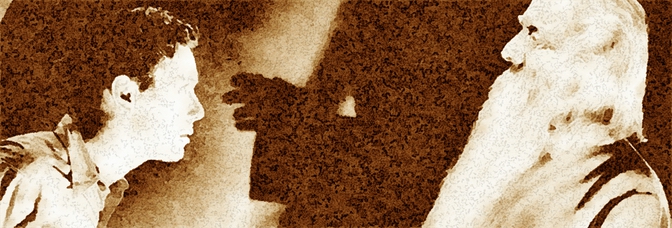
Adventures of Captain Marvel has a lot of action in its first chapter. Setting up the ground situation is even action. There’s an expedition to Thailand and, although they have permits with the occupying British forces, the native people aren’t thrilled with the expedition coming in to tomb rob. So it’s up to native guide,…
-
Adventures of Captain Marvel has a lot of action in its first chapter. Setting up the ground situation is even action. There’s an expedition to Thailand and, although they have permits with the occupying British forces, the native people aren’t thrilled with the expedition coming in to tomb rob. So it’s up to native guide,…
-

The most impressive things about The Little Foxes are, in no particular order, Bette Davis’s performance (specifically her micro expressions), Patricia Collinge’s supporting performance, director Wyler’s composition, director Wyler’s staging of the narrative (adapted by Lillian Hellman from her play and set in a constrained area but a living one), Herbert Marshall’s performance, and Gregg…
-

Sullivan’s Travels is almost impossibly well-constructed. Director Sturges, editor Stuart Gilmore and photographer John F. Seitz go through various, entirely different narrative devices and do them all perfectly. Whether it’s a high speed chase, Veronica Lake having a screwball comedy sequence on the studio backlot, Lake and lead Joel McCrea having soul-searching conversations, McCrea and…
-

There’s something off with Meet John Doe. Director Capra can’t find a tone for the film, but he also can’t find a pace for it. He tries to find the tone, over and over, usually with excellently directed sequences, but he just throws up his hands as far as finding the pace. If Robert Riskin’s…
-

Preston Sturges has a great structure to The Lady Eve. The first part of the film–the majority of the runtime–has wealthy oddball Henry Fonda returning home on a ship and falling in love with Barbara Stanwyck. Makes sense, as she’s wonderful, only she (and her father, Charles Coburn) are card sharps out to fleece rich…
-

In Citizen Kane, director Welles ties everything together–not just the story (he does wrap the narrative visually), but also how the filmmaking relates to the film’s content. Kane’s story can’t be told any other way. That precision–whether it’s in the summary sequences or in how scenes cut together–is absolutely necessary to not just keep the…
-

Even though almost every moment of The Maltese Falcon is spent with Humphrey Bogart’s protagonist, director Huston keeps the audience at arms’ length. Most of the film’s more exciting sounding set pieces occur off-screen, but so does Bogart’s thinking. The audience gets to see him manipulating, often without context. His most honest scenes are with…
-

Shadow of the Thin Man has a healthy mix of comedy and mystery. The resolution to mystery is a little lacking at the end, but the film moves so smoothly until then it’s easily forgivable. And there is one amusing final twist (along with a good final joke). Most of the comedy comes from William…
-

The Devil and Miss Jones has three or four stages in the narrative, but director Sam Wood basically has three. The first phase–covering the first two narrative stages–feature this singular composition technique. For close-ups, Wood either gives his actors a lot of headroom (fifty percent of the frame) or almost none. Harry Stradling Sr. shoots…
-

Ellery Queen and the Murder Ring‘s title confuses me for a couple reasons. First, Ralph Bellamy’s Ellery Queen disappears for long stretches of the seventy-minute runtime. When he does show up, he usually makes a mistake or overlooks something, then someone else comes in and gets the investigation back on track. Second is the Murder…
-

Come Live with Me features exquisite direction from Clarence Brown. Whether he’s pacing out a reveal, directing a conversation or just being inventive with composition, he does an outstanding job. George J. Folsey’s photography helps, as do the fantastic sets. It’s a shame good direction can’t overcome a truly lame screenplay from Patterson McNutt. The…
-

For the final Inspector Hornleigh picture, the filmmakers go propaganda. They do have some fun with it—the film’s first sequence is Gordon Harker and Alastair Sim on an army base, undercover as aged privates, investigating scrounging. It’s all played for laughs, sort of wasting some of the running time before Harker and Sim can get…
-
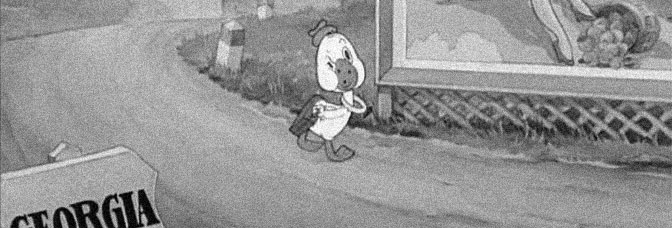
There aren’t any real gags in The Goose Goes South until the finish. And that gag is sort of predictable. The cartoon concerns a goose who can’t fly and therefore has to find other ways south for the winter. The uncredited narrator explains the goose’s problem and describes some of his adventures. But The Goose…
-

The majority of Sundown is excellent. Hathaway sort of mixes the Western and British colonial adventure genre with a World War II propaganda piece. New Mexico stands in for Kenya—it’s an interesting war film because there aren’t any Americans. Lead Bruce Cabot is playing a Canadian. Cabot does well throughout. He handles the colonial scenes…
-

So You Won’t Squawk opens with a lot of expository dialogue, only not from Buster Keaton. For the first few minutes, Keaton’s treated like he’s in another silent. Except, of course, his actions are much more restrained. He’s goofing around while decorating… not too exciting. Of course, once he does start talking, he immediately becomes…
-

Man Made Monster, at least for the first fifteen minutes (of an hour), gives Lon Chaney Jr. one of his best roles. He gets to be the affable guy his other performances from the forties often hint he’s capable of being, but never gets to be. Not surprisingly, Monster takes that aspect of his character…
-

Love Crazy has to be the worst film William Powell and Myrna Loy ever made together. Powell started his career in silents, so it’s possible it’s not his worst film, but I’m pretty sure it’s Loy’s. Love Crazy starts incredibly lazy. It doesn’t bother defining either character–they’re just Powell and Loy playing a couple, Powell’s…
-

The Wolf Man‘s most lasting influence–beyond the advantages of using Larry Talbot as a synonym (Pynchon did it in Vineland) and the endlessly suffering protagonist–has to be the music. I noticed parts both John Williams (for The Empire Strikes Back) and Danny Elfman (for Batman Returns) lifted. The music is an essential part of the…
-

Don Ameche is a university professor working on his book revealing jealousy as an outdated concept. Rosalind Russell is his wife, who wishes Ameche would get jealous over her. Enter Kay Francis and Van Heflin as their extra-martial temptations (though, not really, because Ameche’s not interested in Francis and he’s right about Russell too). Actually,…
 The Stop Button