Category: 1939
-
The Magnificent Fraud tells the unlikely tale of an actor on the run who just happens to be in the right place at the right time for the role of a lifetime. Akim Tamiroff’s stage actor’s enjoying a residency of sorts in San Cristobal’s hottest nightclub, one maybe owned by the president’s troubleshooter, Lloyd Nolan.…
-

Until the action-packed last thirty minutes, Stagecoach is a class drama. A group of strangers and acquaintances are in a stagecoach, traveling West, post-Civil War. It takes fifteen minutes at the start of the film to get them in the coach, with some of the time spent on establishing the characters (and why they’re traveling),…
-

There are a lot of great shots in Destry Rides Again, with director Marshall finding a lot of raw human emotion in a comedic Western; it starts with opening titles, which are a long tracking shot introducing the setting—the town of Bottleneck. The tracking shot is at night (cinematographer Hal Mohr’s black and white photography…
-

Mr. Smith Goes to Washington runs two hours and nine minutes, with the last thirty minutes and change giving star (but second-billed) Jimmy Stewart a big, long scene; sure, it’s intercut with various asides but as far as Mr. Smith Stewart is concerned, it’s a single long scene. Stewart’s had some significant scenes before, but…
-

The You in You Can’t Get Away With Murder refers to Billy Halop, nineteen year-old punk kid who doesn’t respect what sister Gale Page sacrifices for him and instead runs around with neighborhood tough Humphrey Bogart. They knock over gas stations, they play pool, it’s a good life… at least until things go wrong during…
-

The first forty-five minutes of Only Angels Have Wings is mostly continual present action. Jean Arthur arrives in a South American port town, looking around–followed by two possible ne’er-do-wells (Allyn Joslyn and Noah Beery Jr.)–and the film tracks her experience. Great direction from Hawks, beautiful cinematography from Joseph Walker. Pretty soon she discovers they’re not…
-
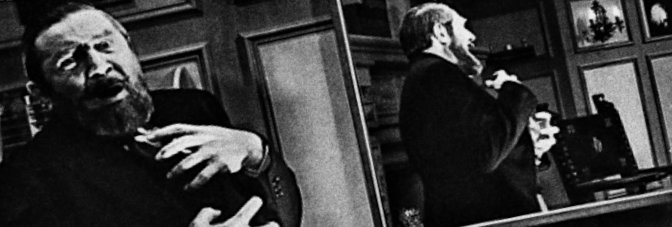
For the first few chapters, Bela Lugosi can carry The Phantom Creeps. He’s hamming it up as a mad scientist surrounded by actors who can’t even ham. Creeps has some truly terrible performances, particularly from its other leads, Robert Kent and Dorothy Arnold. He’s the military intelligence officer out to discover what’s happened to Lugosi’s…
-

Sadly, there’s not much world destroying in To Destroy the World. Not even when Bela Lugosi, finally reunited with his meteorite and able to escape, decides instead he’s going to steal a biplane and bomb things. Starting with the federal building. Only he drops a bomb on a zeppelin, which does indeed crash and burn,…
-

The Blast features some of Phantom Creeps’s most prevalent tropes. Good guys following bad guys because they happened to drive and pass one another. Jack C. Smith’s henchman (to Bela Lugosi’s mad scientist) getting shot and dazed. Smith’s been shot at least three times (and dazed) in the serial. Sometimes even with multiple shots. Guns…
-

The Blast features some of Phantom Creeps’s most prevalent tropes. Good guys following bad guys because they happened to drive and pass one another. Jack C. Smith’s henchman (to Bela Lugosi’s mad scientist) getting shot and dazed. Smith’s been shot at least three times (and dazed) in the serial. Sometimes even with multiple shots. Guns…
-

The title, Phantom Footprints, could almost refer to when a spy–seeing invisible Bela Lugosi’s shadow–thinks there might be something there. But then another spy just tells the first spy to shut up about it. It happens twice, first with Anthony Averill saying it’s stupid, then (after Averill starts talking about it) with Edward Van Sloan…
-
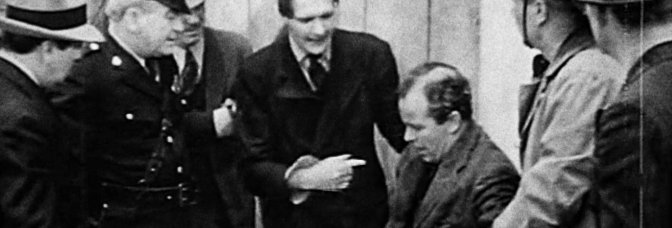
Speeding Doom once again has the good guys, bad guys, and Bela Lugosi trying to get Lugosi’s box. In the box is a powerful meteorite, which allows for all of Lugosi’s inventions. But the good guys and bad guys don’t know about it yet. They still aren’t sure Lugosi’s alive. Until the bad guys chase…
-

Trapped in the Flames is yet another exciting installment of The Phantom Creeps. Yet again, the Feds (led by Robert Kent) pursue the foreign agents (Anthony Averill’s the chief henchman, Edward Van Sloan’s the boss) trying to find Bela Lugosi’s missing box. No one but Lugosi (presumed dead by both parties) knows what’s in the…
-

The Menacing Mist is endless. It starts with Bela Lugosi trying to kill Robert Kent with his remote control robot, but then he has to deal with some insurrection from lackey Jack C. Smith. Kent’s just doing action, so at least he’s not doing bad acting. Smith, on the other hand, is doing some bad…
-

The Gay Falcon answers a question I never thought to ask. Can George Sanders flop a part? The answer is yes. There are extenuating circumstances to be sure, but Sanders flops the lead in Falcon. He’s a skirt-chasing, playboy criminologist, which ought to be a natural fit for Sanders. Instead he comes off as a…
-

Phantom Creeps hits the halfway point with some intrigue involving one of the cast possibly being a double agent (fingers crossed as it’d give the plot something engaging) and Bela Lugosi getting a new weapon, a kind of ray gun. The ray gun doesn’t get much usage after the demonstration because Lugosi sics his robot…
-

Thundering Rails is mostly vehicular action. It starts with Robert Kent and Dorothy Arnold trying to land a damaged plane while dropping hand grenades on the foreign spies (being careful not to hurt good guys Regis Toomey and Edwin Stanley). Then there’s a bunch of car chases. The cliffhanger–which isn’t a cliffhanger at all–involves a…
-

I suppose Invisible Terror, which doesn’t feature much invisible terror, is an improvement over the previous chapter. Terror does have Edward Van Sloan in a full flight suit waving a gun around threateningly. Not many opportunities to see such a thing. The story continues to be Feds versus gangsters with Bela Lugosi (still thought dead)…
-
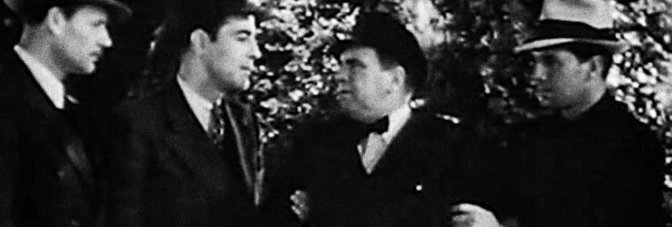
If Crashing Towers is any indication, the only thing keep The Phantom Creeps creeping along is top-billed Bela Lugosi. He’s not in the chapter much–more often than not he’s invisible–and, wow, are things rough without him. In addition to the predictable bad acting from Robert Kent and Dorothy Arnold, Edwin Stanley–who’s not new to the…
-

Despite a stupefying cliffhanger resolution–disasters happen, people just don’t get hurt–Death Stalks the Highways turns out not too bad. Comparatively. Take Bela Lugosi for instance. He tries real hard with some of his acting. It’s not good, but he’s trying. The trying gets him ahead of Robert Kent, who’s not good but also not trying.…
-
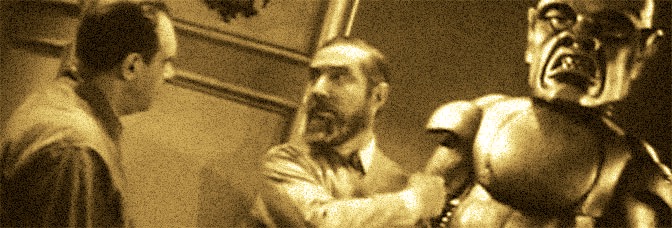
The Menacing Power does all right setting up the hook of The Phantom Creeps–Bela Lugosi is a mad scientist with various technological inventions he’s going to use for nefarious purposes–and even manages to gracefully segue between the expository setup and the chapter’s cliffhanger. So far Lugosi’s made an invisibility wearable, an eight-foot plus tall robot,…
-

The Menacing Power does all right setting up the hook of The Phantom Creeps–Bela Lugosi is a mad scientist with various technological inventions he’s going to use for nefarious purposes–and even manages to gracefully segue between the expository setup and the chapter’s cliffhanger. So far Lugosi’s made an invisibility wearable, an eight-foot plus tall robot,…
-
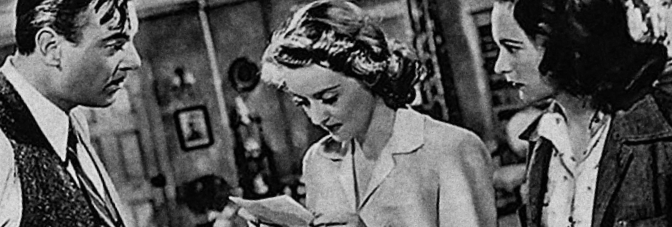
Bette Davis and George Brent never kiss in Dark Victory. He’s a brilliant neurosurgeon, she’s a mysteriously ill young socialite. He saves her, they fall in love. But does he really save her…. Victory gives Davis an excellent part, right up until the end of the film. It’s a somewhat bumpy ride–in the first act,…
-
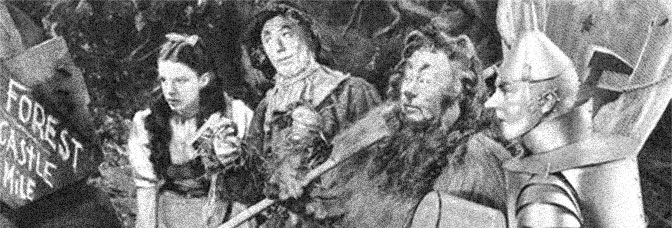
By the time the door opens and Dorothy (Judy Garland) finds herself over the rainbow, The Wizard of Oz has already completed one full narrative arc and is starting another. The film opens with Garland in a crisis–she’s a teenage girl on a farm where no one has time for her (it’s a busy farm,…
-

Midnight is a rather smart film. Screenwriters Charles Brackett and Billy Wilder are able to do a whole bunch of plot twists–always through comedic means–because of how they’ve got the film structured. The film opens with Claudette Colbert arriving in Paris, penniless. Taxi driver Don Ameche takes pity on her and falls for her. There’s…
-

Son of Frankenstein is a mostly wasted opportunity. For everything good, there’s something significantly wrong with it. The script is good, director Lee doesn’t direct actors well. The German Expressionist-influenced sets are great, Lee shoots it so stagy, the sets go to waste. Lee likes his long shots. He and editor Ted J. Kent do…
-

There are two big sequences in Rules of the Game. There’s the hunting sequence, which concentrates on the rabbits and pheasants before–and as–they are killed for sport. The animals are hunted without motive or enjoyment. Until a line in the third act connects events, the hunt is mostly just a way to inform Nora Gregor…
-
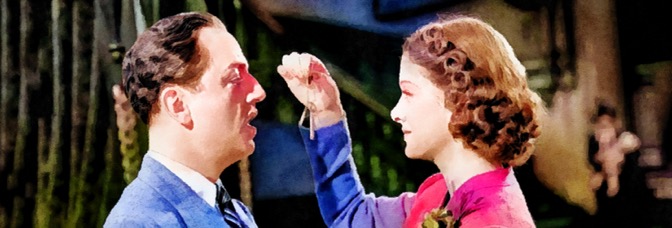
Another Thin Man is a peculiar blend of old dark house mystery and the Thin Man style of murder mystery. Most of the first half of the film is the old dark house mystery, with healthy doses of humor thrown. Frances Goodrich and Albert Hackett’s screenplay brings William Powell and Myrna Loy to New York…
-
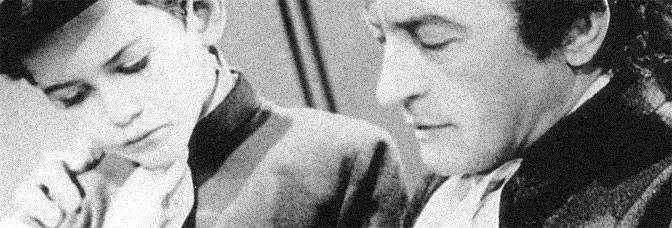
Despite Michael Curtiz directing and Claude Rains starring–Curtiz does better than Rains–Sons of Liberty is a rather tepid little short. Rains plays a Jewish proto-American (circa 1776) who sacrifices all for the United States. He even dies penniless because he won’t sign a document on the Sabbath. Of course, Liberty never says the word “Jewish.”…
-

I was expecting The Rains Came to be a standard soap–with some ethnic flair, of course (Tyrone Power’s an Indian doctor, Myrna Loy’s a British lady). Instead, it’s a little like… Maugham-lite. Neither Loy nor Power is the lead (in fact, Power’s in it so little he should get a “special guest star” credit). The…
 The Stop Button