The Stop Button
blogging by Andrew Wickliffe
Category: 1935
-

The Last Days of Pompeii opens with a disclaimer. Despite sharing a title, it is not based on Edward Bulwer-Lytton’s 1834 novel. That disclaimer should be read as a warning. The film runs ninety-six minutes. The last days of Pompeii are the third act; the first two acts… wait, no. The timeline doesn’t even work…
-

Smack-dab in the middle of The Informer is a romance between IRA commander Preston Foster and his gal, Heather Angel, sister to an IRA man (Wallace Ford). Foster and Angel steal moments together on one fateful night, tragic circumstances giving them unexpected time with one another, but those same circumstances sort of foreshadowing their very…
-

Not even halfway through Mad Love’s sixty-seven minute runtime it’s clear all the film’s going to have to do to succeed is not to fail, which isn’t going to be easy. The film’s about a brilliant surgeon (Peter Lorre) who’s sort of publicly stalking married stage actress Frances Drake. Now, he falls in love with…
-
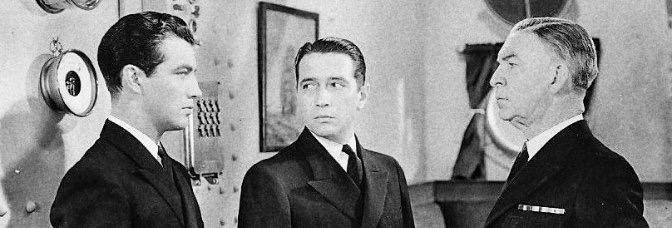
Murder in the Fleet is a reasonably diverting little B murder mystery; Frank Wead and Joseph Sherman’s script is almost better than the film deserves, given it doesn’t even run seventy minutes and doesn’t even bother pretending it’s got subplots. Well, outside top-billed and sort of lead Robert Taylor’s romantic troubles with blue blood Jean…
-
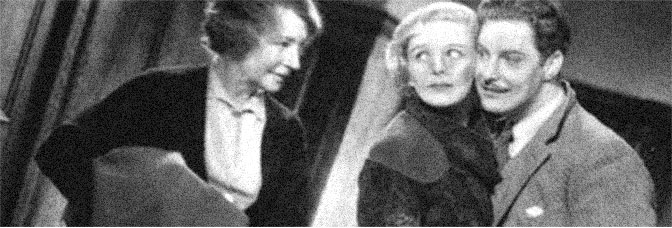
There are numerous good moments in The 39 Steps. Even the clunky finale is a good moment–director Hitchcock knows he’s got a good moment, he just doesn’t know how to fill in around it. This inability on Hitchcock’s part makes The 39 Steps immediately interesting when compared to the rest of Hitchcock’s filmography, but far…
-
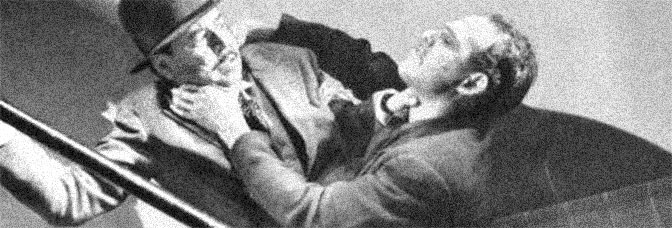
Werewolf of London. He actually does need a tailor, because he’s a gentleman and gentleman dress for the evening. For whatever reason, director Walker seems to spend more time on lead Henry Hull getting dressed while a werewolf than doing much else while a werewolf. There are a couple effects shots in the film involving…
-
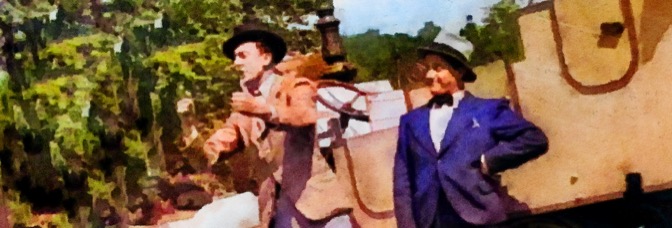
It takes Fun Sunday! almost the entire short film to find its footing. The problem is director Berr; he has no comic timing. Sunday cuts a couple corners as far as budget–the sound cuts in and out, going over to music and not the background noise–but it’s rather ambitious stuff. Except for Berr. He doesn’t…
-

As good as the Marx Brothers are in A Night at the Opera–and George S. Kaufman and Morrie Ryskind’s strong script is important too–director Wood really brings the whole thing together. The film has its obligatory musical subplot and romantic leads. Wood knows how to balance those elements with the comedy; during long music sequences,…
-

For The Bride of Frankenstein, director Whale takes a contradictory approach. It's either more is more, or less is less. More music, all the time. Franz Waxman's frequently playful music rarely fits its scenes, unless Whale is going for a melodramatic farce, which he really doesn't seem to be doing. I kept hoping he would…
-
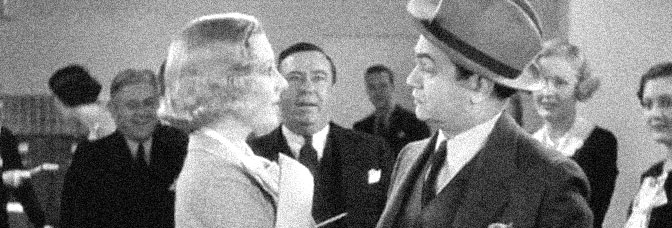
The Whole Town’s Talking has some peculiar third act problems, but it also has this extraordinary first act set over three scenes and twenty-some minutes, which evens things out. Some of the problem might stem from Town’s plot–mild-mannered office clerk Edward G. Robinson just happens to look like a famous gangster and is falsely arrested.…
-
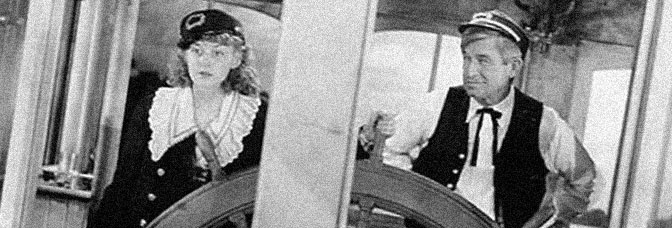
The best scene in Steambout Round the Bend is the wedding between Anne Shirley and John McGuire. Neither Shirley nor McGuire is particularly good in the film, but McGuire’s about to be hung and so they’re getting married. Steambout is often a comedy and Eugene Pallette–as the officiating sheriff–tells some really bad jokes at the…
-

Murder on a Honeymoon is a tepid outing for Edna May Oliver and James Gleason’s detecting duo. It’s the third in the series and, while Oliver and Gleason are back, it’s clear some of the magic was behind the camera. Robert Benchley and Seton I. Miller’s script is a little too nice (in addition to…
-

MGM cut at least twenty-five percent out of Mark of the Vampire, which accounts for some of the plotting problems but still leaves the film a little messy. Ben Lewis’s editing is weak during dialogue exchanges, not just in general. And no amount of studio interference could have changed Browning’s reliance on weak special effects.…
-
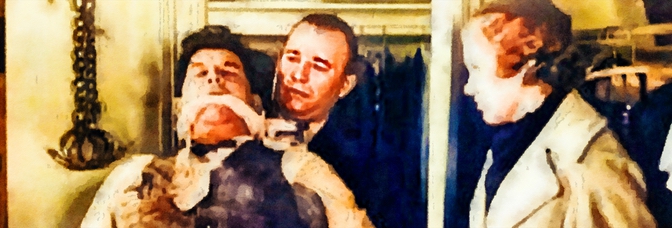
I hope Robert Armstrong got paid well for The Mystery Man, because it doesn’t do him any other good. While it’s nice to see Armstrong in a lead role, the film’s so incompetently produced, it’s sometimes painful. Armstrong acts well but director McCarey doesn’t know how to compose shots. You’ll get what should be a…
-
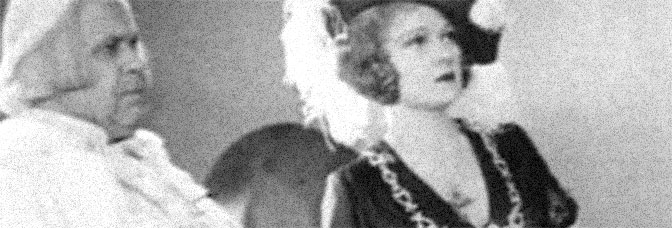
Gance has a real problem with Lucrezia Borgia… none of his characters are likable. Even Antonin Artaud, playing a friar who rallies against the Borgia regime, is unlikable and he’s the film’s closest thing to a good guy. Gance shoots Artaud like a lunatic. It’s also not a film about Lucrezia Borgia, it’s a film…
-

Whipsaw takes some detours, but eventually reveals itself as an unlikely road picture… albeit one with limited stops. The first few scenes are in London, with a lot of exposition introducing Myrna Loy and Harvey Stephens as jewel thieves. There are some other jewel thieves who want in on their score. At this point, Whipsaw…
-
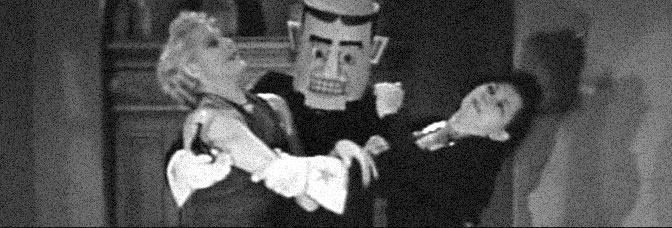
I’m wondering if all the Thelma Todd and Patsy Kelly shorts–the team being one of Hal Roach’s attempts at a female Laurel and hardy–are as bad as The Tin Man. For a while, it seems like Todd is much worse than Kelly, but once Kelly’s acting opposite someone else… she’s much worse than Todd. Tin…
-
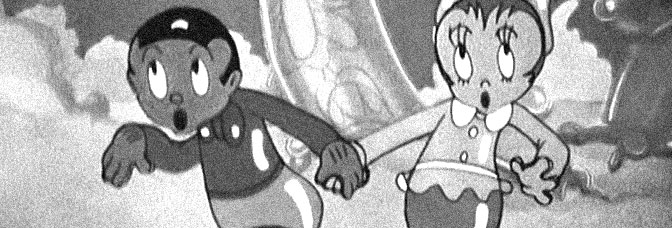
For lack of a better word, Balloon Land is disturbed. It’s a cartoon about a magical place where everyone is a living balloon. Not just people, but plants too. Objects are solid though. The new balloon people–Iwerks opens showing the reproductive process–are made through one creature’s snot and then inflated. We later learn balloons can…
-

How to Sleep isn’t just a funny little short featuring a man who can’t get to sleep, mostly because he keeps doing stupid things, but it’s also an interesting look at how a personality works on film. Robert Benchley wrote the film, he hosts the bookends as though it’s a serious scientific exploration and he…
-
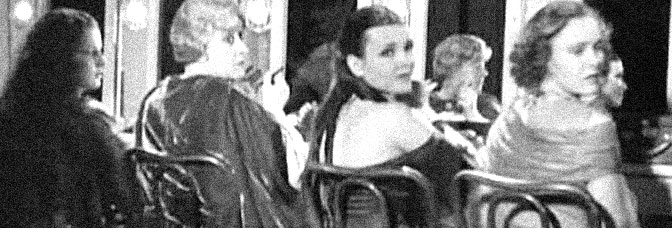
At the surface, Hollywood Extra Girl is just a promotional tie-in to Cecil B. DeMille’s The Crusades. The short’s lead, Suzanne Emery, was an extra in The Crusades and the short suggests she might make it in Hollywood just because of that inclusion. According to IMDb, she did not. But the short also serves to…
-

I wish I knew if Remember Last Night? is supposed to be a knock-off of The Thin Man or if it’s just a highly coincidental release, coming a year later, with a similarly intoxicated, ritzy couple solving crimes as they get more intoxicated (Robert Young and Constance Cummings play the couple in this film). Remember…
-

Wings in the Dark is three-quarters overwrought melodrama with the remainder squandered potential. The film opens with Myrna Loy as the protagonist, an aviatrix (never thought I’d get to type that word) whose flying abilities can’t compensate–in terms of professional opportunities–for her lack of male gender. This part of the film, with Loy trying to…
-

In its opening, Toni is established as an immigrant’s story. Foreign workers (Spanish and Italian) go to the south of France to work the quarries. The opening “prologue”–it’s never announced as a prologue, but there’s an “end of prologue” card–shows the workers’ arrival. The end also shows workers arriving, three years later, after the title…
 The Stop Button