Category: 1931
-
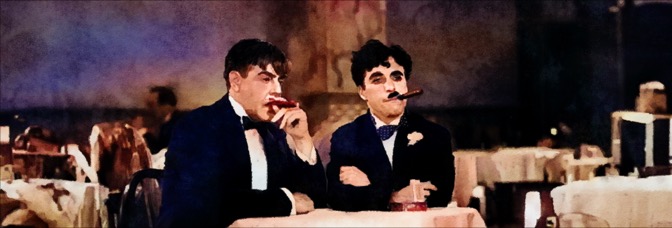
About halfway through City Lights, I realized most of the gags repeat. Especially when it’s Chaplin and his de facto sidekick, Harry Myers. But instead of making the bits seem rote, the repeat value just makes them funnier. There are some differences in how the jokes work, but not very much; Chaplin also lays into…
-

Transatlantic is a pre-code Modern Marvels Melodrama. Set in some fascinating technological, man-made invention or creation, a varied group of characters get together and have some drama. Sometimes there’s a murder, sometimes there’s not. Transatlantic has a murder. Unfortunately, it takes its sweet time getting there too, which gets frustrating; the film doesn’t even run…
-

For most of Night Nurse’s seventy-two minute runtime, lead Barbara Stanwyck is able to keep the film going just through her intensity. She’s a new nurse on her first assignment after the hospital, caring for a couple of anemic kids in their mansion, condo apartments, or just studio apartment set. The hospital set in Night…
-

Even with some first and third act problems and a peculiar present action–Millie’s a solid melodrama. It works up actual suspense, actual danger, and finds true villainy amid the pat shittiness of men. In addition to passing Bechdel—briefly but definitely—the film ends up fully confronting all the things it seems like it’d be safer to…
-
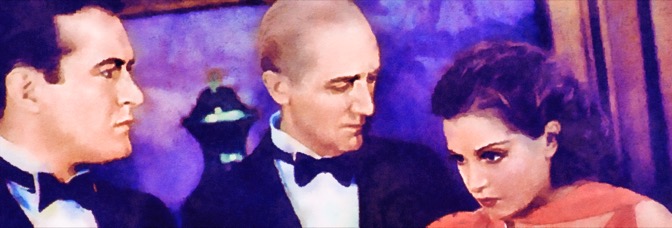
The Woman Between ought to be the most scandalous, salacious Pre-Code soap possible given the tawdry subject matter—trophy-ish wife Lili Damita (it’s complicated, she’s got her own business and she’s French) cheats on her husband on her latest voyage back from Europe and it turns out she’s shacked up with his son, Lester Vail. Now,…
-

Dr. Jekyll and Mr. Hyde—it’s pronounced Gee-kyl, incidentally, as in Fronkensteen—is a stunning disappointment. It’s difficult to know where to begin, given the film is about a scientist, Fredric March, who’s really horny for his fiancée, Rose Hobart (and she’s horny for him too), but her dad, Halliwell Hobbes, thinks March’s a no good horn-dog…
-

The Lady Refuses gets frustratingly close to making it to the finish. It collapses in its final moments, though it’s barely been keeping it together through the third act, when everything (by everything the main plot and the single directly related subplot) comes together and profoundly fizzles. The only reason it provides any tension at…
-

The first third of City Streets is this awesome bit of experimenting from director Mamoulian as he tries to figure out how to make a sound picture. Lots of great shots and camera setups, usually with too dawdling cuts. William Shea holds everything just a few seconds too long. But the montage imagery itself is…
-

Not to be too obvious, but I really wasn’t expecting a twist ending for The Maltese Falcon. But only because I’ve… read the book, seen the 1941 version, seen spoofs of it; I sort of figured I’d be able to guess the plot turns. And I did, right up until the end, when Falcon shows…
-

Hot Biskits refers to lead Thurston Briggs. He’s Hot Biskits, only he uses a pseudonym because he’s a con man. He’s got a cushy job as a miniature golf course manager; the owner is a crooked cop, who’s fine just so long as the managers don’t make any money on the side. Although Briggs can’t…
-

A Connecticut Yankee fumbles on pretty much every level, including wasting lead Will Rogers. The big problem is the script, from William M. Conselman. It doesn’t help any director Butler can’t mount an action or comedy sequences, because there’s nothing else in the picture. It doesn’t even work as a Rogers vehicle because his character’s…
-
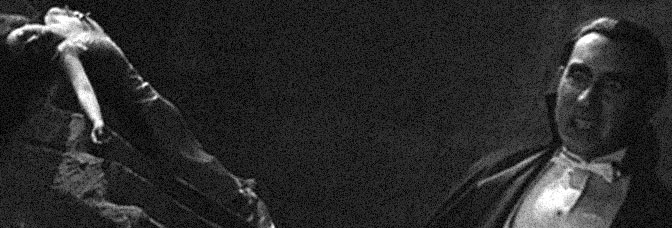
A lot of Drácula’s hundred minute runtime is spent with Eduardo Arozamena talking really slow to José Soriano Viosca and Barry Norton. Arozamena’s Professor Van Helsing (so nice to have such a familiar “brand” you can just talk about the characters and assume some passing familiarity) and Viosca and Norton are the guys who need…
-
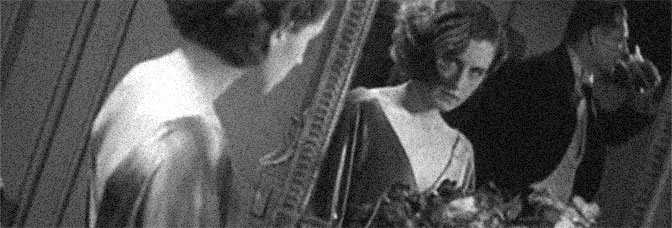
The first hour of A Free Soul is this extremely engaging, if occasionally melodramatic, story about Norma Shearer and Lionel Barrymore. They’re rebellious blue bloods–Barrymore’s Shearer’s father and he’s raised her to be an independent woman. He’s a defense attorney and a drunk. She’s his ambassador to their disapproving relations. She takes up with mobster…
-

Even though it still falls apart at the end, this truncated, eight millimeter version of Dracula is better than the regular version. It’s exactly what I was hoping for from these Castle Films digests. All of the long dialogue scenes are gone. There’s no explanation of vampires, the entire sequence before London is gone, no…
-

The eight millimeter digest version of Frankenstein removes all but three main characters. Colin Clive gets the most time, though loses all subplots and character, with Boris Karloff probably coming in second. It’s odd to watch Frankenstein and have the monster make so little impression but it’s clearly possible. Dwight Frye, for a while, makes…
-
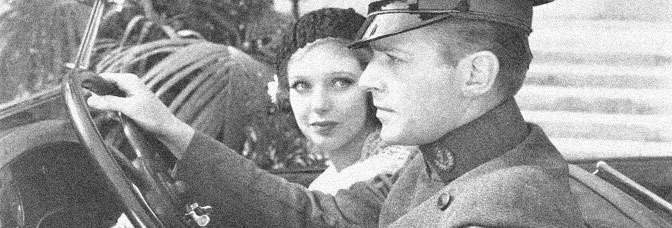
While I Like Your Nerve is urbanely genial, it’s a somewhat high concept romantic adventure comedy. Douglas Fairbanks Jr. is a playboy–though not one of means–living it up in South America. He travels from country to country (they are, of course, so small he can drive) and stirs up trouble. But then he sees Loretta…
-

It takes about seventeen minutes for Monkey Business to start. The first seventeen minutes are the Brothers running around a cruise ship, on the run from the ship’s officers. In those seventeen minutes–about a fifth of the picture–they manage to get in a number of gags, including Zeppo discreetly laying the groundwork for his romance…
-

The Iron Man‘s protagonist is not the Iron Man itself (himself?), which shows up after the halfway point. The protagonist is a cantankerous old man with some magic powers. He lives amongst all the adorable cartoon animals who sing and dance happily and he does what he can to ruin their days. He’s a bad…
-

Watching Bosko the Doughboy, I kept thinking, “too soon.” It’s a comedy cartoon about World War I, specifically trench warfare. In the cartoon, Bosko is the only human. The rest of combatants are animals–dogs, cows, a pig or two, a lot of birds. The battle scenes are graphic and, one has to assume at the…
-

Helping Grandma gives the impression directing Our Gang shorts for so long, McGowan lost (or never developed) any ability to direct adults. The way he holds shots on the kids, making sure they get their gags done, makes sense… even if it lacks any artistry. But in Grandma, he inexplicably holds shots on Margaret Mann.…
-

The most cinematic thing about Free and Easy might be its end credits card. The card at least makes Easy feel like a short film and not a radio show. Well, wait, I guess there are three sight gags in the short… otherwise, it’d definitely be better suited for radio. It opens with a group…
-

I think The Speckled Band is a period piece but maybe not. There aren’t any exterior establishing shots in London, so no automobiles. It’s a question because the Sherlock Holmes in this film isn’t some recluse… he’s got an office and three secretaries. The film has a very episodic feel to it, but not in…
-

I’m trying to imagine how Frankenstein looks on the big screen–maybe on one the size of Radio City Music Hall; James Whale fills the screen upward. He directs the viewer’s attention always up, starting with the first scenes in the tower laboratory. The frames are obviously filled with extensive detail, which video certainly does not…
-

I don’t think I’d ever realized M‘s technical importance. Lang creates quite a few filmmaking standards here, still in use today. Non-specific to genre, M features some brilliant off-screen dialogue work. It’s the earliest example (I’ve ever seen) of hearing a scene’s action while looking at something else. There’s also Lang’s approach to the sound.…
-

I never got Dracula. Even as a kid, I never watched it over and over, like I did the other Universal monster movies. When I went back and saw it in the late 1990s–after Ed Wood–Bela Lugosi’s performance horrified me. He makes funny faces and does Charles Atlas exercises for scary body language and woodenly…
 The Stop Button