Category: 1921
-
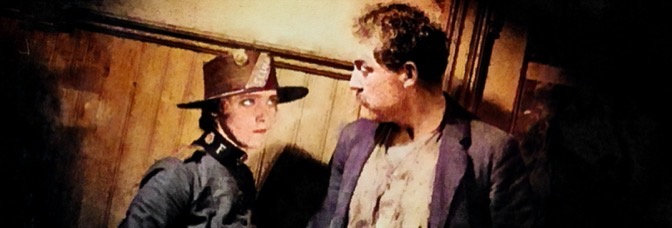
Victor Sjöström directs, stars, and adapts The Phantom Carriage. He gives himself a great showcase. Most of the film is a breathtaking character study of an abject bastard. The film throws reason after reason for Sjöström being an irredeemable, abject bastard, and none of them stick. He’s always ready to deliver more bastard. It’s his…
-

Hard Luck starts as a… failed suicide attempt comedy. Nothing morbid, just absurd and slapstick. And a little dumb. Star, director, and writer Keaton always has dangerous ideas for ending his life, but never particularly good ones. There’s a lot of physical humor from Keaton during this section; situational physical comedy. Most of it is…
-
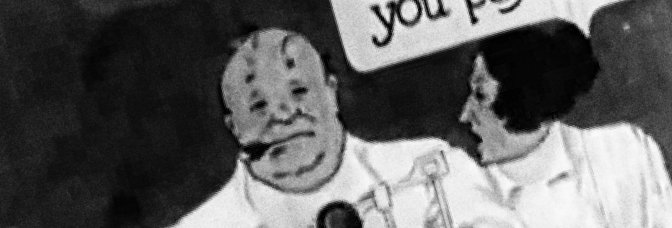
The Flying House does a lot in its eleven minute runtime. First and maybe foremost–it’s questionable given where the film ends up–it’s a successful, ambitious format change for the Dreams of the Rarebit Fiend comic strip. Adapted by its creator, McCay–who’s got his twenty-five year-old son, Robert, animating–Flying House is a cartoon version of the…
-

The Blot has a lot of plot. Lot of plot. Director Weber fills the film with characters and subplots–unfortunately, not many of the supporting cast get credited so I’ll just have to compliment based on their characters. The main plot is about rich college kid Louis Calhern who discovers–because he has the hots for his…
-
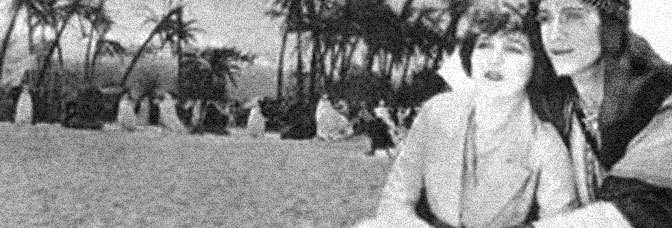
The uncredited editor of The Sheik had a thankless task–during the first act, director Melford is packing in so much expository information all the cuts to introduce new information. The Sheik’s silent, the editing of the first act is always important in a silent film. There needs to be a certain pace, there needs to…
-
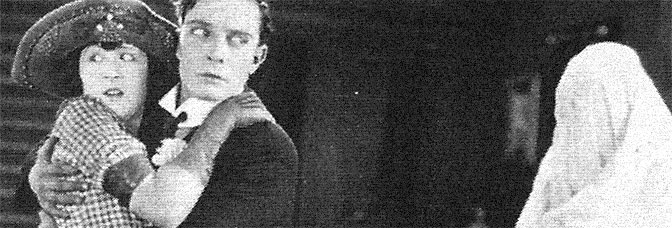
The Haunted House has some excellent gags. There’s a lot of set gags in the finale, when bank clerk Keaton ends up in the–well, the haunted house. His coworker–a delightfully evil Joe Roberts–is actually a counterfeiter who uses the haunted house to print money; the haunted bit is just a cover. Lots of great comedic…
-

Some time after the halfway point in The Kid, it becomes clear the film isn’t going to end badly for its leads. Charlie Chaplin is the tramp, Jackie Coogan is his ward (a tramp in training). Chaplin, as a director, is fairly restrictive. Most of the action takes place on a few streets, primarily outside…
-
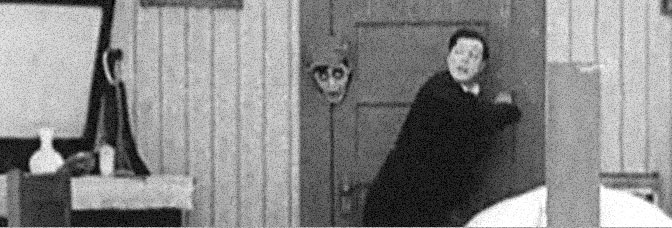
The ‘High Sign’ starts innocuously enough. Leading man Buster Keaton is out of work and answers a want ad to be a clerk at a shooting range. Maybe the tone of the short can be determined from Keaton stealing a cop’s gun to practice, because things don’t stay innocuous for long. In addition to the…
-

The Man with the Twisted Lip is not a particularly exciting narrative to begin with, but director Elvey does keep the story moving at a decent pace. He paces most of Lip like a play, albeit one with flashbacks. Elvey cannot, however, make it interesting. Some of the problem is the adherence to the source…
-

Given the terrible attempts at humor and Eille Norwood’s histrionic performance as Sherlock Holmes, one might think The Dying Detective is a farcical adaptation. Unfortunately, I doubt director Elvey gets farce as he doesn’t get pacing or filmic storytelling. Almost every shot in Detective goes on too long. He’s not just holding the shot until…
-

Now or Never takes a long time to get to the basic comedic plot–Harold Lloyd is stuck taking care of a little kid on a train ride. The kid, played by Anna Mae Bilson, is absolutely adorable and a perfect foil for Lloyd. She’s his costar, not romantic interest Mildred Davis, which is somewhat unfortunate.…
-

Newmeyer takes Harold Lloyd to a country house in Among Those Present and sets him loose in front of a bunch of snobs. Lloyd plays a variation of his regular character, but this time with additions. For much of the short, he’s posing as a British lord, which showcases Lloyd’s acting ability. The short has…
-

To call The Devil’s Foot inept is too complementary. Some of the stupider story elements come from the Conan Doyle story, so one cannot really fault screenwriter William J. Elliott. Instead, the fault lies entirely with director Maurice Elvey. The short does show how important sound is to a procedural investigation narrative, but Elvey’s incompetence…
-

Where to start with I Do…. There are two big places and one little one. The little one is just suburban paranoia in the twenties, with newlyweds Harold Lloyd and Mildred Davis terrified over being robbed. It leads to hijinks. But this subplot is only the last seven minutes, tacked on to the rest. The…
-
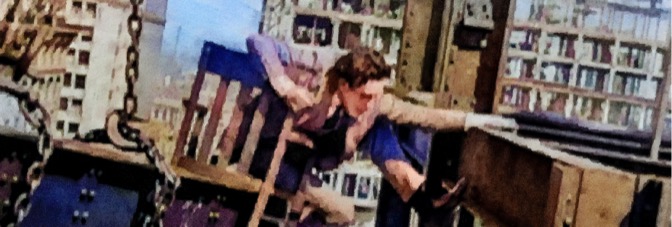
Never Weaken combines two of Lloyd’s favorite features (at least from his shorts of the era)… skyscraper derring do and failed suicide attempts. While the former is definitely thrilling, the latter is unpleasant and, in terms of narrative, rather lazy writing. The short starts strong, with Lloyd out to drum up business so his girlfriend…
-
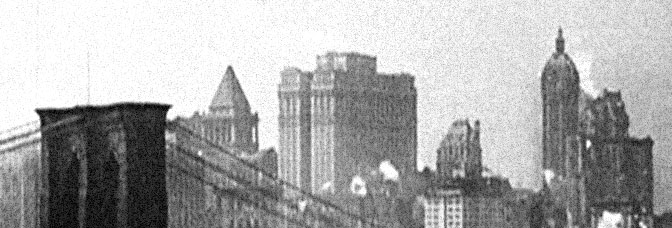
About three quarters of Strand and Sheeler’s shots in Manhatta could just be stills. It’s less about the camera being motionless than about the subjects being motionless. While the subjects are varied, a lot of them are related to the water—whether the tugboats or the ocean liners or the docks, there’s a lot of water…
 The Stop Button