Category: Sum Up
-

I’ve been watching classic movies my whole life. As a kindergartener, I was so scared by Young and Innocent’s blinking, black-faced murderer I refused to participate in an eye-closing exercise. My childhood Saturdays were filled with Svengoolie’s best, my dad and I recording them and trying to edit out the commercials. For anyone not forty-plus…
-

Almost all of Eleanor Parker’s feature films are available today on DVD. Almost all of her Golden Age titles have been available since 2018, when Warner Archive released The Last Ride (1944), while Kino Lorber’s release of The Oscar (1966) a few months ago is the most recent new-to-DVD Parker film. Despite Warner Home Video…
-

It’s impossible to imagine Wrath of Khan without the James Horner score. When Star Trek II came out in 1982, it was the third of the late seventies, early eighties sci-fi franchises. Star Wars and Superman were both looking forward to their third films in 1982, while Trek was recovering from its troubled 1979 Star…
-

Tim Blake Nelson’s O adapts Shakespeare’s Othello as a modern, moody, lush, teenage Southern Gothic. Sixteenth century Venice becomes a South Carolina prep school, Palmetto Grove, in the late 1990s; Venice’s armies become the school’s basketball team, the Hawks. The Hawks are crushing it this season, all thanks to jersey number 4, senior Odin James…
-

E: What am I watching? It just started, and I don’t know what’s happening. B: It’s symbolic. E: Yeah? Who’s that guy? B: That’s Death walking on the beach. E: I’ve been to Atlantic City a hundred times, and I’ve never seen Death walk on the beach. From Diner (1982); written by Barry Levinson; set…
-

“From thy wedding with the creature who touches heaven, lady God preserve thee.” Eighth Wonder Most film blogathons are actor, actress, director, sub-genre themed. If you’re trying to branch out, if you just haven’t had a chance to write about something you love yet, they’re efficient opportunities for some post subject variety. Even though I…
-

Between 1932 and 1997, two-time Academy Award winner Luise Rainer—who was the first actor to win more than one Academy Award and the first to win two back-to-back— made a total of fifteen films. Approximately. Austrian Rainer made three German-language films in the early thirties before Hollywood—MGM, specifically—discovered her and brought her to the States…
-

Eleanor Parker did not win any Academy Awards, which is simultaneously obvious and inexplicable. The latter because she obviously deserved one (or six), the former because if she had won any, she’d have been better known in the eighties and nineties, when home video and basic cable drove classic film viewership. The first half of…
-

I didn’t have any big plans for The Stop Button in 2018 other than blogathons and whatever came up. Comics Fondle I was reading all of Love and Rockets, which took more than 2018. But Stop Button… well, marathon training. It was going to take up a lot of time. Of the 157 feature films……
-

Since 1954, Japan’s Toho Company Limited has made over thirty Godzilla films. There are three distinct eras of Toho Godzilla movies–the Showa, the Hensei, and the Millennium. Most of the films, at least during Showa era, got dubbed theatrical releases in the United States. If they didn’t get theatrical releases, they aired on television. What…
-

When she starred in Eye of the Cat, Eleanor Parker had been in more than forty theatrical films. She was forty-seven years old. She had just been in the biggest movie of all time–1965’s The Sound of Music. When Eye of the Cat came out in June 1969, Sound of Music was still playing in…
-

Going into the nineteen sixties, Eleanor Parker’s acting career seemed to have regained some of its recently lost momentum. Home from the Hill, released in March 1960, brought Parker into a genre she’d long avoided–the all-star soap. And–in addition to Parker being outstanding in the film, Hill had been a big hit. At the same…
-

When Eleanor Parker left her Warner Bros. contract in early 1950, she did so before any of her films of that year released. There were three–Chain Lightning, Caged, and Three Secrets. All three were successful. She was top-billed on the latter two (and second-billed only to Bogart in Lightning). She’d get an Oscar-nomination for Warner’s…
-

In June 1941, right before turning nineteen years old, Eleanor Parker signed on as a contract player at Warner Bros. She had just finished a year at the Pasadena Playhouse. Parker started acting in high school and had been dodging studio screen tests since she was fifteen; she wanted to continue developing her craft on…
-

When I was in undergrad, I discovered the existence of Secret Agent. I was on a thirties Hitchcock kick and a Maugham kick. The idea of a Hitchcock Maugham adaptation? Should be something. At the time–sixteen years ago–Secret Agent was a major disappointment. I’ve still got an interest in Maugham adaptations, but I don’t expect…
-

Since its first installment in 1934 and in the eighty years since, The Thin Man series has stood apart from other film series and franchises. Its six films always delivered a “twist” mystery and the wonderful chemistry between stars William Powell and Myrna Loy. Much of the series’s most memorable features came straight from the…
-

At multiple points throughout his career, Edward Burns has been a disappointment. He’s not currently a disappointment–in fact, his now five-year absence from feature filmmaking is distressing, given his last film’s success; Fitzgerald Family Christmas is great. But many times over his eleven film, seventeen year filmmaking career–writing, director, producing, and starring–he has disappointed. Over…
-

Between 1974 to 1981, John Carpenter directed five independent feature films–Dark Star, Assault on Precinct 13, Halloween, The Fog, and Escape from New York. Three of those first five films–Dark Star, Precinct 13, Escape–are phenomenal motion pictures and should have established Carpenter as a significant seventies American filmmaker. They did not. Only recently have Carpenter’s…
-

With the summer 1982 release of The Thing, John Carpenter finally fully arrived in Hollywood; he’d made a studio picture. And he didn’t come alone. He brought cinematographer Dean Cundey, who shot all of he and Debra Hill’s films, and at least three from Escape from New York: editor Todd C. Ramsey, co-producer Larry J.…
-

In the four phases of John Carpenter’s career, the final one–starting in 1992 and going on eighteen years–contains almost forty percent of his theatrical output. This final period is almost an afterthought’s afterthought. While Sandy King produces most of the films, Gary Kibbe photographs most of them, and Peter Jason has a part in most…
-
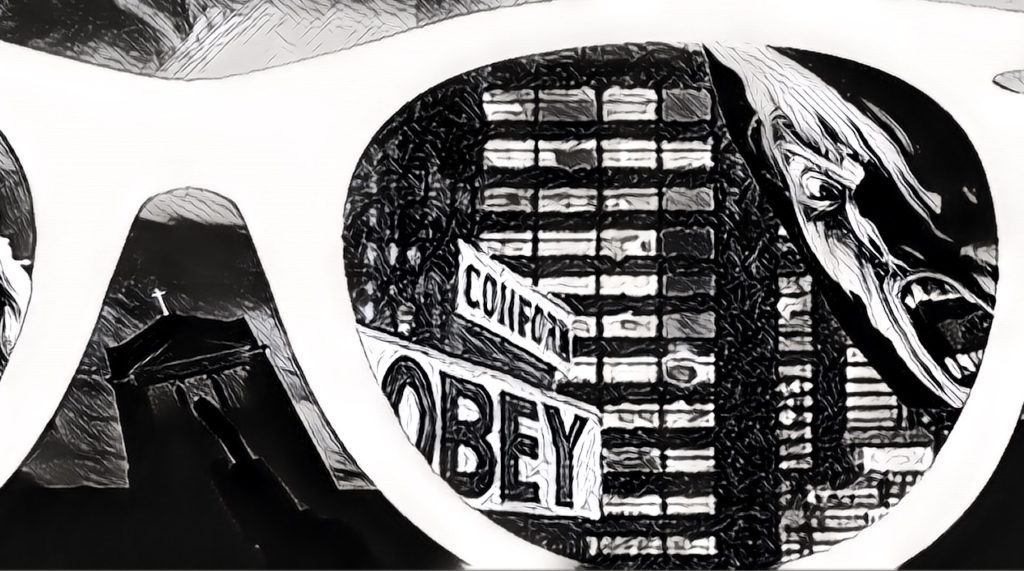
Following Big Trouble in Little China’s disappointing box office returns, director John Carpenter returned to low budget filmmaking. For Alive Films–and distributed through Universal, back in the Carpenter business following the failures of The Thing and Halloween III–Carpenter wrote and directed Prince of Darkness and They Live. His last two films of the eighties, the…
-

The movie poster for Superman and the Mole-Men proclaims the film to be “the all-time ace of action in his first full-length feature adventure.” That “all-time ace of action” is Superman. 1951 moviegoers–sure, children moviegoers, but moviegoers nonetheless–had been waiting lifetimes for Superman’s first full-length feature adventure. When Mole Men came out in November 1951,…
-

In the summer of 2008, Matthew Hurwitz (of DangerBurger and Video Fugue previously of Cinemachine) and I launched An Alan Smithee Podcast. Just under six years later, we released the final, one hundredth episode. The podcast started as a general discussion of modern film, but soon became a targeted discussion of two films, one good,…
-

When talking about Dekalog, three things are going to come up. Religion in film (I’m listening to The Blessed Islands to get in the mood), Mannequin (you know, “Switcher!”), and Dekalog. Since Dekalog is ten modern tales of the Ten Commandments–the director, Krzysztof Kieslowski, and his cowriter, Krzysztof Piesiewicz, mix various commandments in each episode.…
-

One of the things I wanted to do with The Stop Button, way back when I started it (or, if not started it, when I realized I was going to keep going with it), was watch all the Val Lewton RKO movies. I discovered Lewton in college. I can’t remember how, whether it was in…
-

I grew up avoiding Eleanor Parker movies. At least the one everyone knew about–my mom and my sister used to watch The Sound of Music all the time. My dad and I avoided it for years. When I did discover Eleanor Parker in the late nineties, I can’t remember the order in which I saw…
-

I have heard of Arabian Adventure, I had forgotten I knew about it when I was thinking about doing this list. Kevin Connor’s career–which has gone from British fantasy films to American television to direct-to-video to the Hallmark channel–reminds of someone like Jack Arnold, who went from Creature from the Black Lagoon to “Gilligan’s Island.”…
-

Merian C. Cooper and Ernest B. Schoedsack’s 1933 film, King Kong, is one of the most popular films ever made. Besides being a box office smash on release–and then again and again on its rereleases–Kong is nearly universally praised, whether by the Library of Congress or the American Film Institute. In his first movie guide,…
-
Merian C. Cooper and Ernest B. Schoedsack’s 1933 film, King Kong, is one of the most popular films ever made. Besides being a box office smash on release–and then again and again on its rereleases–Kong is nearly universally praised, whether by the Library of Congress or the American Film Institute. In his first movie guide,…
-

A discussion of John Carpenter LaserDisc releases from 1994-98.
 The Stop Button