Category: Short
-

In Greetings from Africa writer, director, and star Dunye mixes formats. Her first person comments to the camera are black and white video. The dramatized story is color film. Very, very colorful film. Dunye and cinematographer Sarah Cawley have some affected, formalist shots–even though Dunye’s the only one giving first person narration, Nora Breen (as…
-

When it starts, An Untitled Portrait is about Dunye’s brother. But it’s also going to be Dunye’s family in general. But it’s also going to be about Dunye herself. The short runs three minutes, Dunye’s narration set to home movies, old film clips, but also some stylized original footage of shoes. Dunye’s recollection starts with…
-

Vanilla Sex is the combination of a short anecdote from director Dunye, which she recounts to someone else, set (mostly) to a series of photographs scrolling up the screen. Occasionally, the footage changes to what seems to be home movie of Dunye and some other people playing around, nude (until Dunye shows up, it almost…
-
The first sequence of The Potluck and the Passion, with director Dunye (also acting) sitting down and talking with girlfriend Gail Lloyd about the dinner party they’re about to throw. They go over the guest list as the opening titles run, who’s invited, why they’re invited, why Dunye and Lloyd are throwing the party (it’s…
-

She Don’t Fade opens with Zoie Strauss sitting down in front of the camera and directly addresses the viewer. She talks about how we’re going to see a video from the director, Dunye, and then Fade cuts to a shot of Dunye cleaning up a sidewalk vending table. The title card gradually comes up. Then…
-
Parábola is a series of objects, usually with parabola shapes (a U), shot at different angles, made with different materials, moving and interacting, with lighting and editing making the objects move or interact in one way or another. The objects are sculptures by Rutherford Boyd; they’re sometimes art deco, sometimes just appear art deco because…
-
Janine is shot–and edited–on video. So when Dunye cuts to an insert shot for mood, there’s a jerky quality. She does a lot of freeze frames and the format just means it can’t gracefully return to motion. Seeing the cuts as Dunye relates the story–of Janine–causes attention to refocus. If your attention was waning for…
-

Dear Diary was originally a TV pilot, which didn’t get picked up, then got (slightly) re-edited into a short. It’s impossible to imagine it as a weekly show, just because Diary does so little to establish what would be its regular cast. It opens with star Bebe Neuwirth writing about her day in her diary.…
-

Meshes of the Afternoon is a dream within a dream within a dream within a dream. But since they’re dreams, it’s really just the one dream, I suppose. A woman–presumably, because directors Deren and Hammid shoot from her point of view during the waking segment–comes up and takes a nap. On her way home, she’s…
-

Ident is an unpleasant five minutes. Intentionally unpleasant. Even the dog is unpleasant, but mostly because the protagonist finds the dog unpleasant. The protagonist is unpleasant himself; the dog seems mostly innocent. The short is claymation and takes place in a labyrinthine city. It’s not clear it’s a city for a while, it just seems…
-
The most disconcerting thing about The Good Time Girls is the dialogue. The short opens with this solid, distinct narration from Laura Dern. Director (and writer) Hoffman goes for lyrical shots but not visuals; Autumn Durald’s photography isn’t dull so much as shallow… to the point you wonder if the filters were just set wrong…
-

Flying Padre has three types of impressive shots. The first two types involve an airplane. The short is about a New Mexico priest who flies around his 4,000-square mile parish. There are interior and exterior shots of the plane and director Kubrick gets some fantastic shots from inside out. He’s also got some great shots…
-
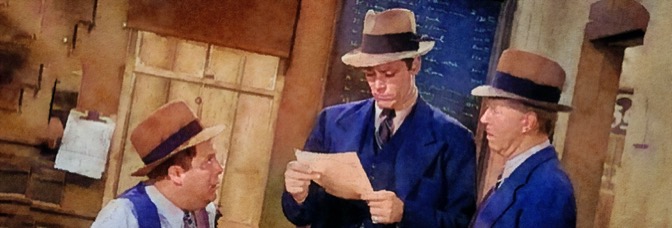
Coffins on Wheels opens with Roy Gordon directly addressing the camera, explaining used car salesman–despite most being all right (check your Better Business Bureau)–can be dangerous. There’s a scrupleless “lunatic fringe.” Then the narrative starts with trusting Walter Baldwin buying a used car from a genial salesman, John Gallaudet. Once Baldwin’s left the lot, however,…
-

Hot Biskits refers to lead Thurston Briggs. He’s Hot Biskits, only he uses a pseudonym because he’s a con man. He’s got a cushy job as a miniature golf course manager; the owner is a crooked cop, who’s fine just so long as the managers don’t make any money on the side. Although Briggs can’t…
-

Doin’ Time in Times Square is forty minutes of footage Ahearn shot out of his Times Square apartment building’s window. Shot over three years, Ahearn cuts the street scenes with home movie footage. Life inside the apartment. Ahearn’s adorable family growing, holidays, parties, sitcoms. Meanwhile, outside is urban blight. Except it can’t all be urban…
-

The Lottery has a lot of mood. Isidore Mankofsky’s lucid but muted cinematography captures a routine day, not even special with an entire small town gathering in a large field. Director Yust has a few favorite touchstones among the townspeople, though only until the lottery itself starts. Then he concentrates on faces and expressions, as…
-
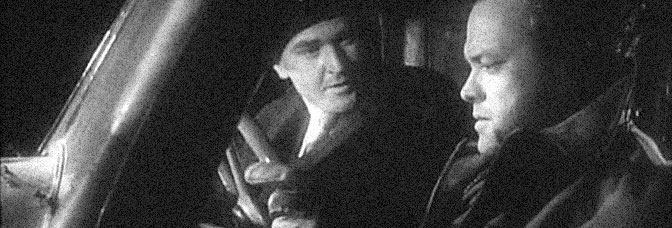
Orson Welles stars in Return to Glennascaul as himself. He’s acting as a combination presenter and narrator. Amusing, he says he’s not going to be around for long, he’s busy making Othello after all. But then when star Michael Laurence starts telling Welles his story, Welles can’t let someone else do the narrating, so he…
-

Vesper has something like six “gotcha” reveals, which is a lot for a short. Especially since Vesper runs twenty-three minutes. And the first gotcha is in the first five minutes. The experience of watching the film quickly becomes waiting for director Sheikhalishahi to spring another one. The story has (maybe) agoraphobic Agnès Godey being stalked…
-
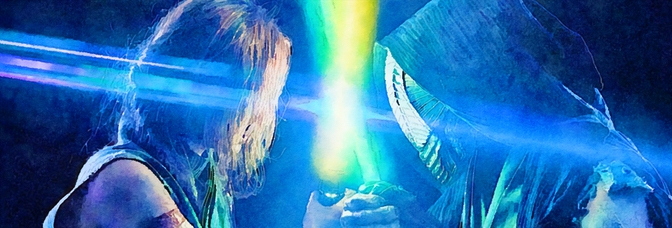
Dark Legacy opens with a shot of a solar system. The “camera” descends to one of the planets. Then we find out it’s a Star Wars short. Because, until that point, director Pietromonaco could be doing anything. He’s just showcasing the visuals. Not showing off. Showcasing. It’s such a nice difference. Anyway, back on the…
-

Literal Bohemian Rhapsody is the filler footage for a bad music video for the Queen song, Bohemian Rhapsody. It’s literal, so Jeff Schine is actually running around telling his mother things and shooting people and whatever. Except he doesn’t shoot the guy right. Because a lot of Literal is just stock footage. It might work…
-

Darkness Falls runs fifteen minutes. The entire short film is set up for its end twist, which multi-hyphenate (including writer and director) Vinsencius hides fairly well. The short never meanders towards its conclusion, instead it just stops and muscles through a bunch of expository dialogue and then ends. The narrative requires newly introduced characters to…
-
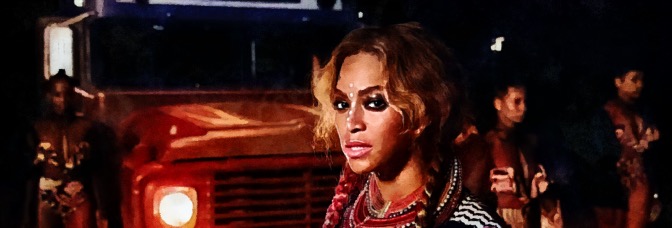
A music video is not a short musical. Lemonade, identifying itself as a visual album, is not a music video (or a string of them) and it is not a musical. It borrows something from all of those mediums, with directors Knowles, Rimmasch and Åkerlund instinctively understanding how to mix and match. Lemonade is a…
-
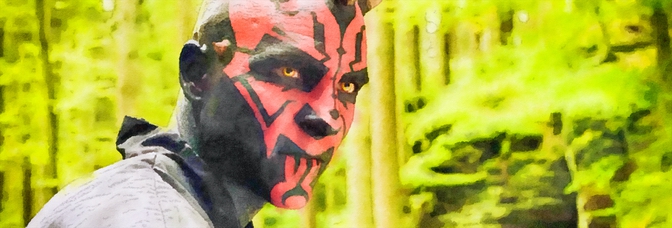
Darth Maul: Apprentice is a fan film. It’s an excellent fan film. Director Bu has a wonderful vision sense–he goes for grandeur and drags it out (the short is an extended fight sequence) but it never gets boring. It should get boring, because absolutely everyone in the short except Ben Schamma’s Darth Maul is lame.…
-
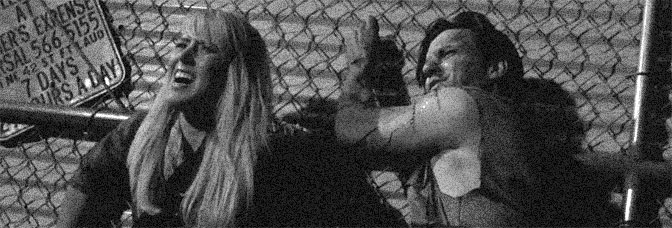
I don’t want to “geek out” when I talk about Ash vs. The DC Dead. It might be embarrassing someday. But it’s hard not to be impressed with director Rosenthal’s ability to find the perfect combination of source material to reference. While the short has David VonHippchen’s Ash facing off against big blue DC super-anti-hero…
-
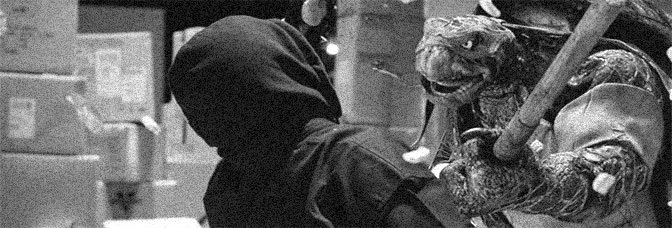
I can’t rip into Ninja Turtles: Veterans of the Night. I can’t do it. Director Díaz-Rivera’s reverence for the source material isn’t infectious. It doesn’t have me remembering the old comic or the cartoon or the movies or anything with rose-colored glasses. But he does sell it. He sells the idea of this grand, sweeping…
-
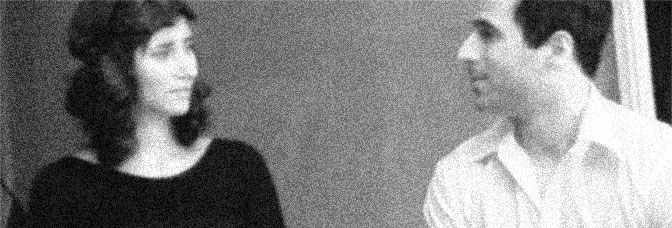
Please Punish Me starts awkwardly (some really bad make-up contrasting the short’s strong technical qualities), then gets sort of offensive for a bit. With the pot-smoking black guy, it sort of feels like a late seventies sitcom. But then it doesn’t seem to be self-aware; there’s this practically Wes Anderson “dungeon” exterior, complete with handwritten…
-

Properly exhibited, Les Grands Ensembles should be projected in an art gallery. In an endless loop. The film runs just under eight minutes. In it, artist Pierre Huyghe tells a strange little story about two buildings. Now, the full title of the piece is (apparently) Les Grands Ensembles (The Housing Projects), and so, one should…
-
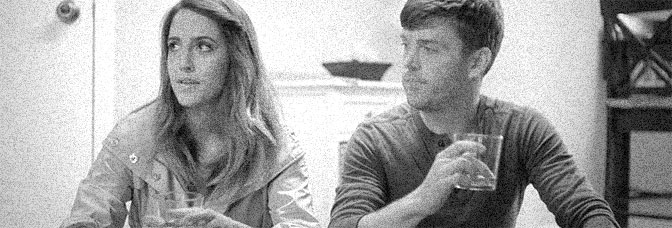
Total Performance is exceptionally smart, confident, and self-aware. It’s a distressing, actually, because I hate the idea of Total Performance. A short film capable of aping comedy-dramas without bringing anything to the table. Writer-director Sean Meehan, along with lead Tory Berner, produce an entirely digestible short film here. But I don’t know how I feel…
-
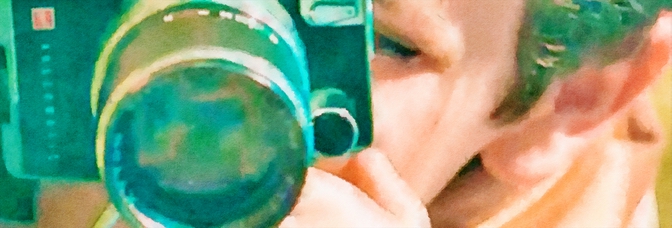
So, until the last fifteen or twenty seconds of Summer ’78, I was going to be rather positive about the short. As it stands, J.C. Reifenberg can compose a shot really well, Don Thiel can shoot and edit really well. Summer ’78 is technically marvelous. It’s about a special little boy–only we don’t know he’s…
-
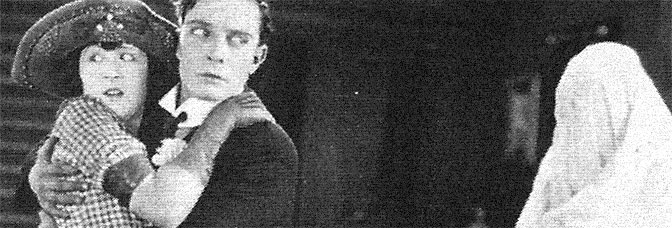
The Haunted House has some excellent gags. There’s a lot of set gags in the finale, when bank clerk Keaton ends up in the–well, the haunted house. His coworker–a delightfully evil Joe Roberts–is actually a counterfeiter who uses the haunted house to print money; the haunted bit is just a cover. Lots of great comedic…
 The Stop Button