Category: ★★★★
-
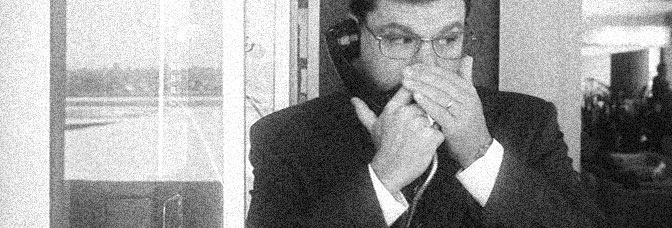
How does Steven Soderbergh pick projects–more, what kind of artist’s statement would he make? The Informant! is his best film–among all his other rather good films–in a while and it owes more to what he learned on Ocean’s Eleven 12 and 13 than on any of his other films. It’s a great time, but it’s…
-

If you were to tell me I was going to react the way I did to The Fountain, Aronofsky’s dream project, I wouldn’t have believed you. While The Wrestler succeeded, Aronofsky didn’t write it. All my experience with his screenplays is negative. In terms of how the film works, The Fountain is somewhat singular. It’s…
-

With Thief, Mann leaves plain an American standard–the gangster movie. Halfway through the film, I wondered how it fit, as the energy the film opens with is gone. The film moves these awkwardly handled scenes without much flare. These scenes are presented as the standard dramatic scenes, but with something not quite right about the…
-
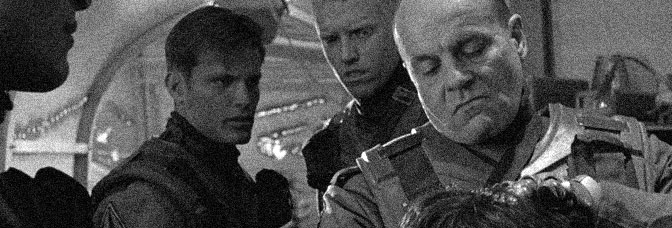
The only “real” pro-war movie I can think of is The Green Berets. But Starship Troopers is also pro-war, even if it’s, well, startlingly so. I mean, the scene where Casper Van Dien grins after getting his battlefield promotion, following a colleague’s horrific death, is a fine example. What Verhoeven does here, in Starship Troopers,…
-
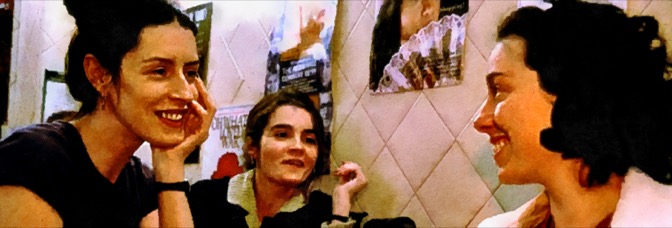
From a description–not even from a few minutes–Wonderland might appear to fit into (or create again) the British realism movement. It’s shot on video, natural lighting, natural make-up, no visible tripod shots, all hand-held, all very cinema verite. There’s no artificiality to it. Except the artificiality of being a filmed narrative. Wonderland even visibly bucks…
-

I’d heard of Rosencrantz & Guildenstern Are Dead, of course. I’d probably even meant to see it at one point, probably around the time of Branagh’s Hamlet, which is when I first got big into Shakespeare. But it was only available on VHS and I was already addicted to widescreen. Oddly, this viewing–at the wife’s…
-

The Royal Tenenbaums is a profound examination of the human condition. It’s hard to think about Tenenbaums, which Anderson made as a precious object–he tends to put the actors on the right and fill the left side of the frame with exactly placed sundries, sometimes it’s the carefully placed minutiae, but he usually puts those…
-
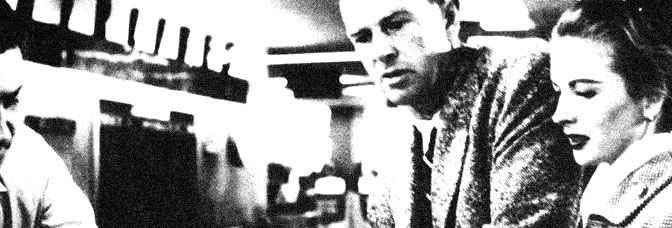
I first saw The Killing when I was in high school. I had a great video store and one of the employees–lots of the employees were film school students–recommended the film to me, raving about Kubrick’s use of fractured narrative. He didn’t call it a fractured narrative, I don’t remember what he called it, maybe…
-

I don’t know how to start talking about The Last Days of Disco. I was going to start with saying I first saw it ten years ago (I first saw it on video), but then I realized I probably first saw it eleven years ago and eleven doesn’t have the same ring. People do like…
-
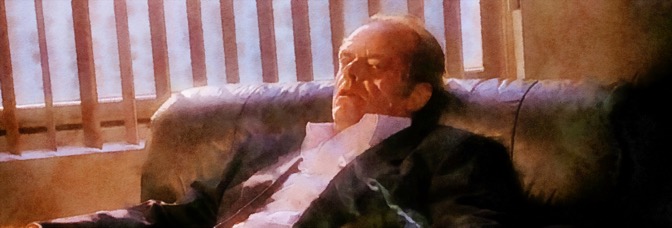
I can’t decide what moment of The Crossing Guard is my favorite. I have it narrowed down to two. It’s either the (louder) one at the end, where Jack Nicholson realizes where he is and how he got there, or it’s when I realized Anjelica Huston–who starts the film in a support group–has never spoken…
-
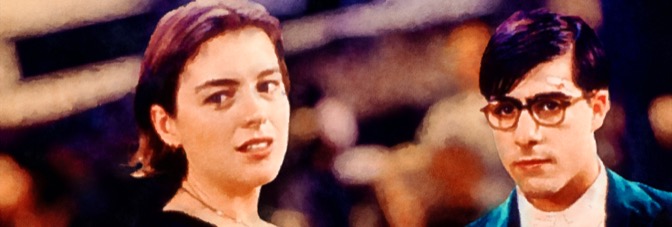
The best moment in Rushmore, the one it all comes together, is at the end, when Jason Schwartzmann dedicates his play to his mother. There’s a brief cut to Seymour Cassel and his reaction. It’s a beautiful little moment and quieter than the subsequent (and also incredibly quiet) moment with Vietnam vet Bill Murray tearing…
-
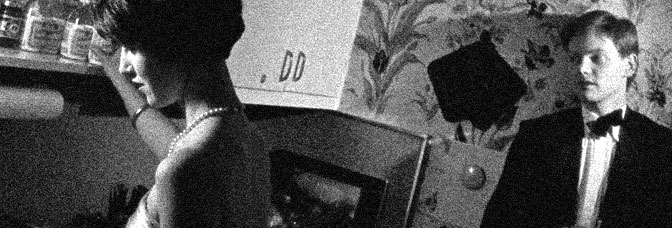
Metropolitan has an incredibly traditional, incredibly cinematic conclusion, which might be why it’s so funny. But why it’s so perfectly in place is the characters–at least the more intelligent ones–impression of the conclusion. They’re aware it’s the Hollywood ending, but it’s a Hollywood ending in the context of Metropolitan, which is something altogether different. Whit…
-
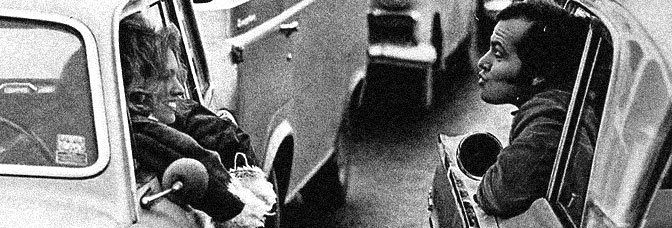
About half way into Five Easy Pieces, the film really hasn’t given any clue as to what it’s going to be. It’s an incredibly complex character study, both in its approach to the narrative and in terms of Jack Nicholson’s protagonist. The beginning of the film, set in the oil fields of Southern California, ends…
-

Halfway through The Indian Runner–I’m guessing at the location, but halfway sounds about right–there’s a stunning montage. It might be the best way to talk about the film, or at least to start talking about the film, because The Indian Runner resists any standard–or glib–entry angles. It’s a five character montage, taking place in the…
-
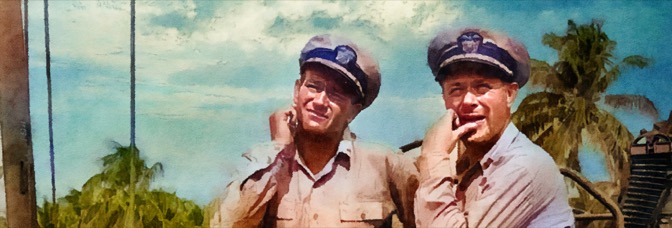
They Were Expendable has a gradual pace. Not knowing the film’s subject matter–just genre–going in, it all unfolded quite deliberately in front of me. The opening is a PT boat exercise. The film’s special effects are spectacular; it’s impossible to tell what’s an effect and what’s an actual boat in the water. These scenes–there are…
-

I was in high school the first time I saw Badlands. I’d seen a lot of movies–I think by that time, I’d even made a top one hundred list. I know I’d seen True Romance, so I must have been at least fifteen. There’s nothing else like Badlands in cinema, which is a bit of…
-
Writing about Magnolia seems a daunting prospect (I don’t think I’ve ever read a review of the film). Following the prologue, which one could (or could not) see as a way to ease the viewer into the genre–the multi-character, all connected genre (Magnolia‘s got to be the best of the genre… I can’t think of…
-

Critical Care opens on its main set–sets are important in Critical Care–with Helen Mirren (as a nurse) checking up on ICU patients. The ICU is a circle, Mirren rounding it by the end of the titles, returning to the station at the center, where James Spader (as a resident) naps during a thirty-six hour shift.…
-

As Milk‘s opening titles ran, it occurred to me Danny Elfman scored it. It doesn’t sound anything like Elfman’s norm–you know, the modified Batman music–but it sounded like the kind of score Danny Elfman should be doing (and should have been doing for years). Milk‘s a biopic–and always feels like one, thanks in great part…
-
Maybe Darren Aronofsky actually gets it. As The Wrestler started, I marveled at what must have been Aronofsky’s longest shots to date until they kept getting longer and longer. His direction of the film is incredibly simple–put the camera on the actors, occasionally do an establishing shot. No medium shots. Long shot to close-up. The…
-
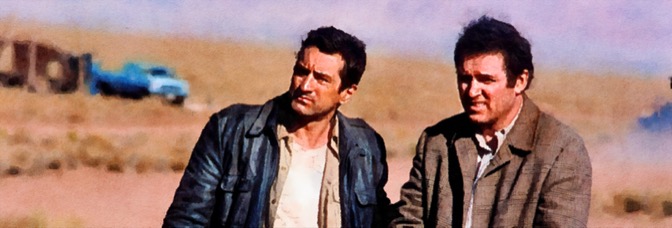
Some time in the 1990s, Charles Grodin said in an interview no one wanted him to do a sequel with Robert De Niro, only ones with him and dogs. Midnight Run is one of the last great comedies (though the genre seems to be on the rise again). It’s an ideal motion picture comedy, with…
-

Once upon a time (in Hollywood), there was a bald director (who always wore a cap) who first got famous on television as an actor, then as a director of comedies, who then started making excellent mainstream Hollywood pictures. Then he started making mainstream crap and then it got worse. The question of Frost/Nixon is…
-
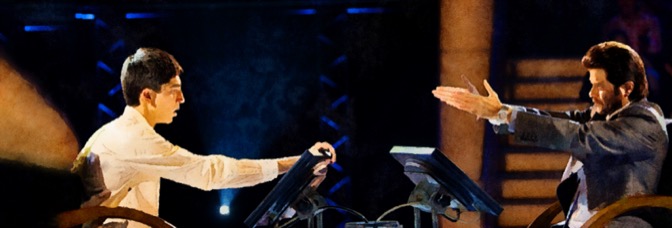
With Slumdog Millionaire, Danny Boyle hasn’t just finally made his grand romance (something he’s wanted to do since A Life Less Ordinary–this time without the “acting” stylings of Miss Cameron Diaz), or given cinema its first great mainstream romance in nine years, he’s also made the best adaptation of a Charles Dickens novel (even if…
-

When Bruce Springsteen did his 9/11 response record, The Rising, he was in an odd position–given the gravity of his intent, he couldn’t misstep. He might get excused for it, but then the record would be (albeit well-meaning) propaganda. It wouldn’t be art. Clint Eastwood’s in a similar situation with Gran Torino. He’s dealing with…
-

I can’t figure out who Renoir had in mind when he made Grand Illusion. It goes without saying he placed incredible trust in his audience, but his expectations are somewhat beyond anything else I’ve seen. Grand Illusion is a film with events–momentous, important events–but they pass without comment, without any recognition or identification. The events…
-
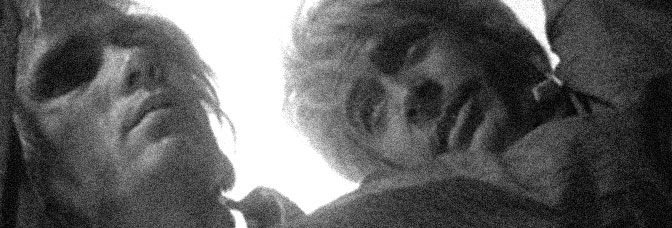
The Stunt Man opens with an exquisitely interconnected sequence, introducing all of the principals–Peter O’Toole, Barbara Hershey and Steve Railsback–while concentrating on Railsback. Hershey’s introduction, which turns out to be the first of director Rush’s muddling of reality, manages to be both blatant and muted. I wonder how it plays on someone’s first viewing of…
-

Little known fact: the British Tourist Authority actually funded for Straw Dogs. They were sick of Americans moving over. Obviously not true, but it would explain a lot. Not many films have such singularly evil human beings as those portrayed in Straw Dogs, but then few feature such textured evil human beings either. The film’s…
-
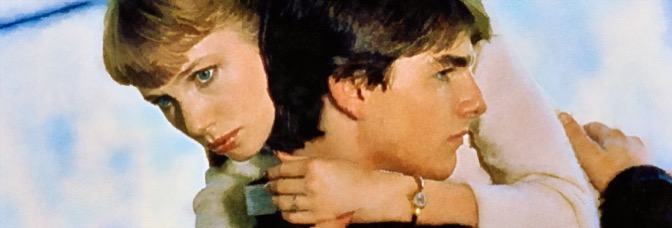
Director Brickman’s original cut of the film only changes a couple scenes at the end, but they entirely refocus the impact of the film. Teenager Tom Cruise still runs a brothel with the help of call girl Rebecca De Mornay while his parents are out of town, still gets in trouble with Joe Pantaliano (wonderful…
-
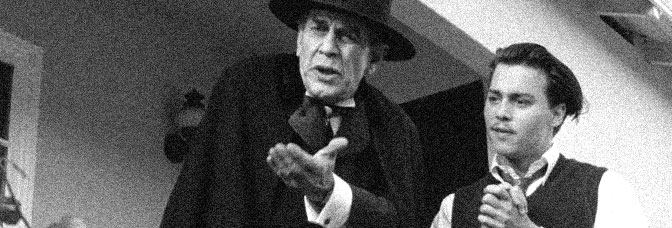
Ed Wood is a biopic of the unsung. The “misfits and dope addicts” of impossibly low budget American filmmaking. The film’s epilogue, following up with the characters, puts the film on the same level as all other big Hollywood biopics. Except this one is about someone who really didn’t do anything (and didn’t even get…
-
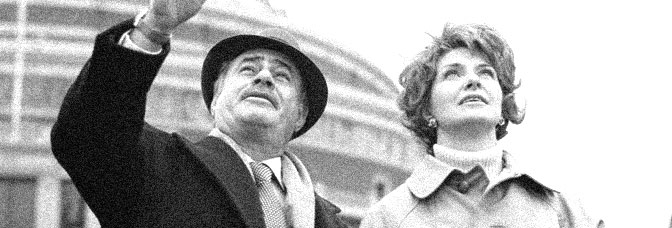
What is this film and how have I never heard of it. Summer Wishes, Winter Dreams is somewhat indescribable in terms of plot. I mean, it obviously isn’t indescribable–I could list the scenes (there are about fifteen in the film, which means it averages a scene every six minutes and that calculation sounds about right)…
 The Stop Button