The Stop Button
blogging by Andrew Wickliffe
Category: ★★★★
-

The Texas Chain Saw Massacre is either terrifying or horrifying. Sometimes it’s a combination of the two. Sometimes it’s visual terror or horror, sometimes it’s audial, sometimes it’s just implied. Director Hooper has three different styles–daytime, nighttime, indoor–and each goes from terror to horror multiple times. The film takes place over less than twenty-four hours,…
-

Despite being about an alien who crash lands on Earth and finds himself stranded in New York City, The Brother from Another Planet takes its time getting to being a fish out of water story. Even when it does, it’s more like a fish being carefully transported in a cup of water to maybe some…
-

The Winslow Boy utilizes all the trappings of a stage adaptation without ever being stagy. Director Mamet opens the film with a family entering their home–there’s some muted conversation before they get completely inside, then the introductions begin. So it’s a very play structure too, at least as far as the first and third acts…
-

The French Connection has a linear progression. No flashbacks, no flashforwards; it’s never implied two events are happening simultaneously. One thing happens after another. Only there’s nothing connecting those things, other than the actors, other than the cops’ investigation. Because French Connection unfolds for the viewer just like it does the cops. Or if the…
-

Disco Pigs might not be the best title for Disco Pigs, but it’s hard to imagine any other title for it so an imperfect one is better than a wrong one. Maybe disco had some appropriate cultural Irish relevancy. Or maybe playwright Enda Walsh, who adapted the screenplay himself, couldn’t think of anything else either.…
-

Even the Rain has a particular narrative distance as it starts, then changes to another one a little later on. Director Bollaín doesn’t transition gradually between these two vantage points; she keeps the pacing of scenes and how they flow into each other, just from the new distance. The film has an ambitious narrative juxtapositioning…
-

Kes has a forecasted structure (so long as you can understand the Yorkshire accents). Teenager David Bradley is about to leave school and head into the workforce. His older brother, played by Freddie Fletcher, works in the coal mines and Bradley knows he doesn’t want that career. They share a bed in their mom’s house.…
-

Wild Strawberries is about a septuagenarian doctor (Victor Sjöström) being awarded an honorary degree. Sjöström’s narration sets it up in the first scene, before the opening titles. Director Bergman’s script, through the narration, lays out the entire ground situation before the titles, in fact. Sjöström is a widower, he has an adult son, he has…
-
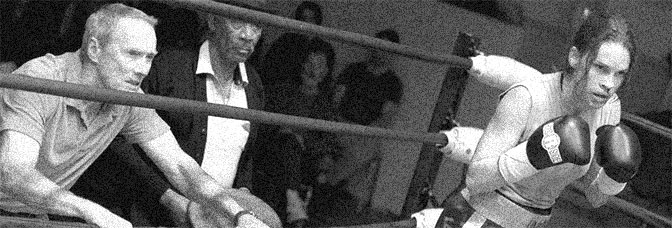
Million Dollar Baby has a somewhat significant plot twist. Well, it actually has a couple of them. And neither comes with much foreshadowing. A little in Paul Haggis’s script, which director Eastwood visualizes appropriately, but they’re in the background. The film has its larger than life story to worry about–Clint Eastwood as a stogy old…
-
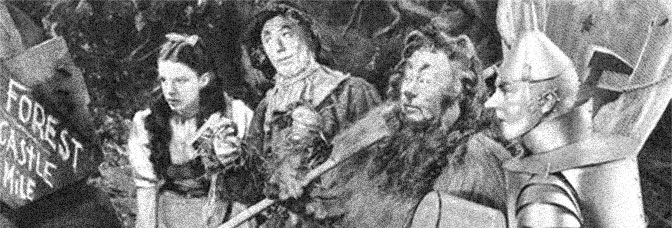
By the time the door opens and Dorothy (Judy Garland) finds herself over the rainbow, The Wizard of Oz has already completed one full narrative arc and is starting another. The film opens with Garland in a crisis–she’s a teenage girl on a farm where no one has time for her (it’s a busy farm,…
-

Love & Friendship opens with some non-traditional portrait cards for its cast of characters. The actors all appear in the opening titles, but then director Stillman breaks out introductions to the characters. Along with some narration. There’s some narration early on, which goes away almost immediately. Because narration might show a little too much of…
-
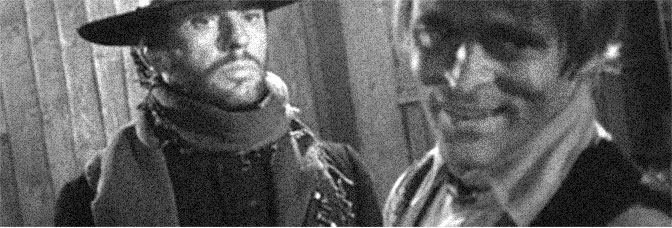
The first act of The Great Silence at least implies some traditional Western tropes. Jean-Louis Trintignant is a gunslinger who fights with evil bounty hunters. Frank Wolff is the new sheriff. Klaus Kinski is one of the evil bounty hunters. Wolff’s got political stuff, or at least the script implies there’s going to be political…
-

Personal Velocity: Three Portraits. Writer and director Miller (adapting her own collection of short stories) ties together three very different stories, each with its own structure, each with its own narrative approach. Velocity is short too–under ninety minutes–so Miller is fast to establish her protagonists. The biggest disconnect, of course, is the narration; John Ventimiglia…
-

It’s a Wonderful Life is going to be a tough one. When I was a kid, during the public domain days, Wonderful Life was omnipresent. It became a joke because of that omnipresence. But also because it’s undeniably sappy. And it has angels in it. It’s so saccharine, I didn’t even notice my eyes tear…
-

Rear Window is an absurdly good time. It’s breathtakingly produced and the set is a marvel on its own, but it’s also an absurdly good time. You’ve got Thelma Ritter chastising James Stewart not just for peeping, she also chastises him for not being serious enough about Grace Kelly. How could it not be an…
-

There’s not much script structure like The Big Easy’s script structure. It’s an exceptionally constructed screenplay. The film’s great, but it all hinges on how Daniel Petrie Jr.’s script works. As previously introduced (whether onscreen or off) come back into the film, expanding on their original impression, as the relationship–okay, hold on, I’m getting ahead…
-

The Seventh Seal has a lot of striking imagery. Gunnar Fischer’s cinematography is peerless, but it’s more–it’s how the photography works with the shot composition, how the shots work with one another (Lennart Wallén’s editing is simultaneously amiable and stunning). And then there’s how it all works with Erik Nordgren’s music. Bergman’s going for theatrics…
-

Just over half way into Inside Llewyn Davis, there’s a moment where lead Oscar Isaac looks into the face of responsibility–weighs it, weighs the consequences of not accepting it, makes his decision. Until that moment, the Coen Brothers hadn’t candidly identified the film as a character study. It happens in the middle of an epical…
-

From the opening credits, Andrew Dickson’s score sets the tone for Secrets & Lies. It’s going to be severe. I don’t think there’s a light moment in the score–any of the film’s lighter moments, usually involving Timothy Spall’s ability to make people smile (he’s a photographer, so it’s a good ability), are mostly silent. The…
-

Where to start with Rashomon? Starting at the beginning means talking about the bookends–three strangers stranded in the rain, two telling the third different versions of the same story, each ostensibly true. The rain pours down around them, drowning out their voices. Rashomon is a film without a protagonist; it eschews the very idea of…
-
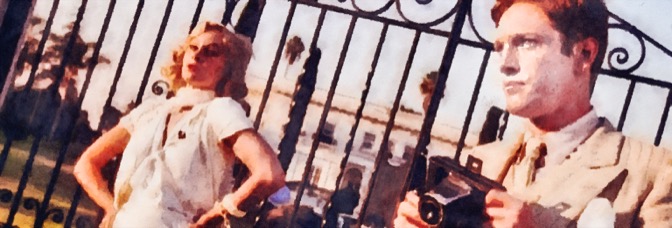
The Day of the Locust is a gentle film, at least in terms of Schlesinger’s direction, Conrad L. Hall’s cinematography and John Barry’s score. The film’s softly lit but with a whole lot of focus. Schlesinger wants to make sure the audience gets to see every part of the actors’ performances. He also wants the…
-

Midnight is a rather smart film. Screenwriters Charles Brackett and Billy Wilder are able to do a whole bunch of plot twists–always through comedic means–because of how they’ve got the film structured. The film opens with Claudette Colbert arriving in Paris, penniless. Taxi driver Don Ameche takes pity on her and falls for her. There’s…
-
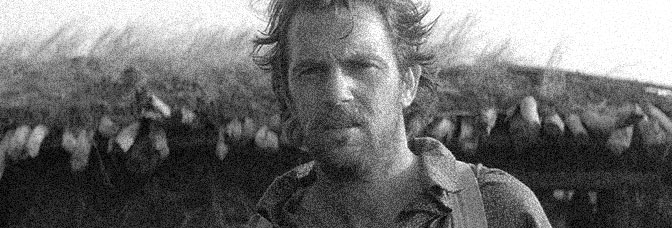
From the start, director Costner embrues Dances with Wolves with melancholic tragedy. Even as Costner’s protagonist–a Union soldier reassigned to the frontier–travels west, seeing startling natural beauty, which Costner and cinematographer Dean Semler visualize carefully, enthusiastically, perfectly, there’s dread. Most of it comes from John Barry’s lush and haunting score, but Costner does make sure…
-

Sullivan’s Travels is almost impossibly well-constructed. Director Sturges, editor Stuart Gilmore and photographer John F. Seitz go through various, entirely different narrative devices and do them all perfectly. Whether it’s a high speed chase, Veronica Lake having a screwball comedy sequence on the studio backlot, Lake and lead Joel McCrea having soul-searching conversations, McCrea and…
-

Whatever his faults (and faulty films), Robert Altman never bought into what anyone said about him–not his critics, not his audience. The Player is an overtly hostile outing. Altman never had much nice to say about the film, as I recall, but he doesn’t try to say nice things with the film itself. He makes…
-

The Third Man runs just over a hundred minutes and takes place over a few days. It’s never clear just how many; director Reed and writer Graham Greene are both resistant to the idea of making the film too procedural. Greene’s scenes, even when they’re expository, still strive against lucidity. Everyone in the film is…
-
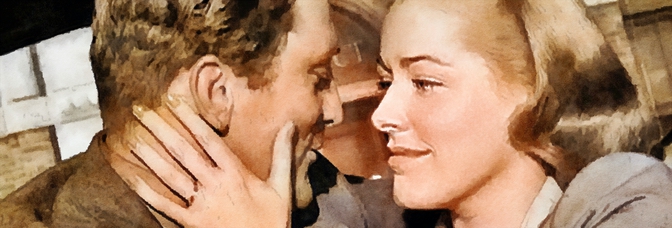
Detective Story, the film, is William Wyler’s “production” of Sidney Kingsley’s play of the same title. Philip Yordan and Robert Wyler adapted the play. Wyler directed and produced the film. It is a stage adaptation and proud of it. The phrasing above is directly adapted from how the film opens and credits Wyler and Kingsley…
-

Butch Cassidy and the Sundance Kid opens with a sepia-toned silent film newsreel. It’s exposition, but also contrast. The silent images of a daring train robbery distract from reading the film’s accompanying opening titles. When the film itself starts, it’s just as sepia-toned. Only it’s Conrad Hall and he’s able to suggest the lush, denied…
-

The least violent part of Reservoir Dogs is the bloodiest. One of the characters is in a pool of blood, slipping on it as he delivers his dialogue. Director Tarantino finds a moment of Shakespearian tragedy and builds a film to it. He uses stylish ultra-violence, Dogs is visceral with the blood, but the action…
-

Max Steiner does the music for Caged, which is strange to think about because Caged barely has any music. Director Cromwell instead emphasizes the silence, especially as the film opens. Right after the opening credits, which do have music, Caged gets very quiet. “Silence” reads all the walls in the women’s prison where protagonist Eleanor…
 The Stop Button