The Stop Button
blogging by Andrew Wickliffe
Category: ★★★★
-

Outstanding, sometimes comedic, often tragic look at the lives of a group of laid off Spanish ship-builders, four years after the yard closes, as they contend with economic depression, alcoholic depression, unemployment, and the resulting martial strife. Truly great script (co-written by director de Aranoa and Ignacio del Moral), excellent performances from principals Javier Bardem,…
-

Singular Shakespeare adaptation from Welles. Based on Shakespeare’s HENRY plays, focusing on the Falstaff character (played by Welles), the film tracks the boisterous relationship between Falstaff and Prince Hal (someday Henry V), played by Keith Baxter. Henry IV (John Gielgud) strongly disapproves of the friendship, which distracts Baxter from warring like pretender-to-the-throne Norman Rodway. Truly…
-
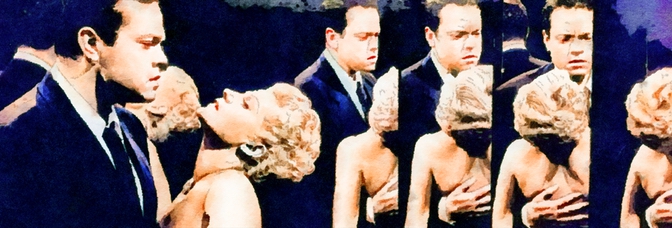
Singular film noir from Welles. It’s a family affair, with Welles writing, directing, acting and then wife Rita Hayworth playing the female lead. She’s the gorgeous, married rich woman, he’s the able-bodied Irish sailor. The film’s peculiarly, intentionally told tale of lust, hatred, and murder. Everett Sloane’s phenomenal as Welles’s boss and Hayworth’s husband. Some…
-

Smart, fun, and funny political satire slash history lesson about the rise of Machine politician Brian Donlevy, charting his path from Depression-ravaged forgotten man to thug to politician to lover to fighter. Great performances from everyone involved–Donlevy’s got the least flashy part but he holds the whole thing up. Muriel Angelus is great as his…
-

Singular, sweaty modern noir about charismatic, hunky, and dim lawyer William Hurt having an affair with trophy wife Kathleen Turner much to the detriment of his career and relationship with closest friends, D.A. Ted Danson and cop J.A. Preston. It gets even more complicated after Hurt meets her husband–a perfectly icky Richard Crenna–and working on…
-

Outstanding period drama about unmarried heiress Olivia de Havilland’s courtship by charming but poor Montgomery Clift and the repercussions for de Havilland’s relationship with her father, Ralph Richardson. Small story grandly told; Ruth and Augustus Goetz adapted their own play (which was adapted from Henry James’s Washington Square). Fantastic performances from everyone involved, stellar direction…
-

Pitch black comedy about TV media personality-obsessed, burgeoning sociopath Nicole Kidman’s rise to fame and the damage she wreaks along the way. Director Van Sant and screenwriter Buck Henry (adapted the Joyce Maynard novel) embrace the story’s lack of potential for not-uneasy laughs and go for every awkward, creepy laugh they can get. Great performances,…
-

When documentary filmmaker Louis Theroux can’t get the Church of Scientology to participate in a film about the Church of Scientology, he enlists various ex-communicated Church members to help him cast actors as Church officials in an attempt to glean some insight into the mysterious organization. Sometimes funny, sometimes terrifying, always thoughtfully executed and constructed.…
-

Singular character study about eighth grader Elsie Fisher’s last week before graduation. It’s all from Fisher’s (eighth grade) point of view, with writer-director Burnham never breaking away except for the occasional concerned or bewildered moment for single parent Josh Hamilton. Adding to the narrative style are Fisher’s YouTube videos, which provide a stunning contrast. Amazing…
-

Stalag 17 opens with narration explaining the film isn’t going to be like those other WWII pictures, where the soldiers are superhuman and the film bleeds patriotism. No, Stalag 17 is going to be something different—first off, it takes place not on the battlefield, but a German prison camp. Through coincidence, the camp is entirely…
-

Crooklyn is a series of memories. They’re mostly the main character’s memories—and if they’re not, they’re definitely from her perception. The memories start in the spring and go through the summer. Director Lee and his cowriters—and siblings (Crooklyn is semi-autobiographical) Joie Lee and Cinqué Lee frequently change the pace of the memories. Some are long…
-

2046 is a very strange sequel. Because it’s most definitely a sequel to In the Mood for Love. Tony Chiu-Wai Leung and Lam Siu Ping are playing the same characters, a few years after that film. But the way writer and director Wong deals with the previous film and its events… he intentionally… well, I’m…
-

Chungking Express has two parts. First part is lonely young plainclothes cop Kaneshiro Takeshi counting down the days to his birthday, which is also thirty days since his girlfriend of five years dumped him. Simultaneously, sort of middle person drug trafficker Brigitte Lin loses her latest batch of mules (once they’re loaded up with the…
-

The first hour of Mikey and Nicky is trying to decide if you’re going to like either of them. Because they don’t deserve sympathy, it’s just whether you’re going to like them. It’s possible to be sympathetic to Peter Falk (Mikey) while still liking John Cassavettes (Nicky). The movie runs two hours, there’s maybe fifteen…
-

After setting up Goldie Hawn and William Atherton as the protagonists, Sugarland Express takes about an hour to get back to them. Hawn and Atherton have an amazing setup–he’s about to get out of prison and has been transferred to pre-release. Hawn comes to visiting day but to break him out. She’s just gotten out…
-

Most of Raging Bull is about boxer Jake La Motta’s quest for the middleweight championship belt and takes place in the forties. The film opens with La Motta (Robert De Niro) in the sixties–out-of-shape, nose disfigured from the boxing; it’s a brief introduction then a fast cut to De Niro in shape and boxing in…
-

There are three different things going on throughout The Buddy Holly Story. Well, more than three but there are the three big different things. There’s Robert Gittler’s screenplay, which has one narrative gesture for most of the film. There’s Gary Busey’s lead performance, which is resolute in both its sincerity and its anti-inscrutability. And there’s…
-

Who’s Afraid of Virginia Woolf? opens with this gentle, lovely music from Alex North. It’s night, it’s a university campus, a couple is walking silently as the credits roll; the music’s beautiful. Then the couple–Elizabeth Taylor and Richard Burton–get home. And pretty soon they start yelling at each other. And they don’t stop until the…
-

High Noon is a film all about courage and cowardice, so it’s appropriate the film starts with the most courageous thing it’s ever going to do and it does a few. It commits to its theme song. Not a piece of music from Dimitri Tiomkin, but a country song (written by Tiomkin, lyrics by Ned…
-

The Life and Death of Colonel Blimp runs two and three-quarters hours and takes place over forty years. The former’s passage is sublime, the latter’s is subtle. Directors Powell and Pressburger bookend the film in the present, then flashback. The lead at the start of the film is James McKechnie. He’s a lieutenant who gets…
-

The first forty-five minutes of Only Angels Have Wings is mostly continual present action. Jean Arthur arrives in a South American port town, looking around–followed by two possible ne’er-do-wells (Allyn Joslyn and Noah Beery Jr.)–and the film tracks her experience. Great direction from Hawks, beautiful cinematography from Joseph Walker. Pretty soon she discovers they’re not…
-

A lot goes unspoken in The Big Sleep. It’s very much set in a wartime Los Angeles, but there’s never much said about wartime conditions or Los Angeles. When private detective Humphrey Bogart goes around the city, investigating, he’s only ever encountering women (beautiful women at that, because director Hawks’s Los Angeles is solely populated…
-
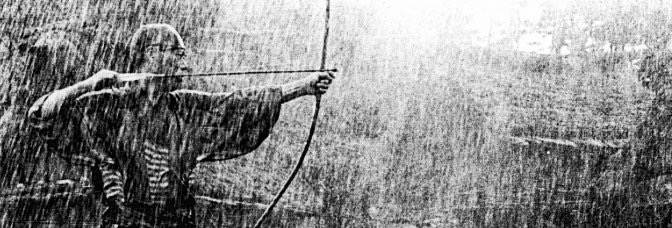
Seven Samurai is about a farming village, under imminent threat of bandits raiding and stealing their crop–and possibly doing much worse–who decides to hire samurai to defend them. They send four men–Fujiwara Kamatari, Kosugi Yoshio, Tsuchiya Yoshio, and Hidari Bokuzen–to town to hire the samurai. They can’t pay them, but they can feed them. The…
-
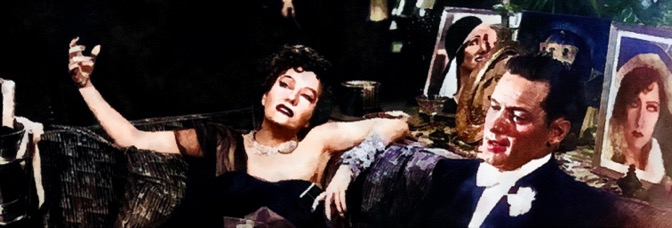
The third act of Sunset Boulevard just gets darker and darker. The film digs down into one level, then finds another, then another, then maybe even another. Director Wilder and co-writers Charles Brackett and D.M. Marshman Jr. find a way to fully condemn the film’s setting–Hollywood, with Paramount Pictures (Sunset’s producer) being the generalized stand-in–while…
-
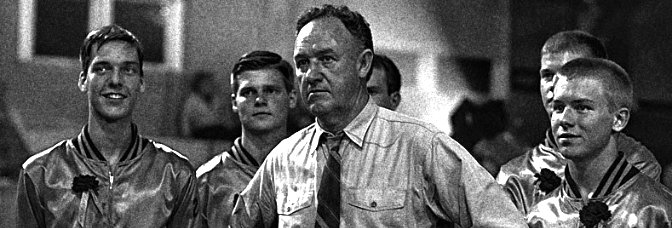
Hoosiers rouses. It rouses through a perfectly measured combination of narrative, editing, composition and photography, and music. In that order, least to greatest. There’s no way to discount Jerry Goldsmith’s score and the importance of his music during the basketball game montages. They’d be beautifully cut and vividly photographed, but they wouldn’t rouse without that…
-
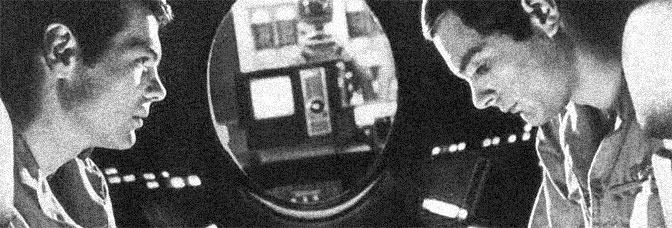
Phenomenal science fiction epic chronicling humanity’s (sometimes unknown) interactions with a mysterious interstellar slab; it shows up at a couple salient historical points. The second, in the title year, kicks off a space exploration mission, which then becomes backdrop to ruminations about the human condition. A technical pinnacle–direction, editing, photography, special effects–and a singular performance…
-

If it weren’t for the first half of the film, The Best Years of Our Lives would be a series of vingettes. The film runs almost three hours. Almost exactly the first half is set over two days. The remainder is set over a couple months. Director Wyler and screenwriter Robert E. Sherwood don’t really…
-

Double Indemnity is mostly a character study. There’s the noir framing device–wounded insurance salesman Fred MacMurray stumbling into his office and recording his confession on a dictaphone. Turns out he met a woman and things didn’t work out. MacMurray narrates the entire film. Occasionally the action returns to him sitting in the office, bleeding out.…
-
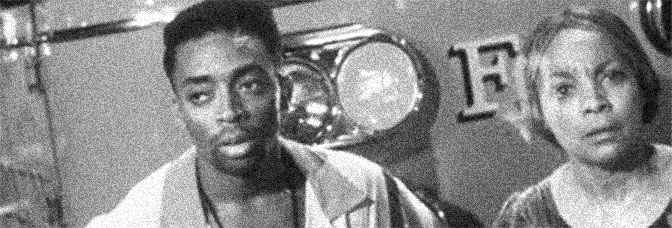
There are no clocks in Do the Right Thing. The film takes place over a twenty-four hour period; all the action is on one block, most of the characters live on the block. It’s a Saturday. Some people are working, some people aren’t. It’s a very hot day. And for the first ninety minutes of…
-
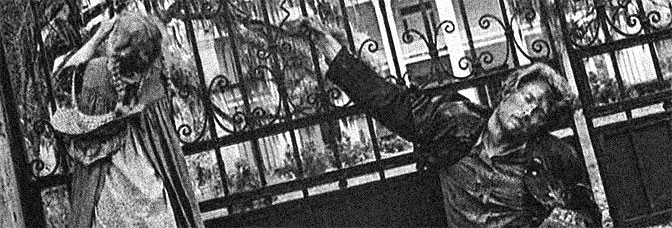
While The Beguiled is a thriller, the film keeps the thrills exceptionally grounded. The film’s set during the Civil War, with wounded Yankee sniper Clint Eastwood taking refuge at a girls school in Confederate territory. The school is quite literally set aside from the war. The war is outside the gates and everyone wants to…
 The Stop Button