The Stop Button
blogging by Andrew Wickliffe
Category: ★★★★
-
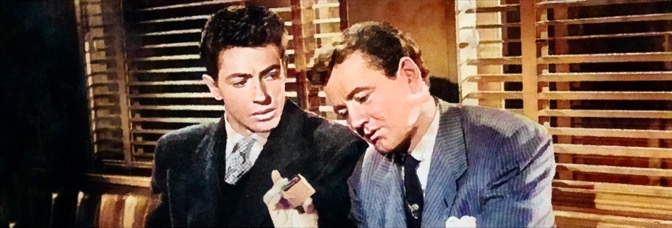
Strangers on a Train is many things, but it’s principally an action thriller. Director Hitchcock never quite ignores any of its other aspects; he’s just most enthusiastic about the action he and editor William H. Ziegler execute. For example, the third act is entirely action set pieces, one to another, with an occasional bit of…
-

Blow-Up is a day in the life picture. It opens with protagonist David Hemmings on his way out of a flophouse; he’s not a tramp; he’s a wonder kid fashion photographer who’s been undercover all night to snap pics. The film reveals all those details gradually. It takes until about halfway through the picture to…
-

During The Element of Crime, it never seems like the mystery will be particularly compelling. The film and the detective’s investigation are compelling, but the mystery itself seems rather pat. A serial killer has been targeting young girls selling lotto tickets, earning the moniker the “Lotto Murderer,” and the police are stumped. So they bring…
-

The first act of Cabaret is about introducing British guy Michael York to Weimar-era Berlin and to the life and times of his neighbor Liza Minnelli. Minnelli’s an American ex-pat; she’s landed in a cabaret and is trying to sing, dance, and sleep her way into movies. York’s there to teach English and get some…
-
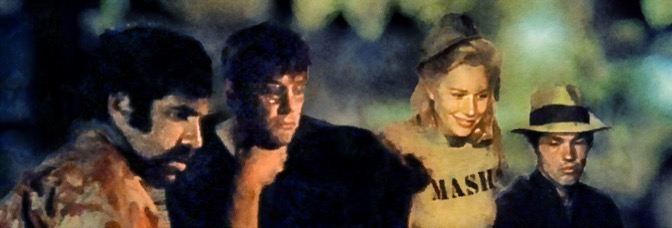
MASH is timelessly white liberal. There’s even a lovable Southerner (Tom Skerritt) who knows in that science way Black folks are just folks, but he still wants to be a dick about it. And his white male Northeastern elitist friends, Donald Sutherland and Elliot Gould, are totally fine with that bigotry because, you know, it’s…
-

Lone Star is Texas Gothic. There’s nowhere else the story plays the same way except a border town, at no time other than when it does; it’s all about the sins of the mothers and fathers playing out. Actual sins, imagined sins, hidden sins. It’s about heroes and villains and how they’re the same thing.…
-

From the start, Passing Strange is a spectacular filming and presentation of a stage production. Lee’s direction, Barry Alexander Brown’s editing, Matthew Libatique’s photography, they’re all great from go. Lee and Libatique have highlights throughout—and Brown’s cutting excels during the busiest sections—but it’s clear Strange will look great no matter the content. Of course, Lee…
-

I’m late on BlacKkKlansman. It plays a little differently in 2021 versus 2018 (or even 2019), because now there’s no difference in the rhetoric of the seventies racist garbage and today’s Republicans. The film opens with Alec Baldwin playing the host of a KKK newsreel and doing multiple takes as to take the racism up…
-

Psycho is a masterpiece of color. After forty joyfully plodding minutes of Janet Leigh going from fetching spinster in a torrid lunch hour romance to grand larcenist in precise black and white (and then another few minute as she moves to close that character arc), director Hitchcock and Psycho put Leigh in the color of…
-

All About Eve is incredibly ambitious work from writer and director Mankiewicz. From the first scene, from the epic Alfred Newman score over the opening titles (which are just the standard late forties, early fifties Fox title cards), it’s clear All About Eve is going for something. But it takes over an hour to even…
-
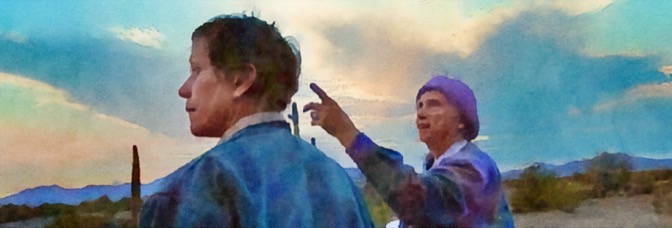
Nomadland becomes even more of an achievement when you find out the supporting cast is entirely amateur. The film’s a character study of lead Frances McDormand as she adjusts to her life as a modern nomad, traveling the country in her van (where she also lives), working seasonal jobs, and coming across a variety of…
-
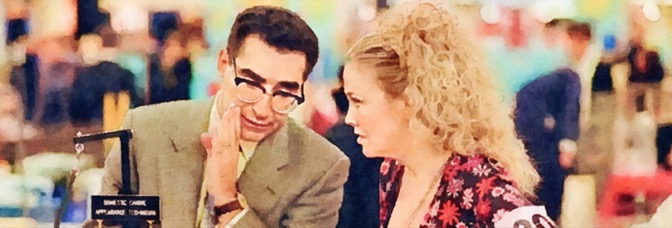
Best in Show is a masterpiece of editing. Guest’s direction is spectacular as well—the way he creates space for the performances—but it’s all about how Guest and editor Robert Leighton construct the narrative. Even in the second half, when Best in Show becomes a singular tour de force of buffoonery from Fred Willard, it’s all…
-
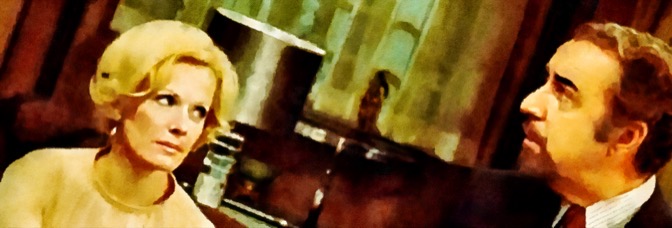
Buñuel arranges The Discreet Charm of the Bourgeoisie as a series of vignettes. Occasionally there will be a surreal bridging device—the cast walking in search of a meal on a highway in the country—sometimes it will turn out to be a dream, sometimes it will be another layer (a narrated flashback, a dream-in-a-dream), sometimes it…
-

The Green Mile takes place in a world where racism wasn’t really a big problem in 1930s Mississippi—not even grieving father Nicholas Sadler is going to say something racist to the Black convicted murderer of his daughters, Michael Clarke Duncan—but it also takes place in a world where the Christian God is real so… I…
-

As intentional as Kazan gets with his direction of James Dean, he’s orders of magnitude more intentional on Julie Harris. Harris is top-billed and the natural protagonist, but Dean’s a supernova. He’s the lead, he’s the star, he’s dynamite, a press agent’s dream. Only he’s got a really quiet part for most of the movie;…
-

We don’t see John Dall court Peggy Cummins in Gun Crazy. We get to see them meet cute when Dall—back home after the Army (and reform school before the service)—and his pals go to carnival and see Cummins’s shootist act. Dall was in reform school for breaking into a store to steal a pistol and…
-

Smack-dab in the middle of The Informer is a romance between IRA commander Preston Foster and his gal, Heather Angel, sister to an IRA man (Wallace Ford). Foster and Angel steal moments together on one fateful night, tragic circumstances giving them unexpected time with one another, but those same circumstances sort of foreshadowing their very…
-

Until the action-packed last thirty minutes, Stagecoach is a class drama. A group of strangers and acquaintances are in a stagecoach, traveling West, post-Civil War. It takes fifteen minutes at the start of the film to get them in the coach, with some of the time spent on establishing the characters (and why they’re traveling),…
-
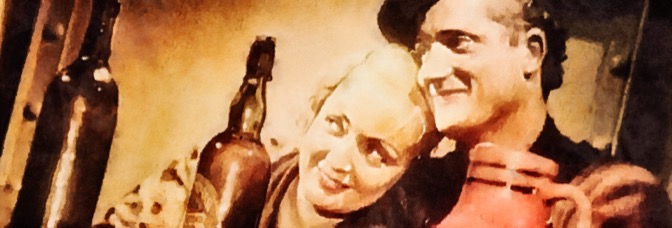
L’Atalante begins with a wedding procession; village girl Dita Parlo has married commercial barge captain Jean Dasté and is going off to live with him on the barge. The wedding guests drop all these details through exposition—we’re not privy to the newlyweds’ conversations as they walk through the village to the barge. Juxtaposed, first mate…
-

There are a lot of great shots in Destry Rides Again, with director Marshall finding a lot of raw human emotion in a comedic Western; it starts with opening titles, which are a long tracking shot introducing the setting—the town of Bottleneck. The tracking shot is at night (cinematographer Hal Mohr’s black and white photography…
-

Mr. Smith Goes to Washington runs two hours and nine minutes, with the last thirty minutes and change giving star (but second-billed) Jimmy Stewart a big, long scene; sure, it’s intercut with various asides but as far as Mr. Smith Stewart is concerned, it’s a single long scene. Stewart’s had some significant scenes before, but…
-

In the third act of Notorious, director Hitchcock and screenwriter Ben Hecht (who had some uncredited and quite exquisite help) figure out a way to get maximal drama out of a rather mundane situation. Well, mundane as far as the possibilities of American agents in Rio de Janeiro (with the permission of the government) trying…
-

It’s an hour into The Hustler before the film offers any real information about protagonist Paul Newman. We’ve seen Newman and mentor slash manager Myron McCormick pool hustle their way across the North American continent, getting Newman to New York City so he can play the best pool player in the world, Minnesota Fats (Jackie…
-

There are few secrets in All That Jazz; the film immediately forecasts where it’s going, with clear shots of star Roy Scheider in the hospital amid the other quickly cut montage sequences. But these are flash forwards, as opposed to the present action and then we’re seeing flashback. Because we’re actually not even seeing “reality”…
-

The first half of Barry Lyndon, very nicely delineated on screen with a title card and then an intermission, is a black comedy. The second half is a tragedy. The epilogue explicitly reconciles the two, but there’s also Michael Hordern’s narration, which does the most expository work of anything in the picture. For the most…
-
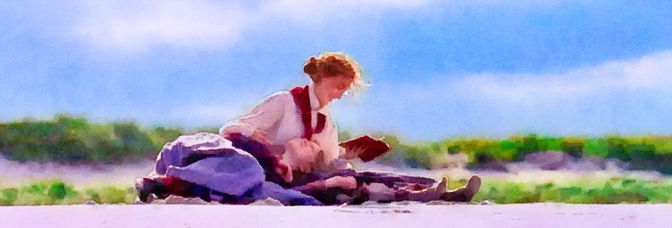
Little Women has two parallel timelines. There’s the present, starting in post-Civil War New York City with teacher and pulp writer Saoirse Ronan living in boarding house (where she also teaches). Then it flashes back to Ronan’s life seven years earlier, at home in rural Massachusetts; she’s the second oldest of four sisters; oldest is…
-

The disconcerting part of The Irishman’s actually never-ending CGI isn’t the aging and de-aging, it’s star Robert De Niro’s creepy blue eyes. For the first half hour of the (three and a half hour runtime), I was trying to get used to De Niro’s CGI… makeup, but kept having problems with it, which didn’t make…
-

What’s so incredible about A Man for All Seasons is how big director Zinnemann makes it while keeping it small while keeping it big. The settings are big—palaces, estates, and so on—but Zinnemann keeps the set pieces small. He and cinematographer Ted Moore will do big establishing shots, but only after they’ve gotten into the…
-

Singular character study about reluctant but ace Korean War flier William Holden and the people around him. The film toggles between Holden, devoted and uninformed wife Grace Kelly, and admiral Fredric March, who’s taken an interest in Holden’s career. Rambunctious helicopter rescue pilot Mickey Rooney also figures in. Great acting, direction, writing (Valentine Davies adapting…
-
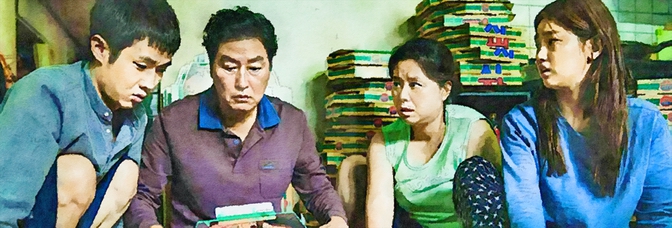
Outstanding black comedy about a poor family insinuating themselves into the lives (but mostly house) of a wealthy one. Director Bong and cowriter Han Jin-won don’t overtly emphasize the clash, rather focus on how the everyone’s relative naïveté exacerbates the clash (and rift) between classes. Great performances–especially Jo Yeo-jeong as the rich mom and Song…
 The Stop Button