Category: ★★★★
-
Talking about Die Hard is complicated for lots of reasons. Besides Aliens, I think it’s the best popular action film ever made and, given when it came out, it’s very familiar. It shouldn’t be full of surprises and, in many ways, is not (though Theo and Karl having a bet on Takagi is something new…
-
There’s something untranslatable about the last line of a novel. Even though maybe it shouldn’t, it essentially sums up everything–not just the scene or the story or the characters, but the reader’s experience as well… (whether the writer’s experience of writing the book is summed up in the line is, obviously, immaterial). With No Country…
-
It’s hilarious, of course, Scorsese finally won an Oscar for the film least like his work. The Departed is the really serious movie Mel Gibson and Richard Donner never got around to making in the late 1990s… but Scorsese–I don’t know if Scorsese adds something to the mix or if he just knew how to…
-

I don’t know where to start with Close Encounters of the Third Kind. The jokey open would be something about listing the defects and not having any, but then flipping it and not being able to list everything Spielberg does right because his successes are so difficult to work out, particularly in to an easy-to-read,…
-

As Our Man in Havana opened, I couldn’t help thinking of Touch of Evil. Reed uses a cock-eyed angle a few times throughout the film and it looks like Evil. The music doesn’t hurt either. Except, I hadn’t realized it was Reed–the opening titles start a few minutes in to the film–and then all I…
-
Twelve Monkeys is one of the more unhappy films. Unhappy films are difficult to pull off–The Godfather Part II is the finest example–but Monkeys does it. When I say unhappy, I don’t mean a sad ending or an unpleasing one or an unrewarding one. Not even a cynical or downbeat one. An unhappy film, if…
-

Thirty-nine years old when Wyatt Earp was released, all Kevin Costner needed to do to de-age himself twenty years was smile. During the young Earp days, Costner looks younger than costar Annabeth Gish, not to mention Linden Ashby (playing his younger brother). The extended version of Wyatt Earp clocks in at three and a half…
-
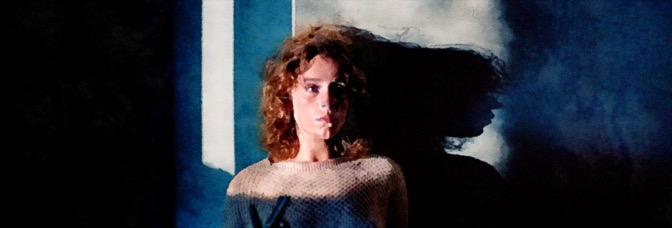
I’m pretty sure I saw the Blood Simple director’s cut twice in the theater. Seems like I did. The second time I helped a couple underage Coen fans get in, and I already knew the recut was a disappointment. I got the original cut from the UK, where it used to be available and might…
-
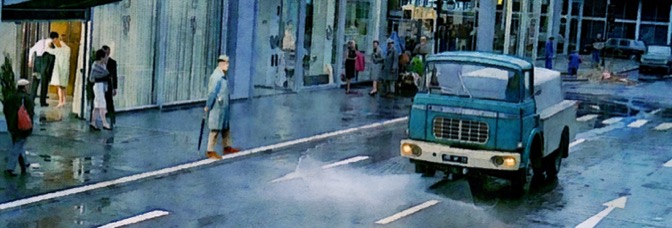
Play Time opens as an attack on modernity worthy of George Amberson Minafer, dealing with the personality-free office place populated by cubicles, to the lines of similarly dressed men on their ways home after work or the same type of men all getting into the same kind of car after their work day. There’s some…
-

Sunshine appears to be an amalgam of Alien, 2001 and Event Horizon (at least, if Event Horizon‘s previews adequately communicate the film’s content, not having seen it). There are Alien references abound, a handful of 2001 ones, and no Event Horizon ones I’m aware of… I imagine they’d try to hide those as well as…
-
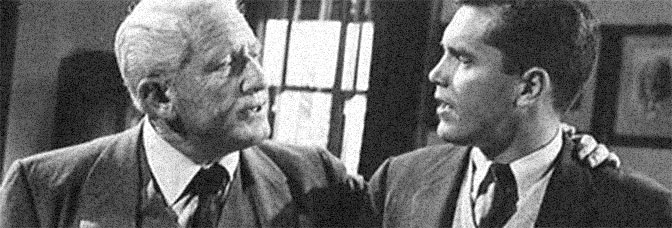
While the title refers to politics, The Last Hurrah also, unfortunately in some cases, provided to be the last hurrah of a number of fine actors as well. It’s a fitting–I can’t remember the word. It isn’t eulogy and tribute seems intentional. I don’t know if Ford knew he was making the last film like…
-

Glibly, I can say the most amazing thing The Queen does is humanize Tony Blair, seeing as he’s been decency’s biggest quisling in recent memory. But seeing a sympathetic portrayal of politician–one still in power when a film is released–is uncommon. Michael Sheen really creates a Tony Blair, certainly a Tony Blair one wishes the…
-

City of Hope is a raw John Sayles John Sayles movie. The camera follows the characters until it bumps into other characters, which is a simple, straightforward method, both a little more honest but also a little more amateurish. It introduces a gimmick into the film, which rarely does anything any good. It isn’t always…
-
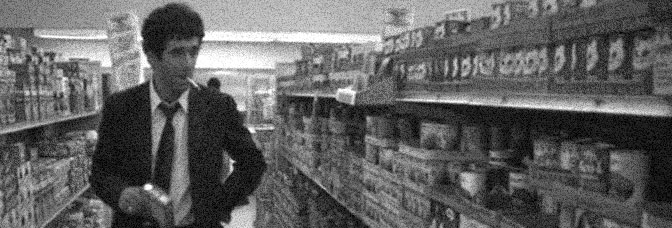
From the first scene in The Long Goodbye, it’s obvious Robert Altman was on to something with casting Elliott Gould as a character (Philip Marlowe) most famously personified by Humphrey Bogart. It isn’t just Gould not being Bogart and Gould not being a traditional noir detective in any way (Gould’s Marlowe is more concerned with…
-

Francis Ford Coppola created the modern film sequel with The Godfather: Part II. I wonder how people who’ve never seen the first one understand the second one. I was talking to a friend about it and he described it as the best filmic account of “the darkening of a man’s heart.” I hadn’t seen it…
-

Talking about The Godfather earnestly has got to be hard. Also talking about it not in relation to its sequel–which happens less and less these days, something I’m going to blame on the sequel discussion scene in Scream 2. It’s stunningly unsurprising. My most profound observations this viewing–and its been ten years or so, since…
-

The first half of Jaws–before the boat, when it becomes a different film–might be the most perfectly made film ever. The second half isn’t less perfectly made, but it’s its own thing, not easily comparable to any other film; that first half deals in traditional filmic standards and does so with singular success. Verna Fields’s…
-

After Ed Burns’s last couple films, I’d forgotten to expect something great from him. Looking for Kitty opens with a shot straight out of The Brothers McMullen, or at least a camera move straight out of it. Kitty also borrows a lot of the same music style and, watching the film, I kept remembering Burns’s…
-

For the first thirty or so minutes, Home for the Holidays is exactly the film its trailer presented. It’s a genial family comedy with a recognizable cast, a mix of standard casting choices like Charles Durning (Dad), semi-standards like Anne Bancroft (Mom), and unknown ones like Geraldine Chaplin (crazy aunt). Even when Robert Downey Jr.…
-

Watching The Lookout, I never really wondered how Joseph Gordon-Levitt was going to do. I wondered about Jeff Daniels, for instance, since Daniels spent the late 1990s working up his number of excellent performances only to fade from things I watch. Gordon-Levitt… looking over his IMDb, I’m not sure the guy’s ever been bad. He…
-

If Steven Spielberg used to be “the kid who’d never grow up,” I always figured David Fincher would always be “the disaffected teen who never grew up,” which is why Zodiac is so surprising. It’s a mature, thoughtful work, one I wouldn’t have even associated with Fincher if I hadn’t known. It’s calm and thoughtful,…
-
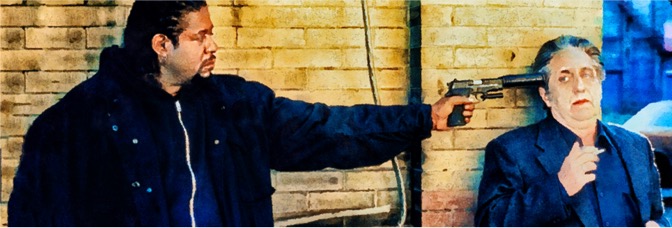
I’m having a hard time thinking of something to say about Ghost Dog. It’s perfect. Jarmusch doesn’t just do a bunch of good things or a bunch of right things. Every single thing he does is perfect. And Ghost Dog is perfect pretty early on too–in the first five or ten minutes, I was completely…
-
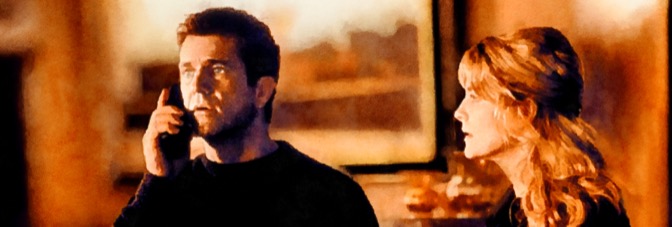
Ransom is not Richard Price’s only “big Hollywood” movie (and it’s probably not his most anomalous one either), but there’s something very particular about the film. You’re watching a mix of various 1990s genres–a Mel Gibson movie, a Richard Price cop movie, and a Ron Howard movie. Except not the current Oscar-bait Ron Howard, the…
-
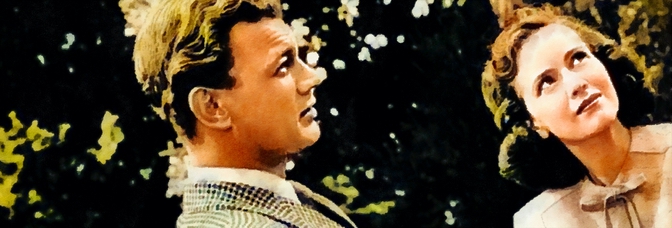
Shadow of a Doubt is a strange one–the presence of Teresa Wright and the small town atmosphere and the Gregg Toland-esque (but not Gregg Toland) cinematography make it feel like William Wyler, the presence of Joseph Cotten and the camera angles and intricate sound design make it feel like Welles (or at least an RKO…
-

I love how the end of Superman, with the spinning back of the earth, causes so much trouble for people. My fiancée–before Marlon Brando had even gotten the kid into the spaceship–made me stop the movie twice (I had to tell her to stop, though I love her line about Superman having just as many…
-
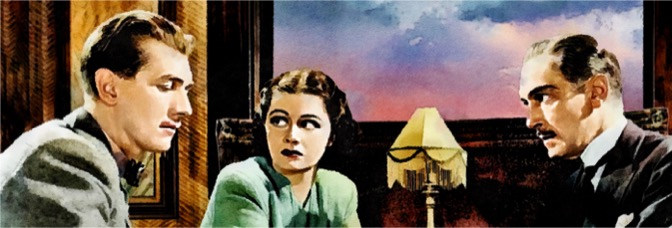
The Lady Vanishes might be the most fun Hitchcock ever lets an audience have with one of his films. Vanishes maintains a comedic sensibility throughout and for the most part, that sensibility overtakes the mystery element. Even the mystery element gives way to an action element–besides North by Northwest (which only barely qualifies) and Foreign…
-

Das Boot probably has–of serious films–the most number of alternate cuts released. Besides the two and a half hour theatrical version, there was a three and a half hour director’s cut (which I saw theatrically, so I suppose I only saw the original version on VHS), and finally, now, there’s the five hour “uncut version,”…
-

It’d be absurdly obvious to point out Letters from Iwo Jima is an anomaly in Clint Eastwood’s body of work. Outside, well, some Japanese directors in the 1950s and 1960s, it’d probably be an anomaly in anyone’s oeuvre. It reminds me of a dream movie–some movie I watch in a dream and wake up and…
-

When my friend saw Flags of Our Fathers and I asked him about it, he described it–I’m paraphrasing–as an unexciting four. Seeing it, I can fully understand. It’s a great film, but its greatness is somewhat inevitable and uninteresting. Clint’s way too good of a filmmaker at this point to turn in something less, especially…
-

If the original Godzilla (the Japanese version, before Raymond Burr) was about the United States as a nuclear power, The Host is a metaphor for the United States as a terrorist state. Or maybe it’s not a metaphor. It’s just about a situation involving Americans and they act with complete disregard for the safety of…
 The Stop Button