Category: ★★★★
-

I never know how to describe Ashes of Time. The first–and probably last–time I tried, I described it as a mix of Magnolia and Crouching Tiger, Hidden Dragon. As difficult as it is to describe, it’s got to be impossible to advertise–a character-based martial arts film, where fight scenes lack any visceral impact. Wong stylizes…
-
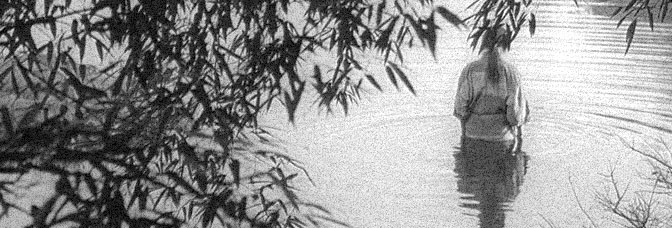
Sansho the Bailiff is one of cinema’s most depressing pieces. I don’t think, after about twenty minutes into the film, there’s a single positive moment. Good things happen–occasionally–but they only lead to bad things (or the revelation of bad things). The film opens with an epigraph, establishing the time period and some basics. It also…
-
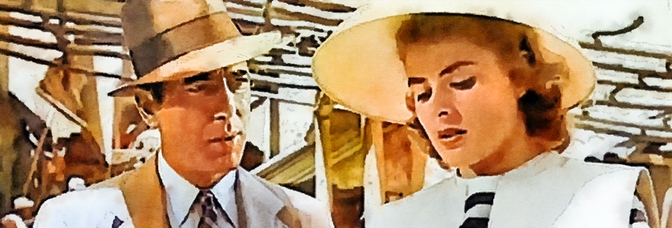
Every time I watch Casablanca–and I think it’s been a while since the last time, over ten years ago, when I saw it at Radio City–I marvel at the pacing. The film runs an hour and forty minutes and it doesn’t even seem like any time has passed until Bergman is in Bogart’s apartment. I…
-

The seventy-five minutes of The Ox-Bow Incident are some of the finest in cinema. The film is eventually a solemn examination of the human condition, quiet in its observations, with spare lines of dialogue of profound importance. But before this period in the film, which roughly lasts from twenty minutes in until the end, Ox-Bow…
-

From the first third of Design for Living, it’s impossible to think it might not be absolutely fantastic throughout. Eventually it does hit a dry period and it’s impossible to think it’s going to pull out of it. Then it does and it’s impossible to think… well, you get the idea. I don’t know why…
-

Canyon Passage starts out strange. Dana Andrews shows up in 1850s Portland (Oregon) and, after some character establishing, fends off someone breaking into his room. It got me thinking later if the unseen event leading up to the intruder is actually the film’s dramatic vehicle, the event setting off the action. Because Canyon Passage is…
-

Arsenic and Old Lace has to be one of the finest–if not the finest–film adaptations of a stage production. Nothing about the film, save the knowledge it’s from a play, suggests its theatrical origins… not the one night present action, not the one set. It’s an ideal motion picture comedy, down to what has to…
-

King Kong is a perfect film. I don’t think I’d realized before. It’s always hard to talk about films like Kong, influential standards of American cinema. I want to talk about how its structure still sets the tone for modern films–the gradual lead-in (it’s forty-some minutes before Kong shows up), the non-stop action of the…
-

I don’t think I’d ever realized M‘s technical importance. Lang creates quite a few filmmaking standards here, still in use today. Non-specific to genre, M features some brilliant off-screen dialogue work. It’s the earliest example (I’ve ever seen) of hearing a scene’s action while looking at something else. There’s also Lang’s approach to the sound.…
-
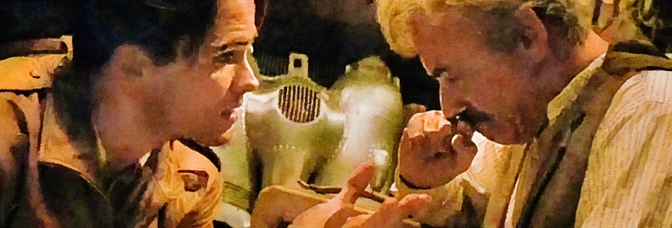
Joe Johnston never getting recognition for The Rocketeer astounds me. Johnston creates a perfect adventure film, a now neglected and abused genre. Additionally, Johnston never fetishizes the historical setting. The late 1930s, Nazis as villains setting is practically its own genre at this point (strange how after a half decade, there are so few choices…
-
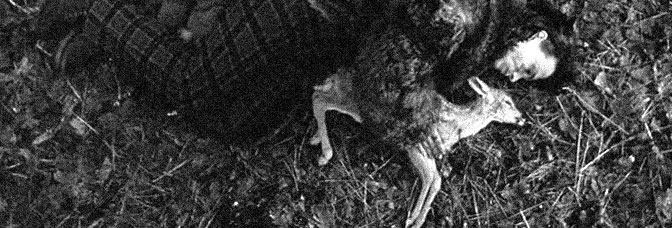
Dead Man is not a strange film. I haven’t seen it in ten years and I’ve probably seen the majority of the Westerns I’ve seen in that interim. So the opening, as Johnny Depp watches the familiar Western trappings pass from a train window, probably didn’t resonate on my last viewing. What Jarmusch doesn’t get…
-

I don’t know where to start. The most flippant place to start–the most colloquial–is with George Lucas… specifically, what happened to the George Lucas who made American Graffiti. But it’s not just Lucas. Gloria Katz and Willard Huyck didn’t go on to write anything close to Graffiti–the conversations in the film, the dialogue, is exceptional,…
-
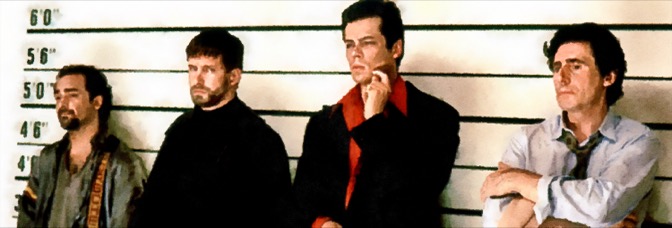
Seeing as how The Usual Suspects popularized the major twist ending–that contrivance having now plagued American cinema for the last dozen years–it’s interesting to see it again. I haven’t seen the film in years (probably ten, at least nine), but I remember the last time I watched it, I thought about what was true and…
-

August clocks in, with end credits, at eighty-four minutes. I didn’t know the running time going in, so I wasn’t thinking about it. I would have guessed, just based on the perceptive passage, around two hours. My wife, not being a fan, probably would say three and a half. Doing a good movie in ninety…
-

The last time I watched Manhunter (the first time I saw the director’s cut), my friend maintained the film’s superiority laid in the added scenes. The director’s cut mostly features more scenes concerning the effect of manhunting serial killers on William Petersen’s character. On this viewing, it’s clear the film’s greatness isn’t so simply assigned.…
-
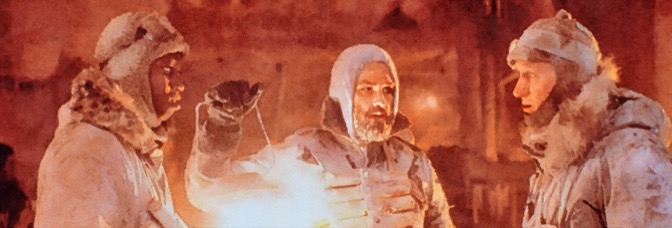
I always say John Carpenter needs to direct something else, something non-genre. A romantic comedy perhaps or a family drama. I guess it never occurred to me, but with The Thing, Carpenter is directing something else. It’s kind of too bad, his best film is the one–in some ways–least like his others. In The Thing,…
-

Don Siegel had an anecdote about the length of titles. He showed them to his boss, who kept asking for them to be longer, then showed them to the boss again, telling him each time he’d made the changes. In fact, he had not–his boss was simply familiar with the titles and couldn’t gauge the…
-

I was apprehensive about Redbelt–mostly due to the awkward trailers–but it was totally unfounded. The film’s story, Mamet’s narrative, resists being abbreviated or advertised. It’s all very gradual, very quiet, which each scene building on the one previous. It’s probably Mamet’s finest film as a director, his widescreen composition is wonderful–there’s this one shot where…
-
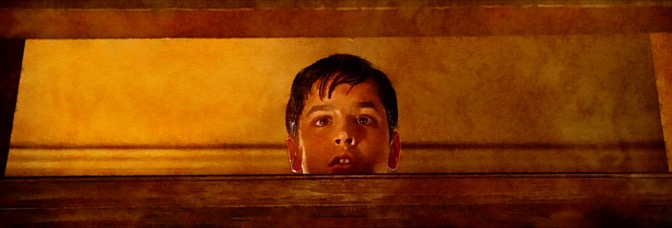
Two major things about Soderbergh’s approach to a memoir adaptation. They’re somewhat connected, so I might not manage to separate them out. King of the Hill has no frame, it has no narration. It has no context. It does not feel, at all, like a “true” story because there’s no attempt to classify itself as…
-

For a painfully brief period in the 1990s, Ron Howard was one of the best filmmakers working. It didn’t last. The Paper kicked off his run. Howard and the Koepp brothers (I can’t remember for sure, but I think Stephen worked at a newspaper) imbue the film with the traditional Hollywood newspaper movie idealism, but…
-
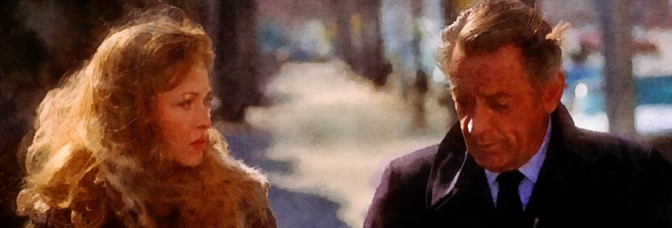
Network lost Oscars. It doesn’t really matter what it lost them to, because the absurdity of the Academy Awards is summed up in that one statement. Network lost Oscars. I’m not sure what shot is Sidney Lumet’s best in the film, because I’m remembering two of them from the last half. These aren’t necessarily the…
-
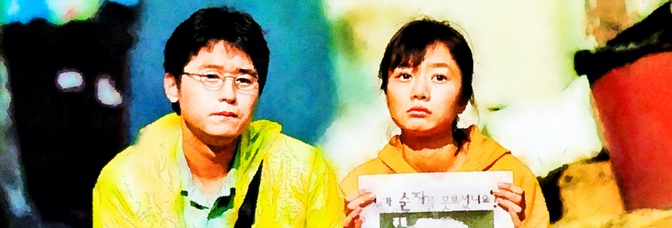
Bong’s first film is unique, not just of Korean cinema, but of most. It’s a mostly lyrical piece–lyrical in the storytelling sense, not the filmmaking (there are only a couple of stylized moments in the film)–juxtaposing Lee Sung-jae and Bae Du-na. Lee’s a grad student trying to become a professor, Bae’s an office assistant in…
-
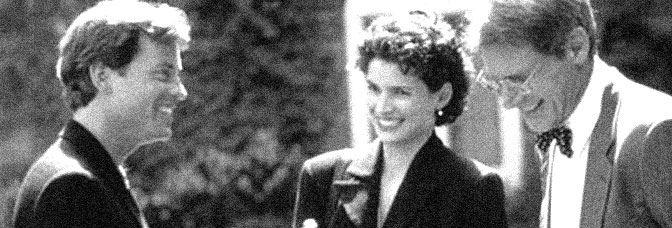
I remember the back of the laserdisc for Sabrina said something about how, going in to the film, one knows what’s going to happen, but the film’s about enjoying it happen. For a back of the disc blurb, it’s incredibly accurate. Sabrina is a joy from start to finish, mostly because Sydney Pollack has put…
-
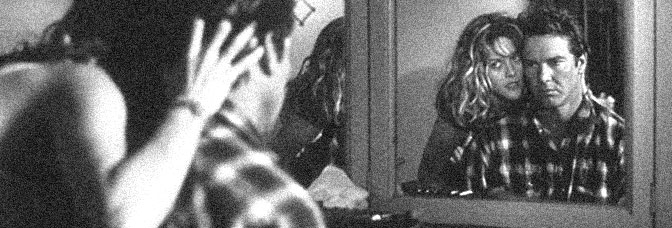
Dennis Quaid’s performance in Flesh and Bone is complicated. The character, the hints the film offers into him, is more complicated, but Quaid’s performance somehow encapsulates all those unknowns without defining them. The film has some really strange touching scenes, as Quaid’s character lets down the wall long enough to express himself. And the anguish…
-

Here’s a strange one. I just had to look to see where it fell in careers, Richard Brooks’s and Robert Taylor’s, because it’s… well, it’s something else. It’s sort of early in Brooks’s directing career, before he took off, and it’s at the very end of Taylor’s MGM contract. Taylor plays a villain in it.…
-
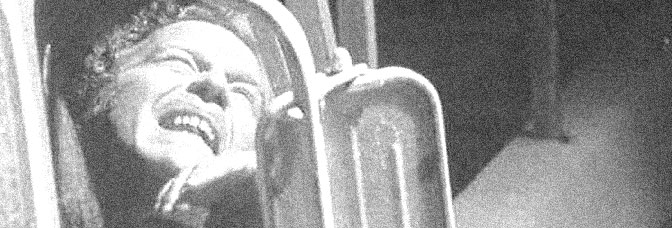
This version–now called ‘The Director’s Cut’–originally came out as ‘The Collector’s Edition’ maybe ten years ago (maybe less). The most striking thing about this cut is Dreyfuss’s insanity. In this version, he’s totally nuts… Spielberg edits back in (from the original, excised from the Special Edition) a couple significant scenes. First, showing off Roberts Blossom–one…
-
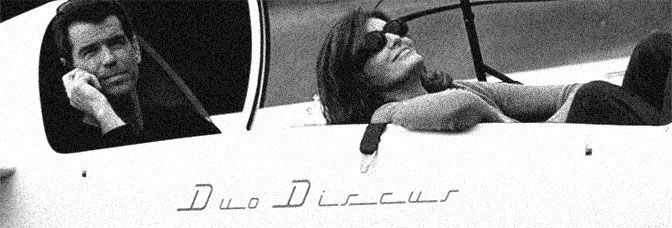
Every time I watch Thomas Crown, I wonder if there’s some magical explanation for all John McTiernan’s other films (except Die Hard, which is, too, singular). Because The Thomas Crown Affair, as I love saying, is the last great utterly mainstream film. But there’s something more… the tone of the film, the Bill Conti score,…
-

There’s something about A History of Violence from the first scene, something about the way the titles become part of the motel exterior. It’s a nice long tracking shot from Cronenberg, with a great (small part though) performance from Stephen McHattie. After the opening, Cronenberg spends a lot of time introducing Viggo Mortensen, Maria Bello…
-

George Clooney directs Good Night, and Good Luck with an absolute confidence. It’s Clooney’s second film, but he doesn’t just know how to make a restricted setting story (the film takes place in the CBS building, a bar, and two to three other locations) exciting… he also knows how to make an informative docudrama into…
-

I’m having trouble working up the enthusiasm for a Blade Runner post. Not because it isn’t a great film, but because I don’t really want to engage in this “Final Cut” business, which I guess I’m going to do anyway. I’ll get it out of the way… Ridley Scott’s “Final Cut” is, so far as…
 The Stop Button