Category: ★★★★
-
Insofar as it has a protagonist,Judgment at Nuremberg is the story of recently electorally defeated Maine judge Spencer Tracy. Tracy is the chief justice on a military tribunal hearing cases in the Nuremberg trials, the Allied attempt to hold the Germans accountable for their actions during World War II. Tracy's coming in towards the end…
-
The Fabulous Baker Boys opens with pseudo-protagonist Jeff Bridges saying goodbye to his latest cocktail waitress one-night stand (always his decision, never hers–Baker Boys is all about taking advantage of patriarchal privilege). Under the opening titles, he walks to work. Baker Boys takes place in Seattle and regularly features its skyline, but director Kloves is…
-
Rebecca opens with protagonist Joan Fontaine narrating, establishing the present action as a flashback—which is kind of important considering how much danger Fontaine will be in throughout. She’s got to make it since there’s the narration. Some of that danger is in Fontaine’s head. Or, at least, she sometimes apprehensive of the wrong person. Sort…
-
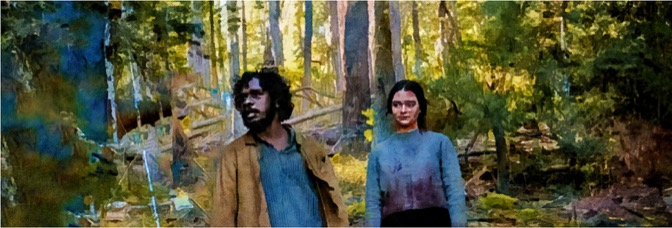
While The Nightingale never gets more brutal than in its first hour—it runs two and a quarter—it’s almost more hopeless with less viciousness. The film’s about how the British slaughtered the Aboriginal Australians. It’s about quite a bit more, but the historical context is Australia in the early nineteenth century when people could still buy…
-
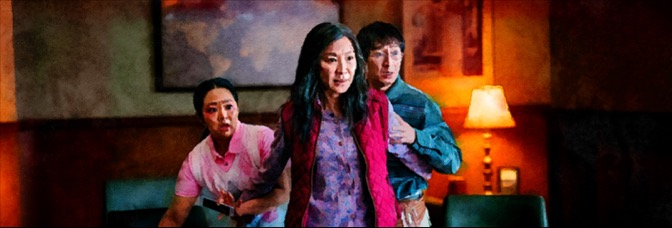
Quite appropriately, Everything Everywhere All at Once is all the things. At once. And more. The film’s a relatively simply told multiverse comic book action-comedy-family-drama-romance-horror story with time to do a traditional hero arc, then deconstruct it. The film gives stars Michelle Yeoh, Stephanie Hsu, and Ke Huy Quan constantly changing roles as we meet…
-
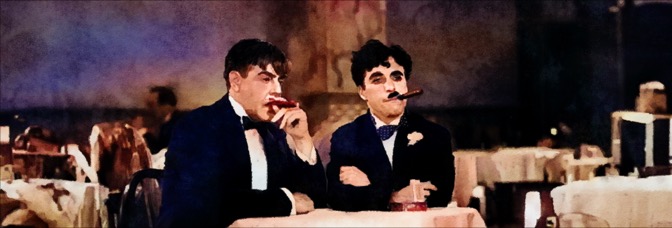
About halfway through City Lights, I realized most of the gags repeat. Especially when it’s Chaplin and his de facto sidekick, Harry Myers. But instead of making the bits seem rote, the repeat value just makes them funnier. There are some differences in how the jokes work, but not very much; Chaplin also lays into…
-
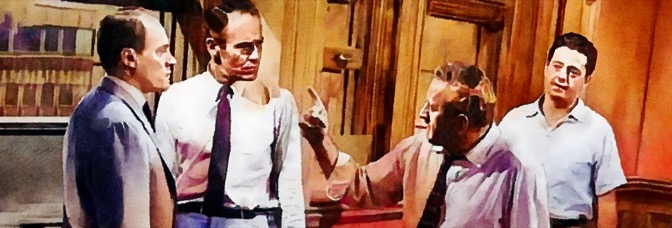
Director Lumet wrote at length about his compositional decisions for 12 Angry Men in his book about filmmaking, aptly titled Making Movies. The camera starts up high, looking down at the jury room and its jurors, then gradually moves down and in; by the third act, it’s in tight, low-angle close-ups. It’s beautiful, sublime work…
-
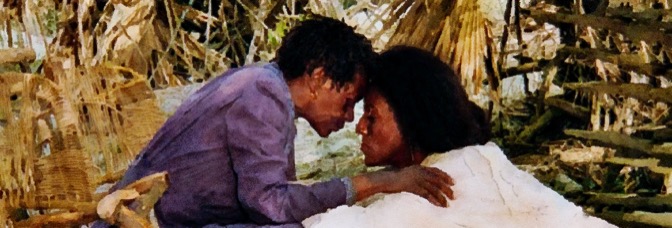
Daughters of the Dust is an epical story told lyrically. Set in 1902, the film tells the story about the time a specific Gullah family headed to the mainland and north into the twentieth century. It opens with Cheryl Lynn Bruce returning home to make the crossing, bringing along photographer Tommy Redmond Hicks to document…
-
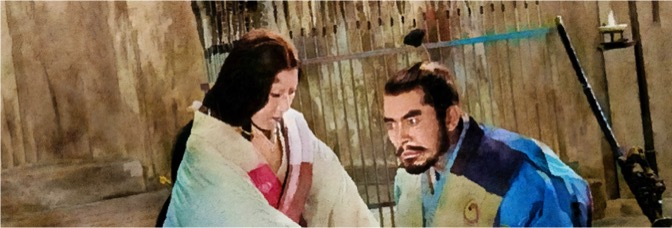
Co-producer, co-writer, director, and editor Kurosawa loves himself some Macbeth. Throne of Blood is Macbeth in feudal Japan, with Mifune Toshiro and Yamada Isuzu as the doomed couple. Kurosawa and his co-writers structure the film as a historical war epic, with modern-day bookends, and then fit Mifune and Yamada’s Macbeth into the war epic. But…
-

Killer of Sheep is a series of vignettes, usually connected with a sequence at the slaughterhouse (though not always slaughter, but sometimes, so be ready), always connected with a piece of music. Sometimes the music recalls a previous scene or musical selection, creating a narrative echo between the sequences. And even though Sheep is incredibly…
-
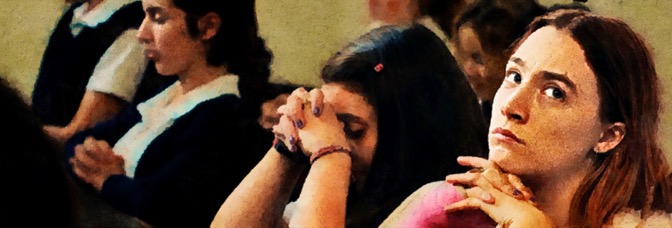
Lady Bird is a loving tribute to Sacramento, California, specifically growing up there as a teenager, from the perspective of a main character who hates Sacramento. Writer and director Gerwig opens the film with a travelogue of Sacramento streets and locations, a device she repeats sparingly (only significantly in the fantastic finale); Lady Bird is…
-
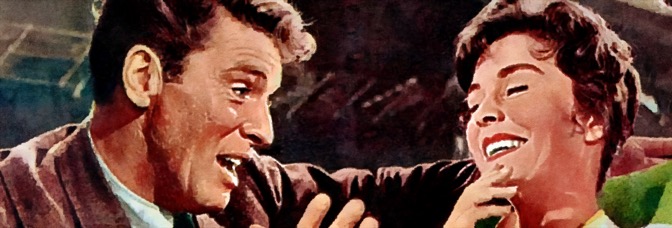
Elmer Gantry is all about possibilities. Possibilities for the plot, for the performances, for the film. Director (and screenwriter) Brooks watches the film along with the audience, specifically the performances. Everyone’s just waiting to see what Burt Lancaster, Jean Simmons, and Shirley Jones are going to do next. Sometimes, Brooks emphasizes the performance with quick…
-
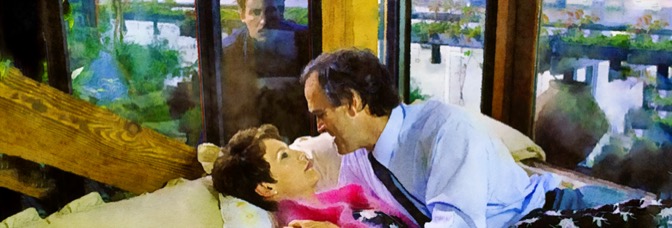
A Fish Called Wanda introduces each of its main characters during the opening titles, cutting from one actor to another, starting with screenwriter John Cleese. He’s a barrister. Then it’s Jamie Lee Curtis; she’s a vivacious American. Then Kevin Kline is a deadly but dim-witted American. Finally, Michael Palin. He loves animals, including his fish…
-
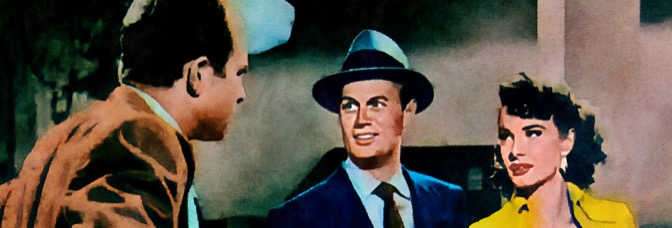
Pickup on South Street is not based on a novel; the opening titles have a story by credit for Dwight Taylor, with director Fuller getting the screenplay one. The film’s got a peculiar plotting and roving protagonist, plus some terrific monologues, and I was wondering if they were Fuller or someone else. They’re Fuller. Fuller…
-
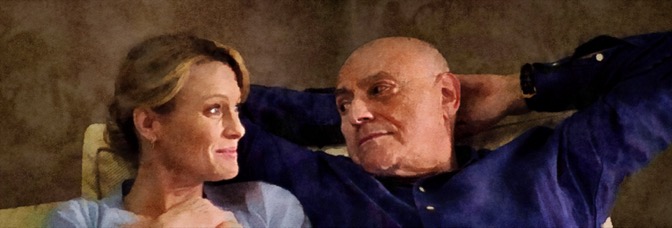
The Private Lives of Pippa Lee is a narrated character study. Protagonist Robin Wright is talking herself through her life while the film observes her, seeing where she’s gained the perspective of time and where she hasn’t. The film starts in the present, with Wright and husband Alan Arkin having just moved to a retirement…
-
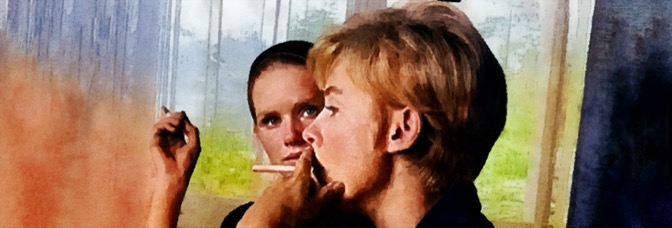
Persona begins with a series of unrelated, sometimes startling, sometimes disturbing images. It’s leader on the film reel, and it establishes the film’s narrative distance. We’re not just removed from the action; the action’s on display at multiple levels, including one involving a young boy, played by Jörgen Lindström, who provides bookends for the film.…
-
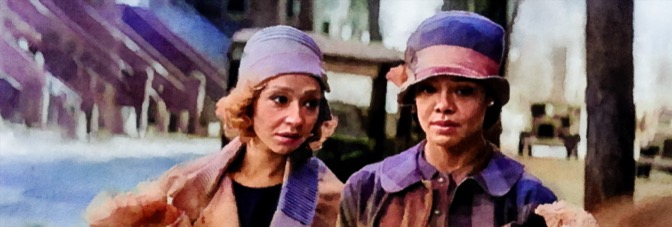
Passing is a genre-buster, which heavily contrasts the very strict mores the film’s subjects live within. The film is an occasional Southern Gothic (set in 1920s Harlem), occasional character study Hitchcock homage. Harlem Renaissance society lady Tessa Thompson has a peculiar day when shopping for her son’s birthday; the sometimes very shitty white folks just…
-
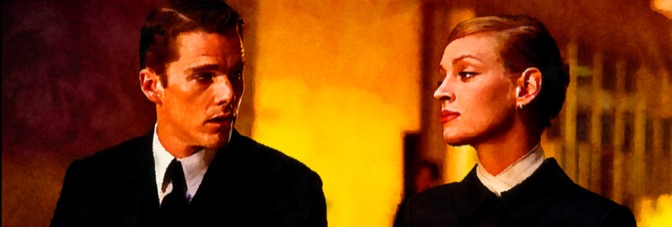
Gattaca is a science fiction triptych character study by way of film noir. And while the film’s a murder mystery, it only uses the film noir device—narration—for a non-mystery section of the film. The narration ends with the murder mystery, not coming back until the finale. It’s an absolutely fantastic structure from writer and director…
-
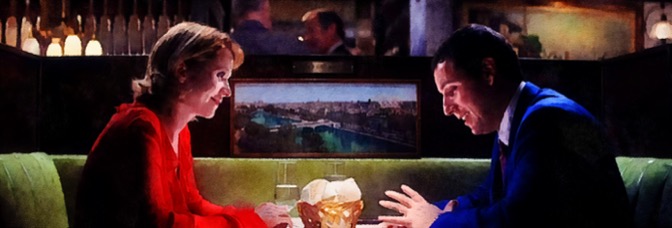
There are probably better movies with seven-minute end credits than Punch-Drunk Love but I doubt there are any where those seven-minute end credits are padded to give the film a more respectable run time. Punch-Drunk Love is an approximately eighty-eight-minute marathon where writer and director Anderson hones in on his protagonist, played by Adam Sandler,…
-
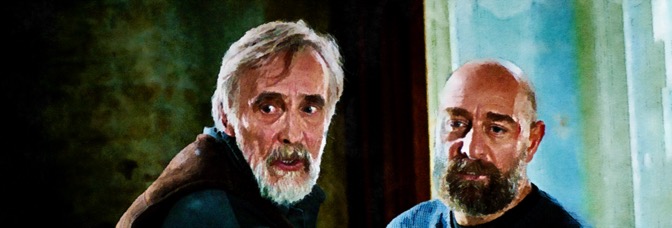
Tangerines has such a profoundly straightforward plot and limited cast I expected it to be a stage adaptation. It’s not; writer and director Urushadze just knows how to perturb character development without theatrics. The film’s about the War in Abkhazia, but its protagonist isn’t Georgian or Abkhaz, rather an Estonian. The film itself does a…
-

If Lenny has a single highlight scene, it’s at the end of the second act, when comedian Lenny Bruce (played by Dustin Hoffman) does a set on dope. The film’s got a fractured narrative, simultaneously showing posthumous interview clips with the people in his life—ex-wife Valerie Perrine, mom Jan Miner, and agent Stanley Beck—recounting Bruce’s…
-
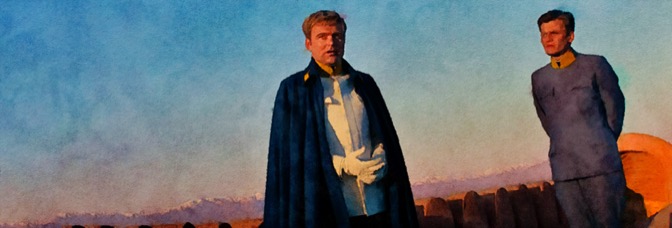
The Desert of the Tartars is a warless war epic. Set at a remote desert fort, a young officer (Jacques Perrin) discovers army life isn’t what he was expecting. The film opens with Perrin leaving home, ready for the great fortune awaiting him, only to learn he’s been assigned to the ass-end of nowhere. The…
-
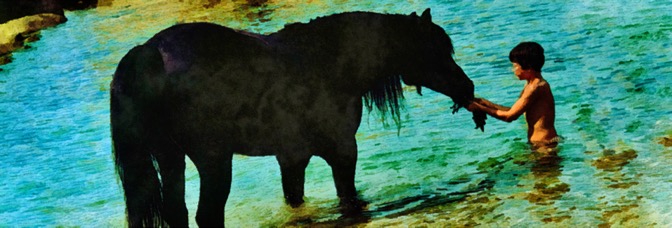
The Black Stallion is two separate, subsequent narratives. The filmmakers utilize two different but related styles for them. The first narrative, with 1940s tween Kelly Reno, shipwrecked on a desert island off the coast of North Africa with a wild Arabian stallion. The second is after Reno’s rescue when he and the stallion have to…
-
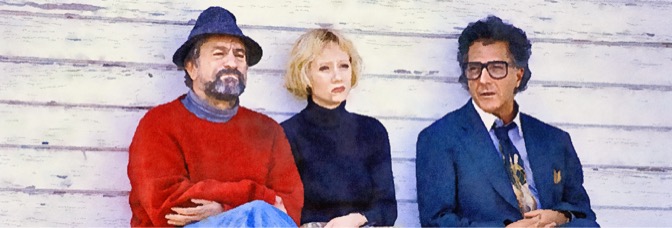
Wag the Dog is a relic from the unrevealed world. Though prescient enough to know sexual misconduct isn’t enough to derail a president from either U.S. political party. As an old—who saw it in the theater, probably opening day—it’s hard to imagine how it plays to someone who’s grown up with Republicans spewing lies and…
-
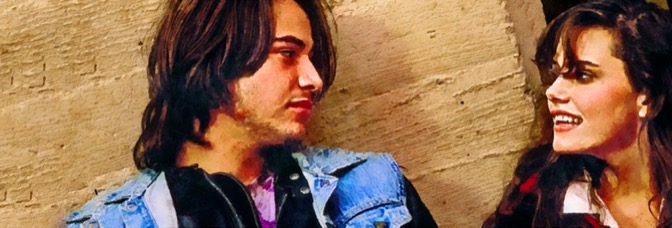
River’s Edge hinges on a few things. First, Joshua John Miller’s performance. The film’s about a group of teenagers reacting (and not reacting) to one of them killing another and showing off the body. Miller is protagonist Keanu Reeves’s little brother, who emulates and identifies with his brother’s worst traits. Second, Jürgen Knieper’s score. The…
-
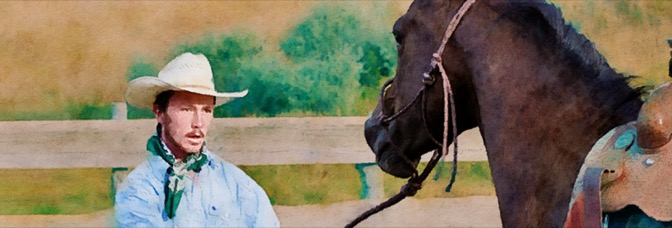
The Rider is a harrowing experience. The film establishes its stakes from the second or third scene; rodeo cowboy Brady Jandreau is recovering from a head injury. His horse threw him and stomped on his head, requiring a metal plate. He can never ride again, except his entire life has been about being a cowboy.…
-
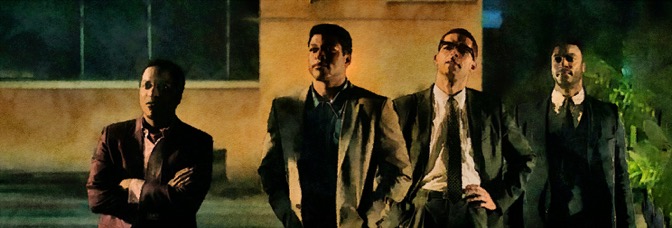
I fully expected One Night in Miami to end with a real-life picture of the film’s historical subjects. The film recounts—with fictional flourish—the night of February 25, 1964, when Muhammad Ali (then still Cassius Clay) defeated Sonny Liston to become the world heavyweight champion. He celebrated his win with Malcolm X, Jim Brown, and Sam…
-
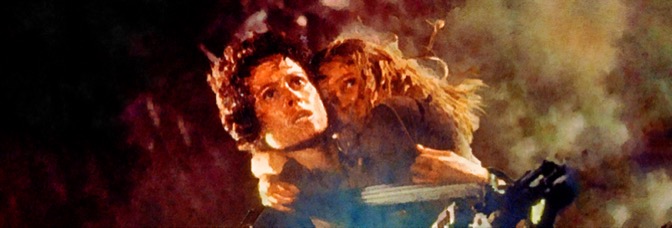
Thirty-six years after its release, recreating the original Aliens (albeit on home media) experience is difficult. Not only has there been a direct sequel, there have been multiple reboot sequels, and the extended, “special edition” version has been readily available for nineteen years now. I’m not ready for an Aliens canon deep-dive, but when did…
-
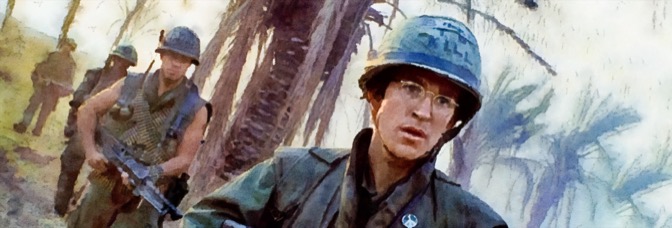
Full Metal Jacket is a film of big swings. Director and co-writer Kubrick hits them all. The three most prominent are the structure, the character study, and the whole arc. The structure and arc are different because the film's got two distinct sections. Minutes one to forty-five or so is a "We're in the Marines…
-
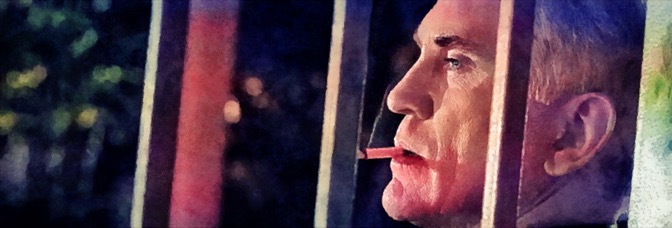
The Limey is all about the foreshadowing. It’s about flashbacks, flash-forwards, and flash asides, but the foreshadowing figures into all of those devices. It’s got a “twist” ending, which then informs previous scenes but not like figuring out Terence Stamp is a ghost or whatever. Instead, it’s knowing something about why he half-smiles—and only something,…
 The Stop Button