Category: ★★★½
-

The Good, the Bad and the Ugly ends up being about three criminals–of varying type–hunting down some stolen Confederate gold. But that Confederate gold story line takes a break after getting setup in the first ten minutes–for almost an hour of the two and a half hour plus film–so Good, the Bad and the Ugly…
-

Frances Ha relies on exposition but depends on summary. Or it depends on exposition but relies on summary. One or the other. Director and co-writer Baumbach and star and co-writer Greta Gerwig move Frances in the summary. Even when the film slows down for a longer scene, the style and tone don’t really change, so…
-

In the Bleak Midwinter is a sweet movie. It’s kind of a Christmas movie–it takes place at Christmas–and it’s this gentle, thoughtful, sweet but never saccharine or even really acknowledging its sweetness sweet movie. Writer and director Branagh puts a lot of work into the plotting of the film, without ever appearing to be putting…
-

There are a lot of things going on in Muriel’s Wedding, so many writer-director Hogan’s script gets to the point he’s constantly raveling and unraveling foreground and background threads. The threads are all wrapped around the film’s center–lead Toni Collette’s complicated desire to change herself. She mostly accomplishes it through various lies, though cheque fraud…
-

The Bridges of Madison County is many things, but it’s definitely an adaptation of a best-selling novel. Thanks to director Eastwood, it’s not a cheap adaptation of a best-selling novel, but it’s still an adaptation. There’s still a frame. No matter how much Eastwood deglamorizes it, no matter how well Richard LaGravenese writes most of…
-
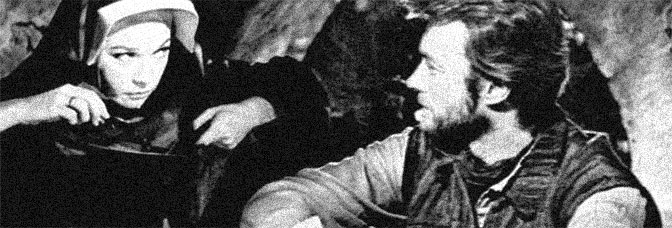
Two Mules for Sister Sara opens playfully. Then it gets serious. Then it gets playful. Then it gets serious. Then it gets playful. Director Siegel never lets it keep one tone for too long, not until the end, when he shows what happens when you take it all too seriously. After a hundred minutes of…
-
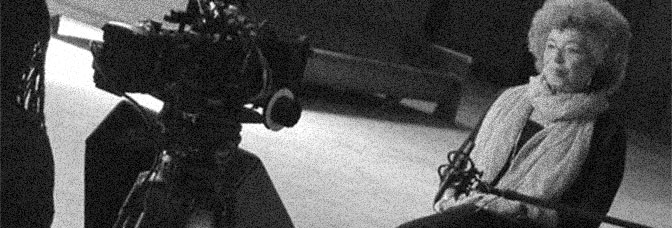
The first half of 13th is didactic–well, except when the film makes fun of interviewee Grover Norquist. There are three or four capital C Conservatives interviewees; Norquist and Gingrich are present because they’re such trolls they think they’re convincing. Gingrich is during his Black Lives Matter phase (the documentary is pre–2016 election, but still very…
-

The most impressive things about The Little Foxes are, in no particular order, Bette Davis’s performance (specifically her micro expressions), Patricia Collinge’s supporting performance, director Wyler’s composition, director Wyler’s staging of the narrative (adapted by Lillian Hellman from her play and set in a constrained area but a living one), Herbert Marshall’s performance, and Gregg…
-

No Looking Back runs just under a hundred minutes. The first half of the film–roughly the first half–evenly relies on its cast. In fact, top-billed Lauren Holly almost has less than either Jon Bon Jovi and director Burns (acting, second-billed) in the first half. It’s a love triangle and she’s the prize. Burns is coming…
-

Director James Cameron opens Terminator 2: Judgment Day with a couple things the audience has to think about when watching the film and isn’t going to see or hear again for a while, so they need to have it in mind to recall it later. Because Terminator 2 is an amazing kind of sequel to…
-

There are two big sequences in Rules of the Game. There’s the hunting sequence, which concentrates on the rabbits and pheasants before–and as–they are killed for sport. The animals are hunted without motive or enjoyment. Until a line in the third act connects events, the hunt is mostly just a way to inform Nora Gregor…
-
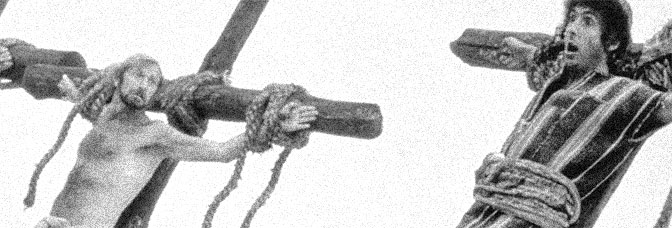
Life of Brian operates most significantly on two levels. The first level is the intellectual one, where the audience is invited to anticipate if and how the film will juxtapose Graham Chapman (he’s the Brian whose life the film concerns) against Jesus. Brian is the kid down the block who just never impressed quite so…
-

So much of The Sound of Music is exquisite, the film’s got enough momentum to get over the rough spots. The film has three and a half distinct sections. There’s the first, introducing Julie Andrews to the audience, then introducing Christopher Plummer and family to the Andrews and the audience, which then becomes about Andrews…
-

Assassination is not effortless. Director Choi makes it look effortless, whether he’s doing an intricate action sequence or one of the film’s many complicated expository scenes. But then there’s also the entire structure of the film, which opens with one character as protagonist, slowly moves to another, but keeps the initial character around as antagonist.…
-
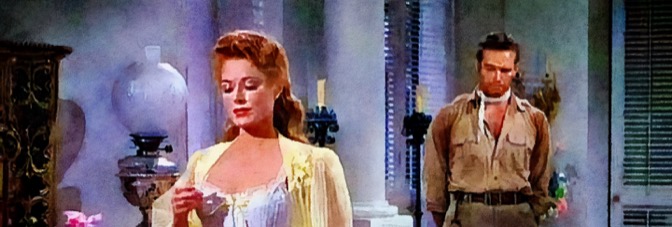
If there are faults with The Naked Jungle, ones not the result of having to follow the Hays Code–which the film skirts thanks to Ben Maddow and Ranald MacDougall’s excellent dialogue, Eleanor Parker’s fantastic, intelligent performance and Charlton Heston’s brute force approach–they fall on director Haskin. The film is well-directed with Parker and Heston’s character…
-
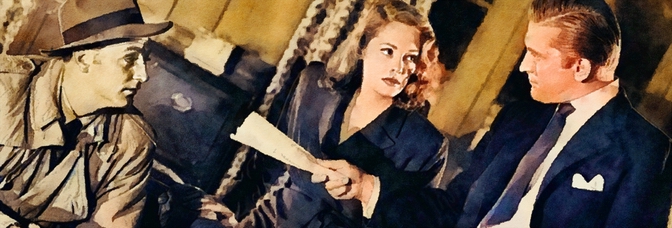
Out of the Past always has at least two things going on at once. Not just the double crossings, which is so prevalent lead Robert Mitchum even taunts the bad guys with it, but how the film itself works. Daniel Mainwaring’s script–which gives Mitchum this lengthy narration over a flashback sequence–gives the impression of telling…
-
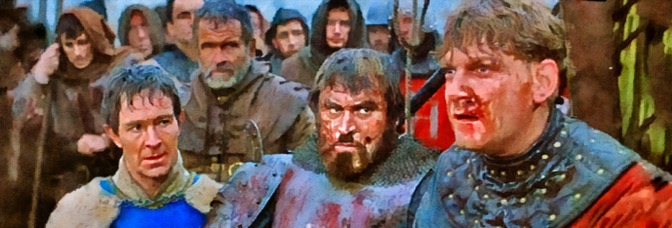
Director (and adapter) Branagh splits Henry V into three sections. They aren’t equal, they don’t match the act changes (usually); Branagh lets photographer Kenneth MacMillan open up the film to (outdoor) light while Patrick Doyle’s score becomes essential. The first outside, daylight sequence–Branagh (as Henry) gives his troops a rousing speech–defines the rest of the…
-
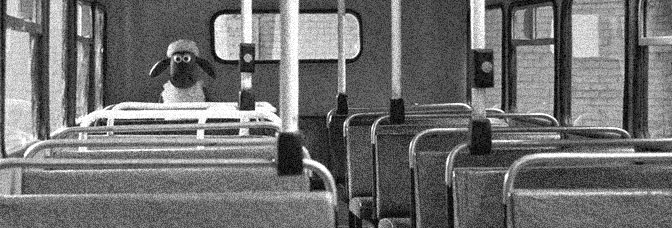
Shaun the Sheep Movie runs just under ninety minutes. There’s a lot impressive about the film (not least being writer-directors Burton and Starzak never using dialogue, just vocal inferences), but the second half moves at a startlingly great pace. Shaun is the finest physical comedy in years, with the directors figuring in not just inventive…
-

The best sequence in College is also the longest. Protagonist Buster Keaton, after failing at baseball (he’s a bookworm who needs to get athletic to impress a girl), goes out for track and field. Keaton observes other men succeed at the various events, tries them himself, fails miserably (and comically), keeps trying, presumably assuming he’ll…
-
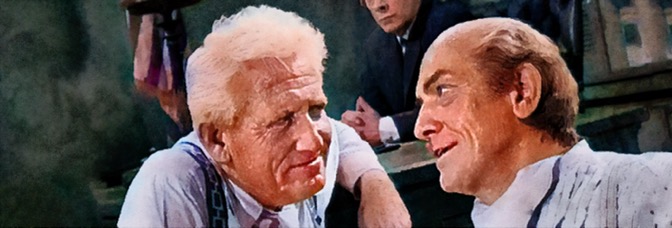
A lot of Inherit the Wind is about ideas and not small ones, but big ones. Director Kramer is careful with how big he lets the film get with these ideas, because even though Inherit the Wind is about Darwin vs. the Bible as its biggest idea, the smaller ideas are the more significant ones.…
-

There is very little economy to After the Thin Man; instead, screenwriters Frances Goodrich and Albert Hackett and director W.S. Van Dyke act with rampant abandon. The first twenty or so minutes of the film is just audience gratification–it’s a sequel to a popular film and the filmmakers are giving the audience what they want.…
-
Towards the end of Working Girl, the film seems to jump around a bit with the timeline. It seems to jump ahead, but then it turns out it doesn’t. And it only seems to jump ahead because of how director Nichols and editor Sam O’Steen structure a couple transitions. It’s not a big thing, but…
-
The most important action in My Sassy Girl takes place off screen–the film takes place over a few years (though the main action is over three and a half months), with listless Cha Tae-hyun home from compulsory national service and back in school and having no idea what to do with his life. Enter Jun…
-
In hindsight, as the film settles during its final scene, it becomes clear a lot of Clean and Sober is obvious. Director Caron and writer Tod Carroll withhold a few pieces of information until that final scene, which do inform a little more, but the obviousness isn’t actually a problem. Protagonist Michael Keaton’s motivations do…
-

Director Lucas makes one attempt at audience accessibility in THX 1138. It’s actually the first thing he does–he shows a clip from an old Flash Gordon serial to let the audience know the story is about the future. The clip also lets the audience know the future isn’t going to be happy. And once he’s…
-

From start to finish, Mr. Bean’s Holiday proves a constant delight. Hamish McColl and Robin Driscoll’s plot is simple–send Rowan Atkinson’s constantly aloof and impossibly unlucky Mr. Bean to France on a holiday. There’s an immediate scene establishing the travel route and then Atkinson gets in trouble at every point along the way. He eventually…
-

Much–probably most–of Fargo is exceptional. The Coens take over half an hour to bring their protagonist into the movie. They spend that first half hour with the villains, even having time to make said villains simultaneously lovable and even more dangerous. William H. Macy isn’t just some loser who schemes to rip off his father-in-law,…
-

Home is never inspiring or sentimental. Writer-director Oliver lets sentimentality graze the film graze once–and it’s a film about sympathetic mental patients reintegrating so it’s amazing he was able to get away with a sidewalk picnic without sentimentality–but the realities of the characters quickly reign in any loose tender particles. The film concerns Gbenga Akinnagbe…
-

Watch In Heaven There Is No Beer with a notebook handy, because you’re going to want to write down some of the band names. A lot of them. And waiting for the end credits doesn’t help unless you’re quick with the pause button. Beer is the story of the Kiss or Kill “club,” which was…
-

Dear Heart starts awkwardly and ends awkwardly. At the beginning, director Mann and writer Tad Mosel are very deliberately setting up their protagonists and the setting. The awkwardness makes sense. That very solid foundation allows for everything following. The ending, which plays–at least for Geraldine Page’s character–like a reverse of the opening for a while,…
 The Stop Button