Category: ★★★
-

Dirty Harry only has one significant problem. It has a bunch of little problems, but it gets past those–sometimes manipulatively, sometimes just nimbly thanks to director Siegel and star Clint Eastwood–but the big one. It can’t overcome the third act. Villain Andy Robinson (I can’t forget to talk about him) has kidnapped a bunch of…
-

Cop Land either has a lot of story going on and not enough content or a lot of content going on and not enough story. Also you could do variations of those statements with “plot.” Writer and director Mangold toggles Cop Land between two plot lines. First is lead Sylvester Stallone. Second is this big…
-

Most of Goodfellas is told in summary. After an opening scene introducing leads Robert De Niro, Ray Liotta, and Joe Pesci, the action flashes back to Liotta’s childhood. Liotta narrates. Christopher Serrone plays the younger version. Liotta’s narration guides Serrone around the neighborhood, letting the film introduce all the mobsters Serrone is enamoured with. Scorsese…
-

The Day the Earth Stood Still opens with these sensational titles. 3D text jumping out, set against the backdrop of space, Bernard Herrmann’s score at its loudest; the titles suggest the film is going to be something grandiose. It is and it isn’t. For the first act, director Wise moves quickly, short scenes setting up…
-

The Night Stalker moves with ruthless efficiency. It’s a TV movie, so it’s got a mandated short runtime–seventy-four minutes; Richard Matheson’s teleplay has a brisk pace, something director Moxey embraces. There’s rarely a dull moment in The Night Stalker. It’s always about waiting for the next bad thing to happen. The film opens with lead…
-
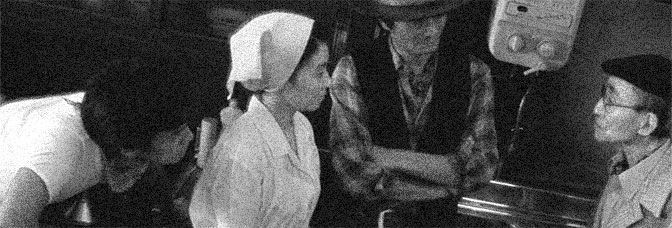
Tampopo is a cinematic appreciation of Japanese food culture. Writer and director Itami also has some love of cinema things, but it’s all about the food. Even when it’s played for humor. Or for nurturing. Or for sex. Sexy foodstuffs abound in Tampopo. But Tampopo is also this traditional narrative. It’s a Western’s narrative, but…
-

Excellent solo outing for Spider-Man Tom Holland (after first appearing in CAPTAIN AMERICA: CIVIL WAR). He’s just a modern high schooler trying to survive debate club and homecoming date woes while playing superhero after school superhero. He wants to do more, of course, much to guest star Robert Downey Jr.’s dismay. Watts’s direction has a…
-

The Friends of Eddie Coyle is an amusing, intentionally misleading title. Eddie Coyle (Robert Mitchum) doesn’t have any friends. He has various criminal contacts he sees on a regular basis, but he doesn’t consider any of them friends. Mitchum’s a down-on-luck small-time crook who’s about to go away for a couple years. He didn’t rat,…
-

Tin Men is expansive. So expansive writer-director Levinson can’t get everywhere. He doesn’t have time in 112 mintues, he doesn’t have the structure for it either. Tin Men establishes its narrative distance firmly, deliberately, and usually hilariously in the first act. When Levinson gets to the end of the second act, he’s way too interested…
-

It takes You Gotta Stay Happy a while to get there, but it’s actually a road movie. Well, it’s flying movie. Owner-operator James Stewart flies his cargo plane from New York to California with a number of paying passengers (a no no), with co-pilot Eddie Albert doing most of the ticket sales. The film’s title…
-

Flash Gordon is all about its gee whiz factor. The serial goes all out to create the planet Mongo, which has come out of nowhere (in space) and is on a collision course with Earth. Only scientist Frank Shannon has a plan to save the otherwise panicked and resigned Earth–take a rocketship to the new…
-

The Seventh Sin has three problems. The first is the third act; it’s too rushed. Given the constraints of the film production–a shot-in-Hollywood production about a cholera outbreak in a rural Chinese town–there’s not so much to be done about it. The film has a limited cast, especially once the action moves from Hong Kong…
-

Last (after QUARTET and TRIO) and most successful entry in trilogy of anthologies of W. Somerset Maugham adaptations. Three stories, all of them well-directed, at least one of them well-written, and all of them rather well-acted even when the writing’s not there. Great performances from Nigel Patrick, Roland Culver, Glynis Johns, and others. Maugham pointlessly…
-

As Captains Courageous enters its third act, Spencer Tracy (as a Portugese fisherman) reminds Freddie Bartholomew (a spoiled blue blood kid Tracy rescues after he falls overboard from an ocean liner) it’s almost time to go home to his regular life. It’s a shock for Bartholomew, but also for the viewer. Even though the first…
-

Waiting for Guffman is a story of dreams and dreamers. Director (co-writer and star) Guest opens the film with shots of a small American town, Blaine, Missouri. It’s a town with a lot of history and a lot of heart. Sure, it’s all absurd history, but those absurdities just make the heart beat stronger. Guffman…
-

Moana takes a while to find its stride. Directors Clements and Musker and Hall and Williams aren’t at ease until the movie’s on the water. The film starts on a Polynesian island, with a young chief-in-training (Auli’i Cravalho) secretly longing not to be stuck on the island paradise, but out exploring the ocean. Grandmother Rachel…
-

There are few constants in The Untouchables. Leading man Kevin Costner comes in after nemesis Robert De Niro (as Al Capone) opens the movie; only the Chicago setting and Ennio Morricone’s grandiose, bombastic, omnipresent score are unabated. Director De Palma embraces the film’s various phases, sometimes through Stephen H. Burum’s photography, sometimes just through how…
-

Duck Soup is madness. It’s not divine madness or sublime madness. It’s comedic madness, which is fine, but it’s a tad frantic and a tad distracted. The film opens with Margaret Dumont’s wealthy widow getting Groucho Marx installed as a head of state. Turns out evil Louis Calhern–a neighboring country’s ambassador–wants to create unrest and…
-

T2 Trainspotting is a victory lap. John Hodge’s screenplay is thorough, thoughtful, cheap, and effective. It goes so far as to integrate unused portions of the original Trainspotting novel to try to get build up some character relationships. Because T2 is an expansive sequel. It’s got a contrived inciting action, which Hodge and director Boyle…
-
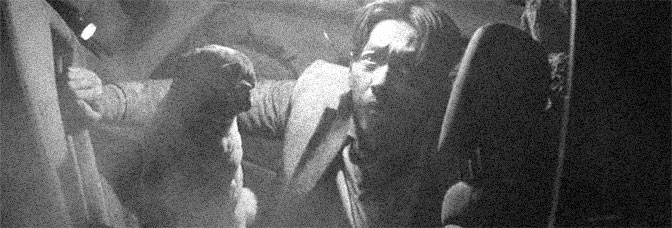
Tunnel is a small scale disaster movie. It’s also not. It’s about a small scale response to a big disaster. Writer and director Kim takes some time introduce threads about craven reporters, craven government officials, craven capitalists, but most of the movie is lead Ha Jung-woo stuck in a tunnel. The first ninety minutes of…
-

The Blot has a lot of plot. Lot of plot. Director Weber fills the film with characters and subplots–unfortunately, not many of the supporting cast get credited so I’ll just have to compliment based on their characters. The main plot is about rich college kid Louis Calhern who discovers–because he has the hots for his…
-

Even though the film’s called Colin Hay – Waiting For My Real Life, it’s not entirely clear what relationship the documentary is going to have with its subject. There are various people interviewed, ranging from Australian movie stars to record execs to sitcom stars to Mick Fleetwood. Directors Faulls and Gowtham do a fantastic job…
-

The best thing about Temple Grandin is Claire Danes’s performance. She even gets through the parts where she’s thirty playing fifteen. It’s a biopic, there a lot of flashbacks. Director Jackson tries to use a lot of visual transitions for them, but they really succeed because of the teleplay and the performances. To give some…
-

Peyton Place takes over a year and a half starting in 1941. Director Robson has a really slick way of getting the date into the ground situation. Robson and cinematographer William C. Mellor go a little wild with Peyton Place–there’s a lot of location shooting and Robson tries hard to make the viewer feel enveloped.…
-

In the first scene of Hidden Figures, the film makes it immediately clear there’s going to be quite a bit of self-awareness. The film is based on the true story of three black women who were instrumental to NASA’s–and the space program’s–success. They’re working at NASA in the early sixties, during segregation, doing harder jobs…
-

Vigil in the Night is supreme melodrama. I mean, in its first ten minutes, the film manages to establish a small English town’s hospital, introduce stoic nurse Carole Lombard and her flighty sister Anne Shirley, throw them into tragedy and crisis, and kick Lombard into an entirely new setting. Vigil in the Night is an…
-

The Man Who Skied Down Everest is a peculiar film. It’s straight, methodical narrative non-fiction. In 1970, Miura Yûichirô set out to ski down Everest. His expedition included a film crew. The resulting film doesn’t tell Miura’s story outside the present action–through narrator Douglas Rain, Miura’s diary entries tell the story in the present tense.…
-

Midnight Cowboy gets to be a character study, but doesn’t start as one, which is an interesting situation. About forty-five minutes into the film, which runs just shy of two hours, Midnight Cowboy chucks the narrative urgency. Maybe not chucks, maybe just shuts down, because it does take the film a while to lose that…
-

There’s an almost magical competency to Summer School. It starts with the opening titles, which are expertly edited to showcase the eventual primary cast members. Not the adults–outside lead Mark Harmon–rather the students. There’s no audible dialogue, just a rock song playing, but there’s enough performance from the actors to give personality to their characters…
-

Even though Give Us the Moon ends up going exactly where I expected it to go, the film’s not predictable at all. It opens with Peter Graves’s post-war layabout. He was a war hero, his father (Frank Cellier) is a rich hotelier, he wants to do nothing with his life except enjoy it. Through coincidence,…
 The Stop Button