The Stop Button
blogging by Andrew Wickliffe
Category: ★★★
-
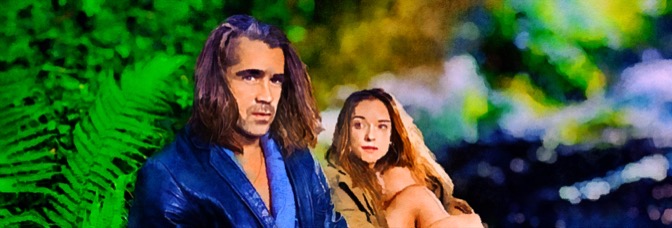
Ondine is very committed to the bit. The film opens with Irish owner-operator fisherman Colin Farrell bringing a woman up in his nets. A beautiful woman. She seems very confused to be breathing air and doesn’t tell him very much about herself. Alicja Bachleda plays the woman. She refuses to go to a hospital, and…
-
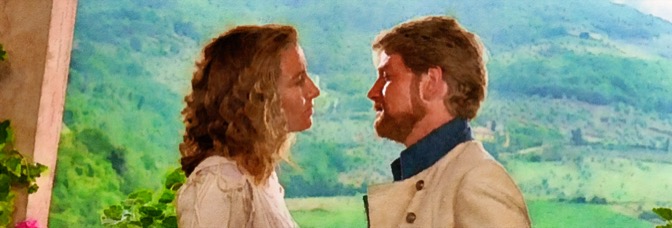
Much Ado About Nothing has a machismo problem. It’s not writer, director, and star Branagh’s fault; it’s just the historical patriarchy. Though Branagh does try to do some initial counterbalancing, opening the film with a quote about the sexual dynamics. Still, that moment only carries through the first scene, setting up Emma Thompson’s character… And…
-

I’m hesitant to describe Barb and Star Go to Vista Del Mar as an absurdist comedy because the “absurdities” always land perfectly. For example, the opening titles have paperboy Reyn Doi singing along to the entirety of Guilty (Barbara Streisand and The Bee Gees) and then getting into a tree elevator. By the time Doi…
-

It Follows is a monster movie. Somewhere in the second half of the film, the monster starts acting with more malice towards its targets, like it’s frustrated it hasn’t been able to kill them yet. Given it’s an invisible sex monster—or, I guess, possibly an invisible sex demon—there’s a particular energy to it. There’s always…
-

I didn’t know Submarine came from a novel going in. I didn’t know it came from the “Great Welsh Novel” until a few minutes ago. I was checking to see if the novel—written by Joe Dunthorne—was YA. Turns out it’s literary fiction, which makes the film adaptation, screenplay by director Ayoade, slightly more interesting, slightly…
-
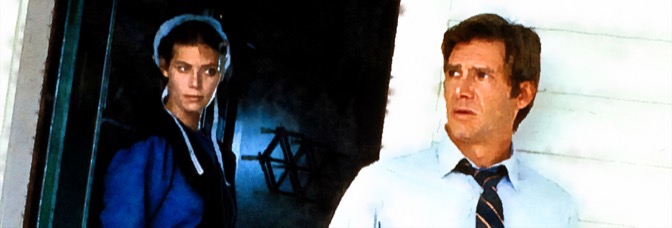
Witness has a beautifully directed scene or sequence every five to ten minutes. Just something director Weir is able to particularly nail, sometimes with John Seale’s photography’s help, sometimes with Thom Noble’s editing, then probably least of all, with Maurice Jarre’s score’s help. Jarre’s score is good, very pretty, and occasionally redundant; when it sells…
-

The Strawberry Blonde is a period piece within a period piece. It opens in the past, then there’s a flashback to the further past. It recalls a time when WASPs couldn’t figure out how to eat spaghetti and the political corruption machine was easier to crack. Director Walsh is very enthusiastic about the time period…
-

I begin talking about Little Shop of Horrors with a confession—I didn’t like it as a kid. I think I saw it a couple times on video, but a full decade before I was willing to give musicals a chance. Now, of course, I can appreciate the absolute glory of the film’s musical numbers, particularly…
-

Jewel Robbery is a delightful mostly continuous action not-even-seventy minute picture; it’s a play adaptation but never feels stagy, just enthusiastic. Especially once William Powell shows up, then the film revels in his performance. Until he arrives, director Dieterle toggles between showing off filmmaking techniques (with some able cutting courtesy editor Ralph Dawson) and showing…
-

Knives Out is very successful, very neat riff on the Agatha Christie-esque genre of mystery stories, specifically the limited cast, the intricate death, the “gentleman detective.” Out’s gentleman detective is Daniel Craig, who plays his French-named character as a Southern Gentleman with aplomb. He’s always delightful, even though he’s—intentionally—not particularly good at the investigating, rather…
-
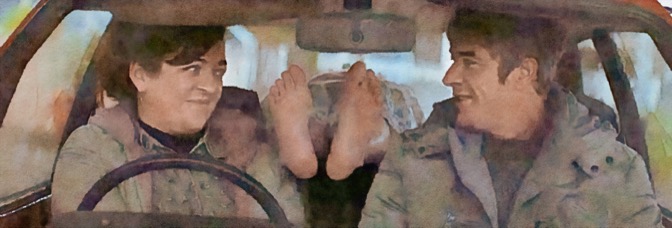
A few minutes into Extra Ordinary, after a stylized prologue and then opening sequence, I realized it was a low budget marvel. The film has under five locations and six characters. Directors Ahern and Loughman widen the proverbial lens to make it feel bigger with choice location shooting—being able to do the driving in the…
-

Despite Dana Andrews and Peggy Cummins being perfectly serviceable leads, Night of the Demon never really comes to life without antagonist Niall MacGinnis around. MacGinnis is a Satanic cult leader who conjures forth demons from Hell—hence the title—to deal with his enemies and—while he never explicitly confesses to his enemies… he takes a delight in…
-

Not even halfway through Mad Love’s sixty-seven minute runtime it’s clear all the film’s going to have to do to succeed is not to fail, which isn’t going to be easy. The film’s about a brilliant surgeon (Peter Lorre) who’s sort of publicly stalking married stage actress Frances Drake. Now, he falls in love with…
-

I spent much of Take Care of Your Scarf, Tatjana waiting for the character, played by Kati Outinen, to forget her scarf because I thought the title was Don’t Forget Your Scarf, Tatjana. I knew the film only ran sixty-two minutes and so assumed there’d be some scarf-forgetting. Oops. Is there scarf-forgetting? No spoilers. But…
-

Birds of Prey (and the Fantabulous Emancipation of One Harley Quinn) is a Margot Robbie vehicle, which is excellent, because Robbie’s great and the filmmaking, particularly on Robbie’s scenes, is outstanding. Retitling it the Fantabulous Emancipation of Harley Quinn would be the best move; the Birds of Prey are going to be a bonus, with…
-

About halfway through The Witch: Part 1. Subversion, I wondered why they’d opened with a flashback showing presumably chid witch Kim Ha-na escaping from her government “doctors.” The prologue introduces evil scientist lady Jo Min-soo and her chief fixer Park Hee-soon, it introduces the secret castle-like laboratory fortress, it has a lot of blood. The…
-

Farmageddon has so many sci-fi TV and movie references it’s hard to keep track. The whole thing feels like an homage to E.T. as far as the story—an alien (“voiced” by Amalia Vitale; voicing means making noises in Farmageddon, there’s no dialogue) gets stranded on Earth and makes friends with a local who helps them…
-

During To Kill a Mockingbird’s exceptional opening titles, I wondered how it was possible the film was going to look so amazing yet had no reputation for being some exquisitely, precisely directed piece of cinema. Then up came Stephen Frankfurt’s credit for title design, which kind of dulled my excitement for a moment. Could Mulligan…
-

Restoration is two parts period drama, one part character study, one part comedy. It’s often tragic, both because of events occurring and because it takes place in 1665 England and 1665 wasn’t a great time to be alive given the state of medical knowledge versus, you know, disease. Or mental health. The general complete misunderstanding…
-

Nobody’s Fool takes place during a particularly busy December for protagonist Paul Newman. He’s got a lot going on all at once, but mostly the reappearance of son Dylan Walsh and family. They’re in town at the beginning for Thanksgiving, but Walsh’s marriage is in a troubled state—we’re never privy to the exact details, as…
-

Niagara has some noir-ish elements to it—femme fatale wife Marilyn Monroe stepping out on war veteran husband Joseph Cotten—but it’s not about the darkness, it’s about the light. And its location shooting. Niagara takes full advantage of the falls, not just for scenery but for multiple story elements (we find out Monroe’s stepping out because…
-

Bogart meets Bacall in the 1940 Caribbean; he’s an old ex-pat fishing boat captaining and trying to keep his head down in Vichy-controlled territory, she’s a young ex-pat more concerned with getting out of where she’s been than where she’s going. The star wattage on Bacall–everyone just sits and watches her, Bogart grinning by the…
-

Outstanding comedy (with a healthy dose of drama) about small-town waitress Keri Russell; trapped in a terrible marriage (to abusive Jeremy Sisto), she’s just found out she’s pregnant. Mostly a character study–Russell’s phenomenal. Great supporting performances: Cheryl Hines, writer-director Shelly (Russell’s waitressing comrades), Andy Griffith as her favorite regular; Sisto’s terrifying. It’s got third act…
-

Gentle, delightful, idiosyncratic comedy about the teenage boys in a Scottish New Town deciding it’s time to stop being weird about it and finally talk to the girls. They’re almost graduated after all and football’s not everything, after all. John Gordon Sinclair’s interest in female footballer Dee Hepburn kicks off the trend; unfortunately his only…
-

Hyper-gritty cop movie about ex-undercover officer Jason Patric returning to the force to solve the murder of a fellow undercover cop (they didn’t know each other, but the NARC bond is apparently strong). Once back, Patric enlists the aid of bull in china shop tough cop (an awesomely bloated and belligerent Ray Liotta). The filmmaking’s…
-

Rather strong character study masquerading as a thriller about wealthy housewife Joan Bennett contending with a rebellious teenage daughter (Geraldine Brooks, in the film’s only weak-ish performance), the daughter’s skeezy older lover (Shepperd Strudwick), and the blackmailer who finds out about the illicit affair (James Mason)–all while getting the house ready for Christmas. Bennett’s phenomenal,…
-

Not noir noir about architect Richard Moir discovering there might be something shady about the shady property developers he’s designing for. He teams up with community organizer (and initial foe) Judy Davis to figure out what’s going on. The occasional extreme stylizing is fine but not as impressive as how fast director Noyce keeps the…
-

The longest continuous stretch of Invasion of the Body Snatchers is about fifteen minutes (the film runs eighty). Small California city doctor Kevin McCarthy and his long-lost lady friend Dana Wynter have just spent the night holed up in his office, hiding from their neighbors, who have all been replaced by “pod people.” The pods…
-

Secret People is a very peculiar propaganda picture. It’s mostly set in 1937, almost entirely involving Italian immigrants, and it’s very pro-British. The film downplays the idea fascist regimes are dangerous (fascist regimes in 1937, remember) while getting behind the idea of doing whatever the British government says, even if what they say is appease.…
-
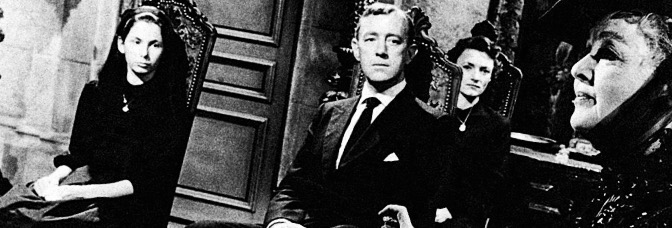
Peculiar character study slash mystery starring Alec Guinness as a staid British school teacher who meets his lookalike while in France. French Guinness tricks British Guinness into taking his place as a French blue blood, saddled with a wife, a kid, a mistress, and a failing business. Only British Guinness comes to love all those…
 The Stop Button