Category: ★★★
-
According to the opening titles, 20 Feet from Stardom will focus on background singers and session vocalists Darlene Love, Merry Clayton, Lisa Fischer, and Judith Hill. Love and Clayton started in the sixties, Fischer in the eighties, Hill in the aughts. If they’re the main cast, the supporting are Claudia Lennear and Tata Vega. The…
-
It’s been long enough since I last saw Amadeus I forgot the narrative face-plant of the epilogue. The film objectifying the suffering of nineteenth-century psychiatric hospital “patients” is bad enough, but the way the film ignores it’s spent the second half of the nearly three-hour film away from narrator F. Murray Abraham… Well. It doesn’t…
-
The Marvels is a sequel to Captain Marvel, starring Brie Larson, which came out four years before but takes place thirty years before. It’s also a sequel to the TV shows “WandaVision,” which introduced Teyonah Parris (though her character appeared as a little kid in Captain), and “Ms. Marvel,” which introduced Iman Vellani as a…
-
By the time Rocky gets to the big fight, you forget there’s actually going to be a big fight. While the film does open with a boxing match, until somewhere decidedly in the late second act, Rocky isn’t a sports movie. It’s a character study of a boxer, sure, but he’s not in a sports…
-
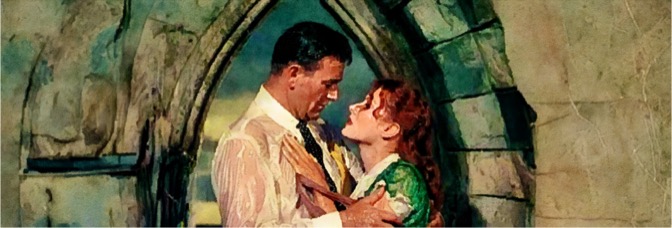
The Quiet Man starts as a loving postcard tour of the Irish countryside. It’s pastoral, romantic, funny, human. Son of Ireland-gone American John Wayne returns home and immediately falls in love with neighbor Maureen O’Hara. Unfortunately, despite O’Hara having similar inklings, her big brother is Wayne’s new nemesis, Victor McLaglen. It’s this exceptionally lush, tender,…
-
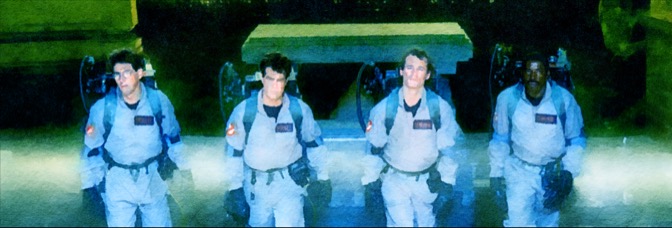
In the almost forty years since Ghostbusters’s release, the film remains unparalleled in terms of present-day, urban sci-fi action. The film’s a mix of crisp action comedy and a special effects spectacular, with Reitman’s direction toggling as needed and Elmer Bernstein’s score tying a beautiful knot. With the special effects, the film never isn’t grasping…
-
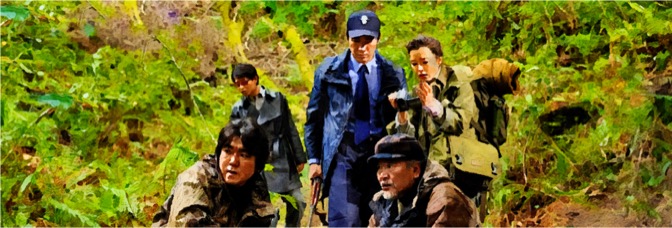
Chaw tells the familiar tale of a man-eating wild boar and the brave villagers who confront it. The boar’s descended from the mutant boors the Japanese created when they invaded Korea. These abominations have been low-key terrorizing the countryside for decades and as the hipsters started doing weekend trips from Seoul into the countryside, things…
-
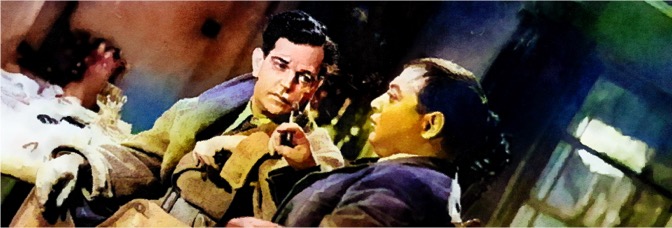
The Man Who Knew Too Much is an action thriller. It doesn’t start as an action thriller—it begins with an English family (dad Leslie Banks, mom Edna Best, daughter Nova Pilbeam) vacationing in Switzerland. Their vacation has almost come to an end, and they’re saying goodbye to some of their trip friends. Their good trip…
-
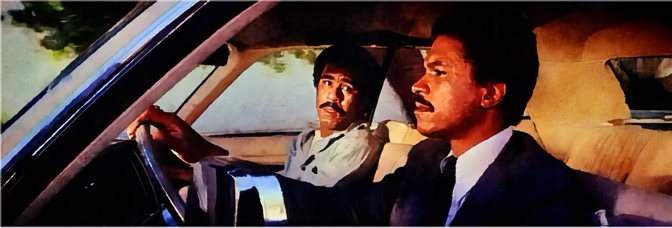
Hit! is multiple movies all at once. It’s a heist procedural, with Billy Dee Williams putting together an unlikely crew of experts to take out the Marseille heroin syndicate. It’s a rogue secret agent movie—Williams’s boss, a profoundly under-cast Norman Burton, doesn’t want him showing up the U.S. government by taking out the bad guys.…
-
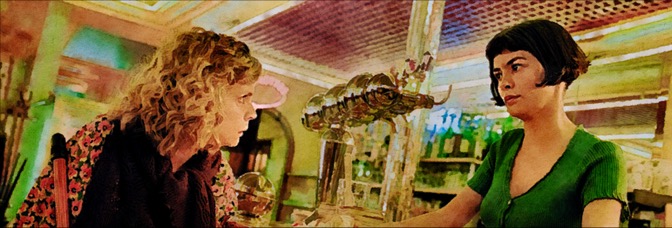
I’m hesitant to call Amélie whimsical, though it’s the closest adjective. The film’s kind of a French New Wave-inspired fairy tale, except instead of being about magic magic, it’s about the magic of the everyday and, especially, its residents. There’s also something decidedly not fairy tale about protagonist Audrey Tautou’s quests. Broadly, Amélie is about…
-
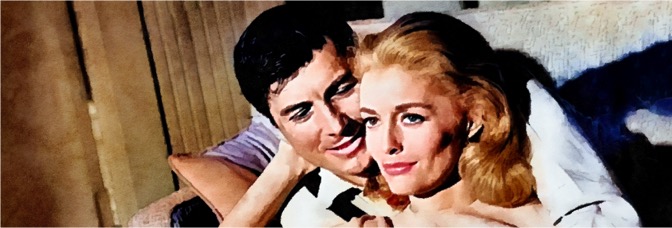
The Naked Kiss is an exceptional motion picture. However, it’s never not without its problems: it’s an astoundingly classy exploitation picture about an ex-prostitute (Constance Towers) who tries going straight, only to discover the other side of the tracks just hides their secrets in different places. The film will also explore the lack of honor…
-
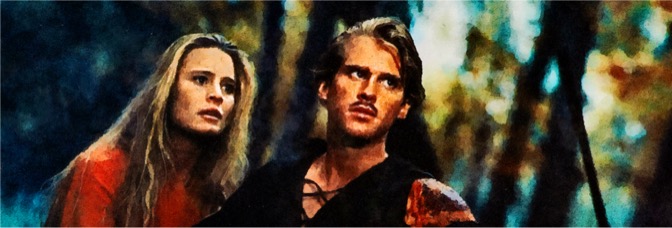
I’m undecided on how to discuss The Princess Bride’s second act. It’s a misstep but an intentional one. Instead of being the story of reunited lovers Robin Wright and Cary Elwes, the film becomes an action comedy for Mandy Patinkin and Andre the Giant, which is fine; they’re great. But the film entirely ignores Wright’s…
-
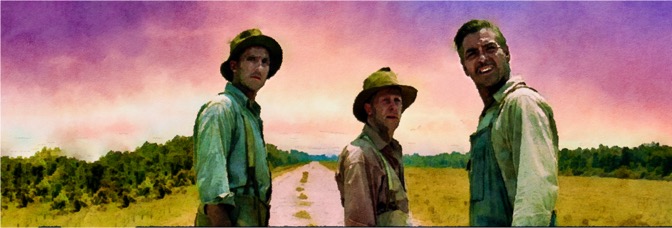
O Brother, Where Art Thou? is a frustrating, adequate success. There’s some excellent filmmaking and even better performances. Still, the Coen Brothers’ adaptation of Homer’s The Odyssey is at times too stringent and, at other times, narrative spaghetti on the wall. The falling pieces are co-stars John Turturro and Tim Blake Nelson, who spend the…
-
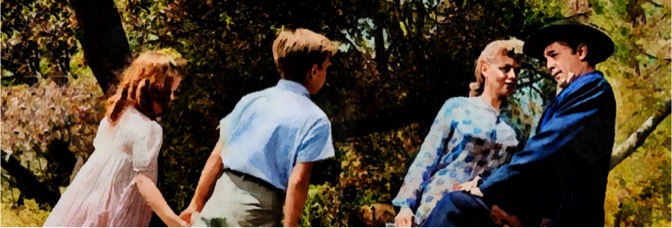
Night of the Hunter is a singular experience. Definitionally. It’s the only film Laughton ever directed, which makes sense. The film’s visuals are decades too early for the composites they can do; Laughton did direct plays, which also makes sense. Hunter feels “stagy,” but not. Laughton directs his actors for close-up without ever losing track…
-
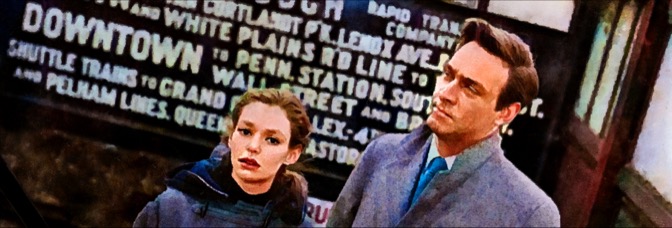
Conservatively, Stage Struck has six endings. They start about fifty-eight minutes into the film, which runs ninety-five minutes. Actually, wait, there are probably—conservatively—seven. I forgot how many there are mid-third act before the actual (ending-laden) finale. For a while, the false endings add to the film’s charm. Maybe if the third act hadn’t reduced lead…
-
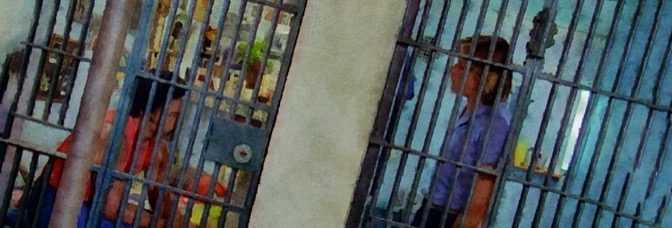
The Jericho Mile plays a little like a truncated mini-series. The first hour of the film introduces the characters, the ground situation, and does an entire arc for six characters. There’s a minimal subplot about prison psychologist Geoffrey Lewis trying to convince seemingly super-fast-running inmate Peter Strauss to open up in therapy. Lewis then gets…
-

Essentially, The Favourite gives each of its three stars an act to shine. Rachel Weisz gets the first act, Emma Stone the second, Olivia Colman the third. They all appear throughout, but the script’s surprisingly segmented with its narrative perspective. Surprisingly because it means the first-act protagonists (Weisz and Stone) are accessories in the third…
-

A Fistful of Dollars opens with a long, primarily dialogue-free sequence introducing the star—Clint Eastwood—and the setting, the desolate near-border Mexican town of San Miguel. The sequence introduces the town to Eastwood and Eastwood to the viewer. He quietly watches the goings on, principally Marianne Koch’s family troubles. She’s living in a little house under…
-
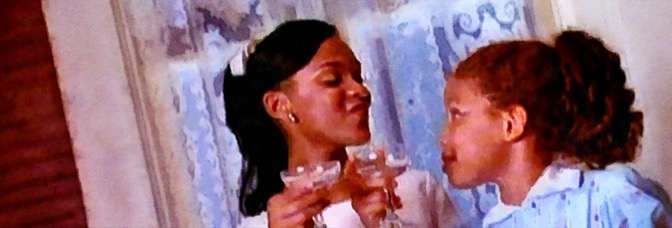
Eve’s Bayou is Southern Gothic, but it’s got a kids’ summer story grafted onto it; by the end, the two genres are working together to great effect. I mean, the end’s got problems, but the way the film gets to it is captivating. The film opens with Tamara Tunie narrating from the future—when she was…
-
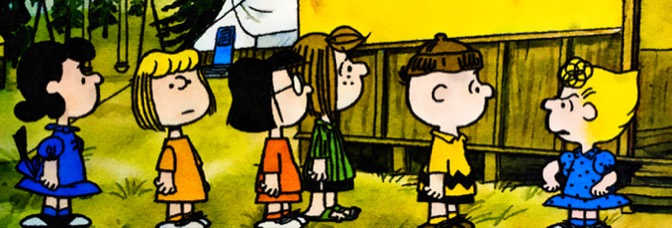
There’s only one adult referenced in Race for Your Life, Charlie Brown. When the bus leaves Charlie Brown (voiced by Duncan Watson) stranded, they’ve established the driver’s silhouette. Not having any adults makes a lot of sense since, somehow, the Peanuts parents all decided to send their kids to a camp on the other side…
-
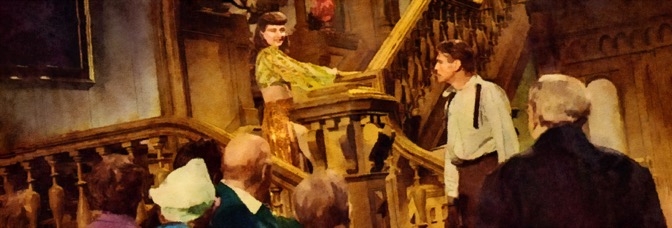
Ball of Fire is a rare delight. It’s got an enormous cast of scene-stealers who all work in unison, thanks to Hawks’s direction but also Charles Brackett and Billy Wilder’s screenplay being so well-balanced. For most of the picture. The third act has two choices, and it chooses poorly but still successfully; I’ll get to…
-
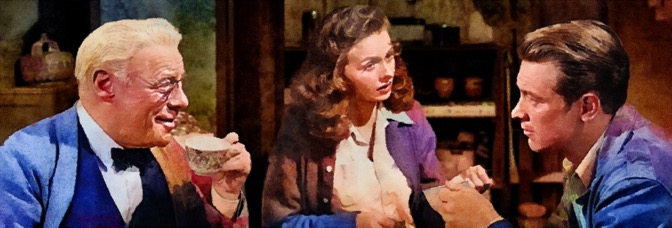
Apartment for Peggy has a protagonist problem. It’s also got what seems to be a Production Code problem, but more on that one later (especially since it gets tangled with the protagonist problem). The film opens with retired university philosophy professor Edmund Gwenn dispassionately deciding he’s going to kill himself. He’s been working on his…
-
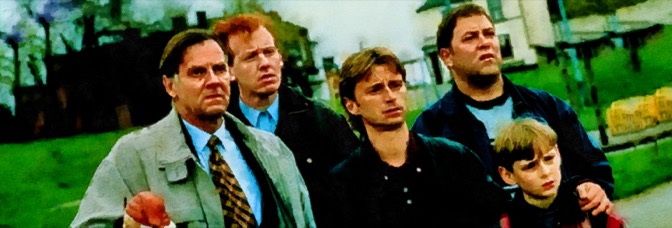
During The Full Monty’s opening titles, an old promotional film plays, establishing the setting. Sheffield during its glory days, when they produced the best steel in the world. Or at least could make a promotional film saying they did. In the present, the steel mills have closed—and been closed about six months—and the former employees…
-
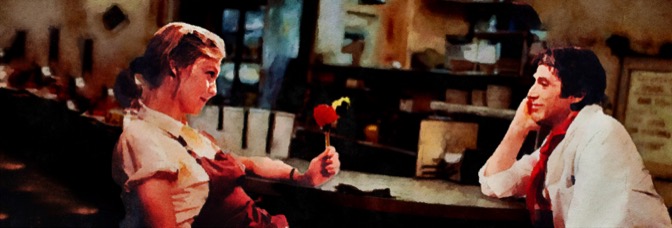
Besides the sex scene, set to Rickie Lee Jones singing, “It Must Be Love” (which means Al Pacino sings it later as he gleefully reminisces), Frankie and Johnny avoids revealing too much about the private tenderness between Pacino and romantic interest Michelle Pfeiffer. At one point, he says something to her as their first date…
-
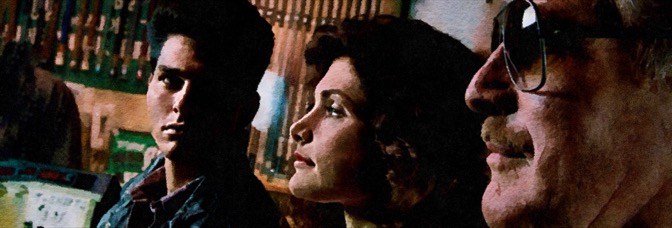
The Color of Money opens with a brief narration explaining the pool game variation nine-ball. Director Scorsese does the narration, which is the most interest he ever shows in the game of pool for the rest of the movie. The narration serves a straightforward purpose—it lets the audience know when to know the game is…
-
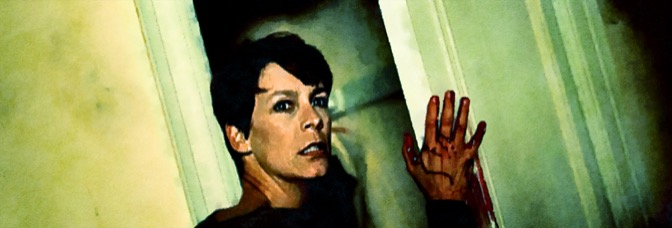
Halloween H20 is an impressively short motion picture. It’s got an eighty-six-minute runtime, but the end credits run four minutes plus. The opening titles run three minutes, plus the cold open teaser runs ten. So the main action barely runs seventy minutes, thirty minutes of story, forty minutes of slasher suspense. It’s been twenty years…
-
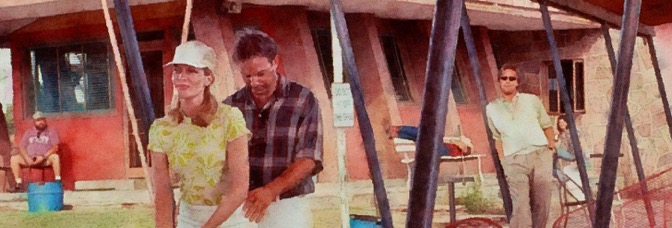
Tin Cup’s got very few problems. It’s just a romantic comedy about a ne’er-do-well golf pro who decides to improve himself to impress his rival’s girlfriend. There’s a little more nuance to it, but not much. Kevin Costner plays the hero, Rene Russo plays the love interest, Don Johnson plays the other guy. Because all…
-
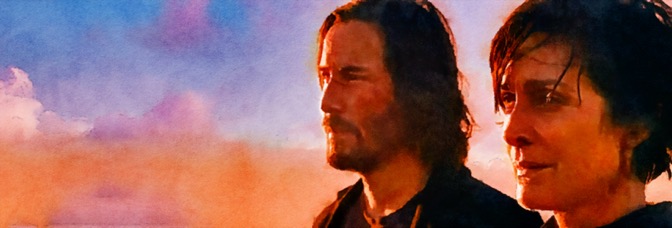
The Matrix Resurrections opens with a "cover" of the opening of the original Matrix movie. It takes a while before it makes sense in the narrative, but basically, new cast members Jessica Henwick and Toby Onwumere are watching the scene where Carrie-Anne Moss escapes from Hugo Weaving. Only it's not Carrie-Anne Moss or Hugo Weaving;…
-
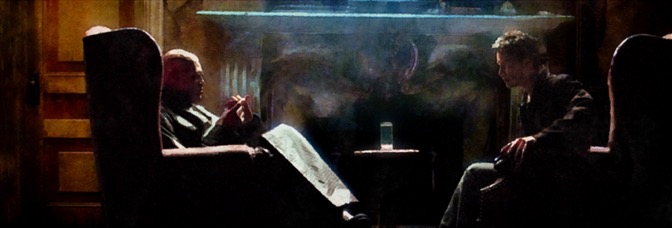
The Matrix starts kicking ass in the second half. The first act clunks along, introducing both Keanu Reeves’s plot and then the Carrie-Anne Moss and Laurence Fishburne one. The second act makes a lot of promises and stumbles delivering on them. There’s this big fight scene between Reeves and Fishburne, and instead of accelerating the…
-

Thanks to a weak performance from lead Ewan McGregor and an obviously altered ending, Nightwatch straddles being a reasonably perverse suspense thriller and a scalding commentary on middle-class white male masculinity. McGregor is a third-year law school student who takes a job at the morgue to help pay for he and girlfriend Patricia Arquette’s giant…
 The Stop Button