Category: ★★½
-

For most of its runtime, Suspiria builds. It increases suspense, it increases terror, it increases discomfort. Director Argento and cinematographer Luciano Tovoli shoot these long shots with slightly fish-eyed backgrounds. Combined with Giuseppe Bassan’s jawdroppingly awesome production design, the film gives the impression of having no depth. No perspective. The actors move in front of…
-

Seven credited writers on Sleeping Beauty and none of them could figure out any dialogue to give the prince. Though, notwithstanding some cute banter between the three fairies, there’s not much good dialogue in Sleeping Beauty anyway. Villain Maleficent doesn’t even get any. Eleanor Audley’s great in the part, but it’s not because of the…
-
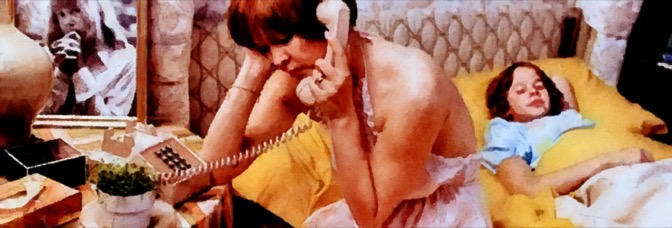
Despite the title, The Exorcist is about pretty much everything except the actual exorcist. When he does appear, kicking off the third act, it’s kind of a stunt. There’s a lot of implied mythology in the film, without much connective tissue–but nothing ruling out connective tissue. Director Friedkin does a balancing act. The reveal moment…
-

Devil in a Blue Dress is almost so much better. Director Franklin gets easily distracted and follows tangents, both in the script and the directing. The latter makes sense–he’s always too enthuastic about the (excellent) production design, recreating late 1940s Black Los Angeles. With Tak Fujimoto’s warm but vibrant photography, the “regular life” part of…
-

Overlong confused (not confusing) thriller about newlyweds Katharine Hepburn and Robert Taylor. Taylor seems too good to be true, except he flies into a rage whenever his missing, saintly brother is mentioned. So Hepburn starts investigating, just without much interest. There’s a real disconnect between Minnelli’s direction and Edward Chodorov’s script. Minnelli does all right…
-
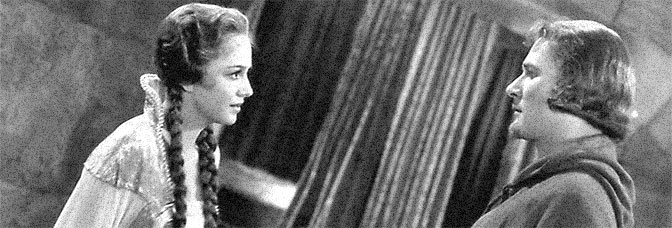
The Adventures of Robin Hood gets by on a lot of charm. Charm and costuming (good and bad). The film opens with title cards setting the scene. Sherwood Forest, evil King’s brother, righteous nobel, beautiful damsel, insidious villain, and Technicolor tights–Claude Rains looking like a Little Lord Fauntleroy grew up and broke bad. Rains, with…
-
Genial and life-affirming–but never trite, which is an accomplishment–story about a bunch of broken-dreamed, WASPy thirtysomethings returning to summer camp of their youth (camp owner Alan Arkin invited all his favorites) and recapturing their mojo. Beautiful Newton Thomas Sigel photography, good performances–including a great extended slapstick cameo from Sam Raimi. Writer-director Binder just plays it…
-

Making Mr. Right feels a little incomplete. It’s not entirely unexpected as Floyd Byars and Laurie Frank’s script plays loose with subplots–even after the film forecasts its basic structure, it loses track of a lot, and some essential scenes happen offscreen. The subsequent reveals in the narrative (to other characters and the audience) never play…
-

Excluding prologue and epilogue, Oscar has a present action of roughly four hours. The movie runs just shy of two hours. A lot happens with a lot of characters. And, while the film’s based on a play–which explains the limited setting–and even though it’s not like director Landis does anything spectacular except keep the trains…
-

Terry Jones’s The Meaning of Life is a seven-part rumination on The Meaning of Life. At least the title cards for each part suggest its a seven-part rumination on the Meaning of Life. Not to spoil anything, but if the film does get around to addressing said meaning… well, it acknowledges you don’t need to…
-

Quite a bit works in Private Benjamin, which makes all the creaky parts stick out more. Even though the film runs 109 minutes, a lot seems cut out. Characters just fade away, especially as the film rushes in the second half. But even lead Goldie Hawn just ends up staring in various montages–happy and sad…
-

Absolute Power has a number of narrative issues. Well, less narrative issues and more narrative slights. As the film enters the third act, director Eastwood and screenwriter William Goldman decide the audience has gotten enough out of the movie and it’s time to wrap things up. It’s a shame because the film goes into the…
-
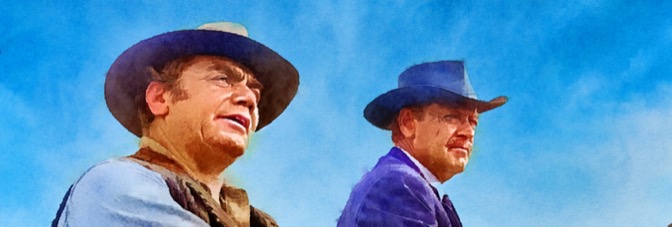
The Wild Bunch opens with a methodically executed heist slash shootout sequence. Director Peckinpah quickly introduces cast members, partially due to the dramatic plotting, mostly due to Lou Lombardo’s fantastic editing. All juxtaposed with some kids watching ants kill scorpions. The Wild Bunch opens with one heck of a declarative statement. Peckinpah wants to look…
-

Tootsie opens with Dustin Hoffman giving acting classes. He’s a failed New York actor–but a well-employed waiter–who must be giving these classes on spec. It seems like Hoffman being a beloved acting teacher might end up having something to do with the plot of Tootsie, which has Hoffman pretending to be a female actor in…
-

Monty Python and the Holy Grail is an excellent collection of very funny sketches on a theme. It’s really funny. It’s often exceptionally well performed–acted is a bit of a stretch–and it’s got a wonderful tone. It also lacks narrative momentum, which is kind of extraordinary since it’s about the quest for the Holy Grail.…
-

Champion is a boxing picture. It ends with a big fight, as boxing pictures are wont to do. However, as the fight starts and the film cuts between all the people Kirk Douglas’s Champion has wrong, the film isn’t asking the viewer to root for the protagonist. Douglas is a bad guy. The entire third…
-

Electric Dreams is a very strange film. And not just because it’s about a computer brought to life by champagne and electric fire. Not even because said computer has the voice of Bud Cort. It’s strange because it has no interest in having a conventional narrative structure, both in terms of the screenplay and the…
-
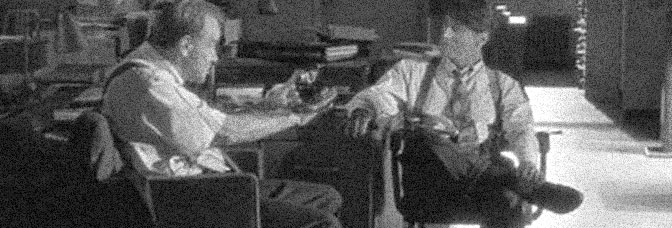
The first half of Glengarry Glen Ross is phenomenal. David Mamet’s screenplay is lightning fast during this section, moving its characters around, pairing them off for scenes or moments–the brevity is astounding. Half the movie is over and it feels like just a few minutes. Then the second half hits and the pace is still…
-

Maybe the first two-thirds of Blazing Saddles are really funny, getting great performances out of lead Cleavon Little, his sidekick Gene Wilder and especially Harvey Korman’s villain. Wilder’s almost an add-on character; he’s around so Little, in addition to being funny and likable, doesn’t also have to be an accomplished gunslinger. It’s one of the…
-

Lethal Weapon 3 is an expert action movie. Director Donner, cinematographer Jan de Bont, editors Robert Brown and Battle Davis do phenomenal work. Even though the cop action thriller plot of the film is its least compelling–dirty ex-cop Stuart Wilson is funding real estate development through arms dealing–those sequences are still good. The actors carry…
-

Three Kings ought to appeal to every one of my liberal affections–director Russell very seriously wants to look at the Gulf War and how it failed the people it should have been protecting. Over and over, Russell goes out of his way to make the American soldiers take responsibility. Not for the war itself, but…
-

There are a lot of excellent things in Batman: Mask of the Phantasm, but maybe my favorite thing is the end credits music. It’s smooth jazz. It’s this smooth jazz love song over the cast and when you see names like Abe Vigoda and Dick Miller and John P. Ryan in an animated Batman movie,…
-
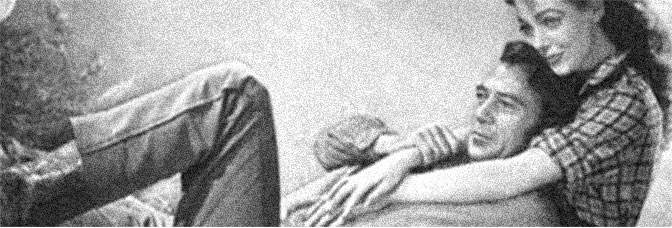
Along Came Jones gets by on its gimmick and its charm–it’s got a lot of charm, both from the cast and Nunnally Johnson’s screenplay, which is good as director Heisler doesn’t bring any. Jones is a lower budget Western, lots of rear screen projection, lots of boring setups from Heisler. He prefers medium long shots,…
-
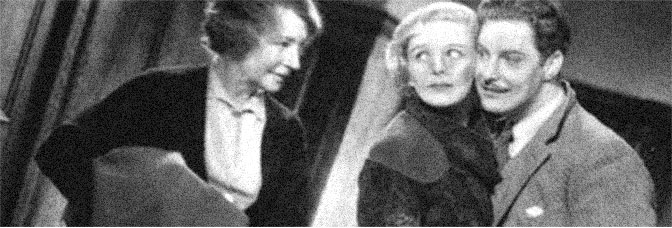
There are numerous good moments in The 39 Steps. Even the clunky finale is a good moment–director Hitchcock knows he’s got a good moment, he just doesn’t know how to fill in around it. This inability on Hitchcock’s part makes The 39 Steps immediately interesting when compared to the rest of Hitchcock’s filmography, but far…
-
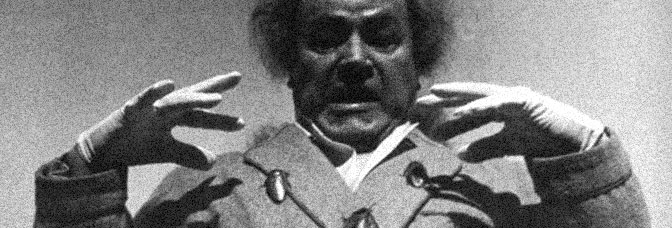
Creepshow is an homage to 1950s horror comic books. Director Romero and writer Stephen King go out of their way to make it feel like you’re reading one of those comics. It’s about the anticipation. The terror isn’t promised, it’s inevitable. So watching Creepshow is about waiting for the kicker. For the most part–and certainly…
-

Fun, odd-ball Godzilla movie has the monster defending Japan from a giant radioactive sludge monster. Director Banno uses the film to make an impassioned environmental statement and, against the odds (and despite a terrible suit for the sludge monster, Hedorah), he succeeds. Great special effects otherwise. Banno goes all in on his Godzilla as Japan’s…
-

For a film with quite a bit of grounded violence, Atlantic City is pretty genial. Director Malle shoots in close medium shots; there’s not a lot of grandeur to his shots. Atlantic City has grandeur, as a setting, but Malle doesn’t go out of his way to stylize it. Cinematographer Richard Ciupka shoots the whole…
-

There’s something off with Meet John Doe. Director Capra can’t find a tone for the film, but he also can’t find a pace for it. He tries to find the tone, over and over, usually with excellently directed sequences, but he just throws up his hands as far as finding the pace. If Robert Riskin’s…
-
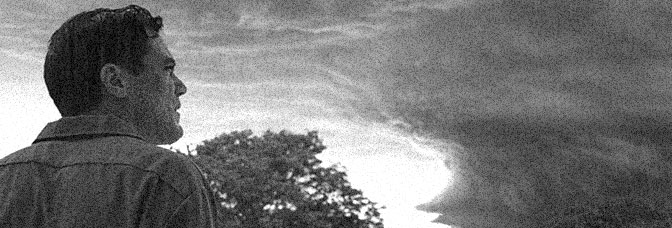
Take Shelter is relentless; sort of an anti-Field of Dreams. Michael Shannon is a husband and father, respectable, employed member of a somewhat rural community. There’s not tons of money (wife Jessica Chastain pays for their summer vacations by selling her sewn goods) and daughter Tova Stewart has lost her hearing and needs expensive implants,…
-

It’s very easy to talk about Star Wars: The Force Awakens as an event. Or maybe just talk about returning stars Harrison Ford and Carrie Fisher and even Peter Mayhew (who gets actual scenes with Ford this time, for the first time ever). But those avenues aren’t the most interesting, because the window dressing–all of…
 The Stop Button