The Stop Button
blogging by Andrew Wickliffe
Category: ★★½
-

Singularly hilarious teen comedy about best friend Jonah Hill and Michael Cera having their last chance to hook up with their dream girls before they graduate high school and go off to college. Juxtaposed with their adventures trying to get to the right party, their third wheel Christopher Mintz-Plasse goes off to have a wild…
-

Overall disappointing noir about down-on-his-luck screenwriter Humphrey Bogart getting his mojo back thanks to fetching neighbor Gloria Grahame taking an interest. Unfortunately they’ve just met because Bogart’s a murder suspect and, despite falling for him, Grahame isn’t exactly sure he didn’t do it. The leads are far better than the script, just never at the…
-

Well-paced, emphasis on fun fun con movie with corrupt DA Yu Ji-tae and his team of blackmailed con artists trying to take down the perpetrator of the biggest Ponzi scheme in South Korean history. Everyone’s got their own agendas, their own secrets, which complicates the already arduous task. Especially newest team member Bin Hyun, who…
-

Fun, funny sequel has Spider-Man Tom Holland touring Europe on a class trip (leaving his Spidey suit at home) and trying to recover from AVENGERS: ENDGAME. He’s also wooing crush Zendaya and avoiding Sam Jackson’s pleas for help in battling giant monsters. Great anchoring performance from Holland. Loads of other good stuff… just not the…
-
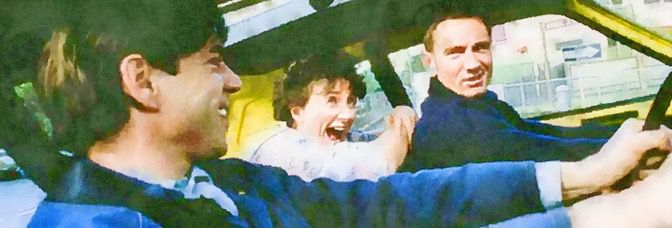
Charming comedy about an Autistic man (Colin Friels) who comes out of his shell in unexpected ways when he takes on lodgers John Hargreaves and Lindy Davies. Friels makes various contraptions–starting with model trains, then all the way up to his own version of a car. The script’s uneven, the pacing’s off, and director Tass…
-

Pretty good but should be a lot better considering the stars and director WWII submarine picture. Clark Gable is the commander who strong-arms his way onto Burt Lancaster’s boat to take it on a Captain Ahab suicide mission against a very successful Japanese destroyer. Good acting from the leads (almost great from Lancaster) and nice…
-

Painfully uncomfortable comedic drama/dramatic comedy about police officer Cummings (who stars in addition to writing and directing) breaking down after the death of his mother, leading to serious consequences regarding his job, his impending divorce proceedings, and his relationship with his daughter. Phenomenal showcase by Cummings for Cummings, who just doesn’t have any interest in…
-
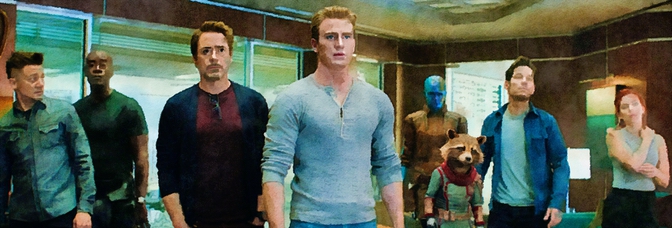
Avengers: Endgame had the ending I was hoping for, but maybe not necessarily the right ending for the movie. And it’s only got one. If Endgame has any singular successes, it might be in its lack of false endings. It does a lot of establishing work, sometimes new to the film, sometimes refreshing it from…
-

A Shock to the System is almost a success. It’s real close. It has all the right pieces, it just doesn’t have enough time at the end to put them away in their new arrangement. Everything’s in disarray because the film changes into a thriller—with a different protagonist—for a while in the third act. After…
-

If Lured had gone just a little bit differently, it could’ve kicked off a franchise for Lucille Ball and George Sanders. He’s the high society snob, she’s the New York girl in London, they solve mysteries. But Lured isn’t their detective story; it’s Charles Coburn’s detective story, they’re just the guest stars. Coburn’s a Scotland…
-

I’m not sure how much would be different about Red Dust if the film weren’t so hideously racist, particularly when it comes to poor Willie Fung (as the houseboy), but at least it wouldn’t go out on such a nasty note. Especially since the finale, despite being contrived, at least plays to the film’s strengths,…
-

The Trouble with Harry is very cute. It’s fine, the film’s intentionally cute, but it’s also somewhat frustrating. With the exception of the glorious Technicolor exteriors of Vermont leaves, director Hitchcock and photographer Robert Burks don’t do anything particularly interesting. John Michael Hayes’s screenplay is so confined it often feels like Harry is a stage…
-

Sensitivity Training is… an easy (but not in a pejorative way) comedy with winning (but not in a sarcastic way) lead performances. It’s never daring, but it has some good laughs. It’s better than middle of the road but it there’s not much exciting about it. Director Finell does a great job with a low…
-

Screenwriter Rod Serling really likes to employ monologues in Seven Days in May. John Frankenheimer likes to direct them too. And the actors like to give them. Because they’re good monologues. The monologues give all then actors fantastic material. Everyone except George Macready, who isn’t the right kind of scenery chewer for Seven Days. Maybe…
-

Despite excellent lead performances, Tumbleweeds is almost entirely inert–dramatically speaking. Janet McTeer is a thirtysomething single mom with bad taste in men who drags tween daughter Kimberly J. Brown all around the country after her latest romance goes bad. The romances never go too bad because McTeer has a preternatural ability to stay away from…
-

Lawyer Man is a tad too streamlined. It runs around seventy minutes, charting neighborhood attorney–meaning he works with ethnic types and not blue bloods–William Powell’s rise and fall from grace. At the end, he says something about the events taking place over two years, which the film accomplishes through a variety of narrative shortcuts, usually…
-

At no point in Creed II does anyone remark on the odds of Michael B. Jordan boxing the son of the man who killed his father. It’s all matter-of-fact. The sportscasters all seem to think it’s perfectly normal Dolph Lundgren spent the thirty-ish years since Rocky IV training his son to someday defeat the son…
-

Haywire’s plotting is meticulous and exquisite. And entirely a budgetary constraint. It’s a globe trotting, action-packed spy thriller with lots of name stars. The action in the globe trotted areas, for instance, is more chase scenes than explosions. Haywire doesn’t blow up Barcelona, lead Gina Carano chases someone down the streets. She doesn’t land a…
-

The third act of All That Heaven Allows is all about agency. Who has it, how they avoid it, why they avoid it. For a while it seems like it’s about Jane Wyman having it, then about Rock Hudson having it. Wyman’s always implied agency, right from the start. Hudson, who doesn’t have a scene…
-

Despite producing the film himself, top-billed James Mason doesn’t have the best part in Bigger Than Life. Instead, Barbara Rush–as his suffering wife–gets it. Mason’s a man with a life threatening chronic illness who has to take special medication. Slowly–though not too slowly–that medication starts making him psychotic. Rush is the faithful wife who ignores…
-

The Lodger begins four murders into the Jack the Ripper killings (the film actually goes over the historical number but also makes some rather liberal changes to the history). Just after a murder occurs, which seems a rather unfortunate event since the victim passes a number of police officers and even a vigilante gang, a…
-

While Mission: Impossible – Rogue Nation doesn’t deliver much in the way of plot twists, it instead delivers a lot of easy smiles and a handful of good laughs. The easy smiles aren’t just for the action sequences, which often focus on characters’ reactions to them–sometimes relief, sometimes awe at Tom Cruise’s derring-do–but also for…
-
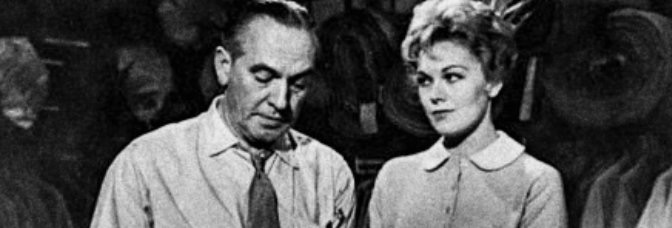
Paddy Chayefsky adapted his own play for Middle of the Night and there are some clear alterations with original intent. Fifty-six year-old widower Fredric March is in garment manufacturing. His first scene has him hanging out with the other old guys in the factory, kvetching about how there’s nothing to do but visit their children.…
-

So much of The Babadook is so good, it almost doesn’t matter the film’s third act is a series of little disasters. Director (and writer) Kent does such an exquisite job with the film until then, she can basically coast to the end credits. The Babadook is a spectacularly made film; Kent’s direction, Simon Njoo’s…
-

For most of its eighty minute runtime, Petticoat Fever operates entirely on charm and technical competence. The charm of its cast, not the charm of Harold Goodman’s screenplay (from Mark Reed’s play). Robert Montgomery is the sole operator of a wireless station in arctic Canada (save Otto Yamaoka as his Inuit servant; the film’s moderately…
-
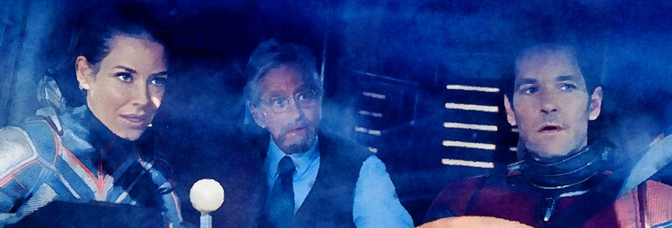
Despite being in the first scene in the movie and sharing most of Paul Rudd’s scenes with him, Evangeline Lilly is definitely second in Ant-Man and the Wasp. The film gives her her own action scenes–some truly phenomenal ones–but very little agency. She’s entirely in support of dad Michael Douglas; even after it’s clear Douglas–in…
-

Olivia de Havilland is top-billed on My Cousin Rachel, but Richard Burton’s the star. For better or worse. Burton’s a young English gentleman, de Havilland is his cousin. And his cousin–and guardian’s–widow. She doesn’t appear for the first twenty-five minutes of the film, which instead have Burton becoming more and more concerned for his missing…
-

The first half hour of Naked Alibi–the film runs just under ninety minutes so the entire first third–is separate from the remainder. Set in a small city (shot on the backlot, but rather well thanks to Russell Metty’s glorious photography), chief of detectives Sterling Hayden has been getting a lot of heat over police brutality.…
-

Giant has a fairly good pace for running three hours and twenty minutes. Even more so considering almost the entire second act is told in summary, with stars Elizabeth Taylor, Rock Hudson, and James Dean gradually getting more and more old age makeup. At his “oldest,” Hudson has a bulk harness, which is simultaneously obvious…
-

The extended version of Superman runs three hours and eight minutes, approximately forty-five minutes longer than the theatrical version (Richard Donner’s director’s cut only runs eight minutes longer than the theatrical). The extended version opens with a disclaimer: the producers prepared this version of the film for television broadcasts (three hours plus means two nights).…
 The Stop Button