Category: ★★
-

Ghost of Mars has a lot of earnestness going for it. Director Carpenter needs quite a bit his cast and he supports them even when they’re clearly not able to succeed–especially lead Natasha Henstridge. He takes the project seriously, his cast takes it seriously. Sure, it doesn’t exactly work out, but it’s not from lack…
-

Warning Shot is almost successful. For most of the film, director Kulik and screenwriter Mann Rubin craft an engaging mystery. Then the third act happens and they both employ cheap tricks and it knocks the film off course. It’s a rather short third act too–the film’s got a peculiar structure, probably to allow for all…
-

Alligator has quite a few things going for it. Lead Robert Forster is great, Robin Riker’s solid as his love interest and sidekick, John Sayles’s script has some excellent moments in it (some of them just being the attention he pays to Forster and Riker’s relationship), the giant alligator effects are solid, Larry Bock and…
-

Endings should never be too literal; especially not in a film where a character talks about having ambiguous endings to stories. Night People ends too literally, especially after a third act where all sorts of threads dangle near one another. Writer and director Lough doesn’t tie things up exactly, but he does go out of…
-
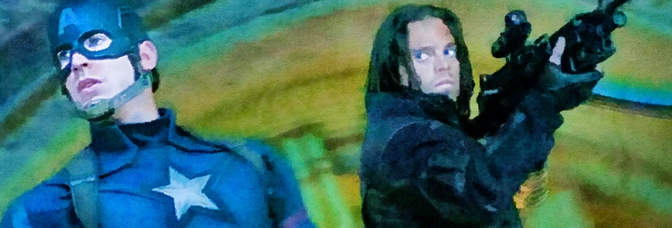
I wasn’t aware it was possible, but go-to Marvel superhero movie composer Henry Jackman is actually getting worse as he does more of these movies. His score for Captain America: Civil War is laughable, which is too bad, because if the film hit the thematic beats Jackman failed to achieve? Well, it wouldn’t fix the…
-

JFK is a protracted experience. It runs over three hours, it has no real narrative structure–the film opens with the Kennedy assassination and an introduction to the principal characters (and some of the possible conspirators, always played quite well by a guest star), then jumps ahead three years where it starts chronicling lead Kevin Costner’s…
-
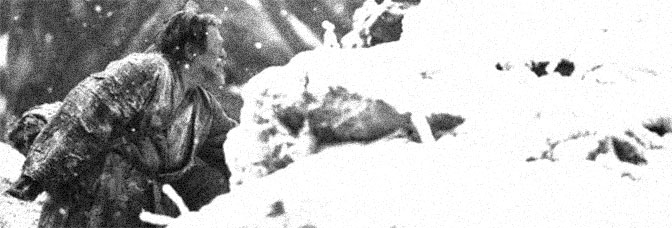
The Tiger: An Old Hunter’s Tale is a rather ambitious piece of work from director Park. Maybe too ambitious. It’s not just about juxtaposing old aged hunter Choi Min-sik against the last tiger in Korea (the film’s set during Japanese occupation when the Japanese were having all the tigers exterminated), it’s also about juxtaposing almost…
-

Mothra 3: King Ghidorah Attacks is simultaneously accessible but also one for the Mothra fans, which is a bit of a weird thing to think about. The film presupposes there are going to be dedicated Mothra fans in the audience and gears a lot of references towards them–at the moment I was appreciating the imagination…
-

Joan Crawford is top-billed in Love on the Run. Unfortunately, she has absolutely nothing to do in the entire film. Maybe if Clark Gable had something to do besides deceiving everyone (and then rescuing Crawford) the movie might make it through better, but he doesn’t. Love on the Run is eighty somewhat charming minutes of…
-

I want to like Star Trek Beyond more than I do. I want to be able to look past its problems. It has a whole lot of problems. Michael Giacchino’s music is awful. Stephen F. Windon’s photography is rather wanting. The four editors don’t do any particularly good work, though they’re not working with the…
-

Clerks operates on intensity. But it’s mostly dialogue and there’s not a lot of action. So director Smith relies on surprises, whether visual, in dialogue, in plot. At its best, Clerks is creative with its constraints. At its worst, Clerks is lead Brian O’Halloran whining (badly, I might add). There’s a lot of whining. Only…
-

Thirteen Women runs just under an hour. A minute under an hour. There was pre-release cutting on the studio’s part. But with those fifty-nine minutes, director Archainbaud is still able to create one heck of a creepy film. The film’s not a mystery. It’s not even a thriller. It’s all gimmick, but it’s suspenseful all…
-

The Creature Walks Among Us is a surprising disappointment. It never has potential exactly, but it does have something. Arthur A. Ross’s script is rather good for this production. Right off, Ross has decent science dialogue. His character interactions are good. And then it’s clear the cast is fairly solid too. I mean, sure, they’re…
-

Narratively, Windstruck falls apart in the last thirty-five minutes. Director Kwak’s screenplay stops and starts–not vignettes really, but definitely episodic. Leads Jun Ji-hyun and Jang Hyuk have their romantic courtship, which gets off to a rocky start as police officer Jun confuses Jang for a purse snatcher, set to sixties American rock and roll and…
-
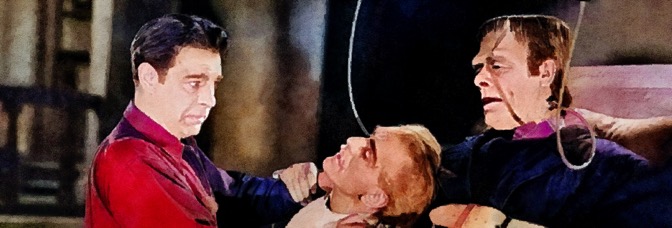
Just over half of House of Frankenstein is glorious. Kenton’s direction is outstanding, the sets are imaginative, the actors are doing great. Beautiful photography from George Robinson. House is a scary movie, what with physically but downright evil Boris Karloff running the proceedings. What doesn’t work–like John Carradine’s “just okay” Dracula–gets smoothed out by unexpected…
-

Ant-Man is almost a lot of things. It’s almost a kids’ movie, but not quite–there’s a maturity to the material without it getting overly complex. It’s almost a heist planning movie, but director Reed can’t quite bring all the elements together. He does get them into the right place–the crew hanging out in a particular…
-

I have a long nostalgic history with The Mole People, which I won’t get into, but there will be tangents. Because The Mole People’s one of the reasons I got into classic film. It’s one of the reasons I prefer watching black and white films for concise intellectual pleasure, usually in run time but sometimes…
-

Godzilla vs. Mechagodzilla is outrageous spectacle. The film has the perfect combination of story, director and special effects. The film allows its giant monsters limited personalities, feasible motivations. It even manages to raise questions of morality as this version’s Mechagodzilla is piloted by the anti-Godzilla task force. They’re blowing up just as much as the…
-

Batman v Superman: Dawn of Justice is, as a film, just as unwieldy as that title. Director Snyder, through a strange, comforting overconfidence, gets the film through its two and a half hour run time. By the end, when Snyder teases a cliffhanger, teases various comic book references, it’s a deceleration process. The viewer has…
-

Lizzie is about lead Eleanor Parker’s struggle with multiple personality disorder. More accurately perhaps, Lizzie is about Parker’s multiple personality disorder. As a protagonist, Parker disappears fairly quickly into the film’s eighty minute runtime. She doesn’t even get to open the film; it introduces her through other characters’ expository conversation. Screenwriter Mel Dinelli, quite unfortunately,…
-

Besides an occasional good performance and a lot of charming ones, Dazed and Confused only has so much going for it. Director Linklater is far more concerned with the script than he is with the direction. He doesn’t give the actors much to do and then doesn’t seem to want to spend much time with…
-

Somewhere near the end of the second act, The Beauty Inside internally collapses. The film’s well-directed, well-acted, often quite well-written, but it’s got one heck of a MacGuffin and no one can figure out how to address it. The Beauty Inside is about a man who changes into a different person every time he wakes…
-

Diabolique has an extremely messy script. Not just in how the film changes gears multiple times as far as the pace. The entire film takes place in a week (and a day, maybe) and the first half or so takes place in three days. Director Clouzot is initially deliberate with those seventy-two hours, encouraging the…
-
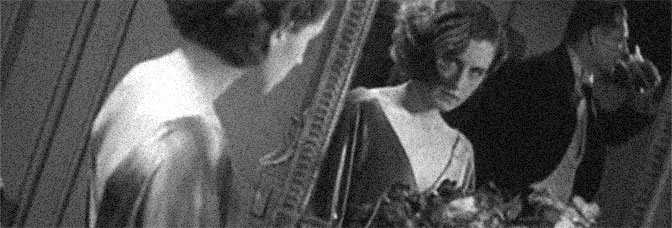
The first hour of A Free Soul is this extremely engaging, if occasionally melodramatic, story about Norma Shearer and Lionel Barrymore. They’re rebellious blue bloods–Barrymore’s Shearer’s father and he’s raised her to be an independent woman. He’s a defense attorney and a drunk. She’s his ambassador to their disapproving relations. She takes up with mobster…
-
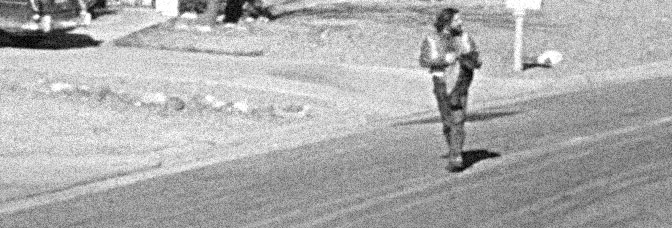
The best part of The American Dreamer is some of Warner E. Leighton and co-director Schiller’s editing, which only works thanks to Schiller and Carson’s filmmaking. They have this wonderful device where they film their subjects listening to recordings of their previous filming and then cut, often imperceptibly, between the subjects listening to themselves and…
-
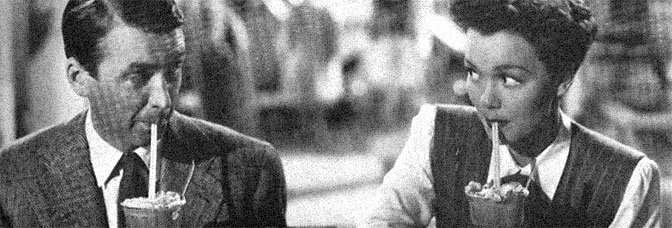
Magic Town is too much of one thing, not enough of another, but also not enough of the first and too much of the latter. There’s a disconnect between Wellman’s direction and Robert Riskin’s script. While Wellman can handle the broad humor of the script–there isn’t much of it and it stands out like a…
-

The Man from U.N.C.L.E. is surprisingly okay. Who knew Guy Ritchie would come up with such an interesting way of doing a spy movie. Sorry, a super-spy movie. It’s not an espionage movie, it’s a James Bond movie, only not. Because Ritchie isn’t anywhere near as interested in set pieces as he is how he…
-

American Splendor has a little too much going on. Directors Berman and Pulcini seem to want to do something different–Splendor opens as a cross between a docu-comedy and an attempt at time period preciousness (which gets them into trouble later as the film doesn’t progress, visually, out of the eighties). Paul Giamatti plays Harvey Pekar…
-

Mon Oncle has a concerning amount of narrative. Way too much of the film is about Jean-Pierre Zola and Adrienne Servantie’s bourgeois ultra-modern couple fretting over their son’s affection for his uncle, played by writer-director Tati. Tati’s protagonist does not live in the automated home of Zola and Servantie, but in a quainter, more traditional…
-

When Doctor Zhivago got to its intermission, I assumed director Lean would keep things moving as fast in the second half as he did in the first. These expectations were all high melodrama. Instead, the post-intermission section of Zhivago feels utterly detached from the first, even though there are a lot of returning faces. But…
 The Stop Button