Category: ★★
-

For most of The Guest, the script doesn’t matter. Either the acting or the filmmaking carry the scene. The first act is this fairly standard, fairly obvious—albeit beautifully produced—drama about an all American family in crisis after the death of the oldest son, a soldier, killed in action in the Middle East. Dad Leland Orser…
-

Harold Pinter television play about a successful toilet manufacturer (Leo McKern) and his eventual downfall due to jealousy and lust. Jealousy is with wife Jennifer Wright (who’s barely in it) and her… brother(?) Charles Gray, who McKern tries manipulating. Lust is secretary Vivien Merchant, who rather encourages him. Or does she… is it all in…
-

Engaging, if questionably executed, thriller about cop Kim Mu-yeol teaming up with gangster Ma Dong-seok to take down a serial killer, who none of the other cops believe exists but tried to kill Ma only Ma’s a badass gangster who now wants revenge. If the script were, if the direction were better, it’d be a…
-
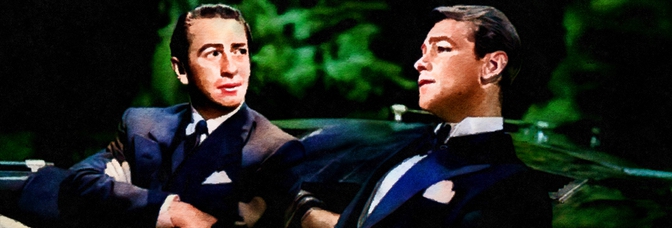
Not bad adaptation of F. Scott Fitzgerald novel makes plenty of adjustments for the Production Code and has some significant misses in the casting department, but lead Alan Ladd takes the part seriously, tries, succeeds. Unfortunately no one in the supporting cast comes anywhere near close, with both narrator Macdonald Carey and lost love Betty…
-

De facto physical comedy showcase for Michel Simon, something director Renoir isn’t anywhere near as interested in as trying for a social commentary. Based on the René Fauchois play, the limited cast (four principals) and location (a book shop and attached apartment), it is stagy without necessarily feeling stagy, a success for Renoir. Unfortunately, it’s…
-

High concept propaganda picture without enough concern for executing that high concept; neither from writer Dalton Trumbo or director Fleming, leaving the cast to (ably) fend for themselves. After a protracted setup with Spencer Tracy doing a middling job romancing Irene Dunne, the story moves to Tracy mentoring new flier Van Johnson (who will eventually…
-

Reasonably charming “real story” of CINDERELLA has a likable lead performance from Drew Barrymore, a decent (though not charming) performance from Dougray Scott as her prince, and a great one from Anjelica Huston as her wicked stepmother. It’s never quite as realistic as it pretends, because the script’s a mess. Tennant’s direction is a little…
-
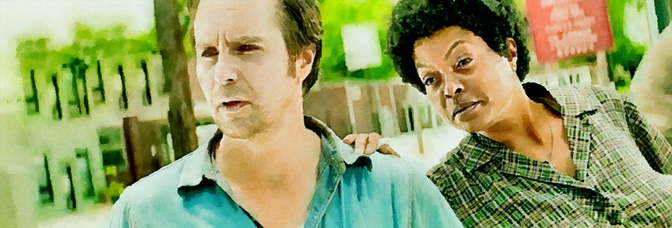
Could be worse, but should be a lot better based on a true story about a 1971 North Carolina school desegregation crisis. Sam Rockwell is the Klan leader, Taraji P. Henson is the (Black) community organizer. Will they somehow work together to make the world a better place? Henson and Rockwell have real thin parts–courtesy…
-

Effective (rather than good) thriller about a young woman, Chloë Grace Moretz, discovering her new best friend (Isabelle Huppert) is a possibly dangerous stalker. Lots of suspenseful set pieces; they just don’t add up to a successful film. It almost gives Huppert a great movie villain role, only not to have any idea what to…
-
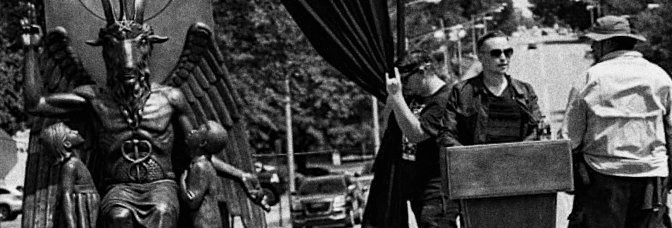
Hail Satan? starts with a joke and ends with Satanic Temple spokesperson Lucien Greaves having to wear a kevlar vest to a rally because so many Pro-Life, Born Again Christians are making legitimate assassination threats. The opening joke is one of the first Satanic Temple rallies, when they’re goofing on Rick Scott. In the span…
-

Major missed opportunity adaptation of a Somerset Maugham model about working girl Joan Crawford temporarily stranded on a South Seas island with Christian missionary Walter Huston. Huston takes it upon himself to make Crawford godly or ruin her life if she doesn’t consent to it. Sometimes great Crawford performance just doesn’t work with Huston’s loud…
-

Born in East L.A. is a much lighter comedy than expected. Maybe not more than writer-director-star Cheech Marin portends—and a lot of the film’s ineffectiveness isn’t first time feature director Marin’s fault, he needed one of his four editors to have some clue about creating narrative continuity. And while his cinematographer—Álex Phillips Jr.—isn’t at all…
-

Given Dramatic School is all about top-billed Luise Rainer’s rise of stage stardom, it might help if she were actually the protagonist of the story, instead of its—occasional—subject. Because Rainer’s got to share the film with a bunch of other characters, none particularly interesting. There’s Rand Brooks, who’s the headmaster’s son and from a long…
-

It Happened in Hollywood is very nearly a success, which is surprising since most of the film is entirely mediocre. There’s a great lead performance from Richard Dix, as a silent movie cowboy who can’t make it in talkies (though, to be fair, the one bombed screen-test scene was more used to comment on the…
-

Right until the action-packed finale of The Mighty Quinn, there’s nothing the film can do lead Denzel Washington’s charm can’t forgive. But the finale, which incorporates poorly choreographed and poorly shot capoeira (from obvious fight doubles), a helicopter, a machine gun, suddenly awful music from composer Anne Dudley, and a handlebar-mustached M. Emmet Walsh in…
-

Somehow Bend of the River manages to be too cluttered while running too short at ninety-one minutes. The film starts great; James Stewart is a former bad man of the West who’s trying to be a good guy and become a farmer (or rancher if he can get himself some cattle). He’s guiding a wagon…
-

Jean Simmons doesn’t smile until over halfway through The Happy Ending. The movie runs almost two hours and has a present action of like eighteen years. The first eight minutes are a mostly wordless summary of John Forsythe courting Jean Simmons in the early fifties. The time period’s not important–even though the film taking place…
-

It’s very difficult, even when an effects shot fails, to not be impressed with director Polák’s practical ambitions with Icarus XB 1. The film needs effects shot-it’s about a starship on twenty-eight month voyage from Earth to Alpha Centauri. The first starship to take that trip. So there’s general establishing shot stuff in space but…
-

With Hello Destroyer, writer and director Funk spares down a character study. He saps the action from it–and there’s a lot of potential action, as the character the film studies is a rookie pro hockey player (Jared Abrahamson). Abrahamson’s a quiet loner who fits in well enough with the team, but is rather passive. Outside…
-

For most of its seventy-ish minute run time, The Purchase Price does really well with the way it does summary. It does so well it never even seems possible the film’s just going to welch on everything in the third act… but rather unfortunately, it does. The big problem is how the film–specifically Robert Lord’s…
-

Experiment Perilous is a strange film. Not the plot–well, some of how the plot is handled–but the strangeness comes from the result of how the film is executed. It’s a Gothic family drama set in twentieth century New York City without a lot of the family. There’s a flashback sequence, but Perilous is rather modestly…
-

The Other Side of the Wind opens with two very ominous notes. Well, two and a half. The first is a text card explaining the film’s history, but not much about its resurrection. For example (and here’s the half ominous note), was it director Welles’s idea to do multiple aspect ratios? It makes sense, but…
-
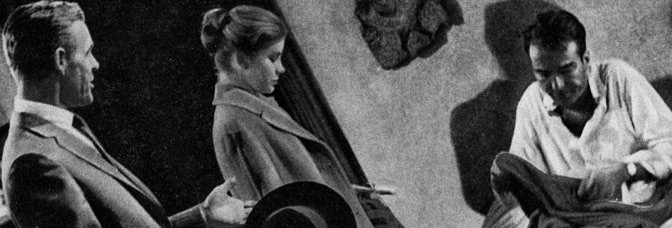
The most frustrating thing about Lonelyhearts is Donehue’s direction. While not a television production, Donehue directs it like one. He’ll have these shots of star Montgomery Clift baring his soul to girlfriend Dolores Hart and Donehue will stick with Clift, no reaction shot on Hart much less letting her hear the whole thing. Of course,…
-

It was until after The Cheap Detective was over I realized there’s never anything about Peter Falk’s fee. It’s not clear whether he’s cheap or not. It’s never addressed. It’s one of the many things Neil Simon’s screenplay never gets around to addressing, like if the third act is all a scheme or if it’s…
-
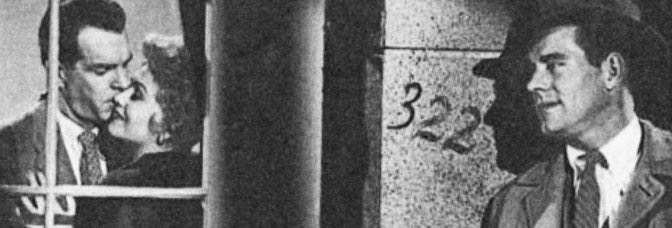
As far as suspension of disbelief goes, nothing in Pushover compares to the second scene of the film, when twenty-one year-old Kim Novak makes goggly-eyes over forty-eight year-old Fred MacMurray. Both actors handle it straight, which is impressive on its own, but clearly MacMurray realizes how lucky he’s got it. Turns out he’s a cop…
-

Somewhat recently I read an observation along the following lines–Ingmar Bergman created great roles for actresses by giving them absolutely awful emotions to essay. Whoever said it (I’ve tried, without success to properly credit her) said it a lot better. But at around the hour mark of Autumn Sonata, I couldn’t think of much else.…
-
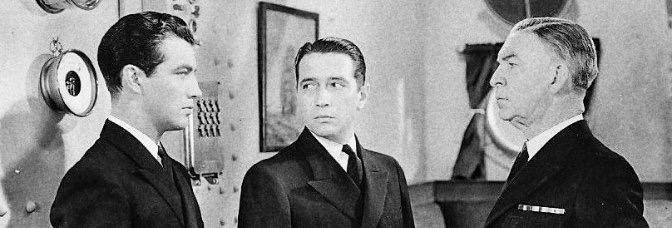
Murder in the Fleet is a reasonably diverting little B murder mystery; Frank Wead and Joseph Sherman’s script is almost better than the film deserves, given it doesn’t even run seventy minutes and doesn’t even bother pretending it’s got subplots. Well, outside top-billed and sort of lead Robert Taylor’s romantic troubles with blue blood Jean…
-

Sometimes a Great Notion is all about the joys of toxic masculinity and apathy. At some points in the near two hour runtime, it might hint at being about the virtues of rugged American individualism, family, and maybe capitalism, but it’s not. Screenwriter John Gay avoids exploring those virtues like the plague or directly contradicts…
-
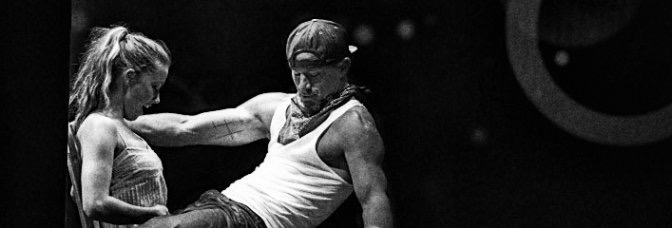
Every once and a while, Magic Mike XXL throws in some vague nod towards having character development. It doesn’t. And the movie knows it doesn’t need any, but it still pretends it does. All of the characters have the same arc, with the exception of “lead” Channing Tatum. He’s only the lead because he’s Magic…
-

Let Me In is ponderously stylized. Director (and screenwriter) Reeves approaches the film–about a twelve year-old boy (Kodi Smit-McPhee) who befriends the new girl in his apartment complex, also ostensibly twelve years old. Chloë Grace Moretz is the girl. She’s not just a girl, she’s a vampire. Reeves shoots it kind of like “She’s a…
 The Stop Button