The Stop Button
blogging by Andrew Wickliffe
Category: ★
-

Anderson is clearly getting bored with the Resident Evil franchise at this point–even though he returns to direct (I imagine it was because it’s in 3D). Afterlife has three distinct beginnings, something I’m actually unfamiliar seeing. Having too many endings is one thing, but having too many beginnings… doesn’t happen a lot. The problem is…
-
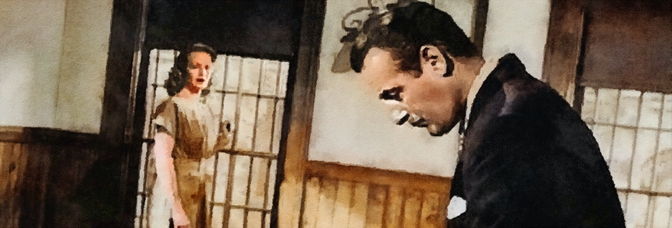
If you took a film noir and removed the noir, you might have something like Criminal Court. The plot is noir. An upstanding attorney (Tom Conway) accidentally kills mobster (Robert Armstrong) and runs off, unknowingly leaving his girlfriend (Martha O’Driscoll) to take the wrap. What does Conway do? Does he try to falsify evidence to…
-

There’s a very interesting throwaway line in The Recruit. During the traitor’s confession, there’s an implication the betrayal occurred following the CIA ignoring information they could have used to prevent 9/11. Like everything related to 9/11, it’s all implied (this one is less obvious than the others), but it’s definitely there. Given the film seems…
-
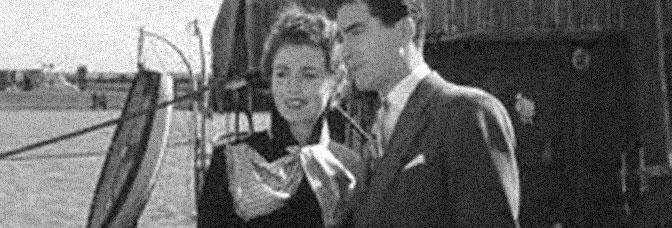
I’m not sure I’ve ever seen a horror film not interested in being scary before Ghost Ship. It seems like a strange concept, but certainly one with a lot of possibilities. Unfortunately, I’m not sure Sewell knew he was making a scary movie without a single scare. I don’t really know what he was doing.…
-
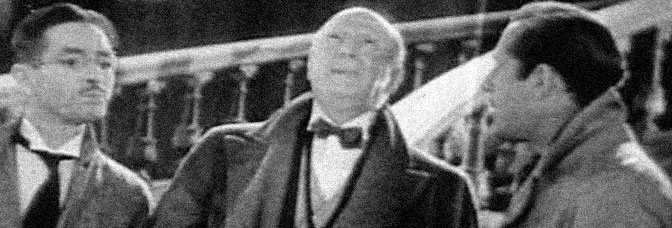
I’m not sure when the “old dark house” mystery film started–I haven’t seen any silent entries in the genre but I imagine there must be some, especially since the genre also appears to have been popular on stage. The Ghost Walks, in 1934–five years into talkies–shows the genre staling already. In an inventive plot development,…
-

Apparently, given the chance, comic book writers write screenplays just like comic books. Sitting through Under the Red Hood is not an unpleasant experience–Bruce Greenwood, voice alone, is the best Batman since Michael Keaton, animated or actual–but it’s got an atrocious plot structure. First, the movie would be unintelligible for anyone who didn’t read Batman…
-
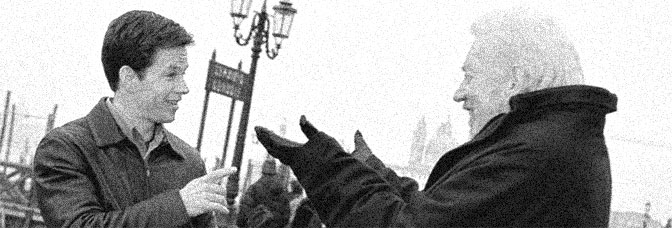
So Edward Norton hated making The Italian Job? I’m shocked. (According to the Internet gossip, it was to fulfill a Paramount contract–they even gave him a car… I don’t remember if it was a Mini Cooper). It’s the lamest role Norton’s ever played. As an actor without a persona, he doesn’t belong in the Italian…
-

The revenge thriller isn’t a new genre. Even if it only got mainstream popularized in its current (and lengthy) violent incarnation with Death Wish, one can look back to the beginning of cinema for entries. In other words, The Outlaw‘s nothing new… at all. But the particular Korean filmmaking sensibilities added to this particular revenge…
-

Kong has definitely seen Apocalypse Now–to the point he pays homage–and Full Metal Jacket–to the point he doesn’t really pay homage, but kind of just lifts moments and shots. I guess a horror movie set during the Vietnam War’s a good idea. I mean, there’s a lot of history, a lot of possibilities for ghosts–one…
-
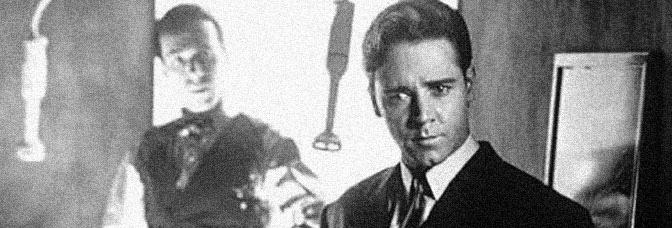
Virtuosity, being from the 1990s, is from the era when both Russell Crowe and Denzel Washington didn’t only appear in films directed by the Brothers Scott and Kelly Lynch was still in movies getting theatrical releases. It’s an early CG movie, with lots of computer references and set in the “near future.” It’s incredibly solid,…
-
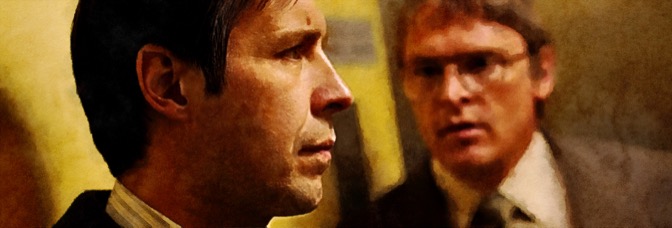
This adaptation runs almost ninety minutes (almost) and the source novel is, according to Amazon, 400 pages. So I’m guessing the novel doesn’t read like a disjointed, James Ellroy goes to England, but what do I know, I’ve only seen the movie. But it’d be hard at 400 pages… even with a big font. There’s…
-
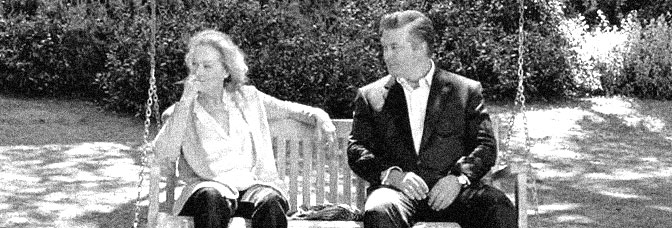
It’s not difficult to come up with compliments for It’s Complicated. Alec Baldwin is very funny. Unfortunately, he’s very funny playing a slight variant on his character from “30 Rock.” Similarly, John Krasinski is very affable. Unfortunately, he too is simply playing a variation on his “Office” character. The film is from Universal (or NBC…
-

A friend of mine (colleague might be the better designation, but friend first, I suppose) has given up on punishing slash hating films for having bad endings. I disagree. Otherwise, I’d give The Losers four stars and scream recommendations for it from the rooftops. Because the end of The Losers, an exceptionally problematic action revenge…
-

I started Solomon Kane with a decidedly negative opinion of James Purefoy. The first twelve to fifteen minutes did nothing to change my mind. Then something happened. The script stopped being so expositive in its dialogue and all of a sudden Purefoy got really good. He kept it up until the end of the film…
-

I’m not entirely sure what I was expecting from 1974 but I didn’t get it. I think I thought it was a serial killer investigation, based on a real case. Instead, it’s this melodramatic crusading reporter thing, with the serial killings taking a back seat to that emphasis. Except then the crusading reporter thing takes…
-

Has there ever been a major studio ninja movie before? As far as I know, no. There were the Cannon ones in the eighties, but those, obviously, don’t count. Actually, I didn’t even know Ninja Assassin opened theatrically. I’m slow keeping up with what qualifies one film to be released theatrically while another not. The…
-

Ayres is a degenerate gambler (who cleans up nice) and Rogers is the girl who loves him, despite herself, of course, in this breezy melodrama. In terms of particulars, it has almost nothing to recommend it. Ayres is a little bit too believable as the callous lead, who purposely eschews all advice as he lucks…
-

The last time I tried watching Starship Troopers 2, I turned it off. I have no idea how I made it past that point this time, but I’m almost glad I did. The big problem with the first act is Brenda Strong, who it centers around. Strong’s acting “style” fit in the first film, but…
-
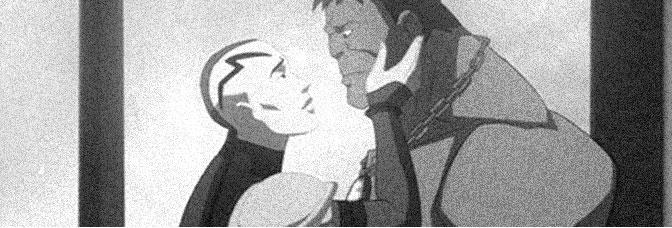
I think the only reason I liked this one is because it’s incredibly harsh (no pun). Not only do they have one character–while thirteen years old–killing her parents (after they’re turned into zombies) on screen, she then kills her little brother, now a zombie too (off screen), and later having a little kid die in…
-

I actually kind of like The Wedding Singer; it’s blandly inoffensive, has a solid 1980s soundtrack and kind of plays like how “Everybody Hates Chris” would have played if it had sucked instead of being the best sitcom since “Arrested Development.” On that subject, the problem with The Wedding Singer is it makes easy eighties…
-

Watching “Damages,” it was always surprising to me what a good actor Timothy Olyphant has turned out to be. Before it, all I’d really seen him in (albeit a while ago) was Scream 2 and he’s absolutely terrible in that one. In A Perfect Getaway, he proves able to translate his ability into a more…
-
I kind of remember the “Land of the Lost” theme song, but don’t remember ever watching the show. I watched the movie because of an interview Elvis Mitchell did with Silberling, but have no idea what he said in that interview to make me interested in seeing it. Land of the Lost was a box…
-

The Taking of Pelham 1 2 3 might be the worst directed film I’ve ever liked. I haven’t seen a Tony Scott effort in eight years and he just gets more and more obnoxious with the post production effects. It’s like he’s competing with himself to affect more style and be more visually incoherent than…
-
There’s a certain amount of competence to the plotting in Green Lantern: First Flight. It’s too bad the filmmakers didn’t pay the same attention to the characters. The film basically lifts the plot structure from any number of established sources–Star Wars, The Matrix, a little Superman here and there–to tell this origin story about a…
-

Sometimes competency is a bad thing. Screamers is a fairly well-made–Duguay’s composition isn’t spectacular, mostly because the sets were all CG embellished so there was only so much he was actually shooting–but there are some excellent effects sequences. There’s some nice stop motion and then a great shuttlecraft liftoff. Duguay knows how to spend his…
-

Didn’t John Woo used to have a style? I mean, I know he had birds and he had the guns pointed at each other, but didn’t he have some style? He’s got no style in Paycheck, which ends up being one of the best movies John Badham never made. It’s a complete time waster, the…
-

A substantial portion–probably seventy percent–of Paperback Hero is solely about Hugh Jackman being charming. The rest, presumably, is about being a Claudia Karvan movie. But it’s really not. Karvan’s top-billed and she’s got, I guess, the bigger story, but Jackman’s the protagonist for the parts of the film where there’s a protagonist–the result is a…
-

One has to wonder if, had things worked out differently, Harrison Ford would have made a Han Solo prequel in the mid-1980s. I mean, he did reprise Bob Falfa. While the X-Men movies did make Hugh Jackman a star, they didn’t really make him the biggest star in the world. But X-Men Origins: Wolverine does…
-

Apparently all the X-Men movies needed was the vapidness of Brett Ratner. What’s strangest about his replacing of Singer is the mutation being a metaphor for homosexuality. Singer used it as a metaphor (poorly) for race in the first one. I don’t think there were any metaphors in the second one, but it works perfectly…
-
If it weren’t for the fantastic Brad Fiedel music (until the end credits) and the Pittsburgh locations (the city really is underutilized as a filming location, with Striking Distance taking fantastic advantage of its mix of urban, green and water), there’d be nothing to distinguish this one. It’s a B movie given a high profile…
 The Stop Button