Category: ★
-

There’s something strangely likable about Rise of the Fellowship, which serves as an affectionate homage–if technical spoof as well–of Peter Jackson’s Lord of the Rings adaptations. Ron Newcomb’s direction isn’t original, but it’s effective, and Brian Pennington’s photography is outstanding. The film centers around four high school students who have to beat the odds to…
-

The Curse of the Cat People is apparently Kent Smith. Well, him and writer DeWitt Bodeen. Smith and Jane Randolph return from the first film, this one set over six years later. They have a daughter–Ann Carter in an almost perfect performance–who’s a lonely child. She eventually imagines herself a friend, personified by Simone Simon…
-

Given how much fun the actors have in Escape Plan, there are a couple big unfortunates. First is director Håfström; he isn’t able to direct the actors through the poorly scripted parts and he also can’t direct the one-liners. Plan is the first time Sylvester Stallone and Arnold Schwarzenegger have ever done a buddy picture…
-

Best Seller either isn’t sleazy enough or it isn’t glitzy enough. Larry Cohen’s script about a cop who writes true crime books teaming up with a hitman desperate to be the subject of such a book needs something distinctive about it. Leads Brian Dennehy and James Woods are okay, but Cohen’s script doesn’t give them…
-
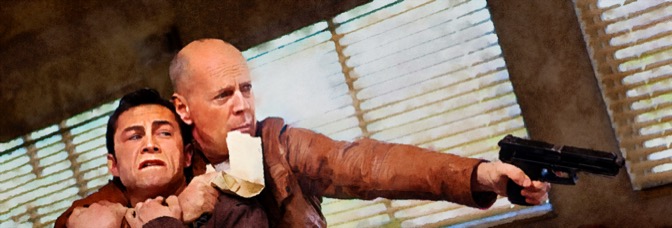
A lot of Looper is a film noir set in the near future. Criminal–but basically good guy–Joseph Gordon-Levitt ends up on a farm, as de facto protector to a young woman (Emily Blunt) and her kid. Except this part comes after Looper is an action movie where Gordon-Levitt teams up with his future self (Bruce…
-

Crazy People is distressingly tepid. It has a number of fine performances–Dudley Moore’s sturdy and likable in the lead, Daryl Hannah’s outstanding as his love interest and the supporting cast’s so good I’m going to wait a while to talk about them to go out on an up note. But the film itself? Very tepid.…
-

Save lead Michael Keaton, the Chicago location shooting and the technical competence, Touch and Go plays like an overlong sitcom pilot. Keaton’s a star hockey player who gets mugged by a gang of young “toughs,” including Ajay Naidu. Because he’s a nice guy, Keaton doesn’t turn Naidu into the cops, instead getting involved with him…
-

It should be obvious British Intelligence is based on a play, so much of it takes place in a single house, but director Morse and screenwriter Lee Katz open it up enough it never does. Actually, even though it’s a low budget picture, their expansive approach even obscures the concentration around the one setting. Intelligence…
-

Murder on a Honeymoon is a tepid outing for Edna May Oliver and James Gleason’s detecting duo. It’s the third in the series and, while Oliver and Gleason are back, it’s clear some of the magic was behind the camera. Robert Benchley and Seton I. Miller’s script is a little too nice (in addition to…
-

No doubt, Deadball is a strange one. And not just because thirty-six year-old Sakaguchi Tak is playing a seventeen year-old and actress Hoshino Mari is playing his sixteen year-old male sidekick. I’m not even sure the suggestion conservative Japanese politicians are really in the pockets of Nazis is Deadball’s strangest feature. It’s just a messed…
-

With a larger budget–and a different director–Number One with a Bullet might succeed. It’s a wry spoof of cop movies and TV shows, pairing crazy man Robert Carradine and urbane Billy Dee Williams. One has to assume Carradine’s casting against Revenge of the Nerds-type is part of the joke, but Williams seems to be there…
-

The first half of The Girl Who Kicked the Hornet’s Nest falls victim to the Halloween II phenomenon. The main character–in this case Noomi Rapace–is in the hospital and out of commission. Hornet’s Nest is never comfortable giving insight into Rapace’s actions, which makes it a mildly pointless final entry. I mean, a Hollywood ending…
-

Bullet to the Head feels a little like an eighties buddy action movie. Between Sylvester Stallone in the lead and Walter Hill directing, it should feel more like one. But Stallone plays this one mature. He might not be playing his actual age (probably sixty-five at the time of filming), but he’s definitely supposed to…
-

Come Live with Me features exquisite direction from Clarence Brown. Whether he’s pacing out a reveal, directing a conversation or just being inventive with composition, he does an outstanding job. George J. Folsey’s photography helps, as do the fantastic sets. It’s a shame good direction can’t overcome a truly lame screenplay from Patterson McNutt. The…
-

Thank goodness for Helena Bonham Carter and Sacha Baron Cohen… otherwise, someone might confuse Russell Crowe’s performance as the most inept in Les Misérables. Actually, Crowe’s quite a bit better than Eddie Redmayne and Amanda Seyfried too. Redmayne just can’t sing–neither can Crowe, but it doesn’t impair his acting too much–and Seyfried’s just misused. Director…
-

Sector 7 is about twenty-two years late. It’s another “Alien with sea monsters;” 1989 had two and a half major entries in that genre. It does, however, add one interesting element. Wait, I guess it’s more Aliens with sea monsters. The female lead, Ha Ji-won, is more Ripley in tough mode. Anyway, the interesting element…
-

All My Dear Miss Aldrich is missing is a good script. Well, it’s missing some other things, but with a good script, it could have survived. The film has a lot of events in the first thirty or forty minutes, with the remaining minutes centered on a mystery. But it’s not really a mystery because…
-

The Spiral Staircase opens with this lovely homage to silent cinema. Director Siodmak takes great care with the setting in time–Nicholas Musuraca’s sumptuous cinematography helps–and then Spiral becomes a waiting game. Certainly if Siodmak took such great care with one sequence, he’ll return to that level of care again…. However, he does not. The rest…
-

It’s interesting to hear Peter Weller voice Batman in Batman: The Dark Knight Returns, Part 1 (is that title long enough?) since Dark Knight Returns, the comic, always felt like Batman meets Robocop. Not so much because of the tone, but because Frank Miller uses media intercuts to flesh out the setting just like Robocop…
-
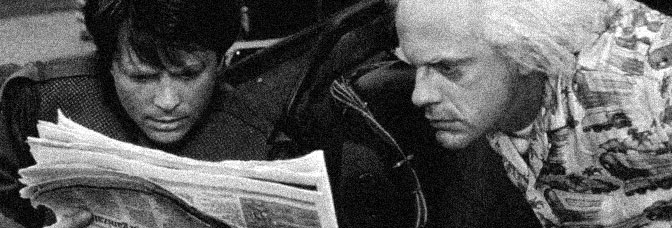
Back to the Future Part II, while front heavy with special effects, ends up being a small picture. The first half or so deals with the sequel setup from the first movie’s finale but then Part II tells a side story set during the first film. Time travel franchises can be, it turns out, rather…
-
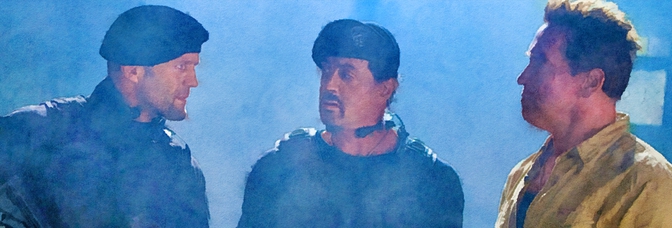
The Expendables 2 plays a lot like an eighties “G.I. Joe” toy commercial. The vehicles all fire missiles and have detachable smaller vehicles. As opposed to having absurdly named characters with silly themes (there’s no “ninja Expendable”), the characters instead have silly names and amusing personalities. The script, from Sylvester Stallone and Richard Wenk, throws…
-

Besides Mark Wahlberg, it’s hard to say where Traveller goes wrong. There are some problems with Jim McGlynn’s script, but they’re mostly little ones. Julianna Margulies’s character’s name isn’t repeated enough, leaving her as “Carol from ‘ER’” for a lot of the movie. And even Wahlberg improves somewhat. He’s utterly incapable of humility; sometimes it’s…
-

Rock of Ages is middling. With a better script and better lead actors, it would likely be much improved. Female lead Julianne Hough gives an okay performance, but her singing leaves a lot to be desired. Male lead Diego Boneta can sing, he just can’t act. Their romance, the ostensible central story of Ages, is…
-

With Moonrise Kingdom, Wes Anderson has finally put his directing craft so far ahead of his narrative, the narrative doesn’t matter. Neither, in Moonrise‘s case, do the actors. There isn’t a single outstanding performance in the film… maybe because Anderson and co-writer Roman Coppola don’t write one. They’re to the point of using Jason Schwartzman…
-

For maybe forty minutes–from twenty minutes in to the hour mark–Lost in Space is actually rather engaging. It’s not any good as a narrative, but Hopkins’s direction of the space sequences is phenomenal. The film opens with something familiar, a dogfight out of Star Wars, but the later sequences are not. They aren’t original, but…
-

It’s not hard to identify the problem with White Sands. Daniel Pyne’s script is terrible. His characters often act without motivation and the double and triple crosses he writes into the plot never have any pay-off. It doesn’t help director Donaldson sees himself–and not incorrectly to a point–doing a desert noir in the vein of…
-

For some inexplicable reason, partway through The Avengers, director Whedon and his cinematographer, Seamus McGarvey, decide to switch over to really bad DV. The entire movie might be DV, but the middle section is painfully obvious. With Tom Hiddleston’s British machinations, it feels like the biggest, strangest (and possibly worst) “Masterpiece Theatre” ever. While Whedon’s…
-

Serial Mom gets a lot of mileage out of its concept–Kathleen Turner’s June Cleaver as a serial killer (actually, spree killer)–before it runs out of gas. Sadly, once it does, all of the plot problems become clear. But then Waters brings it to court and Mom is reinvigorated. Turner’s not special during the first hour…
-

Spaltro tries to do a lot with Things I Don’t Understand. The film starts with confrontational narration from protagonist Molly Ryman. The first twenty minutes feel like an extended trailer rather than the film itself, establishing Ryman as an unlikable, insincere egotist. It turns out there’s a logic to the first person exposition, but it…
-

For the final Inspector Hornleigh picture, the filmmakers go propaganda. They do have some fun with it—the film’s first sequence is Gordon Harker and Alastair Sim on an army base, undercover as aged privates, investigating scrounging. It’s all played for laughs, sort of wasting some of the running time before Harker and Sim can get…
 The Stop Button