The Stop Button
blogging by Andrew Wickliffe
Category: ★
-

Bad direction from Rich hobbles the whole picture, which concerns destitute blue blood turned gigolo Michael Sarrazin plotting with latest squeeze Gayle Hunnicutt to off (Sarrazin’s) rich aunt, Eleanor Parker, for her money. Complicating matters is Parker and Sarrazin’s history. They’ve been carrying on in the biblical sense since Sarrazin was a teenager. Icky bad.…
-

The Watch deals in caricature and stereotype. Ben Stiller’s the anal-retentive, Vince Vaughn (can anyone even remember when he tried acting) is the aging bro, Jonah Hill’s the kid in his early twenties who lives with his mom (and hordes guns, which dates the film) and Richard Ayoade’s the deadpan, socially awkward British guy. If…
-

The Dream Master has a really lame final scene, which is too bad since the second half of the film actually gets rather good. The script–from Brian Helgeland, Jim Wheat and Ken Wheat–is impressive for a couple reasons. First, it gives Lisa Wilcox a great hero arc across the traditional gender lines–she’s the nerd crushing…
-

The Man Who Came to Dinner is, a little too obviously, an adaptation of a play. There are occasional moments outside the main setting–the home of Grant Mitchell and Billie Burke–but director Keighley doesn’t do anything with them. All involve Richard Travis’s character, which suggests maybe his subplot (local reporter in the center of a…
-

Despite good performances and direction, Godard’s examination of the bourgeois out of their element–and in the purview of communal cannibals and people out of novels–is rarely effective. Godard immediately puts the audience on guard, then tries to shock with violent misogyny, animal cruelty, and sight gags involving car accidents. He’s not interested in connecting with…
-

Robinson Crusoe on Mars is silly. It’s inconsistent and silly. The film survives a weak first act–the narrative trick of opening with one character (played, poorly, by Adam West) and then transferring to another (Paul Mantee) is fine, only Mantee doesn’t get any good material for quite a while. Mars, which–as the title suggests–is about…
-

For the Emperor is a combination of bloody and pointless. Director Park is sort of impersonal about the violence–even though it’s usually very personal (knife fights)–as though giving it some distance will make the characters seem less reprehensible. Lee Yong-soo’s screenplay barely shows any of the victims of the gangsters; it’s all just tough bad…
-
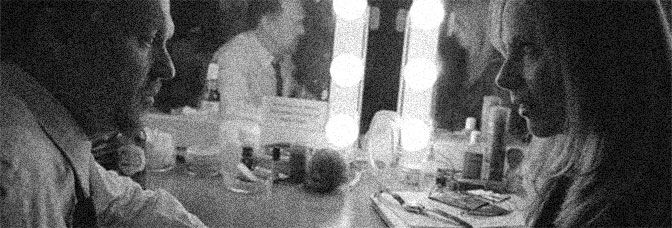
The funniest thing in Birdman is, surprisingly, not when Michael Keaton and Edward Norton get into fisticuffs and Norton’s in nothing but speedos. The funniest thing in Birdman, which is about former superhero movie megastar Keaton staging a pseudo-intellectual comeback stage production of a Raymond Carver adaptation, is–after Norton makes fun of Keaton’s character’s overly…
-

Shallow Grave has bold colors. The production design–by Kave Quinn–isn’t particularly good. Over ninety percent of the film takes place in a rather boring apartment. But that boring apartment has a lot of bold colors. Sure, photographer Brian Tufano doesn’t know how to shoot those bold colors to make them effective, but he doesn’t know…
-

Guardians of the Galaxy does something splendid and director Gunn never really acknowledges it, which just makes it more splendid. The Rocket Raccoon character–beautifully voice acted by Bradley Cooper–is easily the most successful CG film creation to date. And Cooper gives the film’s best performance; whoever directed Cooper in the sound booth, be it Gunn,…
-

Where’s Marlowe? is a pseudo-documentary about a pseudo-documentary about private investigators. Miguel Ferrer is the private investigator and he seems like a good fit for the role, only director Pyne and co-writer John Mankiewicz don’t actually need him for anything. The point of the film, as things move along, is getting the documentary makers (played…
-

Bullets Over Broadway has a lot going for it. Between Chazz Palminteri, Jennifer Tilly and Dianne Wiest, there’s a lot of great acting and great moments. There are a decided lack of great scenes, however, thanks to director Allen’s choice of John Cusack as leading man. Cusack doesn’t so much give a performance as imitate…
-

The Human Condition I: No Greater Love is about, you guessed it, the human condition and the problems with being a humanist when you’re working in a foreign country your country has invaded and occupied. The film takes place in 1943, in Japanese-controlled Manchuria. It’s a desolate spot, but lead Nakadai Tatsuya doesn’t want to…
-

How do you follow up Nazi zombies? Nazi zombies fighting Russian zombies. Sort of. That aspect of Dead Snow 2 comes near the end, with director Wirkola first having to deal with the fallout from the first movie. But Russian zombies don’t really have the bite of Nazi zombies, so Wirkola just amps up everything…
-
Fear in the Night shows just how far something can get on the gimmick. Bank teller DeForest Kelley wakes up one morning from the dream he killed someone. He then discovers evidence of his crime and, as he suspects he’s going mad, starts going a little mad. If not totally mad, he does make some…
-
Quicksand is a film noir with room for cream and about five sugars. The genre often has a morality element to it, but this entry goes way too far with it. Or it might just be how the film treats lead Mickey Rooney. Most film noir male protagonists are overconfident simpletons taken in by devious…
-

Busses Roar is a slight propaganda film. It doesn’t fully commit to any of its subplots, not even the patriotism. With the exception of the establishing the villainous Japanese, German and the gangster at the opening and the flag-waving speech at the end, it’s not too heavy on it. Most of the film’s almost an…
-

There's definitely a good movie somewhere in Jaws 2; maybe just one without so much shark. Sadly, most of its narrative problems seem obvious to fix. For example, if the shark isn't confirmed and Roy Scheider might just be suffering post-traumatic stress… maybe they didn't want to go dark. Instead, the filmmakers go bright, shiny…
-

There are plenty of things one simply cannot do in two hours; if Devil's Knot is any indication, one cannot try to tell the story of the trial of the West Memphis Three in two hours. Paul Harris Boardman and Scott Derrickson's script seems to do quite a bit well–for the first third of the…
-

While a lot of The Brighton Strangler meanders, there are some rather effective moments in the film. It's a B picture, with John Loder as an actor suffering from amnesia who imagines himself his latest role–a murderer. The film's set in London, with blackouts and air raids–not to mention service people–all part of the setting…
-

For a late night cable movie–how’s that description for a euphemism–Lake Consequence is shockingly okay. It runs ninety minutes (to facilitate more airings, undoubtedly) and it actually runs too long. The film’s at its best during the final third, when hunky tree trimmer Billy Zane has to get the bored housewife he’s been dallying around…
-

There's a fair amount of mess in X-Men: Days of Future Past, but it’s often good mess. It’s also intentional mess because it’s a time travel picture. If you remember any of the previous X-Men movies, lots doesn't make any sense. But it also doesn't matter–director Singer and screenwriter Simon Kinberg rely heavily on a…
-

Linda Fiorentino might be a year older than Matthew Modine back she's supposed to be playing a worldly twenty-one year-old to his eighteen year-old high school senior in Vision Quest and they sure don't look it. Modine looks about twenty-four, his age at the time of filming. Fiorentino looks twenty-one. She isn't the problem with…
-

With a sensational title like The Bigamist, one might expect something lurid and exploitative from the film. Definitely from the titular lead, Edmond O’Brien. But, no, poor O’Brien is just a married traveling salesman with a barren, work-oriented wife (Joan Fontaine) so who can blame him for stepping out. And he only did it once;…
-

The Blob is a mixed bag. On one hand, director Russell does a good job throughout and he and Frank Darabont’s script is well-plotted. On the other hand, the script will occasionally have some idiotic dialogue and the actors just stumble and fall through it. Similarly the special effects. There’s a lot of good work…
-

Calling Hollow Triumph a vanity project for star (and producer) Paul Henreid might be a little too easy. He does play a guy who decides to murder someone who looks just like him–sadly, Daniel Fuchs’s script doesn’t have much fun with Henreid in the dual roles. In fact, Fuchs only gets in one joke–at the…
-

Maybe the National Theatre Live just recorded a cruddy night for the Benedict Cumberbatch as the Creature performance of Frankenstein. Maybe there was some immediate reason that night to explain why Cumberbatch’s performance consists of little more than speaking when inhaling and occasionally giving an angry look. It’s not like Nick Dear’s play is good…
-

Night and the City ends on a comic note. Given the film deals with struggling and desperation–with no humor–having a funny line for a finish doesn’t just feel wrong, it invalidates all the work Robert De Niro does in the film. It turns his performance into a comedic one, which it had not been until…
-

If Repo Chick were a half hour short, it would work a lot better. Sadly, it’s an almost ninety minute feature–even as a seventy minute feature, it’d be a lot better. The problem’s the front end. Cox has to introduce his cast, sure, but he never manages to give the film a real narrative. He…
-

Thor: The Dark World toggles between cloying and disinterested. Between Alan Taylor’s limp direction and the tepid script, it never really has a chance. Either the world will end or it won’t. The film doesn’t waste any time getting the viewer (or even the characters) invested in caring about it. The lack of danger is…
 The Stop Button