Category: ★
-

Source Code is very much MacGuffin as movie. Numerous plot details exist solely to justify (and qualify) certain creative decisions; the film takes a bunch of familiar and somewhat familiar—depending on the viewer’s preferences—sci-fi tropes, devices, and gimmicks, streamlines them, then combines them in those spared-down states. For example, a time traveller in the future…
-

At the end of Still of the Night, the film puts aside the “whodunit” to give second-billed Meryl Streep—who’s playing the femme fatale part but not at all as a femme fatale—a lengthy monologue. It’s all one take, Streep just acting the heck out of this mediocre thriller monologue. It doesn’t make the film worthwhile,…
-
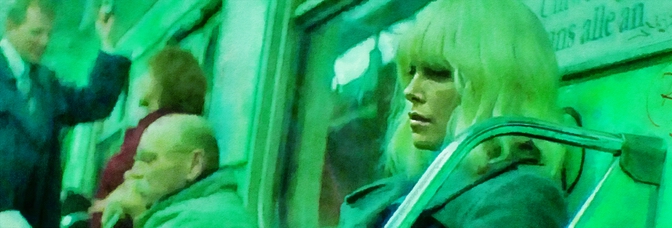
Far more often than not, Atomic Blonde is not more than it is. Atomic Blonde is not a “realistic” late eighties spy thriller à la Graham Greene or even John le Carré (see, I can do nineties “New Yorker” levels of extra too). It’s not a James Bond movie with a female lead (Charlize Theron).…
-

The first act of Duel ought to be enough to carry it. Spielberg’s direction, Frank Morriss’s editing, even Jack A. Marta’s workman photography—it’s spellbinding. It even gets through lead Dennis Weaver calling home to fight with his wife and revealing to the audience he’s a wuss. See, last night he and the wife went to…
-

The first half of Grumpier Old Men is such an improvement over the original, it could be a paragon of sequels. Director Deutch knows how to showcase the actors amid all the physical comedy. There’s a lot of physical comedy and sight gags in Grumpier. There’s Walter Matthau doing the Saturday Night Fever strut while…
-

If Grumpy Old Men weren’t so scared of its ribald humor—giving almost all of it to dirty oldest man Burgess Meredith, who’s just there to make sex jokes and serves no other purpose in the film—you could probably just as well call it Horny Old Men. At least in Jack Lemmon’s case. He hasn’t gotten…
-

John Wick is all right. It feels like if it’d been made in the nineties, it’d have been revolutionary. Instead, it uses all the revolutionary and not revolutionary film techniques since the nineties to make the ultimate in mainstream heavy metal neo-pulp, with a twist of seventies exploitation for good measure. It succeeds because of…
-

It is a dark time for the Star Wars franchise. Although the second highest grossing film franchise of all time, white men really weren’t okay with Kelly Marie Tran getting a lot to do in the last “trilogy” movie, not to mention women telling ostensible alpha Oscar Isaac what to do, and nobody wanted to…
-

The Happytime Murders is exceptionally foul and exceptionally funny. It’s set in a world where animate puppets and humans co-exist, with the human bigotry eradicated because they’ve all decided to hate on the puppets instead. There’s no explanation of how the puppets came to be or when they came to be or whatnot; they just…
-

FAST AND THE FURIOUS spin-off staring franchise scene-stealers Dwayne Johnson and Jason Statham; they’re an unlikely duo (Johnson’s ‘Murican good guy and Statham’s British super-assassin), which the movie uses for a lot of humor, but only provides so much mileage. Luckily Idris Elba’s the bad guy (giving a good performance in a silly movie) and…
-
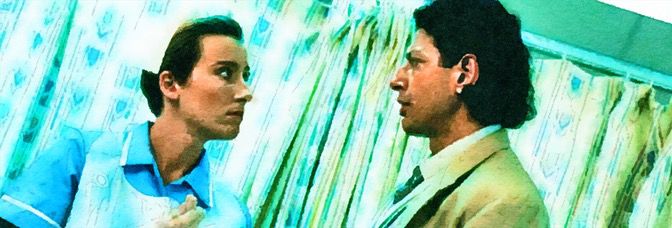
Affably performed but charmless ninety draggy minutes of Jeff Goldblum as an American actor in London who can’t catch a break because he’s a… tall American. When the movie’s about Goldblum wooing seemingly proper British nurse Emma Thompson, it’s all right. When it’s about Goldblum trying to manage absurd stardom–or at least steady work–and his…
-

Flashback heavy noir suffers Horner’s frequently inept, always disinterested direction, a bad script (from Dwight Taylor), and a horribly miscast Richard Boone. Boone’s an obsessive but ostensibly wimpy detective who takes on the murder case of title character Jean Peters. No spoilers, it’s in the opening credits. Elliott Reid is the prime suspect, Jeanne Crain…
-

Hard Surfaces is pretty thin. Sometimes it’s translucently thin. The film itself never has any depth, but fairly regularly the actors at least show they could give it some depth, if it weren’t for the thinness. Ostensibly the film’s well-meaning, but that quality comes off as fake. Like writer (and director) Brown is using trying…
-

If you had told me there was a movie with John Cleese in funny fake teeth and Smash Mouth as a plot point (a positive one), I don’t know I would’ve believed it. But if there is going to be a movie with John Cleese in funny fake teeth and Smash Mouth as in a…
-

Even if you give The Buccaneer a lot of its historical absurdities and classic Hollywood whitewashing, even if you give it a motley crew of murdering (but not raping, good family men) pirates getting giddy and doing a singalong while they row themselves through the bayou to fight for Andrew Jackson against the British, even…
-

Having Wonderful Crime is a perplexing comedy-mystery. The mystery itself is perplexing because it’s so exceptionally convoluted; three screenwriters and four or five red herrings and the picture only runs seventy minutes. The comedy is perplexing because Crime hinges its comedic potential on lead Pat O’Brien. O’Brien is a skirt-chasing Chicago lawyer who lets rich…
-
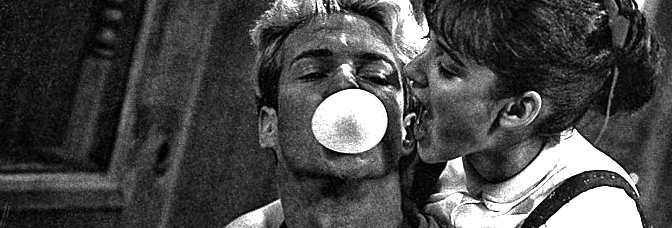
There’s no point to Great Balls of Fire! As a biopic it’s shaky–lead Dennis Quaid only gets to be the protagonist when he’s not being too despicable, which isn’t often and the film has to distance itself from Winona Ryder, playing Quaid’s love interest. And thirteen year-old cousin. So it’s understandable director McBride and co-screenwriter…
-

La Bamba is a perfectly adequate biopic of fifties rock and roll singer Ritchie Valens, who died at seventeen in a plane crash. Very twenty-five year-old Lou Diamond Phillips plays Valens. He’s adequate. He lip-synchs all right, though the performances (Los Lobos covers Valens’s songs) almost never sound right acoustically. When Phillips shows off his…
-
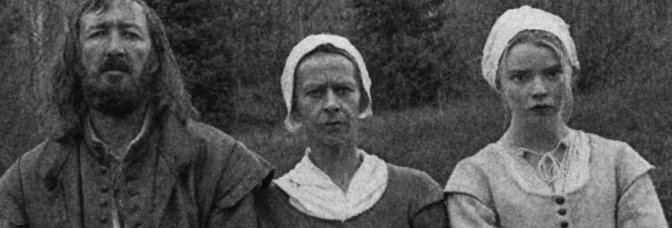
The Witch is very creepy. It has to be. There’s a lot of scary music, done to scary effect. Cuts to black and the like. Ominous forest. Cut to black. Very creepy. Whether or not it’s scary is another matter. It’s somewhat disturbing. But it’s set in the seventeenth century and it’s serious. So it’s…
-
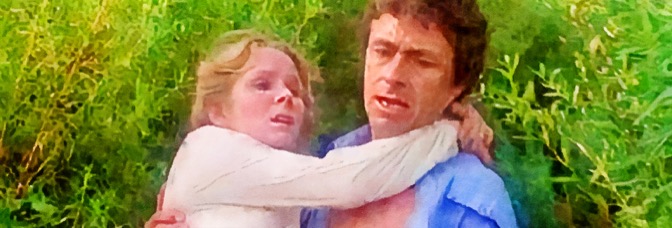
The Return of the Incredible Hulk is the second pilot movie for the subsequent “Incredible Hulk” TV series. It aired three weeks after the first pilot, which featured the origin of the Hulk–scientist Bruce Bixby turns himself into green-skinned musclebound grotesque Lou Ferrigno thanks to gamma rays–and his pursuer, annoying, uninformed tabloid reporter Jack Colvin.…
-

Flash Gordon’s Trip to Mars is far from the ultimate trip. It’s not even a very good trip. It’s the kind of trip where you go somewhere, go somewhere else, then somewhere else, then go back to the second place, then go back to the first place, then go back to the third place, then…
-

Smiley Face is something of an endurance test. How long can the film keep going before falling apart due to its own flimsiness. Thanks to star Anna Faris, it pretty much does make it to the finish. The third act–thanks to the bookending device (the film is told in flashback, narrated by Roscoe Lee Browne,…
-

Much of Police Story operates on charm. If it’s not co-writer, star, and director Jackie Chan’s charm, it’s charm of the scenes. There are some painfully uncharming moments–mostly Chan’s frequent neglective abuse of girlfriend Maggie Cheung–but even when Police Story is in its stunt spectacular mode, there’s charm. The film doesn’t open with charm, however.…
-

Lyle Talbot is the best thing about Atom Man vs. Superman. Overall, he might even give the best performance–he flubs some material, but it’s better material than his only serious competitor, Noel Neill, ever gets. There aren’t great performances in Atom Man vs. Superman. The serial wouldn’t know what to do with them. Talbot is…
-

The Stepford Wives puts in for a major suspension of disbelief request in the second scene–what is Katharine Ross doing married to Peter Masterson. They’ve gone from being a somewhat posh New York couple to a New York couple with kids and so they’re moving to Connecticut. Lawyer Masterson is going to take the train…
-

Somewhere early in Touched with Fire’s third act, it becomes clear there’s not going to be any performance potential from leads Luke Kirby and Katie Holmes. The movie doesn’t really want to be about them. Director (and writer) Dalio skips all the character development, leaving Holmes dulled and Kirby perpetually in between a Zach Braff…
-

Somewhere around the halfway point in Street Smart, when both female “leads” get reduced to a combination punching bag–figuratively and literally–and damsel, the movie starts to collapse. It doesn’t collapse in a standard way. It doesn’t give too much to either of its dueling stars, Christopher Reeve and Morgan Freeman; instead, it gives them less.…
-

Loving Vincent is the story of the man in the yellow suit (not to be confused with the Man in the Yellow Hat, which is sort of unfortunate because monkey) and his quest to deliver Vincent Van Gogh’s last letter. The title comes from how Van Gogh signed letters to his brother–“your most loving brother.”…
-

The opening of Jesus Christ Superstar is the only place the three leads really interact. Jesus, Mary, and Judas all interact. Through and behind the songs, this quick narrative plays out. In addition to showcasing the performers–John Legend is Jesus, Sara Bareilles is Mary, Brandon Victor Dixon is Judas–and giving them brief solos, the sequence…
-

Stardust has a problem with overconfidence. The overconfidence in the CG is one thing, but would be easily excusable if director Vaughn didn’t double down and go through tedious effects sequences. Ben Davis’s photography keeps Stardust lush, whether in the magic world or the real world–but that lushness doesn’t help with the CG. The CG…
 The Stop Button