The Stop Button
blogging by Andrew Wickliffe
Category: ★
-

It’s hard not to be, at least, somewhat impressed with The Vampire Bat, if only because it came out in 1933 as a knockoff Universal horror picture. Except at this point, there’d only been Frankenstein, Dracula and The Mummy. The Vampire Bat brilliantly resembles a Universal horror picture in every way but the filmmaking. There’s…
-

There really isn’t anything to dislike about Star Trek. Well, maybe the music, which isn’t bad, just isn’t as good the rest of the music in the series. There’s a lot to like–Chris Pine (though the wife disagrees), J.J. Abrams’s direction is outstanding, there’s some nice little stuff (Zoe Saldana’s Uhura and her romance, Leonard…
-
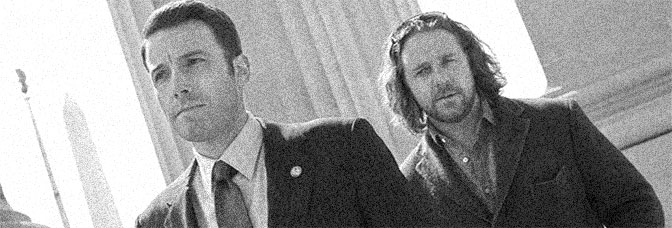
Who has the least personality when it comes to State of Play? Director Kevin Macdonald? He shoots the most boring Panavision-sized frame I think I’ve ever seen. I’ve never seen a Brett Ratner movie from start to finish, but… Macdonald’s boring. He’s not bad, he’s just not any good at all. The lack of a…
-
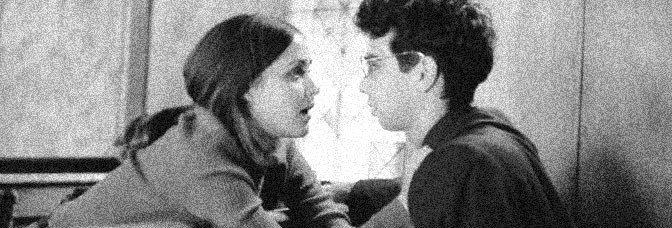
It’s a terrible thing to say, but I can’t figure out why Rose Byrne did this movie. Not to knock it with a generalization, but Just Buried‘s a Canadian production. Even though Jay Baruchel’s on the rise, besides her, everyone in the principal cast is Canadian. For a while, I thought I had it figured…
-

Boiling them down, three things ruin Blood and Wine. Stephen Dorff, the script and the approach. The last two are complicated, because it’s hard to see determine where the script and the approach differ. Blood and Wine was, at the time of its release, promoted as the conclusion of an informal trilogy for Rafelson and…
-

Okay, I thought Lodger auteur David Ondaatje was really his uncle (English Patient author) Michael Ondaatje. I wished I’d checked before starting the movie… even with Hope Davis in it, I’m not sure I would have watched it. It really changes my impression of it. All of the stupid zooming and fast-forwarding and post-production nonsense,…
-
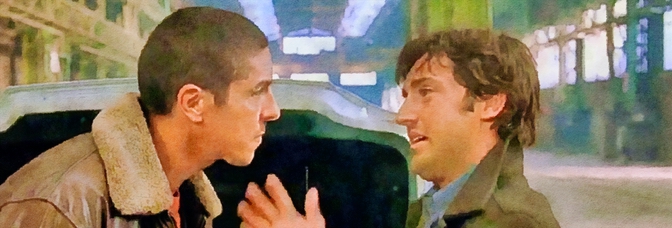
Taxi 3 starts with a superior set-up, a James Bond-esque chase scene through Marseilles, the good guy on a bicycle, running from the bad guys (on rollerblades). It’s goofy and funny–the best part being the bad guy running into a plexiglass (being carried on the street, a riff on the standard glass) and bouncing off…
-

It’s kind of amazing how much self-depreciation can turn something around. Not to spoil Murder 101‘s usage–it’s actually not the spoiler for the mystery–but think of The Muppet Movie. Almost the entire running time of the movie, there are frequent acknowledgments of the absurdity of the TV movie thriller genre. Murder 101‘s charm, in the…
-

Someone thought Calling Dr. Kildare was a good idea. Sitting through the turgid eighty-six minute running time, that thought occasionally popped into my head. Someone thought this story was a good idea. Lew Ayres’s young Dr. Kildare (this one’s set three months, give or take, after the first entry) has a spat with Lionel Barrymore…
-

It’s hard to say who gives a better performance in Blondie Meets the Boss, Larry Simms as Baby Dumpling or Daisy the dog. Simms has a lot of funny lines–all the best lines are from kids talking about adults, it was hard not to think this entry should have been called “Kids Say the Darndest…
-

The Prizefighter and the Lady mixes a couple genres–the philandering husband whose wife can’t stop loving him standard and, additionally, stunt casting. Heavyweight contender Max Baer stars as a heavyweight contender, who fights the champ, played by champ Primo Carnera. Myrna Loy plays the suffering wife, while Walter Huston and Otto Kruger finish the supporting…
-
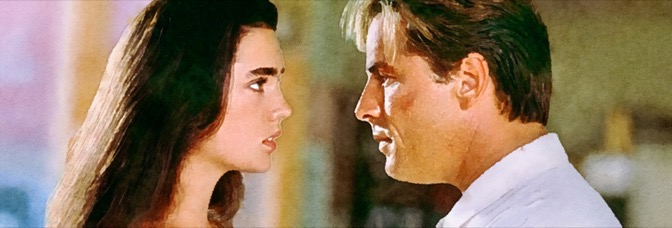
One of the most important things about a film noir is the ending. It has to be perfect. It doesn’t matter what comes before, the ending just has to be right. The Hot Spot is a film noir. It’s not a neo-noir. There’s an important distinction. Hopper seems very aware of that distinction; everything he…
-

Thunderbolt has some excellent use of sound. It’s a very early talky and I’m hesitant to say any of its uses were innovative, because the word suggests others picked up on the techniques and developed them. Most of Thunderbolt‘s singular sound designs didn’t show up again in Hollywood cinema for over twenty years. The way…
-
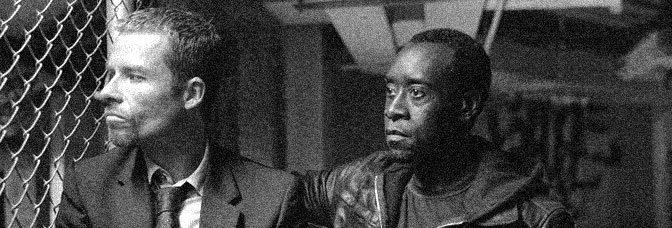
Traitor is the Superman IV of terrorism movies. I suppose I need to explain. I think Tom Mankiewicz once told Christopher Reeve you couldn’t have Superman messing around with the real world. Traitor is a Hollywood terrorism movie–in the vein of Telefon, The Assignment, Nighthawks or even The Jackal–except it takes 9/11 into account. The…
-
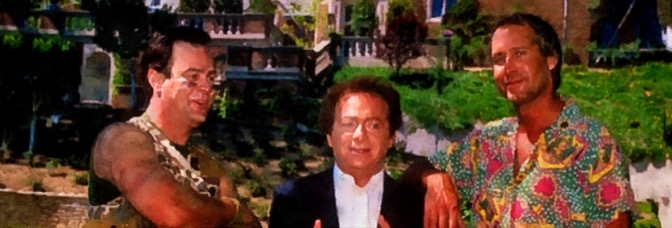
Now it makes sense–Rodney Dangerfield was originally going to come back for Caddyshack II, but then fell out over script disputes and Jackie Mason came in, persona in hand, to fill in. I kept wondering who writers Harold Ramis and Peter Torokvei envisioned in the lead role while writing the script. My history with Caddyshack…
-

I wonder how Let the Right One In would work if it made any sense. There aren’t exactly plot holes so much as nonsensical details. Why a vampire–even if she is stuck as a twelve-year-old–would want to hang out with other twelve year olds is never explained. Her assistant, who drains blood from bodies for…
-

During the lousiest parts of Changeling–easily identifiable by Jeffrey Donovan’s increased presence–there should be a disclaimer running across the bottom of the screen: “It doesn’t stay this bad… promise.” Changeling is the worst film Clint Eastwood’s made in years. It’s easily the worst of his serious films–afterwards, I realized his last film before this one…
-

Hopefully, Lions for Lambs will be the most topical film ever made. Hopefully. In fifteen years, hopefully it won’t make any sense. It probably will. As a dramatic narrative, it’s pretty limp. Most of the scenes with the big three are dialogue scenes, written by someone not incompetent but without much gift for it. It’s…
-

Of the principals, only Michael Rapaport is under thirty (Beautiful Girls hinges on a ten-year high school reunion) and much of the running time can be spent wondering how the viewer is supposed to believe Timothy Hutton isn’t thirty-five years old (he’s actually thirty-six). Hutton gives one of the film’s best performances, frequently transcending the…
-

Thunder Birds runs just under eighty minutes and if one were to subtract the propaganda, both narrated and in lengthy monologues–not to mention the flashback to the stoic Brits–he or she would have a fifty-five minute love triangle set at an Army flight training base. The whole reason one leg of the triangle is British…
-

It’s hard to believe a movie called Tarzan the Ape Man is going to be boring, but this one drags on and on. After a solid opening twenty minutes, the movie stumbles and never regains its footing. The problem is with Tarzan. Johnny Weissmuller’s Tarzan obviously doesn’t speak English but he also doesn’t communicate. He…
-

Beau Geste is a colonial adventure, European soldiers under siege in the Arabian desert. There’s some imagination to the telling, but not at all enough. The strangest thing about the film is the title–Gary Cooper plays Beau Geste, who in some ways is the least of the film’s characters. I think Cooper must get the…
-
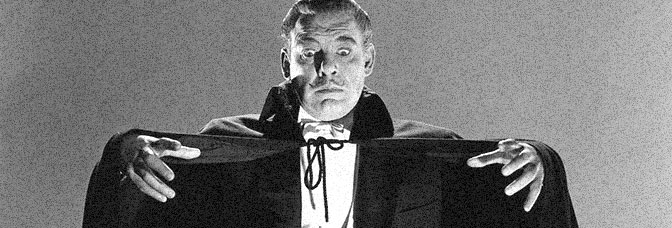
Son of Dracula doesn’t open well. The first scene’s all right, but once Louise Allbritton shows up–in the second scene–things start to go downhill. Allbritton’s one of the film’s constant problems. She’s a terrible actress and, in a film in desperate need of all the acting help it can get, it’s a significant defect. The…
-
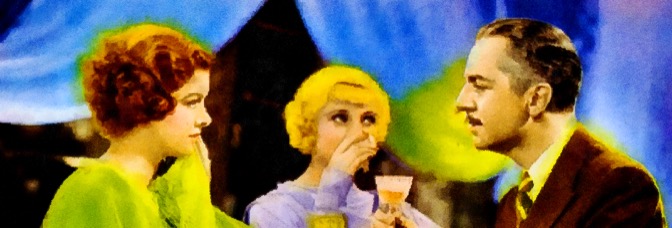
Evelyn Prentice only runs eighty minutes, but it goes on forever. At seventeen minutes alone, it’s getting tiring. The big problem is the lack of thoughtful approach. It’s constantly revealing big twists, twists to shock the audience, but they just end up detracting from the film’s possibilities. Because Evelyn Prentice is not a deep study…
-
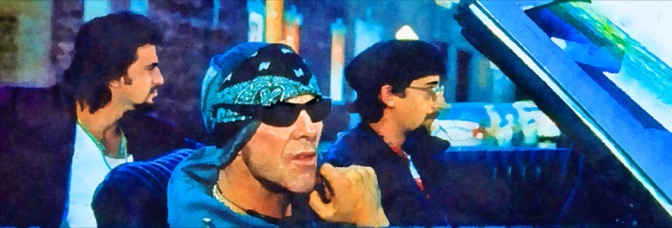
The tragedy of Mickey Rourke is not his failed mainstream career. Rather, it’s how he’s never been able to get any filmmakers of note involved in his vanity projects. Bullet‘s an incredibly ambitious, sensitive film… or, with the right production team, it would have been. What remains hints at what could have been–the film’s a…
-

I have to make a disclosure. I try to drink the highest Robert Parker rated wine I can afford. They’ve tended to be French. Actually, I think they’ve all been French. But whatever. Because Bottle Shock seems rather like advertising for Napa Valley wine, so much so, I’d love to see who financed it. There…
-

The first act of Mamma Mia! practically kills the entire thing. The goofy proposition of a musical set to ABBA songs engenders a lot of curiosity (one starring Meryl Streep provokes a lot more), but the first act–when it tries to be a narrative–is a disaster. The attempts at narrative and summary storytelling are atrocious.…
-

It must have been Bette Midler’s former manager, Aaron Russo (Teachers‘s producer), who somehow confused Arthur Hiller as the creative force behind The Hospital. Teachers is very much like The Hospital, but in its stoic protagonist, the stoic protagonist’s ultimate choice in the end, and the strange hijinks. However, as is clearly evidenced by JoBeth…
-

Quite stupid sequel with an all-new cast (except PREDATOR performer Kevin Peter Hall) has almost nothing going for it except some gorgeous direction from Hopkins. He’s got a great sense for what’s going to at least look good in the film. Good performance from Danny Glover in the lead, but bad performances from almost everyone…
-

Once I heard the concept for Hellboy II–Hellboy versus elves–I knew what was going on. Del Toro was going to make a (tonal) sequel to Pan’s Labyrinth instead of an actual one to Hellboy. As my wife said on the way home, there’s a big difference between demons and elves. It’s like del Toro’s psychic…
 The Stop Button