Category: Film
-

Krisha is an eighty-minute film with a present action of maybe twelve hours. It’s about a family’s black sheep (Krisha Fairchild) coming to Thanksgiving after some time away. There’s no big exposition dump—it isn’t until the third act the film confirms the basic information the characters have all been dealing with—and for the first half…
-

Sylvester Stallone’s director’s cut of Rocky IV arrives four sequels and thirty-five years after the film’s original release. Stallone says it’s for the thirty-fifth anniversary; Robert Doornick (who voiced Burt Young’s robot in the original cut and owns the copyright on the robot) says it’s because Stallone didn’t want to renew with him and had…
-
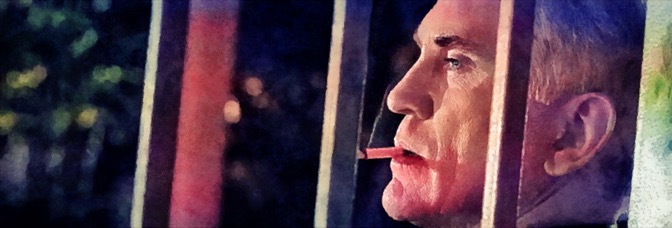
The Limey is all about the foreshadowing. It’s about flashbacks, flash-forwards, and flash asides, but the foreshadowing figures into all of those devices. It’s got a “twist” ending, which then informs previous scenes but not like figuring out Terence Stamp is a ghost or whatever. Instead, it’s knowing something about why he half-smiles—and only something,…
-
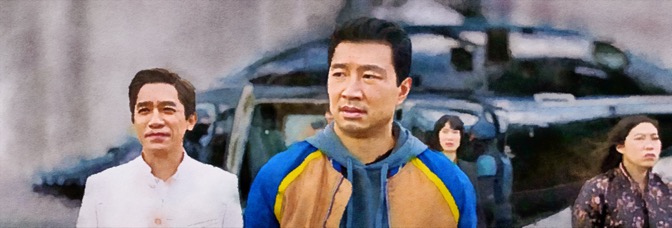
The third act of Shang-Chi makes it real obvious what’s been wrong with the movie the whole time–it doesn’t matter if Simu Liu is onscreen. The third act has a bunch of different characters fighting a bunch of different bad guys, and Liu disappears for a few minutes to do the whole “how’s the hero…
-
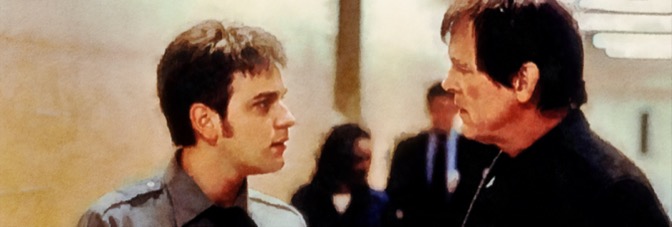
Thanks to a weak performance from lead Ewan McGregor and an obviously altered ending, Nightwatch straddles being a reasonably perverse suspense thriller and a scalding commentary on middle-class white male masculinity. McGregor is a third-year law school student who takes a job at the morgue to help pay for he and girlfriend Patricia Arquette’s giant…
-

Halloween Kills is a fascinating sequel. It’s a terrible movie—though probably better than the previous one just because there’s so much less Jamie Lee Curtis, so you’re not watching her embarrass herself the entire time (though she’s got some really embarrassing moments). But given it’s the ninth Halloween sequel and the second remake of Halloween…
-

Around the halfway mark, The Amazing Mr. X gets a whole lot more interesting without ever being able to get much better. The film starts as a supernatural thriller, with widow Lynn Bari convinced her dead husband is calling to her, pissed off she’s getting close to accepting suitor Richard Carlson’s marriage proposal. Bari’s little…
-
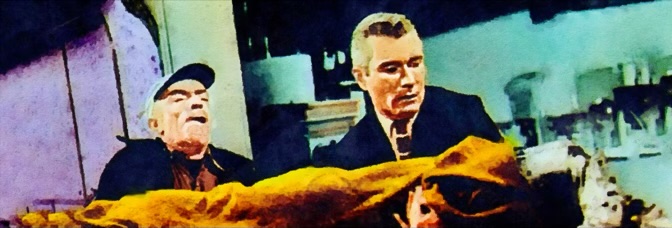
Frankenstein’s Daughter ought to be good camp. If the rest of the movie could keep up with Donald Murphy (as Doctor “Frank”), it’d be something to behold. Because Murphy gives it his all opening to close, seemingly more aware of the picture than the picture’s aware of itself. Though he’s never quite good—he’s better than…
-
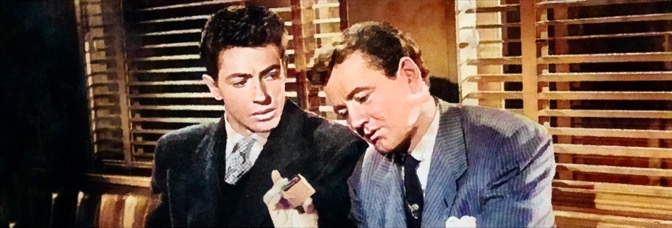
Strangers on a Train is many things, but it’s principally an action thriller. Director Hitchcock never quite ignores any of its other aspects; he’s just most enthusiastic about the action he and editor William H. Ziegler execute. For example, the third act is entirely action set pieces, one to another, with an occasional bit of…
-
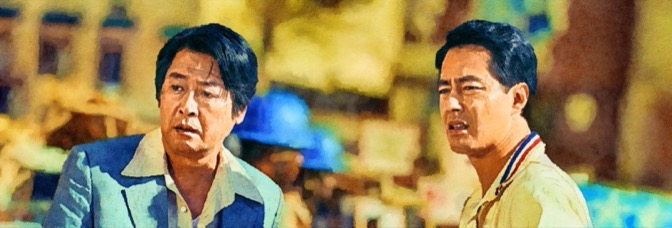
Escape from Mogadishu is almost incalculably problematic. I can't do the math, and I'm sure there's a bunch I don't even see, but it's a doozy. It's a South Korean "inspired by a true story" about the Somali Civil War, specifically the South Korean diplomats and the North Korean diplomats working together to get out.…
-

It’s easy to pick out the “best” thing in Copycat because it’s almost entirely atrocious. Christopher Young’s highly derivative score is lovely—it’s a mix between John Williams and then Aliens whenever Sigourney Weaver is in thriller danger. Thanks to the score, Copycat makes some interesting swings, like emotive, romantic music during the most inappropriate sequences.…
-

It’s so easy to pick on A Fantastic Fear of Everything there’s basically no fun in it. The only thing worse than co-director Crispian Mills’s script is his and Chris Hopewell’s direction. For the first half of the movie, when Simon Pegg’s basically all by himself making a mocking impression of someone with paranoia, the…
-

Blow-Up is a day in the life picture. It opens with protagonist David Hemmings on his way out of a flophouse; he’s not a tramp; he’s a wonder kid fashion photographer who’s been undercover all night to snap pics. The film reveals all those details gradually. It takes until about halfway through the picture to…
-
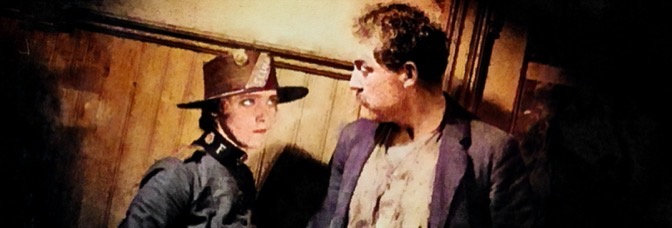
Victor Sjöström directs, stars, and adapts The Phantom Carriage. He gives himself a great showcase. Most of the film is a breathtaking character study of an abject bastard. The film throws reason after reason for Sjöström being an irredeemable, abject bastard, and none of them stick. He’s always ready to deliver more bastard. It’s his…
-
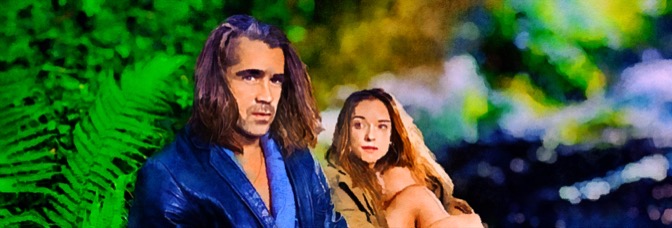
Ondine is very committed to the bit. The film opens with Irish owner-operator fisherman Colin Farrell bringing a woman up in his nets. A beautiful woman. She seems very confused to be breathing air and doesn’t tell him very much about herself. Alicja Bachleda plays the woman. She refuses to go to a hospital, and…
-

The Longest Day picks up when the Normandy beach invasion starts. It happens maybe ninety minutes into the three-hour film. There are the overnight paratrooper drops, which have such dull action scenes it seems like the film will never improve, but then it turns out the large-scale battle choreography is exceptional and could potentially make…
-

During The Element of Crime, it never seems like the mystery will be particularly compelling. The film and the detective’s investigation are compelling, but the mystery itself seems rather pat. A serial killer has been targeting young girls selling lotto tickets, earning the moniker the “Lotto Murderer,” and the police are stumped. So they bring…
-
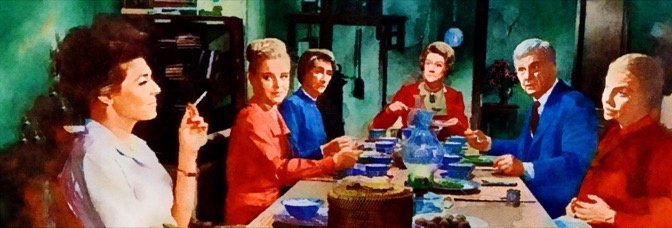
First, it’s actually 8 Women; Jane Chang doesn’t count because she’s not white. Though I suppose it could just be counting good Christian women, then Anne Bancroft doesn’t count. Women is a Western, just one set nearer to modernity and not in the American West. Instead, it’s about a mission in China on the border…
-
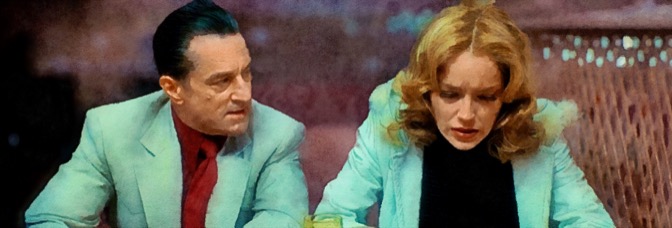
The best part of Casino isn’t my favorite part of Casino because the best part is James Woods bickering with Erika von Tagen. It’s mainly in the background, and it’s the only time anywhere in the film anyone shows any personality not expressly required for their scenes. Director (and co-screenwriter) Scorsese doesn’t believe in background…
-
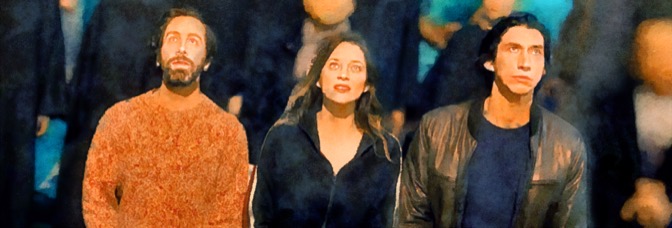
Right up until the end, it seems like Annette will maintain some level of success solely due to the audacity of the project. It’s a musical set in Hollywood, where an edge lord white male comedian (Adam Driver) marries a beloved singer (Marion Cotillard). Only he’s got a shelf life because he’s always trying to…
-

Second-billed Myrna Loy shows up in The Great Ziegfeld at around the two-hour mark. The film runs three hours. The about a half-hour of it is musical numbers; they’re presumably recreations of the actual Ziegfeld stage productions, but even without having read the Wikipedia article first, it’s obvious Ziegfeld’s a glorifying tribute. Loy’s most significant…
-

There are two classes of performance in Macbeth, those who can only handle a double r-rolling and those who go for a triple r-rolling. Director, star and screenwriter Welles gets to do the triple. As does Jeannette Nolan as Lady Macbeth. Everyone else is only doing the double r-roll for their Scottish accent. Like much…
-

A Life at Stake is a peculiar noir. It’s low budget, it’s got an actor-turned-director in Guilfoyle, it’s got Angela Lansbury as the femme fatale, it’s got a great, lushly romantic score from Les Baxter, and it’s got a jam-packed script from Russ Bender. The film only runs eighty minutes, and there are a couple…
-

The first act of Cabaret is about introducing British guy Michael York to Weimar-era Berlin and to the life and times of his neighbor Liza Minnelli. Minnelli’s an American ex-pat; she’s landed in a cabaret and is trying to sing, dance, and sleep her way into movies. York’s there to teach English and get some…
-
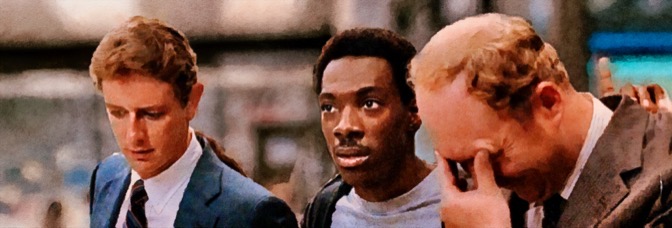
Beverly Hills Cop opens with a montage of Detroit street scenes. Kids playing, people talking, walking, Black and white. It’s beautifully cut—even at its most tediously cop action movie procedural, the editing is always glorious (though there’s lots of technical magnificence in Cop—and is well-done enough you even forgive the film for Glenn Frey’s The…
-
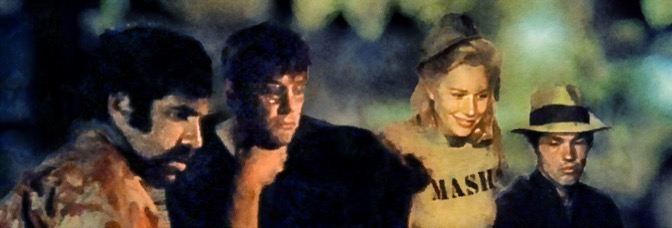
MASH is timelessly white liberal. There’s even a lovable Southerner (Tom Skerritt) who knows in that science way Black folks are just folks, but he still wants to be a dick about it. And his white male Northeastern elitist friends, Donald Sutherland and Elliot Gould, are totally fine with that bigotry because, you know, it’s…
-

I did give Reminiscence a fair shake. I really did. It’s not my fault it opens with an all-CGI “helicopter” shot introducing the setting—a future, flooded Miami—and a terrible voice-over from star Hugh Jackman. It’s writer and director Joy’s fault. And her producers. And whoever thought doing low-to-middling CGI on a fake helicopter shot was…
-

Lone Star is Texas Gothic. There’s nowhere else the story plays the same way except a border town, at no time other than when it does; it’s all about the sins of the mothers and fathers playing out. Actual sins, imagined sins, hidden sins. It’s about heroes and villains and how they’re the same thing.…
-
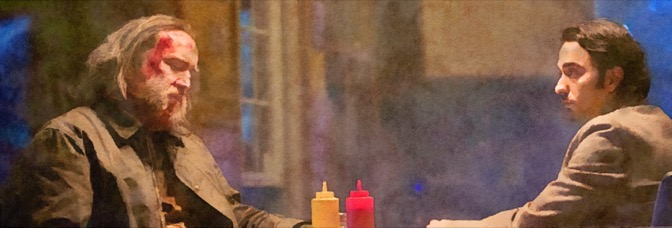
Pig is an anti-noir. Writer and director Sarnoski sets it up as something of a neo-noir in the first act, with seemingly inscrutable modern-day hermit Nicolas Cage having to travel back to civilization and civilization being scared of him. And even though Cage’s adventure routes through shady settings, they’re just background to the actual journey…
-
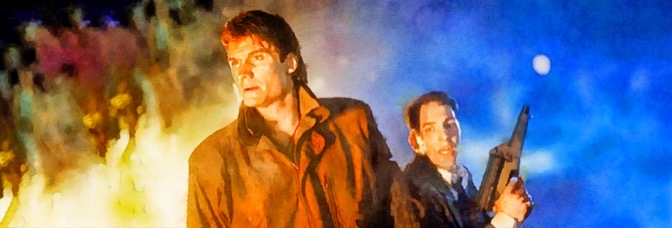
I Come in Peace is a Dolph Lundgren versus alien movie. It’s from the period before Lundgren went to acting classes but had gotten rid of his Swedish accent, which ends up working against the picture. The terrible one-liners might have some personality if Lundgren had some accented inflection. Or if he just lost the…
 The Stop Button