Category: Film
-

As a pilot movie, The Flash is a success. It establishes its regular cast—John Wesley Shipp, Amanda Pays, Alex Désert, Paula Marshall (who wasn’t back, but sure seemed like she would be)—and doing an admirable, post-Burton Batman live-action superhero. Danny Elfman even contributes the theme, while composer Shirley Walker keeps the rest in Elfmanesque line.…
-

“Luther” show creator and Luther: The Fallen Sun writer Neil Cross started talking about him and Idris Elba doing a Luther movie for at least a decade before Fallen Sun. Like everyone else, Cross assumed the singularly charming, extraordinarily talented Elba would be too busy being a movie star to do another “Luther” TV series.…
-
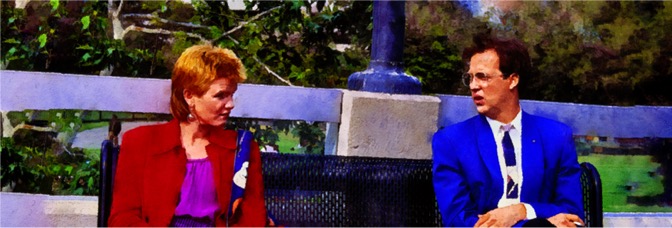
Miracle Mile is an actors’ movie without any great performances. There are affable performances, good performances, (bad performances), but no great performances. Lead Anthony Edwards occasionally tries hard—it’s the end of the world, after all, he’s got to emote—but he’ll frequently hit a wall and start moving his mouth like a Jimmy Stewart impression will…
-
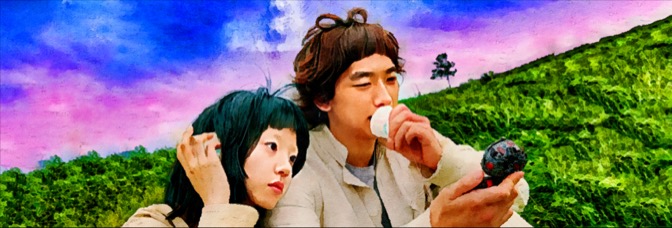
I’m a Cyborg, But That’s OK gets some points for not wrapping things up with a neat little bow, but they do little to offset the film’s more significant issues. Cyborg’s got a lead performance problem and a stakes problem, something the film tries to avoid acknowledging, which ends up creating an infinite loop. Im…
-
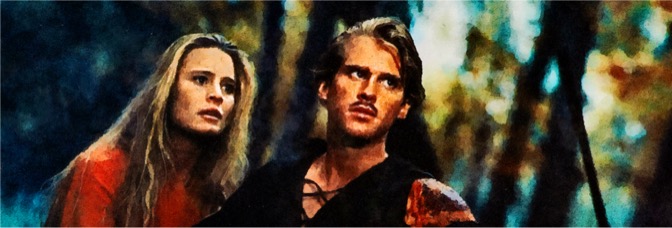
I’m undecided on how to discuss The Princess Bride’s second act. It’s a misstep but an intentional one. Instead of being the story of reunited lovers Robin Wright and Cary Elwes, the film becomes an action comedy for Mandy Patinkin and Andre the Giant, which is fine; they’re great. But the film entirely ignores Wright’s…
-

On the Riviera ends abruptly. The film promises an amping-up of its mistaken identity, only to immediately chuck it and do another musical number. It’s a solid musical number, but the film was on the rise with the comedy. It was about to get really good. The ending features a double scene for star Danny…
-
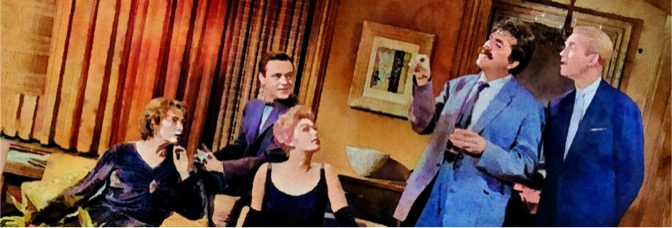
Bell, Book and Candle has three problems. The first involves Kim Novak and James Stewart’s May-September romance, which I’ll take couple jabs at in a bit. The second two problems are with the plotting, either in John Van Druten’s original stage play or Daniel Taradish’s screenplay. In the third act, Candle forgets its supporting cast…
-
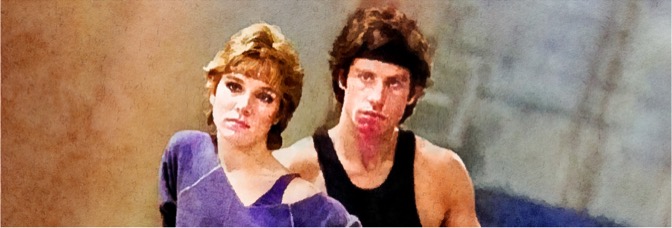
As Staying Alive celebrates its fortieth birthday, I’m sure there’s information on the web to answer some of my most burning questions. For instance, did they shoot John Travolta and Finola Hughes singing numbers for the in-movie Broadway show (Satan’s Alley), or was it always a rock ballet? And what about the Frank Stallone songs—did…
-
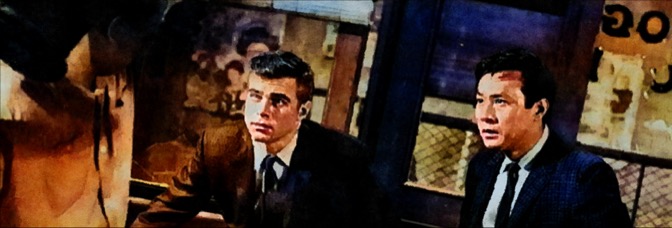
The most gracious explanation for The Crimson Kimono’s politics are it takes place in a universe where the U.S. didn’t concentrate 125,000 plus American citizens in camps during World War II. Even in that universe, there are problems, like white people Glenn Corbett and Victoria Shaw gaslighting Asian guy James Shigeta about his ability to…
-
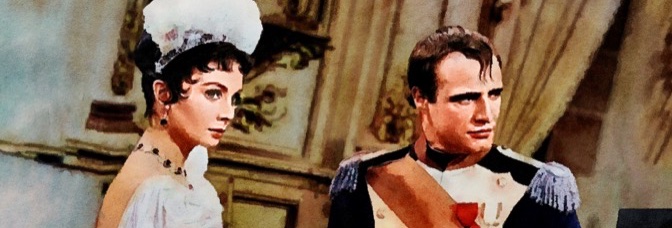
With some notable omissions (paramours, they’re French, after all), Désirée is shockingly historically accurate. Napoleon really did have an ex-girlfriend named Désirée, who ended up the queen of Sweden, her husband his former general and then adversary. The film gets big and little details right. On its face, Désirée is just a resplendent CinemaScope melodrama.…
-
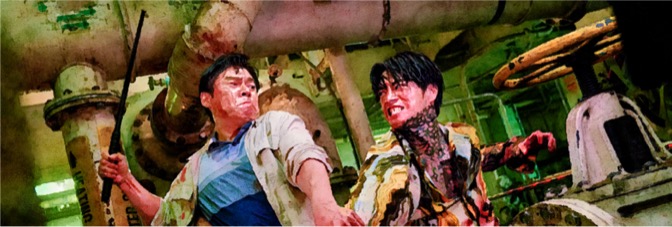
Watching Project Wolf Hunting (sadly not a Good Will Hunting reference), I kept wondering if the human body holds as much blood as the film suggests. It’s violent to the extremis, with every mutilated corpse creating a standing river of blood. It takes the film a while—well, at least ten minutes—to start gushing blood everywhere,…
-
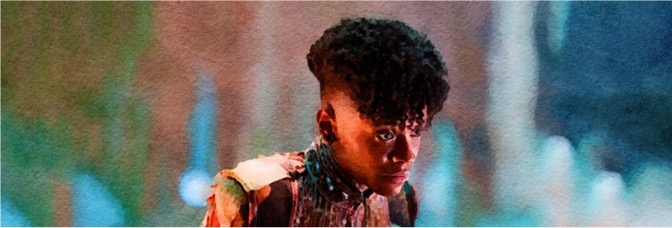
Not to mix metaphors or cross franchises, but Black Panther: Wakanda Forever is a Herculean effort from director Coogler and his co-writer Joe Robert Cole. It’s not quite a Herculean success, but it’s a success, which is more than enough given the numerous constraints they’re dealing with. First and foremost, the unexpected, tragic, and real-life…
-
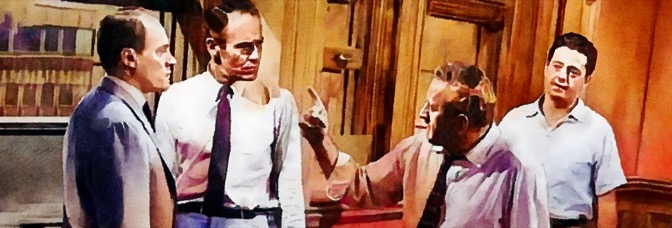
Director Lumet wrote at length about his compositional decisions for 12 Angry Men in his book about filmmaking, aptly titled Making Movies. The camera starts up high, looking down at the jury room and its jurors, then gradually moves down and in; by the third act, it’s in tight, low-angle close-ups. It’s beautiful, sublime work…
-
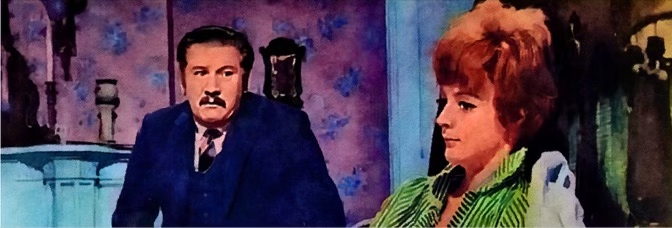
Hot Millions is an entirely amiable, often charming light comedy about career embezzler Peter Ustinov’s attempt to keep embezzling in the computer age. The film starts with Ustinov getting out of prison, late for his exit because he’s busy doing the warden’s taxes. He was caught by the computer last time, and he’s out to…
-
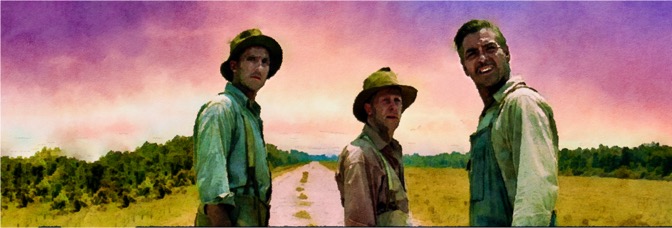
O Brother, Where Art Thou? is a frustrating, adequate success. There’s some excellent filmmaking and even better performances. Still, the Coen Brothers’ adaptation of Homer’s The Odyssey is at times too stringent and, at other times, narrative spaghetti on the wall. The falling pieces are co-stars John Turturro and Tim Blake Nelson, who spend the…
-
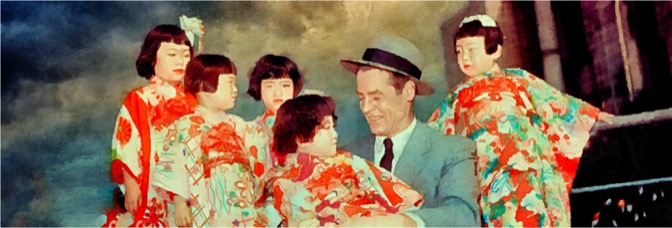
I had a variety of ways I was going to open this post. I was going to make a Robert Palmer reference for my apparent target demographic (it would have read: Director Fuller has cranes and knows how to use them). Except it turns out… Fuller didn’t have a dozen cranes roaming the Tokyo streets.…
-
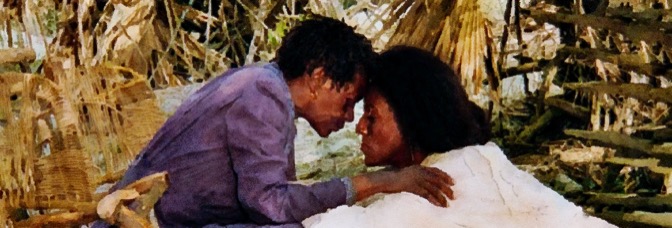
Daughters of the Dust is an epical story told lyrically. Set in 1902, the film tells the story about the time a specific Gullah family headed to the mainland and north into the twentieth century. It opens with Cheryl Lynn Bruce returning home to make the crossing, bringing along photographer Tommy Redmond Hicks to document…
-
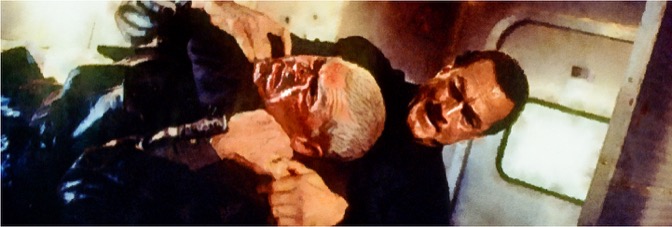
It’s never good when the worst thing about a Steven Seagal performance isn’t the Steven Seagal performance. Kidding. Sort of. And while he’s terrible in Under Siege 2: Dark Territory, he’s far from the worst performance. Stunt cast villain Eric Bogosian is much worse, for instance. As is Seagal’s sidekick, Morris Chestnut, who’s playing a…
-
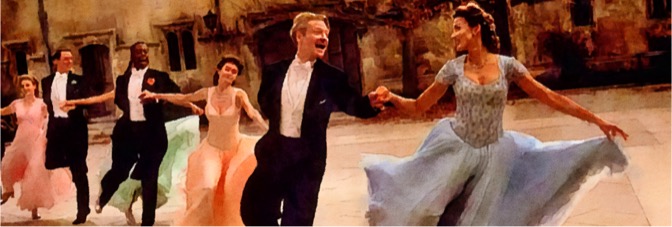
It’s a funny idea, and it would explain a lot about Love’s Labour’s Lost, but I don’t think screenwriter, director, and co-producer Branagh cast Alicia Silverstone on a bet regarding whether or not he could get her to deliver an okay monologue. He succeeds and she succeeds, but just okay, and it takes most of…
-
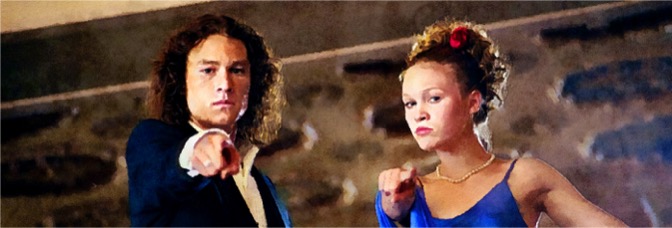
10 Things I Hate About You is from that strange period in American mainstream filmmaking when they knew you couldn’t make too many jokes about high school girls anymore, unless you establish at least twice they’re eighteen so it’s not technically illegal. There’s also the issue of Andrew Keegan’s sexual predator, who the film treats…
-
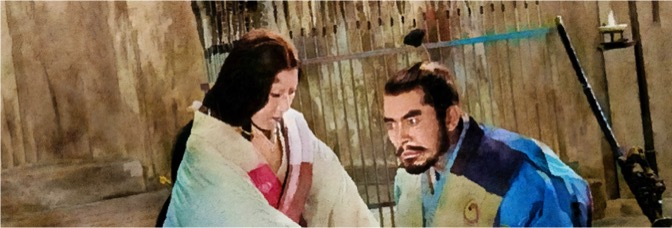
Co-producer, co-writer, director, and editor Kurosawa loves himself some Macbeth. Throne of Blood is Macbeth in feudal Japan, with Mifune Toshiro and Yamada Isuzu as the doomed couple. Kurosawa and his co-writers structure the film as a historical war epic, with modern-day bookends, and then fit Mifune and Yamada’s Macbeth into the war epic. But…
-
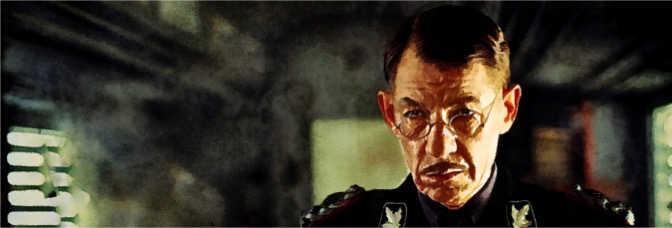
Richard III takes place in an alternate history where the British are five hundred years late with their royal wars, but still in the 1940s for technology and rising fascism. The film doesn’t update Shakespeare’s dialogue, so it’s the cast performing while dressed—increasingly—as Nazis. Except they’re British. Well, not Annette Bening or Robert Downey Jr.…
-
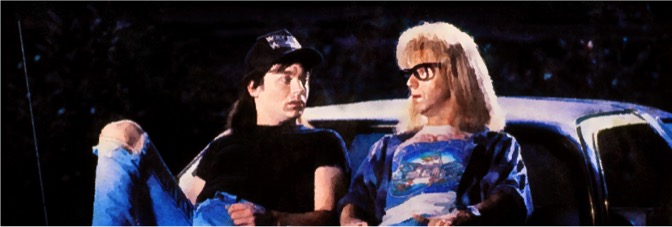
Wayne’s World ought to be a no-brainer. Slick, soulless media exec Rob Lowe turns public access metalhead slackers Mike Myers and Dana Carvey into real celebrities; only they don’t like the deal they’ve made with the devil. Along the way, Myers meets metal rocker chick Tia Carrere, and they fall in like until Lowe tries…
-
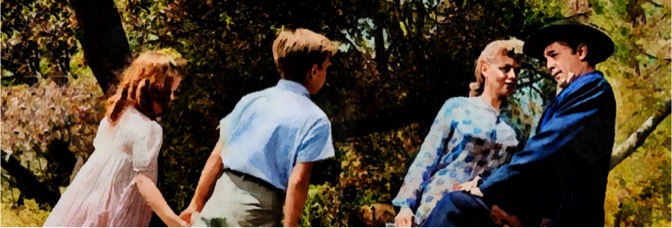
Night of the Hunter is a singular experience. Definitionally. It’s the only film Laughton ever directed, which makes sense. The film’s visuals are decades too early for the composites they can do; Laughton did direct plays, which also makes sense. Hunter feels “stagy,” but not. Laughton directs his actors for close-up without ever losing track…
-

Killer of Sheep is a series of vignettes, usually connected with a sequence at the slaughterhouse (though not always slaughter, but sometimes, so be ready), always connected with a piece of music. Sometimes the music recalls a previous scene or musical selection, creating a narrative echo between the sequences. And even though Sheep is incredibly…
-
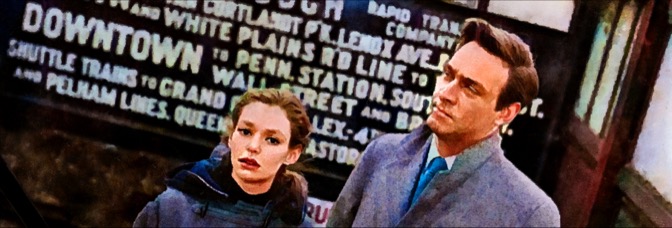
Conservatively, Stage Struck has six endings. They start about fifty-eight minutes into the film, which runs ninety-five minutes. Actually, wait, there are probably—conservatively—seven. I forgot how many there are mid-third act before the actual (ending-laden) finale. For a while, the false endings add to the film’s charm. Maybe if the third act hadn’t reduced lead…
-
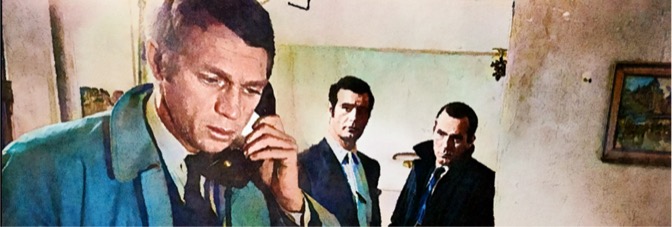
Bullitt is from the period when Hollywood wasn’t calling the Mafia the Mafia yet—it’s “The Organization” here—and none of the mobsters had Italian names, but they are mostly Italian (heritage) actors. It’s especially funny because part of Bullitt’s conceit hangs on WASPs like up-and-coming senator Robert Vaughn not being able to tell Italians apart. But…
-

Emergency Declaration is a disaster movie made like a horror movie. It’s not just any disaster movie, either; it’s Airport meets Airplane but with bioterrorism. The bioterrorism doesn’t have to do with the horror movie; it’s all the investigation procedural. The horror movie experience is entirely reserved for the victims (and the audience). Declaration doesn’t…
-

Black Adam opens with kid narration. At first, it seems like the narrator kid is Ancient Kahndaqi Jalon Christian, who’s sick and tired of living under a tyrannical king who has his people mining eternium for him. Eternium is not a “Masters of the Universe” thing; it’s more like the DC Universe version of vibranium.…
-

Lady Bird is a loving tribute to Sacramento, California, specifically growing up there as a teenager, from the perspective of a main character who hates Sacramento. Writer and director Gerwig opens the film with a travelogue of Sacramento streets and locations, a device she repeats sparingly (only significantly in the fantastic finale); Lady Bird is…
 The Stop Button