Category: Film
-
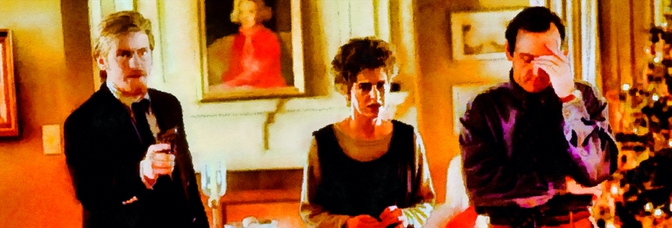
Every once in a while, The Ref lets you forget it’s just a comedy vehicle for stand-up comic Denis Leary and so doesn’t need to actually be a good drama and just lets you enjoy the acting. Demme’s direction is simultaneously detached, thoughtful, and sincere. He and editor Jeffrey Wolf craft these wonderful comedic scenes.…
-

The Spy Who Dumped Me has, rather unfortunately, a punny title. It’s an accurate title—the film’s about spy Justin Theroux dumping his civilian and not aware he’s a spy girlfriend Mila Kunis—but it doesn’t capture the mood of the film. No doubt, it’s a hard one to title—because even though it starts with Kunis going…
-
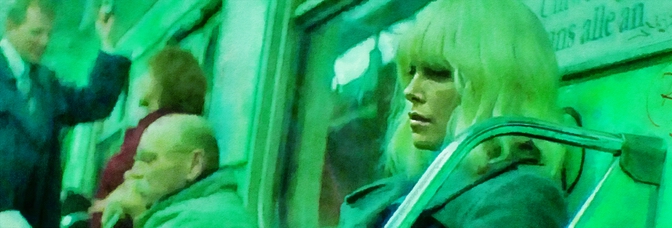
Far more often than not, Atomic Blonde is not more than it is. Atomic Blonde is not a “realistic” late eighties spy thriller à la Graham Greene or even John le Carré (see, I can do nineties “New Yorker” levels of extra too). It’s not a James Bond movie with a female lead (Charlize Theron).…
-

The first act of Duel ought to be enough to carry it. Spielberg’s direction, Frank Morriss’s editing, even Jack A. Marta’s workman photography—it’s spellbinding. It even gets through lead Dennis Weaver calling home to fight with his wife and revealing to the audience he’s a wuss. See, last night he and the wife went to…
-

The first half of Grumpier Old Men is such an improvement over the original, it could be a paragon of sequels. Director Deutch knows how to showcase the actors amid all the physical comedy. There’s a lot of physical comedy and sight gags in Grumpier. There’s Walter Matthau doing the Saturday Night Fever strut while…
-

Farmageddon has so many sci-fi TV and movie references it’s hard to keep track. The whole thing feels like an homage to E.T. as far as the story—an alien (“voiced” by Amalia Vitale; voicing means making noises in Farmageddon, there’s no dialogue) gets stranded on Earth and makes friends with a local who helps them…
-
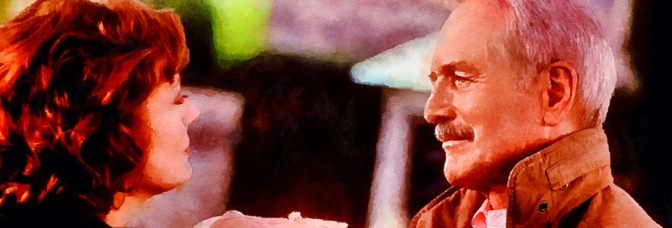
Unfortunate bit of trivia to start us off—Twilight is supposed to be called The Magic Hour, but just around the time of release, Magic Johnson’s high profile (and quickly cancelled) TV show had the same title and they changed the movie’s title. Titles are both important and not. They definitely establish a work’s intention—you may…
-

If Grumpy Old Men weren’t so scared of its ribald humor—giving almost all of it to dirty oldest man Burgess Meredith, who’s just there to make sex jokes and serves no other purpose in the film—you could probably just as well call it Horny Old Men. At least in Jack Lemmon’s case. He hasn’t gotten…
-

I’m not sure how Dirty Mary Crazy Larry played on its original release—like, did audiences actually sympathize with “leads” Peter Fonda and Susan George—but whatever shine time has scrubbed off it has left something of an endurance test. Fonda and Adam Roarke (who’s more the protagonist than Fonda and often more than George) are a…
-

Even with conservative expectations, John Wick: Chapter 3 – Parabellum disappoints. Even with adjusted expectations as the film progresses; the first act seems like it’s going to be a two hour real-time action extravaganza with lead Keanu Reeves fighting his way through seventies and eighties New York City filming locations, only with twenty-first century fight…
-

I’m curious enough about The Battle of Jangsari I think I’m going to read War in Korea: The Report of a Woman Combat Correspondent by Marguerite Higgins, which might have some information about the actual battle of Jangsa-ri because there’s nothing on the Google not about the movie. The big details, which you assume the…
-
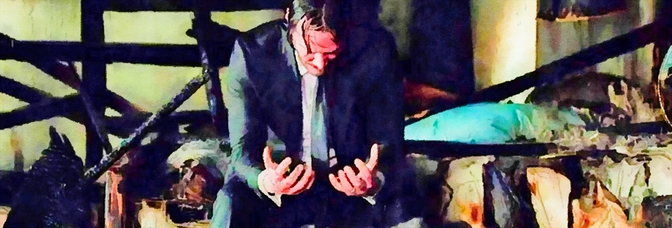
If—and it's a big if—there's anything interesting about John Wick: Chapter Two as a sequel, it's how poorly the original filmmakers execute the sequel. It feels like a contractually obligated affair, only with the original principals returning. Well, save David Leitch who produced the first film and was the (uncredited) co-director. Guess we know who…
-

John Wick is all right. It feels like if it’d been made in the nineties, it’d have been revolutionary. Instead, it uses all the revolutionary and not revolutionary film techniques since the nineties to make the ultimate in mainstream heavy metal neo-pulp, with a twist of seventies exploitation for good measure. It succeeds because of…
-

At the end of Bad Dreams, as GNR’s Sweet Child of Mine starts up over the end credits… I thought, at least director (and co-writer) Fleming has good taste in music. Turns out he didn’t want the song and a studio exec with a better ear put it in the film. Bummer. It would’ve been…
-

Troop Zero is heartwarming but not too heartwarming. It doesn’t promise the stars as much as it promises a gradual slide to fairness; it promises redemption to some but not the ones who really need it. It avoids any seriousness to instead provide consistent, constant entertainment. Often in the form of amusing montage sequences with…
-

Inherit the Viper is an unfortunately titled but acceptably mediocre crime drama about rural siblings Margarita Levieva, Josh Hartnett, and Owen Teague running an opioid business. Levieva’s the merciless boss, Hartnett’s the reluctant muscle, Teague’s the enthusiastic but uninvolved teenager. Everything’s going fine—well, outside the occasional fatal overdose for customers—until Teague decides he’s got to…
-

Catch Me If You Can is a spectacular showcase for Leonardo DiCaprio. Unfortunately, the rest of the film doesn’t exactly rise up to meet him, not the filmmaking, not the writing, not his costars. With the exception of co-lead Tom Hanks, who’s a whole other thing, the direction, the writing, the supporting cast, they’re all…
-

The Princess Comes Across is an uneven mix of comedy and mystery. Too much mystery, too little comedy, noticeable lack of romance. The romance is an awkward afterthought in Walter DeLeon, Francis Martin, Don Hartman, and Frank Butler’s script (four screenwriters is probably too much even in 1936; definitely for this kind of picture), which…
-

Canceled has a great sense of humor. It ends on a knowing smile but then the end credits have a few knowing big laughs. It’s about five minutes of action, real-time, as two friends (Laura Sacchetti and Maria Scenna) try to console a third (Katrina Rossi) over the loss of her favorite TV show. The…
-

Roxanne is a charming romantic comedy. Wait, I think it might need an additional qualifier—it’s a charming romantic situational comedy. I’m not one to sit around and debate stakes with romantic comedies, but even for a romantic comedy… Roxanne’s got some low stakes. Maybe because of how closely screenwriter (and leading man) Steve Martin followed…
-

During To Kill a Mockingbird’s exceptional opening titles, I wondered how it was possible the film was going to look so amazing yet had no reputation for being some exquisitely, precisely directed piece of cinema. Then up came Stephen Frankfurt’s credit for title design, which kind of dulled my excitement for a moment. Could Mulligan…
-

About halfway through, Echoes of You gets after-school special cringy, which seems like it’s too bad because at least before—despite being this Dickensian tale of classical pianist employed as a theatre custodian (Laurence Fuller) who befriends the street urchin living out back (Zakary Risinger) through the magic of music—at least it’s well-executed. I mean, basically.…
-

Restoration is two parts period drama, one part character study, one part comedy. It’s often tragic, both because of events occurring and because it takes place in 1665 England and 1665 wasn’t a great time to be alive given the state of medical knowledge versus, you know, disease. Or mental health. The general complete misunderstanding…
-
Spawn is really bad. It’s bad from the first frame, the first bad CGI vision of Hell. I’m not sure if it’s bad until the last frame, I didn’t bother with the end credits. But based on the music accompanying the start of the end credits… yes, yes, it’s bad until the final frame. Even…
-

Lords of the Deep exists for reasons. Some of them seem interesting enough I’m disappointed the trivia section on IMDb doesn’t offer any explanations. But just going on what it’s like watching the film and what it’s good for? You hate top-billed Bradford Dillman and want to simultaneously be reminded why you don’t like him…
-

Becket has some genre constraints. Significant ones. It’s a king-sized 70mm Panavision English history epic only it doesn’t feature any big battles. In fact, it goes out of its way not to show battles. It’s also an early sixties historical epic and it’s trying to be a little edgy in how it shows the relationship…
-

What’s so incredible about A Man for All Seasons is how big director Zinnemann makes it while keeping it small while keeping it big. The settings are big—palaces, estates, and so on—but Zinnemann keeps the set pieces small. He and cinematographer Ted Moore will do big establishing shots, but only after they’ve gotten into the…
-
There’s a lot of fine direction in The King’s Speech. Hooper does exceedingly well when he’s showcasing lead Colin Firth’s acting or showing how Firth, who starts the film as Duke of York and ends it King of England, moves through the world as this sheltered, unawares babe. Of sorts. These successful sequences would stand…
-
It is a dark time for the Star Wars franchise. Although the second highest grossing film franchise of all time, white men really weren’t okay with Kelly Marie Tran getting a lot to do in the last “trilogy” movie, not to mention women telling ostensible alpha Oscar Isaac what to do, and nobody wanted to…
-

The strange thing about The Frontier Experience is how it’s really bad with exposition for an educational film. Watching it, you can imagine an accompanying quiz and if the filmmakers do acknowledge the potential test question instead of just ignoring it, they treat the plot point or detail like a secret. I’m sure if I’d…
 The Stop Button