Category: Film
-

The You in You Can’t Get Away With Murder refers to Billy Halop, nineteen year-old punk kid who doesn’t respect what sister Gale Page sacrifices for him and instead runs around with neighborhood tough Humphrey Bogart. They knock over gas stations, they play pool, it’s a good life… at least until things go wrong during…
-
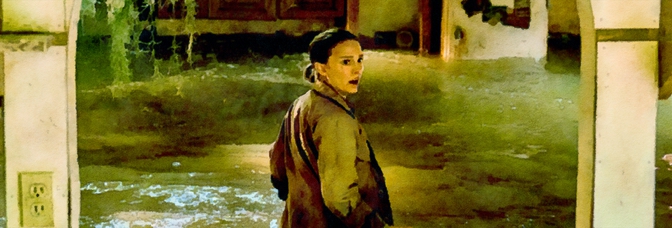
The two most bewildering things about Annihilation are director Garland’s inability to frame for Panavision aspect ratio—did cinematographer Rob Hardy just not want to tell him he was reusing the same three close-up shots, with his subject on one side of the frame, looking off, the other three-quarters empty, or did Hardy not see a…
-

Erik the Viking is a great example of when the director doesn’t know how to direct the script. What makes it peculiar is… director Jones wrote the script. The film, an absurd comedy about a group of Vikings trying to end Ragnarok so they people will stop killing each other, starts with the the very…
-

I wonder if, much like that one immortal monkey divining Borges’s dreams and half-dreams at dawn on August 14, 1934, one could assemble a list of all the action beats in Godzilla: King of the Monsters, which are mostly from Aliens and Jurassic Park 1 and 2, and arrange them to figure out the story…
-

At the end of Congo, after the heroes have found the lost expedition, the lost city, and the laser-pure diamonds but also run afoul of said lost city’s super-ape protectors and happened to find this place during a volcanic eruption, some of the super-apes jump into the lava flow. It’s a somewhat lengthy sequence, which…
-

Birds of Prey (and the Fantabulous Emancipation of One Harley Quinn) is a Margot Robbie vehicle, which is excellent, because Robbie’s great and the filmmaking, particularly on Robbie’s scenes, is outstanding. Retitling it the Fantabulous Emancipation of Harley Quinn would be the best move; the Birds of Prey are going to be a bonus, with…
-

Timeline is really bad. The opening sequence starts Donner regular Steve Kahan in a terrible bit part but at least there’s the stunt casting; the rest of the poorly edited sequence has ER doctors and anonymous law enforcement looking into the mysterious death of a man who appeared in the middle of the highway for…
-

No one in The 13th Warrior seems particularly thrilled to be participating in The 13th Warrior. Some people carry it better than others—Omar Sharif’s cameo is the only “good” acting in the film, as he translates and interprets events for lead Antonio Banderas, who can’t speak the common language with the Vikings they’ve come across.…
-

I finished watching It Came from Beneath the Sea, which I regret, particularly because the whole reason I didn’t shut it down was for the big special effects finale, when the giant radioactive octopus finally attacks a city. Incidentally, it’s San Francisco, which doesn’t turn out to be anywhere near as cool looking as I…
-
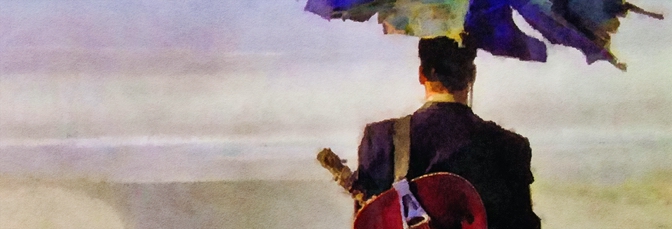
Released in 1998, Six-String Samurai makes the big move of using a very familiar piece of music from the Pulp Fiction soundtrack (Misirlou, which is also the music on the Pulp Fiction trailer) during a big action sequence. It’s not a bold move, because Samurai hasn’t got any boldness. It even walks back being tough…
-
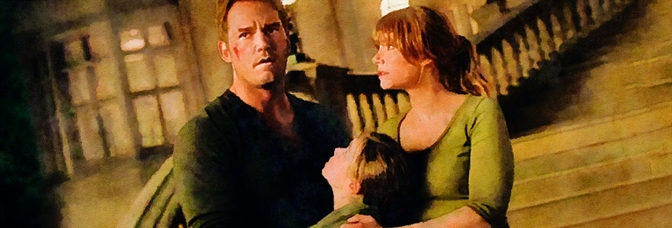
After a strong dinosaur suspense opening, with some futuristic submersible entering the closed Jurassic World bay to get something off the seafloor, Fallen Kingdom shockingly quickly becomes a remake of the first Jurassic Park sequel, Lost World. Like, so much you wish there were more in it so David Koepp got a credit through forced…
-

The middle of Train to Busan is excellent. The first act is iffy, the ending is forced, but the middle is where the film excels. It’s where director Yeon just gets to do action, not getting slowed down with the humanity of it all (which he’s uneven on), and just executes these breathtaking action suspense…
-
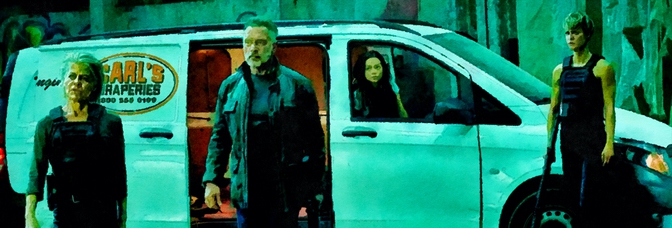
Terminator: Dark Fate is the fourth irrelevant Terminator 2 sequel. It’s not the worst of them, it’s not the best of them. But the poor rights owners just can’t seem to figure out how to franchise and Arnold Schwarzenegger just can’t say no. If there’s a Terminator 7 in a couple years… Arnold will be…
-

If I had to describe a feature of Jurassic World as saddest… I might find myself hard-pressed. There aren’t a lot of possibilities—worst, dumbest, cheapest, silliest, probably some others… but saddest is something different. When the film takes a pointless detour through the original visitor center from Jurassic Park, aged some twenty years and run…
-
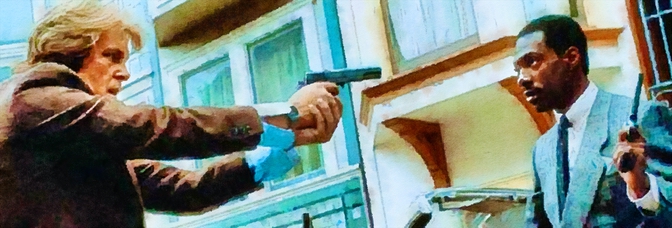
About seventy minutes into 48 Hrs., Nick Nolte apologizes to Eddie Murphy for the racial slurs he’s been calling him since Murphy showed up in the movie. Nolte’s just doing his job, he explains, “keeping him down,” which is an unintentionally honest moment about cops and Black men. Murphy nods to it, but says, “that…
-
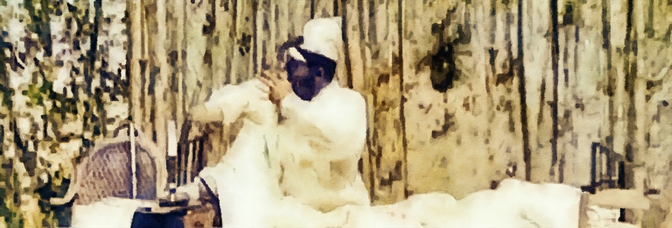
A Terrible Night had me exclaiming, “Holy shit,” when the giant bug appeared. Or when it started moving. I’m not sure if it’s always in the shot. I’m resisting the urge to go and check. The short is short—a minute—and one of director Méliès single shot films. He appears in the film as well, a…
-

About halfway through The Witch: Subversion, I wondered why they’d opened with a flashback showing presumably chid witch Kim Ha-na escaping from her government “doctors.” The prologue introduces evil scientist lady Jo Min-soo and her chief fixer Park Hee-soon, it introduces the secret castle-like laboratory fortress, it has a lot of blood. The opening titles…
-
About halfway through The Witch: Part 1. Subversion, I wondered why they’d opened with a flashback showing presumably chid witch Kim Ha-na escaping from her government “doctors.” The prologue introduces evil scientist lady Jo Min-soo and her chief fixer Park Hee-soon, it introduces the secret castle-like laboratory fortress, it has a lot of blood. The…
-

If you tilt to just the right angle, for a while you can see Dead End as the tale of three people from a poor neighborhood and how life has worked out for them as they got closer to their thirties. Humphrey Bogart grew from a “not too bad” young punk to a public enemy…
-

Batman: Dead End goes far in validating the idea of cosplay as successful costuming for film—well, not Andrew Koenig’s Joker—but definitely the Batman outfit. Costume designer Michael MacFarlane, cinematographer Vincent E. Toto, and director Collora do figure out a way to do a “comics accurate” (if you’re reading comics illustrated by Alex Ross) Batman costume.…
-
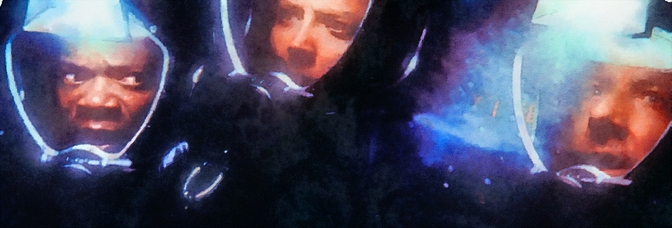
Sphere is not a justifiable use of eighty million dollars. I don’t think you could justify spending a dollar to rent a copy to watch, much less eighty million of them to make the thing. The big problem is the script. Whatever Kurt Wimmer (ominously credited with “adaptation”), Stephen Hauser, and Paul Attanasio did to…
-
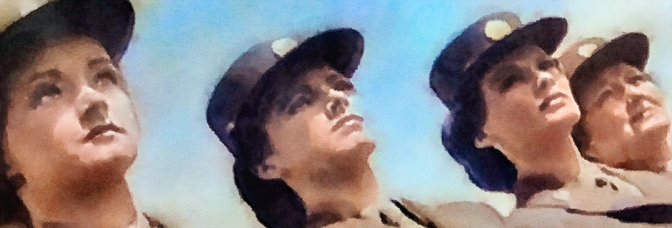
We’re in the Army Now is somewhat inexplicably a rarity. It’s a Warner Bros. “training short” for the Army (during World War II) but in the public domain. It’s got no IMDb entry, no Google results outside a citation from Doug McClelland’s Eleanor Parker: Woman of a Thousand Faces book (with the wrong title), yet…
-

Card Party runs a minute. Three guys sitting outside at a table, drinking wine, playing cards. It’s a family affair for director Méliès (who’s one of the card players), with his brother playing another of them. There aren’t any credits and apparently the third player’s identity is lost to time. At the open, Méliès daughter…
-

Stryker’s War runs just over forty-five minutes. The first fifteen to twenty minutes are all about how twenty-two year-old lead Bruce Campbell can both do anything and make everything feel legit. The film opens in Vietnam (as shot in East Michigan) with Campbell taking his squad out on a mission after being promoted to lieutenant.…
-
Save Me is the story of a kid (Jaheem Toombs) whose house burned down and the rest of his family died and he goes to ask the man who saved him (Sam Bologna) why he saved him and the man doesn’t tell him so the kid lies about it to his new best friend. There…
-

Pierre Paolo is a five minute short, set in a seaside Italian town. It opens with a simple, handwritten title card, then there’s a montage of the town set to classical music. The action rests on an old woman (Filomena Paletta) sitting on some stairs. Text appears across the bottom of the frame, explaining she’s…
-

Cronos opens with an English-narrated prologue about a sixteenth century alchemist making a device to prolong his life. The uncredited narrator is wanting, the music isn’t good—it doesn’t seem like the rest of Javier Álvarez’s score, but who knows (well, the distributor would); it’s a change for the U.S. theaters and a bad one. So…
-

Source Code is very much MacGuffin as movie. Numerous plot details exist solely to justify (and qualify) certain creative decisions; the film takes a bunch of familiar and somewhat familiar—depending on the viewer’s preferences—sci-fi tropes, devices, and gimmicks, streamlines them, then combines them in those spared-down states. For example, a time traveller in the future…
-

At the end of Still of the Night, the film puts aside the “whodunit” to give second-billed Meryl Streep—who’s playing the femme fatale part but not at all as a femme fatale—a lengthy monologue. It’s all one take, Streep just acting the heck out of this mediocre thriller monologue. It doesn’t make the film worthwhile,…
-

If you ever find yourself not believing in the idea that White people of wanting talent can fail upward, watch Jonah Hex. Every one of the principals from the film worked again when, based on the film as evidence, maybe John Malkovich should’ve gotten another job. Sure, Josh Brolin isn’t terrible in the lead, but…
 The Stop Button