Category: Film
-
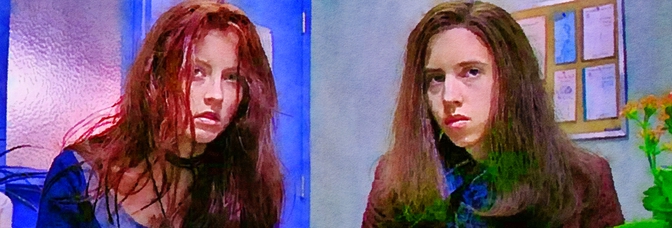
Ginger Snaps is almost there. Karen Walton’s script is almost there, Fawcett’s direction is almost there, Emily Perkins’s lead performance is almost there, Katharine Isabelle’s is… okay, it’s not almost there by the end, when Isabelle’s acting through latex makeup, but she’s good in the first act. Ginger Snaps coasts on the first act for…
-

Sadly, the Writers Guild of America does not publish their arbitrations for writing credits, because the one on Rogue One has got to be a doozy; I desperately want to know how they go to this script. Did it actually start as a video game or did director Edwards really have no idea how to…
-

Bad Education is the story of a junior in high school (Geraldine Viswanathan) uncovering the biggest school embezzlement case in United States history, something like $12 million dollars. Only it’s not Viswanathan’s movie. It’s Hugh Jackman’s movie, which makes sense because Hugh Jackman’s great in it. Not transcendent, but he’s really good. He can’t be…
-
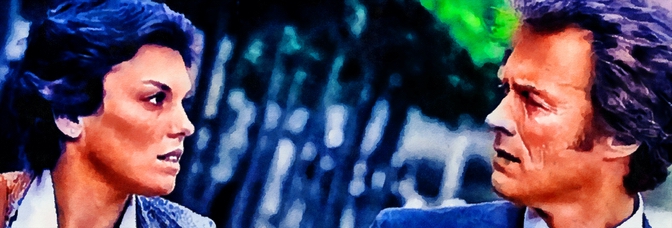
The Enforcer is cheap in all the wrong ways, both in terms of budget and narrative, which probably ought to be clear in the first scene, when the movie opens on a butt shot of Jocelyn Jones in Daisy Dukes. She’s hitchhiking but it’s all a setup for the villain reveal—Jones is in an ostensible…
-
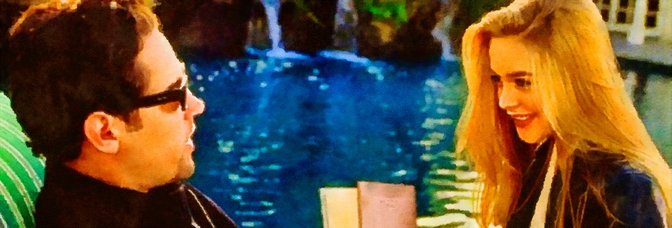
I really didn’t want to bag on Clueless when I watched it this time, the first time since the theater, almost twenty-four years ago. It got good reviews on release, which I fully disagreed with—I’d forgotten how much audiences in the eighties and nineties liked farcical sitcom-level characterizations. Particularly in the nineties with the lusterless,…
-

The first third of City Streets is this awesome bit of experimenting from director Mamoulian as he tries to figure out how to make a sound picture. Lots of great shots and camera setups, usually with too dawdling cuts. William Shea holds everything just a few seconds too long. But the montage imagery itself is…
-

Overnight is occasionally amusing, often mortifying, never contextualized enough to be interesting, and always compelling. But it’s compelling only if you’re somewhat familiar with the subject of the film, Troy Duffy. Specifically, Duffy’s directorial debut, The Boondock Saints. In 1997, Harvey Weinstein bought the script for Duffy to direct at Miramax and less than a…
-

What’s so incredible about Boondock Saints is how David Della Rocco’s atrocious performance distracts from lots of other terrible things going on in the film. At least when Della Rocco is onscreen. When he’s off… well, then the omnipresent deficiencies proudly scream their presences. Della Rocco gets all of the film’s racist jokes and I…
-

Either there’s a good story behind Fist of Fear, Touch of Death’s production or it’s exactly what it seems to be, some producers got ahold of the rights to an old Chinese movie, 1957’s The Thunderstorm, starring a teenage Bruce Lee in a non-martial arts role (in fact, it’s incest melodrama), and couldn’t figure out…
-

There are few secrets in All That Jazz; the film immediately forecasts where it’s going, with clear shots of star Roy Scheider in the hospital amid the other quickly cut montage sequences. But these are flash forwards, as opposed to the present action and then we’re seeing flashback. Because we’re actually not even seeing “reality”…
-

During High Tide’s final twist, I began to wonder just how different the film would be with different music. Sometimes Peter Best’s score is fine—or even good—sometimes it’s very much a product of its time and using way too much saxophone. The film’s biggest melodrama beat, where it commits to just being a melodrama about…
-
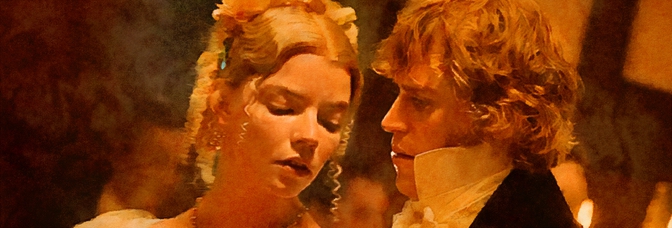
If IMDb is correct, there have been only ten other adaptations of Jane Austen’s Emma, and I’m including the modernizations. So it’s not so much Emma is oft-adapted, maybe just it’s got a very memorable story. Memorable enough even I was anticipating how—oh, wow, it’s director de Wilde’s first feature. Like, remember when music video…
-

The Appaloosa could be worse. Director Furie apes styles he doesn’t understand how to use—his Leone-esque angles, the Acid Western—with what’s a fairly traditional Western, albeit just with a Mexican supporting cast. Well, okay, so Marlon Brando is the only gringo playing a gringo. All the other White people are supposed to be Mexican. You…
-

What’s so frustrating about Champagne for Caesar is how little the film really would’ve need to do to be a success. It just needed a rewrite. Someone to come in and fix Hans Jacoby and Frederick Brady’s script, which is usually fine but they really can’t figure out what to do with Celeste Holm. And…
-

The first half of Barry Lyndon, very nicely delineated on screen with a title card and then an intermission, is a black comedy. The second half is a tragedy. The epilogue explicitly reconciles the two, but there’s also Michael Hordern’s narration, which does the most expository work of anything in the picture. For the most…
-
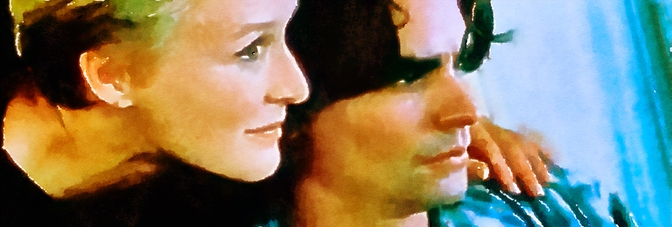
In the Gloaming is a qualified success. If you’re trying to go for humanizing a guy dying of AIDS while his upper middle class White yuppie family is slow to realize he’s a dying person who they probably ought not to avoid because they’ll regret it… it does that job. Gloaming is an hour-long HBO…
-
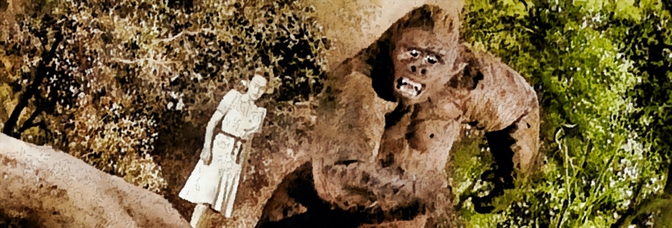
From the first scene, Mighty Joe Young is concerning. There’s a nice establishing shot of an Africa plantation, with some great matte work, then little White girl on the plantation Lora Lee Michel sees a couple African men passing with a basket. She wants what’s in the basket, so there’s a nice lengthy barter sequence…
-
From the first scene, Mighty Joe Young is concerning. There’s a nice establishing shot of an Africa plantation, with some great matte work, then little white girl on the plantation Lora Lee Michel sees a couple African men passing with a basket. She wants what’s in the basket, so there’s a nice lengthy barter sequence…
-

With forty minutes left in its way too long 124 minute runtime, Magnum Force starts getting real tiresome. The film’s already gone through multiple set pieces, with the Clint Eastwood ones pointless to the narrative but apparently what screenwriters Michael Cimino and John Milius think is character development, while the ones related to the a…
-

A Safe Place tracks the relationship of apparently financially secure but listless hippie Tuesday Weld and her square of a new boyfriend, Phil Proctor. Weld spends her time presumably stoned—though we don’t see her smoke, her friends are always rolling a joint or smoking one—and dwelling on the past. She can’t get over the lack…
-
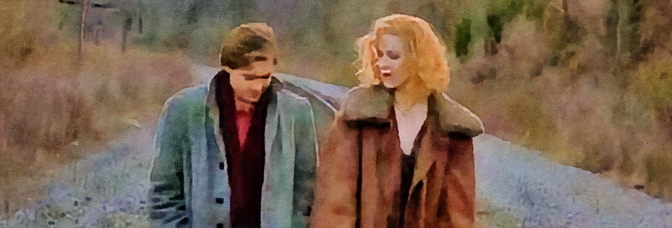
The surprise tragedy of Fresh Horses is Molly Ringwald could’ve been good in it. Even though she’s top-billed, she doesn’t get a scene without Andrew McCarthy until almost halfway through the movie—she’s the white trash object of his working-to-middle class sexual lust—but she’s not good in that scene. Actually, it’s her only scene without McCarthy…
-

Is it really so hard to make a Rocky and Bullwinkle cartoon? It’s somewhat unfair to just crap on the writing (by Thomas Lennon and Robert Ben Garant), the acting (June Foray’s back as Bullwinkle but barely in it), the editing (it’s hard to say if Mark Deimel’s timing is off or if it’s Trousdale’s…
-
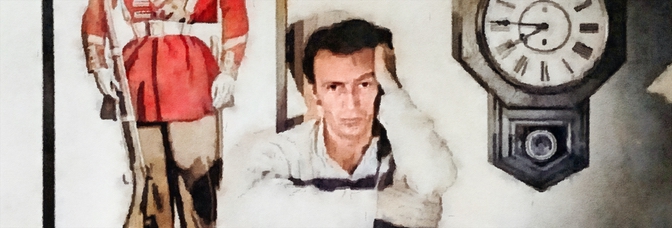
What's a Nice Girl Like You Doing in a Place Like This? is an absurd but arty comedy short. Director Scorsese mixes full motion video with stills, which sometimes do stand-ins for scenes—like protagonist Zeph Michaelis marrying Nice Girl Mimi Stark—sometimes just for expository stuff. See, Michaelis is a writer who gets a new studio…
-

For the first forty-five minutes or so, The Raid is able to keep going on the idea lead Iko Uwais is going to be the most kick ass fighter in the movie. There a handful of short expository scenes throughout the film, plus a prologue, where Uwais prays, does some martial arts workouts (it’s all…
-

Elite Squad is about how hard it is to be a fascist stormtrooper in Rio de Janeiro, because not only do you have to deal with militarized criminals, corrupt cops, smooth-talking (and sexy) liberals, you also might have a wife who doesn’t like you being a fascist stormtrooper or some dead kid’s mom come ask…
-
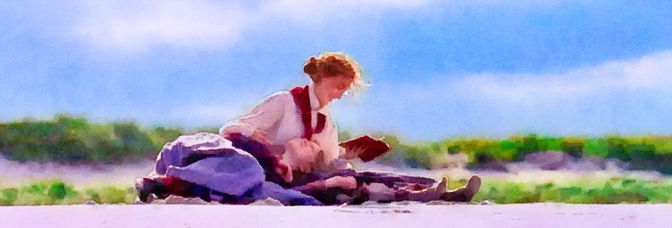
Little Women has two parallel timelines. There’s the present, starting in post-Civil War New York City with teacher and pulp writer Saoirse Ronan living in boarding house (where she also teaches). Then it flashes back to Ronan’s life seven years earlier, at home in rural Massachusetts; she’s the second oldest of four sisters; oldest is…
-

There are two profoundly well-directed scenes in the third act of The Daytrippers, including the last one, so you really want to give what you can of it a pass. Daytrippers is very straightforward, even through the various complexities of the third act, but just because Mottola (who wrote as well as directed) knows what…
-

The disconcerting part of The Irishman’s actually never-ending CGI isn’t the aging and de-aging, it’s star Robert De Niro’s creepy blue eyes. For the first half hour of the (three and a half hour runtime), I was trying to get used to De Niro’s CGI… makeup, but kept having problems with it, which didn’t make…
-

Once it’s clear directors Patching and Serritiello are going to be able to keep Gelateria going, the question becomes how can they possibly end it. The film opens with a lone figure on a rocky beach, yelling into the sea. The water has sound, the yells don’t have sound. Given how the film ends… it’s…
-

Once the technology gets better, something like Familiar Strangers is going to be disturbing as all hell. Director Sayginer has created a bunch of heads, using deep-fake technology to look like various famous celebrities (Maggie Gyllenhaal and Luke Evans are the most spot on), and the top row moves one way, the bottom row moves…
 The Stop Button