Category: Film
-

From the start, Passing Strange is a spectacular filming and presentation of a stage production. Lee’s direction, Barry Alexander Brown’s editing, Matthew Libatique’s photography, they’re all great from go. Lee and Libatique have highlights throughout—and Brown’s cutting excels during the busiest sections—but it’s clear Strange will look great no matter the content. Of course, Lee…
-
The best thing about Much Ado About Nothing, except the dialogue, is Delamere’s direction. Not the stage direction, Rourke did that job, but Delamere’s direction of this recording. There’s some ho-hum headroom stuff going on to keep actors in the shot, but it’s a phenomenal showcase of the actors’ performances. They don’t credit the editor,…
-
If its aloof and earnest host is to be believed, Louis Theroux: Shooting Joe Exotic was totally going to be about said host, Louis Theroux, journeying to Texas during the COVID-19 pandemic to do a new documentary about Joe Exotic. Exotic appeared on one of Theroux’s documentary specials ten years ago and, since being convicted…
-

There’s not much good to say about The Ramen Girl, except the Japanese cast does pretty well. They don’t get actual story arcs, and they’re only around to service the vanity of narcissist protagonist Brittany Murphy. But their acting is good, even though director Ackerman is terrible with their scenes too. Murphy is a trust…
-

Despite some occasionally annoying visual techniques (which I'll enumerate later), director Oppenheimer always shows enthusiasm for the directing of The Magnificent Meyersons. He loves directing New York City walk and talks, whether on the street or in a park. Most of Meyersons takes place either in a park or on the street. Sometimes seemingly the…
-
Much Ado About Nothing has a machismo problem. It’s not writer, director, and star Branagh’s fault; it’s just the historical patriarchy. Though Branagh does try to do some initial counterbalancing, opening the film with a quote about the sexual dynamics. Still, that moment only carries through the first scene, setting up Emma Thompson’s character… And…
-
I’m hesitant to describe Barb and Star Go to Vista Del Mar as an absurdist comedy because the “absurdities” always land perfectly. For example, the opening titles have paperboy Reyn Doi singing along to the entirety of Guilty (Barbara Streisand and The Bee Gees) and then getting into a tree elevator. By the time Doi…
-

Gunpowder Milkshake is a moody, neon, sometimes minimalist mix of neo-noir and spaghetti Western. Director Papushado approaches the film’s budgetary constraints with creativity and ingenuity, focusing tightly on lead Karen Gillan and her dangerous presence. The film bookends with noir narration from Gillan, which creates a dreamscape for the runtime. A highly stylized dreamscape, full…
-

It Follows is a monster movie. Somewhere in the second half of the film, the monster starts acting with more malice towards its targets, like it’s frustrated it hasn’t been able to kill them yet. Given it’s an invisible sex monster—or, I guess, possibly an invisible sex demon—there’s a particular energy to it. There’s always…
-

The first act of Flight to Mars is quirky enough and soapy enough I had hopes for the finish. The film’s about the first crewed expedition to Mars, and I knew it had them landing there and meeting Martians, so I figured there’d be time for more quirkiness and soapiness at the end. It seemed…
-

Joe is a story of white male friendship. The Joe in the title is Peter Boyle, a racist working-class Vietnam vet. The film doesn’t open with Boyle though, it begins with Susan Sarandon. She’s a rich girl turned hippie who’s slumming with a drug-dealing boyfriend (Patrick McDermott) in the Village. The “prologue” (for the entirety…
-

Black Widow gets a lot better after the first act. Mostly because the prologue—set in 1995 Ohio where tween-who-will-be-Scarlet-Johansson Ever Anderson lives with her All-American family (little sister Violet McGraw, mom Rachel Weisz, dad David Harbour)—is almost classy enough. With better music and a more patient, less blandly jingoistic look at Americana, it’d be potentially…
-

I’m late on BlacKkKlansman. It plays a little differently in 2021 versus 2018 (or even 2019), because now there’s no difference in the rhetoric of the seventies racist garbage and today’s Republicans. The film opens with Alec Baldwin playing the host of a KKK newsreel and doing multiple takes as to take the racism up…
-
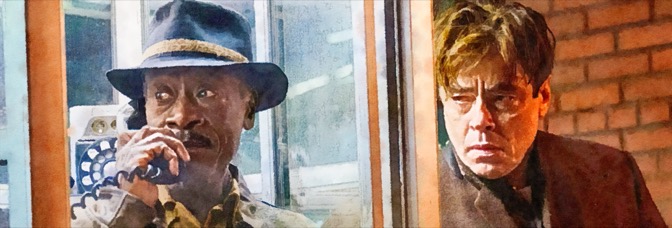
I spent most of No Sudden Move hoping against hope it’d somehow end well. Unfortunately, by the end of Move, I’d forgotten it started as a potential pulpy franchise for Don Cheadle (twenty-five years after Devil in a Blue Dress maybe he could get the one he deserved). The third act is such a slog,…
-

Miss Hokusai is the story of real person Katsushika Ōi. Well, stories of real person Katsushika Ōi. The anime is an episodic memoir mostly about Ōi (voiced by Anne Watanabe) and her younger sister, O-Nao (voiced by Shimizu Shion). The film doesn’t specify but they’re half-sisters, daughters to famous Japanese Edo period artist Katsushika Hokusai…
-

In the Heights is anemic. Tedious and anemic. There are some good performances—Jimmy Smits is great, Gregory Diaz IV seems to be good (he doesn’t get a lot of acting to do), and Daphne Rubin-Vega similarly would be good if it weren’t for Chu’s terrible direction. But since Heights is all about Anthony Ramos and…
-

Wouldn’t it be funny if Bob Odenkirk were an action movie hero? Like a kick-ass one who doesn’t just use machine guns, but also does a lot of hand-to-hand fighting? If you’re unfamiliar with Odenkirk, let’s just say it’s a “cast against type” situation to the extremis. Only it doesn’t matter because action movie special…
-

The extended director’s cut of The Exorcist runs ten minutes longer than the theatrical version. The last time I saw the theatrical, I thought the movie needed some more time to figure itself out. Turns out I was wrong. The ten extra minutes just make it sort of tiresome. Like, the third act of the…
-

I didn’t know Submarine came from a novel going in. I didn’t know it came from the “Great Welsh Novel” until a few minutes ago. I was checking to see if the novel—written by Joe Dunthorne—was YA. Turns out it’s literary fiction, which makes the film adaptation, screenplay by director Ayoade, slightly more interesting, slightly…
-

When did Guy Ritchie get so enthusiastic about his actors’ performances? Wrath of Man is a lot of things—and a little much—but it’s a middling cross between revenge and heist picture where the cast gets a great showcase. Sometimes too much of one, with the script way too talky in the first act. Man’s based…
-
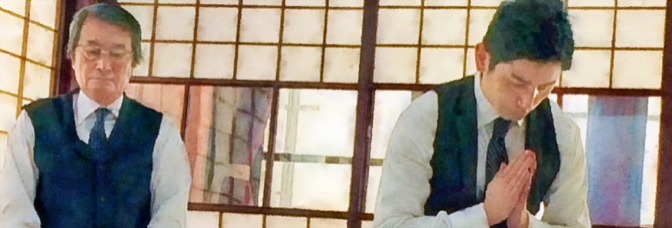
Departures suffers for its DV photography. Suffers. Hamada Takeshi cannot figure out how to light for the video and, as a result, the film never looks good. Maybe if director Takita were somehow taking it into account, but no, Takita just pretends it doesn’t look like an ornate Hi8 camcorder production. With some competent mise-en-scène,…
-

Psycho is a masterpiece of color. After forty joyfully plodding minutes of Janet Leigh going from fetching spinster in a torrid lunch hour romance to grand larcenist in precise black and white (and then another few minute as she moves to close that character arc), director Hitchcock and Psycho put Leigh in the color of…
-
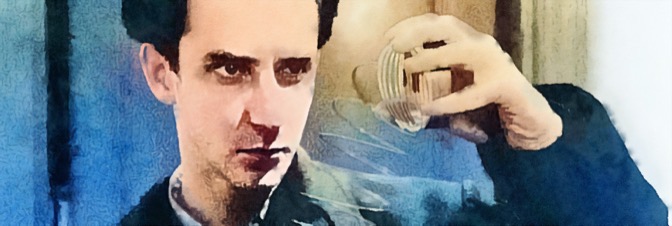
The incredible thing about Pi is how well director Aronofsky is able to compensate for his lead. Pi is about mathematician Sean Gullette discovering a pattern hidden in the stock market—or so he thinks—and trying to navigate the repercussions of his discovery. Wall Street firm lady Pamela Hart is after him for the equation, so’s…
-

Avalon is not a success. It very frustratingly waits until the very end of the picture to clearly not succeed. After trying real hard, there’s just nothing to it. Writer and director Levinson makes a whole bunch of big swings in how he directs the narrative, which is an attempt at doing lyrical structure–just one based…
-
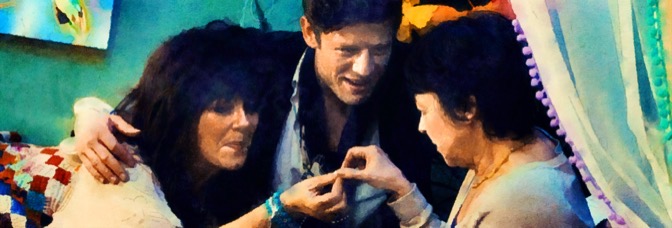
Bonobo has a lot of good instincts, but director Knott and his crew don’t seem to know how to realize them. The most obvious problem is cinematographer James Aspinall, who doesn’t seem to know what he should be doing—Bonobo is always too sharp and too muddy, a decidedly DV problem—but then you realize there’s bad…
-

I spent much of Flatliners’s first half trying to figure out if there was anything technically redeeming about Jan de Bont’s photography. While it’s easy to qualify certain failings—with Schumacher’s bad directing, with Eugenio Zanetti’s obnoxiously ostentatious production design, could de Bont actually shoot it well? No, he couldn’t. But it also doesn’t somehow excuse…
-
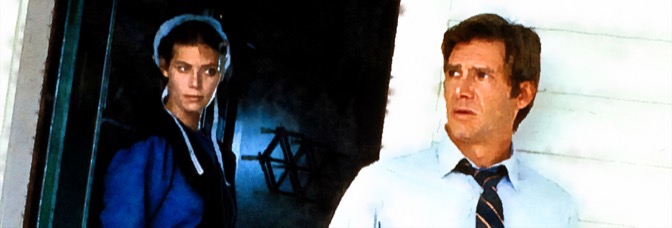
Witness has a beautifully directed scene or sequence every five to ten minutes. Just something director Weir is able to particularly nail, sometimes with John Seale’s photography’s help, sometimes with Thom Noble’s editing, then probably least of all, with Maurice Jarre’s score’s help. Jarre’s score is good, very pretty, and occasionally redundant; when it sells…
-

The scary thing about Tango & Cash is its ability to improve. Not sure who wrote or directed the end of the second act, when Kurt Russell gets to act opposite people besides Sylvester Stallone and you remember it’s actually an achievement to make him so unlikable for so long, but it’s a lot better.…
-

If you told me Room 237 exists because someone wanted to test out how far the “Fair Use” part of copyright exception went… well, okay, I wouldn’t believe it because obviously there’s the other terrible stuff going on and you’d do it better if you were just trying to bring “Fair Use” to the Supreme…
-
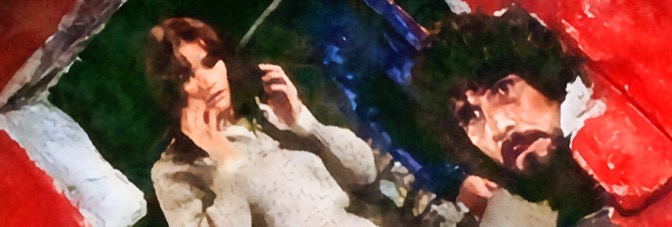
Despite not watching the horror franchises of the eighties while growing up in the eighties, I was familiar enough with them to know most franchises—so long as they started with an A list cast—had a generally well-received first installment before going to heck. And I knew The Amityville Horror was an exception; no one thought…
 The Stop Button