Category: Mystery
-

I had no idea Heather Graham was ever a lead in such a high profile project. I knew she was in From Hell, but she’s got a lot to do–and with an Irish accent. I suppose it’s the best performance I’ve ever seen her give, maybe because her character isn’t a twit and Graham tends…
-
It’s hard to know what to think of Red Dragon. While it’s an adaptation of a novel, it’s also a remake of Manhunter, whether the film wants to acknowledge it or not. It’s got Danny Elfman doing the score, so it’s scary (though he does seem rather influenced by early 1990s Morricone) and director Ratner…
-

The espionage genre has gotten so stupid over the last couple decades, it’s hard to even imagine how a mediocre entry could be good. Now, it’s watching the least worst. Three Days of the Condor is such a peculiar film, even though it’s wholly commercial–I mean, Dino De Laurentiis produced it. It’s not just a…
-
If it weren’t for the fantastic Brad Fiedel music (until the end credits) and the Pittsburgh locations (the city really is underutilized as a filming location, with Striking Distance taking fantastic advantage of its mix of urban, green and water), there’d be nothing to distinguish this one. It’s a B movie given a high profile…
-

It’s hard to say whether Killshot falls apart because of the filmmakers or because of the source material. Killshot changes its mind about what to deliver every three minutes. The script can’t decide on a main character–is it Mickey Rourke’s hit man or is it Diane Lane’s woman in distress or is it Thomas Jane’s…
-
Impulse is somewhat interesting as a piece of pseudo-feminist filmmaking. Not to suggest Locke’s a poser. It’s just her intentions can’t compete with her script. The script appears to have come from two actors turned writers. Leigh Chapman seems to have been brought in to female-up the script. There are some really nice little moments,…
-
Horsemen went direct-to-video with Dennis Quaid and Zhang Ziyi. It’s surprising because it’s a Platinum Dunes production–the guys who remade Friday the 13th; I thought Michael Bay would have a firmer distribution deal. The director, Jonas Åkerlund, is fine. With a better script, he might have made a better movie. Horsemen would have been more…
-

Someone–Ebert maybe–is going to laud The Limits of Control. The nicest thing one can really say about it is it isn’t abjectly terrible. There aren’t many bad performances (Tilda Swinton’s lame and Bill Murray’s awful and Isaach De Bankolé is weak when he has more lines than the Terminator) and Jarmusch really does know how…
-
Who has the least personality when it comes to State of Play? Director Kevin Macdonald? He shoots the most boring Panavision-sized frame I think I’ve ever seen. I’ve never seen a Brett Ratner movie from start to finish, but… Macdonald’s boring. He’s not bad, he’s just not any good at all. The lack of a…
-
I first saw The Killing when I was in high school. I had a great video store and one of the employees–lots of the employees were film school students–recommended the film to me, raving about Kubrick’s use of fractured narrative. He didn’t call it a fractured narrative, I don’t remember what he called it, maybe…
-
Okay, I thought Lodger auteur David Ondaatje was really his uncle (English Patient author) Michael Ondaatje. I wished I’d checked before starting the movie… even with Hope Davis in it, I’m not sure I would have watched it. It really changes my impression of it. All of the stupid zooming and fast-forwarding and post-production nonsense,…
-
Half Moon Street is supposed to be funny, right? No one’s supposed to believe it’s serious, they can’t. Certainly not with Sigourney Weaver’s performance–it’s got to be the worst thing she’s ever done, but it’s amazing because she certainly never gave the impression she’s capable of such an atrocious performance. The script’s full of these…
-
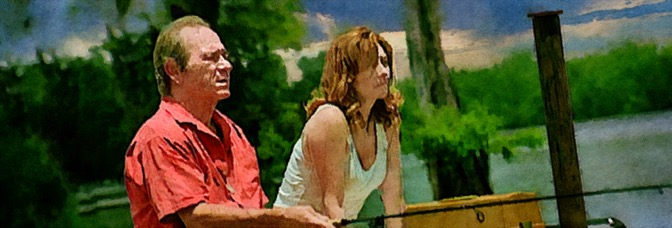
Second attempt (Alec Baldwin tried in 1995’s HEAVEN’S PRISONERS) to turn James Lee Burke’s Dave Robicheaux novels into a film franchise. Tommy Lee Jones is good in the lead and the supporting cast is all fine (Peter Sarsgaard is fantastic) but the script’s a mess. The “mystery” involves Jones, Hollywood actors (Sarsgaard and Kelly Macdonald),…
-
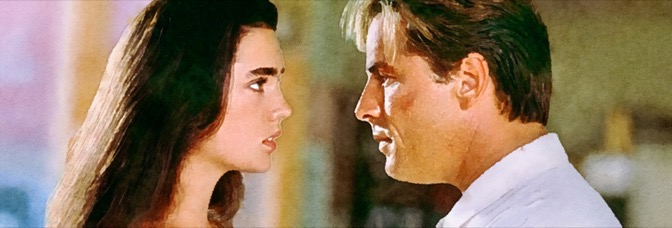
One of the most important things about a film noir is the ending. It has to be perfect. It doesn’t matter what comes before, the ending just has to be right. The Hot Spot is a film noir. It’s not a neo-noir. There’s an important distinction. Hopper seems very aware of that distinction; everything he…
-
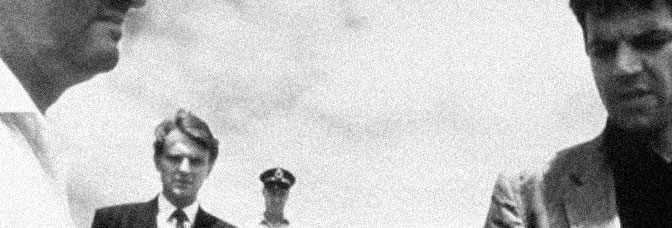
The intrepid reporter genre has almost entirely disappeared. These are the films–around since the 1930s, when newspapers became American cinema’s ideal breeding ground for protagonists (many screenwriters, new to talkies, were former journalists)–where the reporter is investigating a murder or series of murders, ones the police can’t quite seem to solve (the police might even…
-

During the lousiest parts of Changeling–easily identifiable by Jeffrey Donovan’s increased presence–there should be a disclaimer running across the bottom of the screen: “It doesn’t stay this bad… promise.” Changeling is the worst film Clint Eastwood’s made in years. It’s easily the worst of his serious films–afterwards, I realized his last film before this one…
-
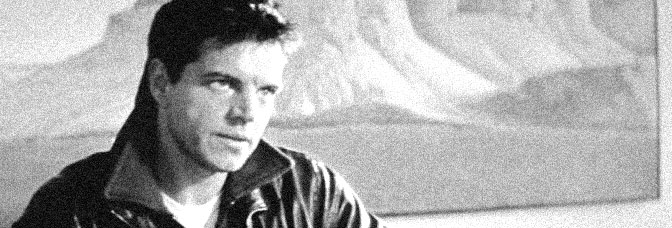
Ground Zero opens with a title card attesting to the film’s historical relevance. The intended effect is apparently to convince the viewer of the film’s authenticity and plausibility. So, for a film featuring a cameraman who can outfight spies, Ground Zero is completely plausible until the helicopter shows up. Not the first helicopter, but the…
-
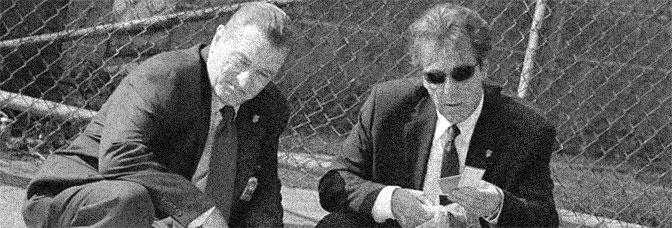
I don’t know when I first realized De Niro and Pacino had never been in a movie together (really together)–it was long before Heat; their pairing doesn’t exactly seem obvious (both were always leading men), but something about their acting pedigree just made it seem natural. For example, Pacino’s never made a film with Scorsese…
-

Hans Zimmer did the score for The Da Vinci Code? I hope he apologized to James Horner for all the plagiarisms (particularly from Horner’s two Star Trek scores and then Aliens). I don’t know where to start with The Da Vinci Code, except maybe to say it’s the finest film of its kind. It’s actually…
-
The train thriller has been a film standard for seventy years, probably longer. I can’t remember the last one, as the genre’s sort of fallen off in the last ten years. The naive American tourist is trouble genre is younger, but not by much. Transsiberian combines the two–a natural combination–but it’s far more of a…
-

It’s getting increasingly difficult not to talk about Woody Allen’s films in the context of his body of work. While on one hand, Cassandra’s Dream does feature what could be construed as a Jaws reference, it’s also rather similar in pacing to some of Allen’s late 1970s, early 1980s films. The film’s first act is…
-

With irregular fade outs, elevator muzak for a score, bad direction and a British cast pretending to be Spanish, Uncovered plays like a mix between a British television movie and a–Canadian–after school special (albeit one with a European approach to nudity). I’ve read the source novel, an intricate thriller, and this filmic adaptation is absent…
-

If Like Minds weren’t shot in Panavision and it didn’t star Toni Collette (just because she hadn’t fallen off the radar far enough yet), it’d be the pilot for an Australian crime drama. Collette would be the criminal psychologist with Richard Roxburgh as the brutish but noble cop who had to put up with her…
-
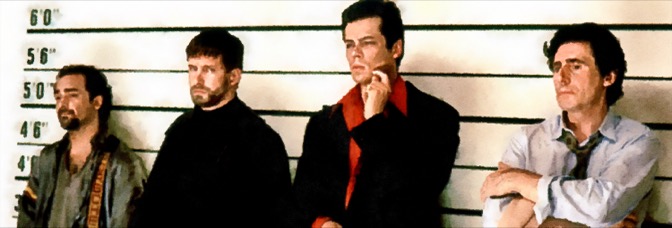
Seeing as how The Usual Suspects popularized the major twist ending–that contrivance having now plagued American cinema for the last dozen years–it’s interesting to see it again. I haven’t seen the film in years (probably ten, at least nine), but I remember the last time I watched it, I thought about what was true and…
-

Loathe as I am to be glib about a director like Arthur Penn, Dead of Winter comes off like a TNT Original Movie. Penn proves himself–with the exception of maybe one scene and even then it’s awkward because it’s Arthur Penn using Steadicam–almost completely inept at directing a thriller. The script’s hardly anything special and…
-
The Morning After is an awkward combination of thriller and adult drama. As a thriller, with Paul Chihara’s enthusiastic and bombastic score, it’s frequently annoying. Jane Fonda can scrub a crime scene of every thread of evidence, but the simple things–like dropping a succeeding lie or leaving all her personal belongings for the police to…
-

The last time I watched Manhunter (the first time I saw the director’s cut), my friend maintained the film’s superiority laid in the added scenes. The director’s cut mostly features more scenes concerning the effect of manhunting serial killers on William Petersen’s character. On this viewing, it’s clear the film’s greatness isn’t so simply assigned.…
-
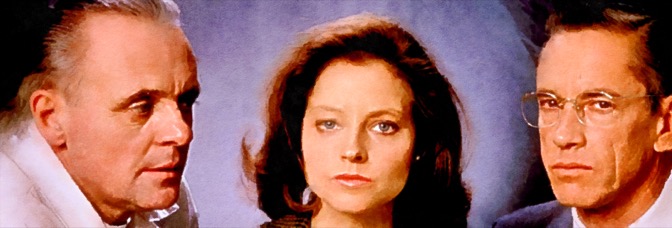
No matter how hard Howard Shore’s score tries, The Silence of the Lambs is just a serial killer movie. I knew it was just a serial killer movie–that realization had occurred to me quite a long time ago–but its adherence to genre standards are still somewhat surprising. The movie wastes so much time on Anthony…
-

Here’s a surprising one. I was ready to say director Langenegger was a music video director who learned how to calm it down for a theatrical, but it appears he’s just a commercial director. For most of Deception, I was just letting myself enjoy the technical. Langenegger’s composition, Dante Spinotti’s photography and Ramin Djawadi’s music…
-
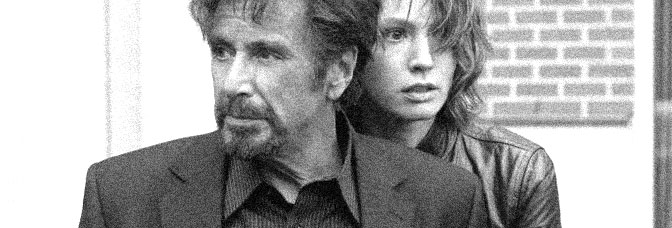
Al Pacino has reached the point William Forsythe has supporting roles in his movies. That facet just about sums up 88 Minutes, which would have been a great late 1990s Dimension movie, maybe even with Pacino, and all those young actors Miramax had on call (I’m thinking it would have been most effective with Neve…
 The Stop Button