The Stop Button
blogging by Andrew Wickliffe
Category: Looney Tunes cartoons
-

Congo Jazz is a great example of how old Hollywood racism works. Having Bosko, the lead in the cartoon, be a little black kid isn’t really overtly racist… until Harman and Ising have him meet a couple monkeys. Guess who looks like who? And then, sort of confirming racists are morons, it turns out the…
-

Watching Bosko the Doughboy, I kept thinking, “too soon.” It’s a comedy cartoon about World War I, specifically trench warfare. In the cartoon, Bosko is the only human. The rest of combatants are animals–dogs, cows, a pig or two, a lot of birds. The battle scenes are graphic and, one has to assume at the…
-

Embarrassingly, I didn’t understand Hare Conditioned‘s title until I looked it up online. No, I won’t tell you. The cartoon is an enthusiastic chase through a department store, with star window attraction Bugs Bunny about to be shipped off the to taxidermy department. Bugs is likable here, partially because he’s opposite a heinous villain, the…
-

Are all Speedy Gonzales cartoons the same? Cannery Woe opens with starving Mexican mice needing Speedy to get them cheese. Sylvester is guarding the cheese. Woe does have a couple minor differences though. First, none of the mice have to whore off their sisters to Speedy. Second, he doesn’t even show up until the cartoon’s…
-

I hadn’t seen Here Today, Gone Tamale before, but I’ve seen Freleng’s subsequent Chili Weather. The setup is the same–these starving, but lazy, Mexican mice can’t steal any cheese from Sylvester the cat, so one of them whores out his sister to Speedy Gonzales. In Tamale, Sylvester is guarding a boat. In Chili, it’s a…
-

A Broken Leghorn never confronts its bleakness or meanness. It opens with Foghorn Leghorn doing a good thing, tricking a presumably barren hen into thinking she laid an egg. But then it turns out to be a baby rooster, so Foghorn spends the rest of the cartoon trying to kill the adorable little rooster. Mel…
-

Martian Through Georgia has three directors and no ending. It also has nothing to do with Georgia. It opens fairly well, with very expressionist mainstream cartooning showing life on Mars. A bored Martian then travels to Earth, which kicks off the majority of the run time. Even though the Martian’s only on Earth for a…
-
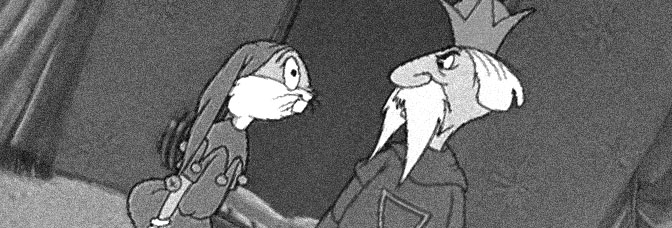
Besides Mel Blanc’s voice work, there’s nothing to recommend Knighty Knight Bugs. Actually, even with his voice work, there’s nothing to recommend it. It’s just the only good thing about the cartoon. Bugs, as a medieval jester, has to go get a sword. Yosemite Sam has the sword. Bugs gets it. The cartoon’s act structure…
-
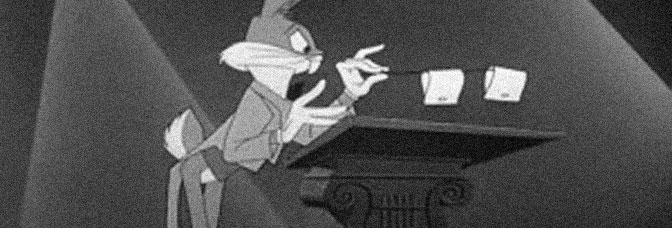
Baton Bunny casts Bugs as a perfectionist conductor who, during a performance, has to cope with wardrobe malfunctions and a bothersome fly. The most interesting thing about the cartoon–and something I’ve never seen from a Bugs Bunny cartoon before–is how co-directors Jones and Levitow go out of their way to make Bugs cute. He’s not…
-

Now Hear This is a fairly amazing cartoon. It’s even more amazing when one considers it’s a Warner Bros. cartoon under the “Looney Tunes” banner. Jones and co-director Noble play with the idea of sound as it relates to movies. I suppose cartoons specifically, but it’s really just moving images. They strip away the background,…
-
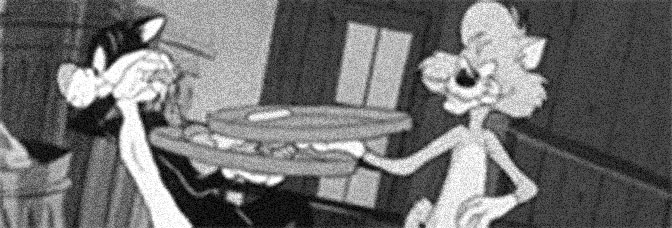
Mouse and Garden has some bad animation… shockingly bad. The cartoon’s about Sylvester and his sidekick, Sam, fighting over a mouse. The animation on Sam (an orange cat) and the mouse is awful. Freleng apparently didn’t care about appearing three dimensional. Actually, a lot of the gags work in two dimensions, as does most of…
-
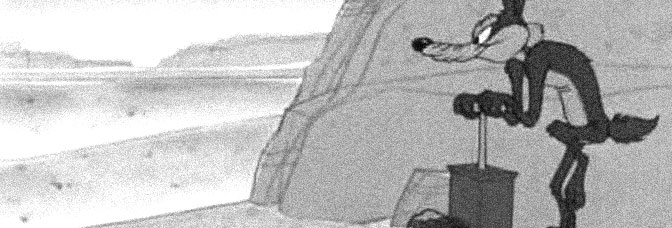
I don’t get it. I haven’t seen a Road Runner cartoon since I was a kid, but watching Hook, Line and Stinker, I couldn’t figure out the appeal. Oh, Jones’s direction is outstanding and the animation is great, but it’s a long series of gags. They’re not laugh out loud funny, but some of them…
-

I feel like By Word of Mouse should be better. It turns out it’s a Sylvester cartoon–not without good gags–but the concept deserves more. A German mouse heads to the U.S. to visit a relation; free market capitalism–well, American consumerism, wows him and the two cousins find a professor (also a mouse) to explain it…
-
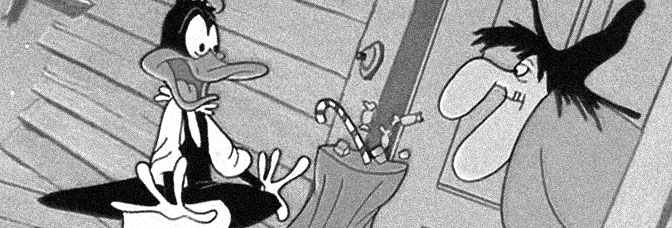
Expository dialogue in a cartoon? I’ve never heard anything so silly before… in A-Haunting We Will Go, the witch introduces Speedy Gonzales. Unfortunately, she does not cook him. Strangely (and sadly since the character dynamic is amusing), Daffy’s nephew doesn’t get an introduction. The stuff with Daffy and his nephew isn’t bad–and the animation on…
-

It takes The Booze Hangs High nearly half its running time to have its first gag… but it’s worth the wait. An adorable little duckling tells its mother it needs to go number two. Without dialogue or visual followthrough, but the message is clear. And, all of a sudden, Booze starts getting better. It starts…
-

The Windblown Hare is fairly intolerable. Even if the animation wasn’t lazy–maybe Warner slashed the budget after finding out what McKimson wanted to do–there are still two and a half major problems. First, and most surprisingly, Mel Blanc’s Three Little Pigs voices are terrible. He’s doing them as Cagney toughs and it flops. Next, the…
-

Is that Porky Pig cameoing in The Great Piggy Bank Robbery? I kept expecting him to be revealed as the big villain. The story concerns Daffy Duck getting clomped on the head and imagining himself in a Dick Tracy adventure. Now, for Tracy fans, there’s a lot to see, including some inventive takes on the…
-

In the last minute and a half of The Hep Cat, Clampett finally comes up with some really interesting shots. The short’s a cat and dog one. It follows the standard. Dumb dog versus a mean, vain and not much smarter cat. The titular hep cat breaks out into a song routine, but it’s not…
-

I have some not insignificant problems with Mouse Wreckers. First, the cartoon is almost entirely beautiful. Great backgrounds, great talking mice, almost everything. Except the mice’s victim, a cat. The animation on the cat is fine, but the design of the cat itself is awful. It frequently disrupts otherwise fine shots. Second, the cat’s innocent.…
-
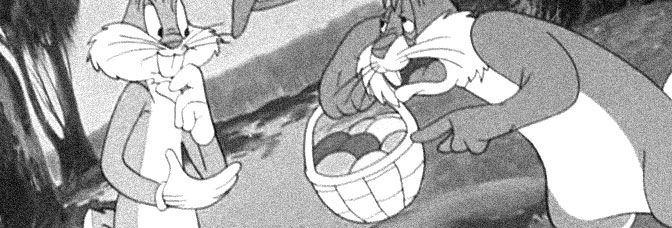
I’m sorry, I think I missed something… did Bugs Bunny just kill the Easter Bunny? Or did he just maim him? Easter Yeggs ought to be a lot better. It’s got an Easter Bunny who conspires to get out of his duties on an annual basis by acting emo, it’s got Elmer Fudd and it’s…
 The Stop Button