Category: Horror
-

Halloween III: Season of the Witch is a–well, it’s kind of a remake of Invasion of the Body Snatchers and not discrete about it at all. The setting has changed and the details, but the movie’s obviously going for the same feel. Occasionally, it even pulls something off. Tommy Lee Wallace is only an adequate…
-

Tremors is a unique film. Even with the derivative setting–the isolated desert town reminds of 1950s Universal sci-fi pictures–and whole “Jaws with giant worms” aspect, it’s a monster slash thriller slash comedy. It starts a comedy and ends one, with S.S. Wilson and Brent Maddock’s script full of comedic dialogue, in addition to all the…
-
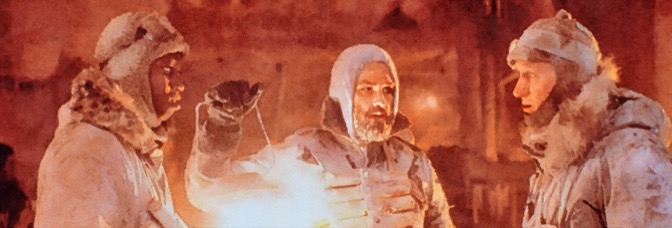
I always say John Carpenter needs to direct something else, something non-genre. A romantic comedy perhaps or a family drama. I guess it never occurred to me, but with The Thing, Carpenter is directing something else. It’s kind of too bad, his best film is the one–in some ways–least like his others. In The Thing,…
-

Count Yorga, Vampire is a retelling of Dracula, modernizing it to the then-contemporary 1970 and changing the locale to Los Angeles. It’s also incredibly low budget–not so low budget it has bad acting (its acting is actually the strong-point)–but it has blacked out windows on houses and cars (so night scenes can be shot at…
-
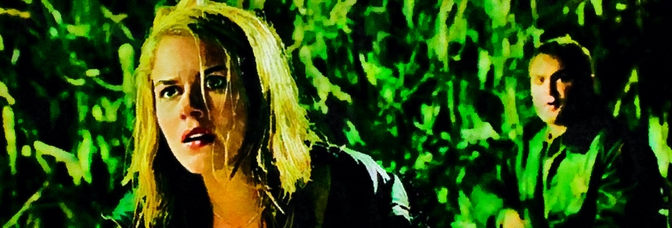
I’ve actually seen Man-Thing before, back when it aired on Sci-Fi. Lionsgate’s DVD release has it in what appears to be an open matte 16:9, as opposed to 2.35:1 (which is how Sci-Fi aired it). So, I matted the DVD and tried the uncut version. It’s probably no better than the televised, but–and here’s why…
-

It’s rare and relatively modern to come across the film where the ending can ruin it. The surprise ending as opposed to the natural narrative progression. They rarely work. I’d read The Mist had a controversial ending, which, watching the last minutes of the film, I assumed referred to the incredibly bold thing Darabont does.…
-

Swamp Thing succeeds–to the degree it does–both in spite of Wes Craven and because of him. Craven is not an inventive low budget filmmaker. He does nothing to compensate. The Swamp Thing costume is bad, has lots of movement below the chest. Craven shoots it head-to-toe instead of obscuring it. There’s a real disconnect between…
-
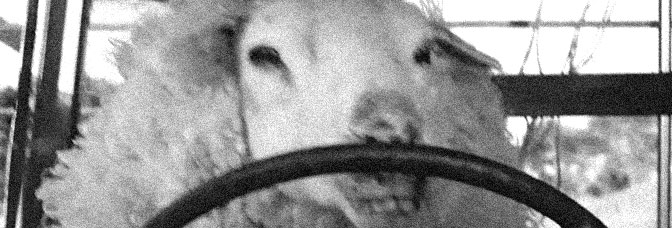
Black Sheep plays like a more discreet, larger budgeted young Peter Jackson. Less ambitious too (I’m thinking of Braindead as the comparison). Both Jackson and King are New Zealanders and so on. Weta, who works with Hollywood Peter Jackson, did the effects for Black Sheep, turning in–besides the gore–were-sheep transformations with heavy American Werewolf in…
-

30 Days of Night is a fine example of bad writing hurting a good idea, which is what I heard about the comic book source too–vampires in Alaska with no sun, Dracula versus Northern Exposure, sounds like a good idea. But it’s just an idea, it’s not a two hour movie. There are some other…
-

This year (2007), I saw more summer movies than I have in at least five years. I avoid big Hollywood franchises (the modern ones, the revitalization attempts… it’s fifty-fifty), so I really don’t know how bad the acting is in most of those films–from what I saw this summer, it’s probably atrocious. But there’s a…
-
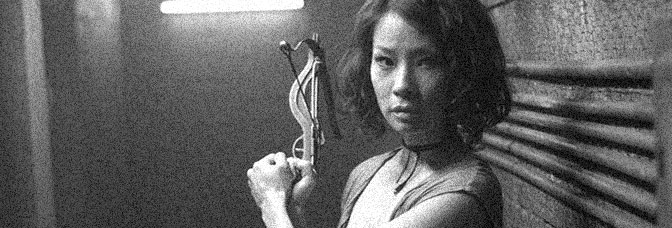
How did the producers of Rise: Blood Hunter ever get cinematography superstar John Toll to shoot this movie? Piles of money, I assume. Probably the same piles of money they used to get Michael Chiklis to play a toned-down version of Vic Mackey. I was thinking, as Chiklis was confronting vampire slash vampire killer Lucy…
-

I wonder how Paul W.S. Anderson writes his screenplays. Does he actually write in all the references–think The Birds here, or a tanker like in The Road Warrior or even the Statue of Liberty shot out of Planet of the Apes–or do they come up later? Resident Evil: Extinction is an amalgam of, I imagine,…
-

Joshua is a particularly disquieting experience. I’m trying to think of a comparable experience and the closest I’m coming to is Antarctic Journal, I think. That film may or may not have had a similar counting up toward some unknown resolution (Joshua does it with the newborn sister’s age in days). The premise of the…
-
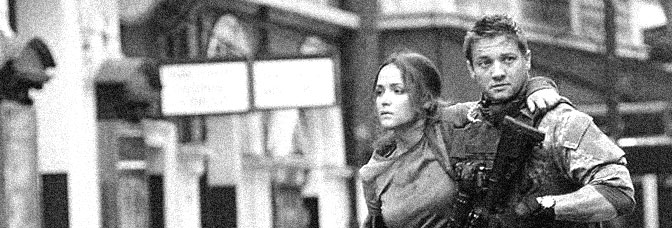
If 28 Weeks Later weren’t executive produced by Danny Boyle and Alex Garland and produced by Andrew Macdonald, it would not be any better (in some ways it would be worse) but it certainly would be less offensive. Before seeing the film, I remarked to friends about what made 28 Days Later, in the end,…
-

The saddest thing about Red Eye is Wes Craven. The film opens with an action movie build-up montage, which he handles fine (for what it is), moves into an Airport movie, which he handles fine, turns into an actor-based thriller, which he handles fine. What doesn’t he handle fine? What does he handle so poorly…
-

The first half of Jaws–before the boat, when it becomes a different film–might be the most perfectly made film ever. The second half isn’t less perfectly made, but it’s its own thing, not easily comparable to any other film; that first half deals in traditional filmic standards and does so with singular success. Verna Fields’s…
-
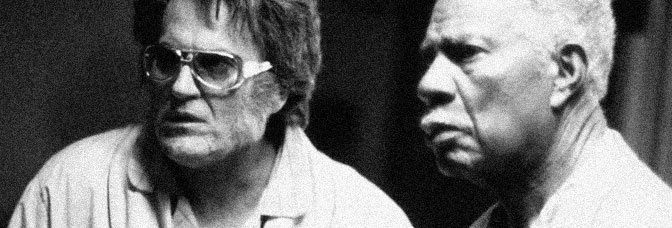
I wanted to see Bubba Ho-Tep back when I first read about it because it sounded weird–Bruce Campbell as an old Elvis versus a mummy with Ossie Davis as JFK as his sidekick. The pairing of Davis and Campbell is weird enough–they seem at odds, style-wise, not to mention Davis is actually old while Campbell’s…
-

Trying to figure out how to start this post was incredibly difficult. As far as sequels go, Resident Evil: Apocalypse is, tonally, a terrible sequel to the first film, but it’s still a perfectly reasonable b-movie. The first film, visually, is classy compared to this one, which has lots of quick cuts during fight scenes.…
-

I have a mild affection for Paul W.S. Anderson–or, at least, I think he gets a bad rap. I’ve never been able to easy prove it before, but Resident Evil certainly helps my argument for Anderson’s effectiveness as a director. The film opens with a nine or so minute tease, establishing the situation, then goes…
-

Fred Dekker can definitely compose a shot. For whatever its faults, The Monster Squad is one good looking film. Some of that credit belongs to the production designer and the cinematographer and the special effects people, but most of it belongs to Dekker. Dekker composes beautiful Panavision shots and he directs actors really well too–well,…
-

Has copyright lapsed on John Williams’s “Promenade (Tourists on the Menu)” composition from Jaws, because this film uses it all the time. While Undead is a fun little movie, I’m pretty sure Lionsgate would get their butts sued off if it got out they were violating such an obvious copyright, and I have to go…
-
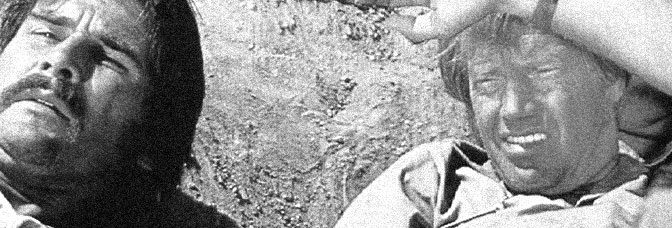
Sitting and watching The Car in 2006, it was amusing to know what Universal studio executives were saying about the film some thirty years ago… “It’s like Jaws, but with a car.” At first, I thought the movie was some kind of Duel remake, but then the Jaws comparisons became obvious, but not obvious in…
-

Spectacular adaption of 1928 H.P. Lovecraft horror story done as a silent film, without any CGI, made in the CGI era. Lots of great, inventive filmmaking and an outstanding adaptation (by Sean Brannery) into the silent film medium. It’s well-worth a look. DVD, Streaming.Continue reading →
-

Meta-slasher movie with twentysomethings playing teenagers menaced by a masked serial killer. Good direction from Craven, great performance from lead and prime target Neve Campbell; just okay support from everyone else. Drew Barrymore and Skeet Ulrich are quite bad. Great cameo from Henry Winkler. Director’s cut adds some violence to the beginning and a “Fred…
-

Isolated desert town–full of lovable goofballs (led by handymen Kevin Bacon and Fred Ward)–has to contend with giant killer worm monsters. Great acting (Gross’s survivalist redefined the actor), wonderfully paced script, excellent special effects. It’s loads of fun. DVD, Blu-ray, Streaming.Continue reading →
-

Cillian Murphy wakes up from a coma to discover the world overrun by zombies and has to try to survive. Not just from the zombies, but also from the military. Visually stunning, with Boyle shooting on DV; great script by Alex Garland; excellent performances. Murphy makes an outstanding Everyman. The film has at least one…
 The Stop Button