Category: Horror
-
I’m not sure what subtitle Resident Evil: Retribution should have, but it definitely shouldn’t be Retribution. The movie really doesn’t have enough story for a subtitle, actually. Unless it’s Old Friends. For the ten year anniversary of the franchise, director Anderson brings back a bunch of old faces–Sienna Guillory and Michelle Rodriguez get the two…
-

Halloween 5 shouldn’t be mind-numbingly boring. There’s no chance something called Halloween 5 is going to be smart, so I was expecting mind-numbing stupidity… but not boredom. The movie opens with a recap of the previous entry, with some changes to the ending to keep Michael Myers alive (he escapes in a manner straight out…
-

Is Hollow Man the last of the “for CGs’ sake” blockbuster attempts? In the nineties, post-Jurassic Park Hollywood assumed doing genre standards over with CG would get big grosses. Hollow Man feels like one of those. There’s nothing nice to say about the film, except one has a lot to mock. Incompetent screenwriter Andrew W.…
-

Halloween: The Curse of Michael Myers spends about twenty minutes resolving the previous movie in the series and, gingerly, setting up the characters for this one. Chappelle sets these events to a radio talk show–Curse screams early nineties–but there is an attempt to make it feel “real.” The shock jock is a ludicrously bad Howard…
-

In a practical sense, one can just watch Poltergeist and be in awe of the technical qualities. Hooper’s Panavision composition and Matthew F. Leonetti’s photography alone are enough to make it a singular experience. But then there are Hooper’s additional touches–like how a scene’s establishing shot is usually the third shot in the scene, the…
-

John Carpenter does some amazing work on Christine. He’s got help from his cinematographer, Donald M. Morgan, but the first forty-five or fifty minutes of the film are simply masterful. Carpenter has a wide variety of scenes–high school, ominous, family scenes, conversations–and all of them are magnificent. It’s just too bad Bill Phillips’s script falls…
-

For a feature debut, The Pact is an exceptional disappointment from writer and director McCarthy. He’s expanding on his exquisite short of the same name and it’s a flop. He remakes the short (the Kevin Williamson teaser) and then continues its story, somewhat aware he’s in familiar haunted house territory and not willing to embrace…
-
For the majority of the running time, at least Sleepy Hollow isn’t boring. Burton gets in an event every ten minutes, which keeps it moving. It often gets really stupid and watching Johnny Depp’s histrionics get tiresome after the first five minutes, but at least it moves. Until the finale, which drags incredibly. Since the…
-

While still bad, Halloween 4 is better than I ever expected. It’s barely ninety minutes and forty or so minutes are of people in crisis, which passes the time fairly well. It takes place in an interesting version of the original film’s town, where the moon (even when it isn’t full) is apparently so bright,…
-

Considering Peter Hyams’s career as a director began in the early seventies, it’s strange to see him reference Alien and the 1976 King Kong—these films being made after he got his start. The Relic has the one big problem of Hyams’s career overall—he photographs his films himself and he usually uses this “realistic” palette. That…
-

Is John Goodman doing an impression of Bill Murray from Caddyshack? Arachnophobia is so all over the place, it wouldn’t be a surprise to find out Frank Marshall directed him along those lines. The movie’s a mix between The Birds and a little Gremlins. Not to mention some proto-Jurassic Park. Unfortunately, Marshall doesn’t bring these…
-

Neve Campbell wanted a reduced presence in Scream 3—she doesn’t really show up in the film’s plot until an hour in—but by not participating, she’s in a worse film. Her performance is fine. Ehren Kruger’s script is so lame, she can’t do much with the role—especially since she’s got to be suspecting everyone. Except Courtney…
-
Based on one of the edits, I’m assuming Mimic isn’t exactly a director’s cut (i.e. del Toro finished his cut, the Weinsteins took it and reedited it) as an approximation. He went back and did what he could to make it fit his intent. Maybe there are more examples—I haven’t seen the original cut—but the…
-

Vampires is a mess. I mean, there’s some good stuff in it, but it feels like the least interesting parts of the characters’ stories. There’s a little bit of sequel setup–and the never happened sequel seems a lot better–but so does a prequel to the film’s events. It takes place over a couple days and…
-
The Ward takes place in an Oregon mental institution in the late 1960s and doesn’t have a single good Cuckoo’s Nest reference. I’m not sure one would have helped—writes Michael and Shawn Rasmussen are fairly tepid (they play toward director Carpenter’s eighties weaknesses in fact). Maybe if they’d modeled the film on Cuckoo’s Nest, things…
-
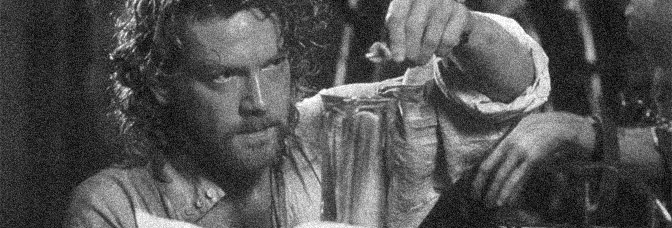
I’m trying to think of good things about Mary Shelley’s Frankenstein. It starts off poorly, with an opening title seemingly made on a cheap video editor from the late 1970s, then moves into the Walton framing sequence. Apparently, no one involved with the film—Branagh, the screenwriters, the producers—understood the point of these frames in the…
-
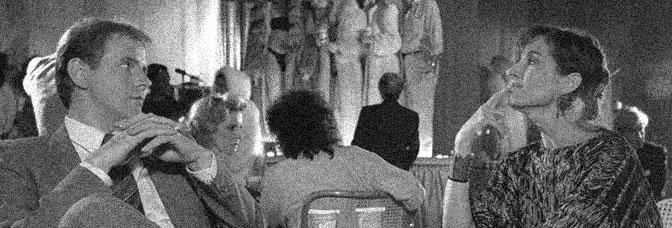
According to IMDb, Larry Cohen cut about a half hour out of The Stuff. It’s entirely possible with that added footage, the movie might have made sense. As it’s cut now, it’s a somewhat diverting–at least until the third act–cross between The Blob and Invasion of the Body Snatchers. Unfortunately, Cohen’s direction is weak throughout,…
-
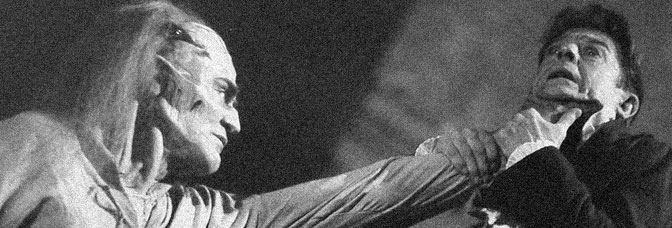
After destroying the future trying to save the environment, scientist John Hurt goes into the past where he finds the events of Frankenstein (the novel) unfolding around him, with Mary Shelley (Bridget Fonda) witnessing Dr. Frankenstein’s descent into madness. Raul Julia’s an amazing Frankenstein, Nick Brimble’s an amazing monster. Hurt’s a tad passive but very…
-

What makes The Haunting so good–besides Wise’s wondrous Panavision composition–is the characters. Yes, it succeeds as a horror film, with great internal dialogue (Julie Harris’s character’s thoughts drive the first twenty minutes alone and the device never feels awkward), but those successes are nothing compared to the character interactions. The Haunting chooses to be both…
-
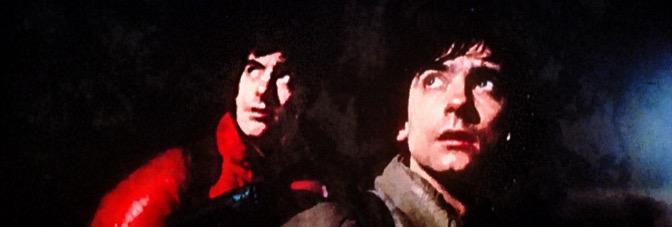
There’s a lot of good stuff about An American Werewolf in London–for example, Landis doesn’t have a single joke fall flat–but something about it just doesn’t work. Something Landis doesn’t do, as a director. I can’t quite put a label on it, since he does so many things well. Like the English setting. With Robert…
-
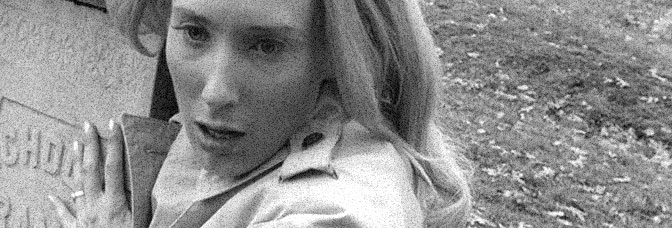
What a lame ending. If it weren’t for the sufficiently uncanny end credits, I’d finish Night of the Living Dead thinking it was supposed to be a comedy. Actually, if it weren’t for that lame ending, I’d be starting this response much differently. Night of the Living Dead has one of the most sublime opening…
-
I had the misfortune of trying to watch Irwin Allen’s director’s cut of The Swarm. As I understand it, Allen’s director’s cut simply adds a half hour of terrible dialogue, completely overshadowing the killer bee aspect of the film. I’m not sure how much better a shorter version of the film would really… ahem… be,…
-

I watched Phantasm III because I wanted to see what Coscarelli would do without studio interference on a Phantasm sequel. Apparently, what he decided to do was add an annoying little kid who kills people (they’re bad people, but they’re people just the same–and it’s never clear he was in any physical danger) and a…
-
The first Phantasm wasn’t just an exercise in inventive low budget filmmaking, it dealt with the cultural fear of cemeteries. The second film has no such allusions. In fact, it’s just an example of bad low budget filmmaking. Clearly–and one can just google for more information–there were a lot of behind the scenes squabbles between…
-
The importance of the director, in cinema, used to be a topic of discussion for me. It hasn’t been lately, because it’s hard to find good examples of well-scripted, well-acted, but terribly directed motion pictures. Thank goodness for The Trollenberg Terror and Quentin Lawrence. Lawrence might be the most boring bad director I’ve ever seen.…
-
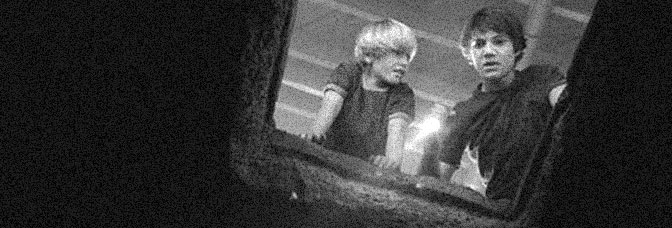
The Hole is, I believe, intended to be a family-friendly (I can’t believe PG-13 movies are now supposed to be family-friendly) horror film directed by Joe Dante. As opposed to Dante directing a family-friendly horror film. It’s Joe Dante doing work for hire, something I’m not really familiar with him doing often. Dante’s direction here…
-
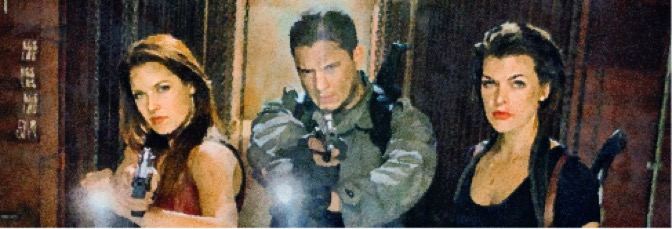
Anderson is clearly getting bored with the Resident Evil franchise at this point–even though he returns to direct (I imagine it was because it’s in 3D). Afterlife has three distinct beginnings, something I’m actually unfamiliar seeing. Having too many endings is one thing, but having too many beginnings… doesn’t happen a lot. The problem is…
-
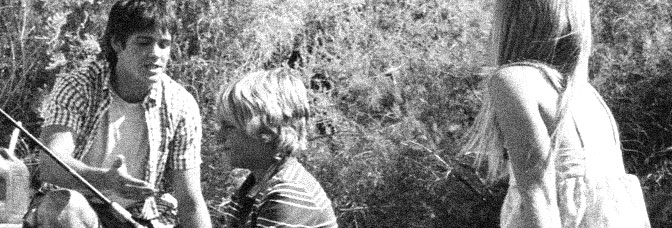
Aja opens Piranha with a pretty deft reference to the original film and follows it immediately with a rather big Jaws reference. The original, ostensibly a parody of Jaws, is absent any kind of reference… so it’s strange to see here. But it’s hilarious. And it might be the funniest of Aja’s other homages to…
-
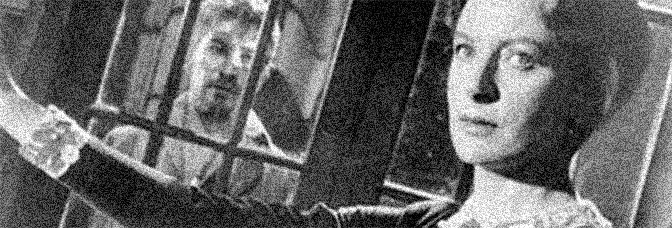
I don’t get it. When I watched the film, I had no idea The Innocents was considered some masterpiece of British cinema. I’m actually rather surprised by the acclaim. Similarly, I’m shocked Deborah Kerr considered her performance in this film her best. It’s not a bad performance by any means; the plotting constrains it a…
-

I’m a little upset. Anthony Perkins only directed two pictures and one of them–this one–was written by Charles Edward Pogue. Pogue’s a bit of punchline, but at least most of Psycho III is well-plotted. His dialogue, especially at the beginning, is iffy, but it might also have been Perkins getting used to directing actors. Psycho…
 The Stop Button