Category: TVM
-

Some of The Dragon’s Challenge’s problems are because it’s a TV two-parter stuck together then packaged as a theatrical. An overseas theatrical, but still a theatrical feature. The action in the first half takes place in New York, with some cuts to villain Richard Erdman making plans. He needs to get a Chinese official out…
-

The B.R.A.T. Patrol is about a group of kids on an airforce base who discover one of the MPs is selling military hardware to literal junk yard arms dealers. None of the adults believe them because it’s a “Wonderful World of Disney” movie and there are rules. There are limits and there are rules. B.R.A.T.…
-

Spider-Man Strikes Back is the international theatrical release of a two-part “Amazing Spider-Man” episode. It’s unclear if any significant changes were made (or insignificant ones). Though I really hope the frequent sequences without much sound are the result of editing and not composer Stu Phillips dropping the ball. Phillips does a Morricone-lite version of his…
-

To put it mildly, Dracula: Pages from a Virgin’s Diary is narratively erratic. The film–a filmed ballet “converted” to a silent movie–opens with panic over Eastern Europeans entering Britain. At least, the onscreen text implies this panic. It’s quickly forgotten; after doing cast introductions (also with onscreen text–these aren’t intertitles, these are just text onscreen…
-

The Cosmopolitans opens with some visual sarcasm, but it quickly moves to verbal. Writer-director Stillman is somewhat merciless, introducing characters just to comment on the absurd pretentiousness of the principals. Of course, Stillman doesn’t let the observers off easy either. It just takes longer for them to become clear; maybe the American leads are just…
-

Madame X never has good pacing. The movie starts with Tuesday Weld on trial, in old age makeup. She refuses to identify herself, hence the title, and won’t even assist her lawyer, Martina Deignan, in her own defense. Weld’s completely passive in the scene. Robert Hooks’s prosecuting attorney closing arguments dominate the scene, setting a…
-

Hans Brinker is clumsy and charmless. It plods through its runtime. Once it becomes clear Moose Charlap’s songs aren’t going to be getting any better and there’s not going to be much expert iceskating on display, it plods even more. A lot of things would help–better writing, better acting, better photography. Unfortunately, Hans doesn’t get…
-
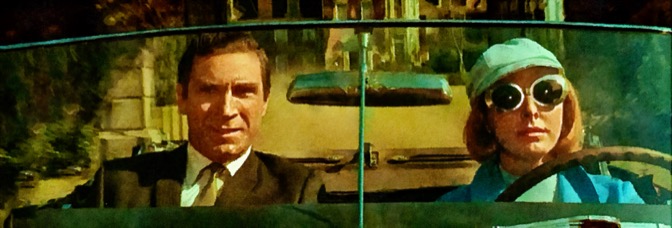
It takes a long seventy-five minutes to get there, but How to Steal the World does have some good moments in its finale. World is a theatrical release of a “Man from U.N.C.L.E.” television two-parter. It leads to an often boring ninety minutes, which improves in the second half just for momentum’s sake, leading up…
-

Even for a TV miniseries, Vanished feels like it runs too long. There are always tedious subplots, like folksy, pervy old man senator Robert Young plotting against President Richard Widmark. Widmark is up for re-election and he’s vulnerable. Even his own press secretary’s secretary (Skye Aubrey) thinks Widmark is “an evil man,” possibly because he’s…
-

Had Alexander the Great gone to series instead of just being a passed over pilot and footnote in many recognizable actors filmographies, it seems likely the series would’ve had William Shatner’s Alexander continue his conquest of the Persian Empire. The pilot is this strange mix of occasional action, Greek generals arguing, and battle footage from…
-

Someone is mind-controlling upstanding citizens and making them commit daredevil bank robberies in broad daylight. While New York’s finest detectives–cigar-chewing Michael Pataki and his nitwit sidekick Robert Hastings–are on the case, they soon get some valuable assistance from Spider-Man! This television movie–a pilot for a series–introduces Nicholas Hammond as the hero. He’s a vaguely annoying,…
-

Maybe I’ll Come Home in the Spring opens with a montage sequence. Sally Field is hitchhiking cross country (supposedly, it’s all California) while audio of her calling home to her parents–after running away to become a hippie–and letting them know she’s all right. The exact amount of time she’s away, where she went, how she…
-

The Wind in the Willows has an undeniable charm about it. Directors Hall and Taylor send the first act of the film focusing on lovely details. Wind is stop motion, with a lot of intricate “set” decoration. And they do occasionally utilize their control over performers and location to get some excellent shots. Unfortunately, none…
-

Somewhere in the second half of The Bastard, the mini-series starts to wear you down and you just give in. The first half is set in 1772 Europe, first in France, then in England. Andrew Stevens is a French boy with a secret. His mom might just be Patricia Neal, inn keeper, but Stevens is…
-

The best thing about Temple Grandin is Claire Danes’s performance. She even gets through the parts where she’s thirty playing fifteen. It’s a biopic, there a lot of flashbacks. Director Jackson tries to use a lot of visual transitions for them, but they really succeed because of the teleplay and the performances. To give some…
-

Once Upon a Spy is a strange result. I mean, it’s a TV movie (pilot) for a spy series, complete with a kind of great James Bond-lite seventies music from John Cacavas, Christopher Lee in a electronic wheelchair with a rocket launcher, spy mistress Eleanor Parker working out of a secret headquarters in the Magic…
-
Bungling direction from Nyby does in this PERRY MASON outing, which is unfortunate since many of the guest stars–except main guest star Pernell Roberts–at least try to give a good performance. Even without Nyby’s bungling, the movie would have some major problems thanks to writer Robert Hamilton’s exceptionally problematic, sexist writing of third lead Alexandra…
-

Raymond Burr does a fantastic job in Perry Mason: The Case of the Musical Murder. He’s got it down. He even sells some of the sillier one liners in George Eckstein’s teleplay. At times, it seems like Eckstein is trying to goof on the idea of a Perry Mason TV movie. Or maybe he’s sincere…
-

Quintessential middling TV movie has Mason (Raymond Burr) teaching law school and his star pupil (William R. Moses, ingloriously replacing William Katt as the series’ blond P.I.) falsely accused of murder. Way too little Burr (he’s good when he’s around), way, way too little Barbara Hale. Moses’s arc involves his rich girl-poor boy romance with…
-
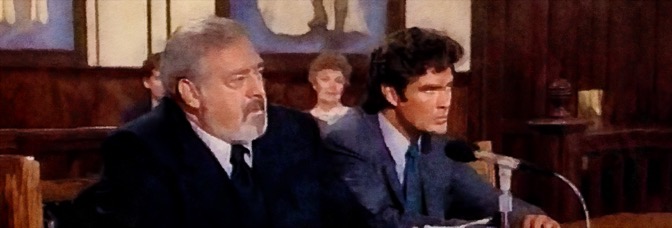
Poorly written, poorly directed PERRY MASON entry has Raymond Burr defending David Hasselhoff, which ought to have some kind of absurd value but doesn’t. Burr’s great (in lousy courtroom scenes), Hasselhoff’s atrocious (worse, it’s a try and fail not a don’t try and fail). Okay support from regulars Barbara Hale and William Katt. Hale’s not…
-
Perry Mason: The Case of the Avenging Ace is a domino effect of lame. Lee David Zlotoff’s script is really bad, but director Nyby is also really bad, and then some of the performances are really bad. Some of the performances a Perry Mason TV movie needs to be okay aren’t okay here. Avenging Ace…
-

Perry Mason: The Case of the Scandalous Scoundrel is a bit disappointing. It’s got a really lame script from Anthony Spinner. Spinner doesn’t have a good mystery, he doesn’t write characters well, he writes dialogue something awful. So there are no expectations from the script. However, Scoundrel has a great cast. A great cast who…
-

I’m going to say something I never expected to say. Ron Satlof does a good job directing Perry Mason: The Case of the Murdered Madam. He’s a regular director on the series and he’s never directed one as well as this one. The showdown between Raymond Burr and guilty party is fantastic. Satlof does well,…
-

Satisfactory PERRY MASON TV movie has Raymond Burr, Barbara Hale, and William Katt in a haunted hotel. Perry (Burr) has to defend old pal Robert Stack (who phones it in). Actually good Kim Delaney figures into the suspect pool, along with annoyingly awful Dwight Schultz. Burr gets a lot to do but Hale doesn’t. An…
-

The Case of the Lost Love is a rather charmless Perry Mason outing. Jean Simmons is an old flame of Raymond Burr’s and he ends up defending her ungrateful husband (Gene Barry). Simmons and Burr have some chemistry as Lost Love establishes their history, but the movie’s so technically inept, it never quite comes across…
-

There’s a lot of camp value to The Case of the Shooting Star. During William Katt’s investigation scenes, his clothes get more and more absurd. At one point he’s wearing a jacket with a tiger on it. Then he gets sidekick and flirtation partner Wendy Crewson, who wears really loud eighties pants, and it becomes…
-

So Perry Mason: The Case of the Notorious Nun. It’s not good. It is not a good TV movie. Even if the writing were better, Satlof is a lousy director. And Héctor R. Figueroa’s photography is quite bad. The lighting in the courtroom finale changes between shots. The editing is already graceless–more because of Satlof’s…
-
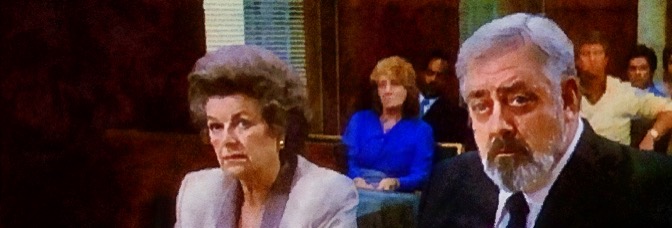
The most impressive technical contribution to Perry Mason Returns has to be Dick DeBenedictis’s music. He lifts thriller style music, some horror, some whatever, then applies it to this somewhat bland TV movie. Albert J. Dunk’s photography is too muted and director Satlof, though very capable of setting up sequences, is mediocre (at best) at…
-
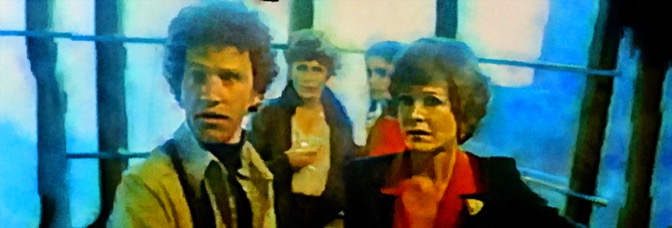
She’s Dressed to Kill is a simultaneously a perfect TV movie and a disappointment. It’s a murder mystery set on an isolated mountain; Eleanor Parker is a recluse fashion designer who has a show and the attendees can’t stop being murdered. Only the killer has followed the attendees, as the murdering starts before the fashion…
-
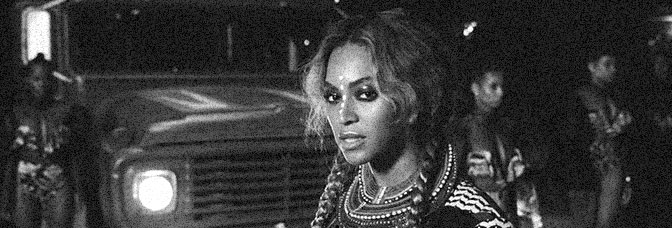
A music video is not a short musical. Lemonade, identifying itself as a visual album, is not a music video (or a string of them) and it is not a musical. It borrows something from all of those mediums, with directors Knowles, Rimmasch and Åkerlund instinctively understanding how to mix and match. Lemonade is a…
 The Stop Button