The Stop Button
blogging by Andrew Wickliffe
Category: Horror
-

Puppet Master II opens with a mostly successful animate puppets resurrect their long-dead master in scary graveyard sequence. It’s a mix of stop motion and live effects; it just has a nice tone about it. Then the endless opening titles start up and the film loses track of that tone. The Richard Band music doesn’t…
-

Puppetmaster has some great stop motion. The stop motion is nowhere near enough to make up for the rest, but there’s some excellent stop motion. The stop motion is so good, in fact, the lighting on it is better than Sergio Salvati’s lighting for the rest of the film. Salvati’s lighting is a problem. He…
-

For most of its runtime, Suspiria builds. It increases suspense, it increases terror, it increases discomfort. Director Argento and cinematographer Luciano Tovoli shoot these long shots with slightly fish-eyed backgrounds. Combined with Giuseppe Bassan’s jawdroppingly awesome production design, the film gives the impression of having no depth. No perspective. The actors move in front of…
-

If cheap, misogynist Canadian horror gore twaddle is a genre, Let Her Out must be one its finest examples. At least in the modern era. In some ways, the worst thing about the film is director Calahan. With a single exception, his direction’s not bad. His composition is strong, his sense of space is solid…
-

The Omen is a terrible bit of cinema. It’s a long bit, almost two hours, filled with Jerry Goldsmith’s–shockingly Oscar-winning–chant filled “scare” score. It doesn’t scare. It annoys, which just makes everything go on longer. Director Donner certainly doesn’t help with it. He drags things out too. Like anyone needs more scenes of Gregory Peck…
-

The Texas Chain Saw Massacre is either terrifying or horrifying. Sometimes it’s a combination of the two. Sometimes it’s visual terror or horror, sometimes it’s audial, sometimes it’s just implied. Director Hooper has three different styles–daytime, nighttime, indoor–and each goes from terror to horror multiple times. The film takes place over less than twenty-four hours,…
-
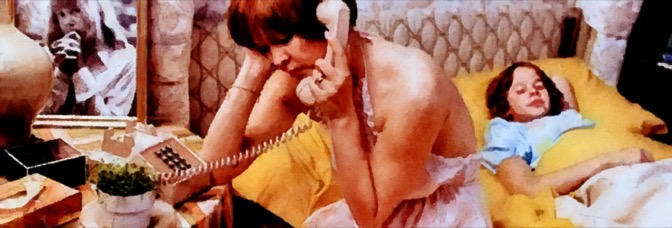
Despite the title, The Exorcist is about pretty much everything except the actual exorcist. When he does appear, kicking off the third act, it’s kind of a stunt. There’s a lot of implied mythology in the film, without much connective tissue–but nothing ruling out connective tissue. Director Friedkin does a balancing act. The reveal moment…
-
Basket Case is endlessly creative. Director Henenlotter doesn’t have the budget to execute anything, but it never stops him from trying; sometimes to mesmerizing effect. The film’s got these scenes requiring a lot of special effects and utilizes (obvious) stop motion to get them done. It’s all part of the buy in. Basket Case doesn’t…
-

The Curse of the Werewolf has an absurd epic structure. Clifford Evans narrates; he eventually comes into the film, which means there’s no way he’d know about events he didn’t witness except everything does apparently take place in the same Spanish town. First is the story of a beggar, played by Richard Wordsworth, who ends…
-

I’m disappointed in Saw; I didn’t think I could possibly have any expectations for the movie where Farm Boy has to cut off his foot. I also didn’t know it wasn’t Danny Glover locked in the room with Cary Elwes. I wish Danny Glover had been locked in the room. He’s not. He’s a cop.…
-
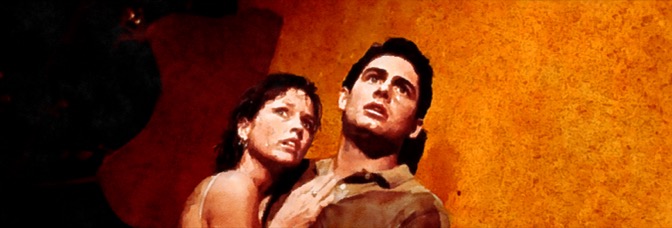
Waxwork has a distressing lack of charm. It ought to have some charm. The first act has its cast of young college students–whose college set seems to be a high school–speaking in some affected pseudo-fifties teen melodrama dialect. It ought to be sostaggeringmewhat charming. It’s not, but it ought to be. Most of the problem…
-

So much of Fright Night is humdrum, with the occasional energy pulses whenever Chris Sarandon gets to be vampirish, I didn’t really expect it to get any better. I certainly didn’t expect director Holland to go all out on the special effects or even Roddy McDowall to get such good material. I also didn’t expect…
-

Voodoo Black Exorcist is exasperatingly dull. In the first scene, which is before the opening titles, after a few seconds it becomes clear seventh century Haitian lovers Aldo Sambrell and Eva León aren’t just star-crossed, they’re also in blackface. Voodoo Exorcist Black is not a Blaxploitation horror film, but a (dubbed) Spanish remake of The…
-

Nothing connects with Something Wicked This Way Comes, though Jonathan Pryce’s performance is probably the closest thing to a complete success. Jason Robards is often quite good, but he’s both protagonist and subject of the film, which neither director Clayton nor writer Ray Bradbury (adapting his own novel) really seem to know how to transition…
-
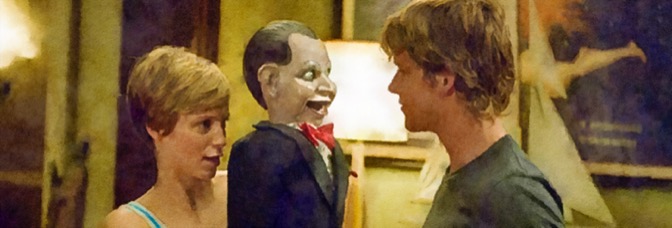
Dead Silence is pretty dumb, but it’s often incredibly well-made, which makes up for a lot of the dumbness. There are a lot of problems with the acting–lead Ryan Kwanten is particularly lacking when delivering the weak dialogue though he’s otherwise acceptable as a scream king. Or, in the case of Dead Silence, where the…
-

Alligator has quite a few things going for it. Lead Robert Forster is great, Robin Riker’s solid as his love interest and sidekick, John Sayles’s script has some excellent moments in it (some of them just being the attention he pays to Forster and Riker’s relationship), the giant alligator effects are solid, Larry Bock and…
-
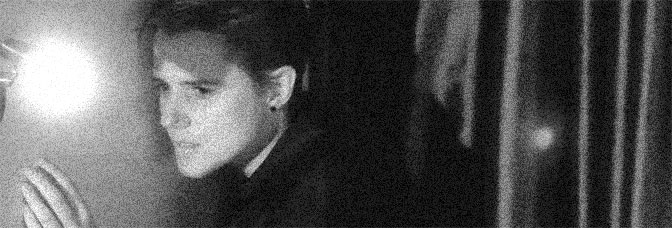
Endings should never be too literal; especially not in a film where a character talks about having ambiguous endings to stories. Night People ends too literally, especially after a third act where all sorts of threads dangle near one another. Writer and director Lough doesn’t tie things up exactly, but he does go out of…
-

Oh, no, Ennio Morricone did the music for Exorcist II: The Heretic. I feel kind of bad now because the music is not good and I like Ennio Morricone. I’m sure I’ve liked something cinematographer William A. Fraker photographed too, but his photography in Heretic is atrocious. Because it’s Exorcist II: The Heretic, everything about…
-
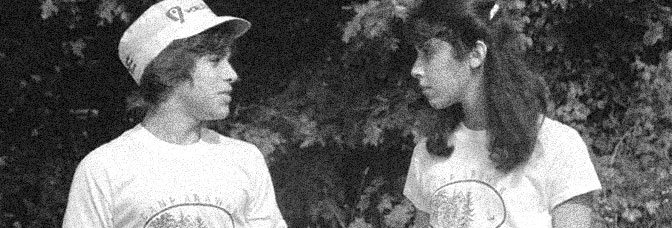
Sleepaway Camp has two things going for it on a consistent basis–Benjamin Davis’s cinematography (it’s not flashy, but it’s exceptionally competent) and the special effects. There aren’t a lot of gore shots in Camp, but director Hiltzik makes sure they count. He can’t do the suspense sequences, which is a bit of a problem, but…
-

The Mangler is terrible. One hopes the rumor producer Anant Singh replaced director Hooper is true because the film’s bad enough and desperate enough, you occasionally want to cut it some slack. You can’t, because it’s terrible, but you still kind of wish you could. Here’s the movie. Small town in Maine (it’s a Stephen…
-

There’s a handful of good things about The Dunwich Horror. They can’t overcome the bad things, but they’re still pretty neat. The script, at least for a while, is fairly nimble. There’s a lot of bad exposition from old dudes Ed Begley and Lloyd Bochner, but the younger folks do quite a bit better. See,…
-

If only there were something remarkable about Jaws: The Revenge. Just one thing terrible enough about it to make it somehow interesting. Jaws: The Revenge is unremarkably bad in its unremarkable badness. As the opening titles rolled, with shark POV of a New England harbor, I wanted it to be some kind of strange close…
-
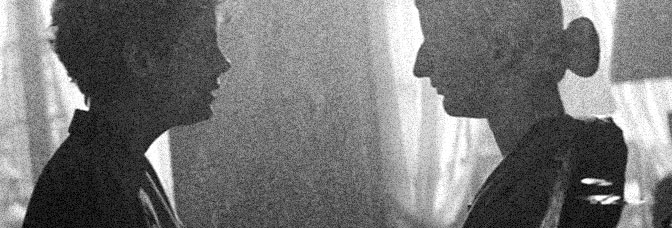
A lot of The Hunger is so exquisitely directed by Scott, it almost seems like there’s nothing the narrative could do to mess it up. His Panavision composition is precise, fixated on the small detail, whether it’s David Bowie’s stubble or Catherine Deneuve’s sunglasses. These details become larger than life, filling the frame, but Scott…
-
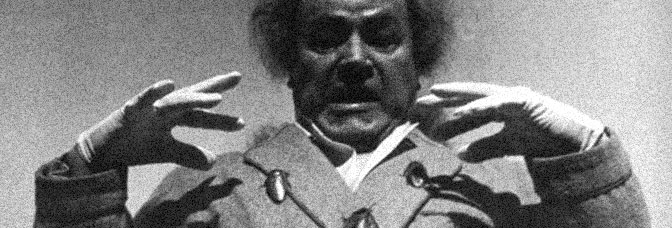
Creepshow is an homage to 1950s horror comic books. Director Romero and writer Stephen King go out of their way to make it feel like you’re reading one of those comics. It’s about the anticipation. The terror isn’t promised, it’s inevitable. So watching Creepshow is about waiting for the kicker. For the most part–and certainly…
-
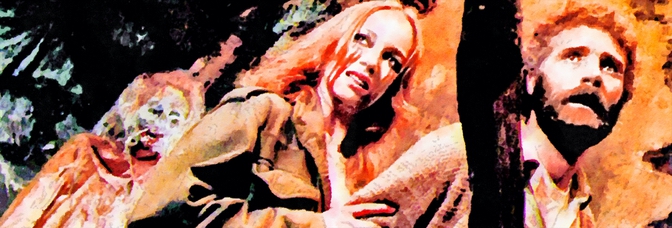
City of the Living Dead isn’t really about a city of the living dead, more an unincorporated municipality of the living dead. An unincorporated municipality of the living dead is far less scary than a city of the living dead. Though the film is rarely scary. It’s occasionally gory, even more occasionally awesome in its…
-

I’m having a hard time with this one. The From Beyond movie poster and VHS box scared the crap out of me as a kid. Even now, having seen the movie and knowing there’s nothing as visually creepy in the film itself, the imagery disturbs me. Villain Ted Sorel apparently having his face melted off.…
-

In the Mouth of Madness is a rarity. It’s a film with some terrible, terrible parts, yet it needs to be longer. There needs to be more terribleness for it to be better. And it can’t even be much better, because those terrible parts break it, but it would be somewhat better. It would definitely…
-
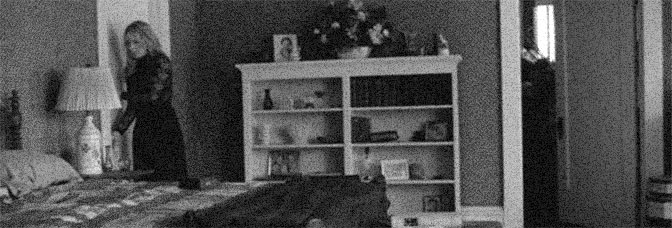
Should Intruders be good? It should be better, no question, but should it be good. It’s about an agoraphobic (who’s an agoraphobic solely as part of the film’s gimmick) who has to fend off intruders into her home. Beth Riesgraf plays the agoraphobic. She’s quite good in the first act, then she loses her own…
-

Most of Moth is “found footage,” only really not because it’s multi-camera found footage and at some point, directors Elekes and Gallai push too hard on the concept and break it. The film tracks the progress of university lecturer Lídia Szabó as she investigates Mothman sightings in Hungary. One of her students, played by director…
-

Black Christmas has a lot of significant problems, but the film’s strengths make up for (or just distract from) a lot of them. But then there’s director Clark. He can’t make the film scary. He can make it disturbing–and often does, even when it’s not successful otherwise–but he never makes it scary. And when Olivia…
 The Stop Button