Category: South Korean film
-

Bluebeard runs just under two hours. The last forty-five minutes of it basically undo–or seem to undo–everything in the first seventy-five minutes. Writer and director Lee doesn’t want to answer the questions the film’s mysteries raise, but reveal entirely new mysteries with entirely new answers. With some exception. It’s a shame, because until that point–and…
-
Tunnel is a small scale disaster movie. It’s also not. It’s about a small scale response to a big disaster. Writer and director Kim takes some time introduce threads about craven reporters, craven government officials, craven capitalists, but most of the movie is lead Ha Jung-woo stuck in a tunnel. The first ninety minutes of…
-

There’s no indication there’s a better movie anywhere in Operation Chromite. Director Lee just doesn’t have a handle on it. The script’s an uncomfortable mix of predictable and manipulative–director Lee and co-writer Lee Man-hee lay on the war movie jingoism so thick, it actually takes a while to realize Lee Beom-su’s giving a legitimately great…
-

SlowWhat a stupid movie. Sure, The Wailing isn’t all bad. The cinematography from Hong Kyung-pyo is fine. It’s not great because, even its better moments, director Na never does a particularly good job. He likes long shots, he likes three shots, but he doesn’t like actually trying to scare the audience. It’s supposed to be…
-

The Tiger: An Old Hunter’s Tale is a rather ambitious piece of work from director Park. Maybe too ambitious. It’s not just about juxtaposing old aged hunter Choi Min-sik against the last tiger in Korea (the film’s set during Japanese occupation when the Japanese were having all the tigers exterminated), it’s also about juxtaposing almost…
-
Narratively, Windstruck falls apart in the last thirty-five minutes. Director Kwak’s screenplay stops and starts–not vignettes really, but definitely episodic. Leads Jun Ji-hyun and Jang Hyuk have their romantic courtship, which gets off to a rocky start as police officer Jun confuses Jang for a purse snatcher, set to sixties American rock and roll and…
-

Somewhere near the end of the second act, The Beauty Inside internally collapses. The film’s well-directed, well-acted, often quite well-written, but it’s got one heck of a MacGuffin and no one can figure out how to address it. The Beauty Inside is about a man who changes into a different person every time he wakes…
-

Memories of the Sword has two, very simple problems. The first is director Park. He’s bad at directing this film. It’s not clear he’s bad at directing films, but he’s bad at directing Memories of the Sword. He fundamentally doesn’t understand action scenes, which means he doesn’t understand how to do the first act of…
-

Assassination is not effortless. Director Choi makes it look effortless, whether he’s doing an intricate action sequence or one of the film’s many complicated expository scenes. But then there’s also the entire structure of the film, which opens with one character as protagonist, slowly moves to another, but keeps the initial character around as antagonist.…
-

Northern Limit Line opens connecting the historical events portrayed in the film directly to the World Cup. Frustratingly, in 2015, I can’t determine whether or not Chol Soon-jo’s source book also has the connection to the World Cup. As literary flourish–and to make the book resonate (it’s also unclear if it’s a novel or book)…
-

For the Emperor is a combination of bloody and pointless. Director Park is sort of impersonal about the violence–even though it’s usually very personal (knife fights)–as though giving it some distance will make the characters seem less reprehensible. Lee Yong-soo’s screenplay barely shows any of the victims of the gangsters; it’s all just tough bad…
-

The most important action in My Sassy Girl takes place off screen–the film takes place over a few years (though the main action is over three and a half months), with listless Cha Tae-hyun home from compulsory national service and back in school and having no idea what to do with his life. Enter Jun…
-

The Suspect isn’t just another action thriller where the director never lets up the pace; it’s also one where the filmmakers constantly force the viewer into one emotional response–a negative one–before relieving the tension a little and creating a hopefulness, then repeating an even more negative situation. It’s expertly manipulative and director Won seems to…
-

Besides an utterly absurd title–and one nowhere near as clever as the film itself–A Werewolf Boy is something of a success. Jo proves one can successfully marry science fiction, werewolf romance, class bigotry and… I don’t know, ageless romantic melodrama. He doesn’t cop out at the end either, but turns the picture into some kind…
-
It never occurred to me there might still be significant mileage in the undercover cop melodrama. Or, for that matter, in the gangster melodrama. New World proves me uninformed on both points. Writer-director Park mixes both genres, somewhat unequally, and creates this unbelievably good film. I use the adjective “unbelievably” because, for the most part,…
-

With The Tower, director Kim redefines the possibilities of the fictional disaster genre. He maintains many genre standards, like the occasional laugh to relieve stress, a fair amount of melodrama, along with the greedy capitalists and the politicking city officials, while throwing in some gore and a breakneck action movie pace. But he mixes in…
-

The Thieves doesn’t try to redefine the heist genre. Instead, it shows the genre’s possibilities. The film has the traditional flashbacks, double crosses, triple crosses and so on, but it also brings a tenderness. And it’s a sincere tenderness; the film resonates because of its characters, not its spectacles. However, director Choi does everything he…
-
Doomsday Book is three stories about the end of the world. There’s no connection between the stories except the directors; the tone changes wildly between all three. The first story is a zombie tale with some humor, some religious allegory and some gore. There are a lot of Romero references in it and also the…
-

Sector 7 is about twenty-two years late. It’s another “Alien with sea monsters;” 1989 had two and a half major entries in that genre. It does, however, add one interesting element. Wait, I guess it’s more Aliens with sea monsters. The female lead, Ha Ji-won, is more Ripley in tough mode. Anyway, the interesting element…
-

For a while during Suicide Forecast—in the first act and third—it seems like the film will be about protagonist Ryu Seung-beom discovering he doesn’t want to be a soulless business success and redeeming himself. But Forecast isn’t exactly about Ryu. A plot summary sounds like a perverse comedy—Ryu’s an insurance adjuster who discovers three people…
-

Arahan has a couple big problems. One is just for me–I didn’t get the final joke. I wonder if it was something cultural. The other one has to do with mainstream Korean cinema. Arahan takes a lot from Western blockbusters (most obviously The Matrix… though there’s a nice Back to the Future homage) and marries…
-

Until about halfway through, I knew how to start talking Bedevilled. It was about a yuppie workaholic (Ji Seong-won) flipping out and going on a forced vacation. Only she goes to this remote island where she used to visit her grandfather as a kid. Instead of a vacation paradise (though the island is lovely), she…
-
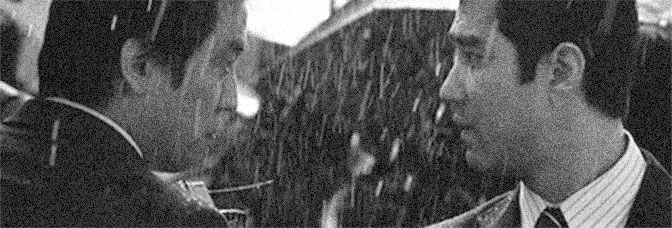
Usually when I say Korean films effortlessly mix genre, I mean it in a good way. It’s still impressive in Murder, Take One; director Jang definitely makes the final ingredient a surprise, but it’s a questionable choice…. The majority of the film—albeit on a reduced budget—is successful. It’s a police procedural with one caveat, the…
-
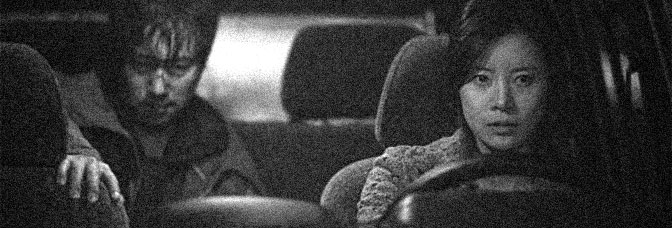
For a “revealing the secrets of a small town” thriller, Moss has a number of problems. The first one might just be me. The town has six residents. It’s not a town in my American understanding. A viewer with more cultural knowledge might experience it differently. Second, and more to the point, it’s just too…
-

Castaway on the Moon explores one of those great urban questions… could you ever get stuck on one of those conservation islands in a city’s river? Despite being a South Korean film, it’d be hard to find a more universal story—deeply indebted Jeong Jae-yeong throws himself off a bridge after his girlfriend’s dumped him and…
-

I’ve lost the desire to visit South Korea. I’m not sure how to describe Attack the Gas Station! I suppose it’s a crime comedy, except the audience is supposed to laugh at the victims. The film lionizes its criminals–who spend the near two hour running time assaulting children, attempting the occasional rape and generally humiliating…
-

Given Korean film sort of resurrected the melodrama as a viable genre (I can’t believe I’m arguing for melodrama, but I guess if you like cinema, you sort of have to accept it–and I mean melodrama in a neutral sense… not as a guaranteed pejorative), I was curious to see how they’d do a disaster…
-

The revenge thriller isn’t a new genre. Even if it only got mainstream popularized in its current (and lengthy) violent incarnation with Death Wish, one can look back to the beginning of cinema for entries. In other words, The Outlaw‘s nothing new… at all. But the particular Korean filmmaking sensibilities added to this particular revenge…
-

Kong has definitely seen Apocalypse Now–to the point he pays homage–and Full Metal Jacket–to the point he doesn’t really pay homage, but kind of just lifts moments and shots. I guess a horror movie set during the Vietnam War’s a good idea. I mean, there’s a lot of history, a lot of possibilities for ghosts–one…
-

At the end of Mother, there’s the moment where the film’s got the big moment where Bong’s either going to make something transcendent or something simply excellent. Not a strange moment, lots of films have this moment. Throughout, especially in the second and third act, Bong ratchets it up a notch or two, making these…
 The Stop Button