Category: Foreign
-

2046 is a very strange sequel. Because it’s most definitely a sequel to In the Mood for Love. Tony Chiu-Wai Leung and Lam Siu Ping are playing the same characters, a few years after that film. But the way writer and director Wong deals with the previous film and its events… he intentionally… well, I’m…
-

Chungking Express has two parts. First part is lonely young plainclothes cop Kaneshiro Takeshi counting down the days to his birthday, which is also thirty days since his girlfriend of five years dumped him. Simultaneously, sort of middle person drug trafficker Brigitte Lin loses her latest batch of mules (once they’re loaded up with the…
-

It’s very difficult, even when an effects shot fails, to not be impressed with director Polák’s practical ambitions with Icarus XB 1. The film needs effects shot-it’s about a starship on twenty-eight month voyage from Earth to Alpha Centauri. The first starship to take that trip. So there’s general establishing shot stuff in space but…
-
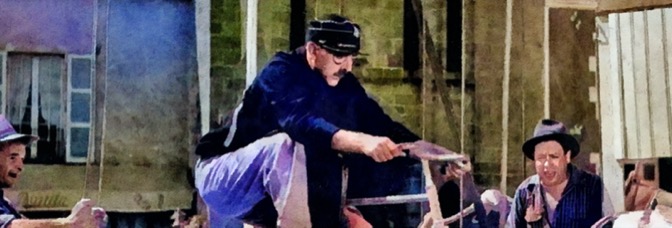
It’s about fifteen minutes before lead (and director) Jacques Tati appears in Jour de fête. The film opens with a travelling fair arriving at its destination and starting to set up. Paul Frankeur and Guy Decomble are the two main fair workers–actually they’re the only fair workers with anything to do except Santa Relli as…
-

Somewhat recently I read an observation along the following lines–Ingmar Bergman created great roles for actresses by giving them absolutely awful emotions to essay. Whoever said it (I’ve tried, without success to properly credit her) said it a lot better. But at around the hour mark of Autumn Sonata, I couldn’t think of much else.…
-

Much of Police Story operates on charm. If it’s not co-writer, star, and director Jackie Chan’s charm, it’s charm of the scenes. There are some painfully uncharming moments–mostly Chan’s frequent neglective abuse of girlfriend Maggie Cheung–but even when Police Story is in its stunt spectacular mode, there’s charm. The film doesn’t open with charm, however.…
-
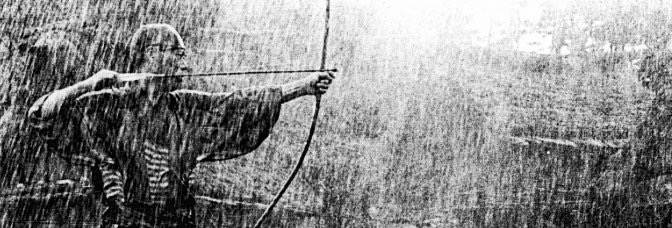
Seven Samurai is about a farming village, under imminent threat of bandits raiding and stealing their crop–and possibly doing much worse–who decides to hire samurai to defend them. They send four men–Fujiwara Kamatari, Kosugi Yoshio, Tsuchiya Yoshio, and Hidari Bokuzen–to town to hire the samurai. They can’t pay them, but they can feed them. The…
-

At eighty-nine minutes, Through a Glass Darkly never has a chance to get tedious, which is part of the problem. Writer-director Bergman has just introduced the characters, just established the ground situation, when he tries a graceful segue into the characters and their relationships being familiar in the second act. They’re not. They’re still being…
-
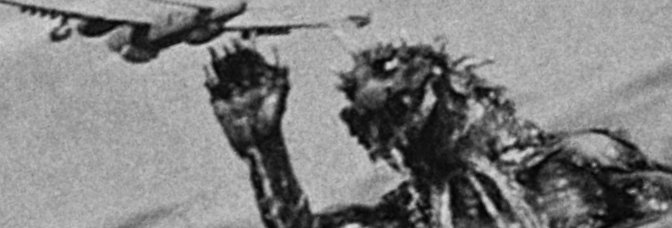
The only thing more tedious and lethargic than the first half of Varan is the second half of Varan. The first half has a motley crew of lepidopterologists awakening a giant monster. The second half has these lepidopterologists consulting with the military to destroy said monster. Not sure why the military thinks a bunch of…
-

Delicatessen is often adorable. There’s a romance between Dominique Pinon and Marie-Laure Dougnac; they’re both adorable, so Delicatessen is often adorable. They’re star-crossed, though Pinon doesn’t know it (Dougnac does), living in a post-apocalyptic future where people eat people (though there are some vegetarians, but they’re considered terrorists). I suppose they’d actually be vegan, give…
-

The first half of Godzilla: Planet of the Monsters is surprisingly good. The film sets the scene during the opening titles–giant monsters attack in 1999, followed later by unstoppable Godzilla, two different space aliens show up to help in exchange for residency on the planet. Godzilla kicks everybody’s butt, driving the last 4,000 people from…
-
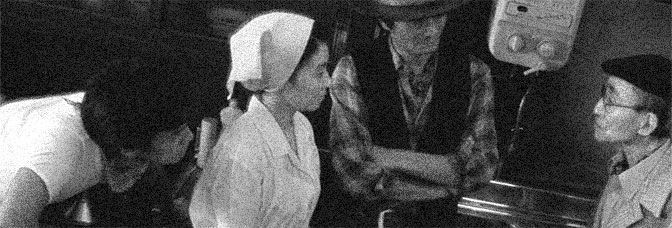
Tampopo is a cinematic appreciation of Japanese food culture. Writer and director Itami also has some love of cinema things, but it’s all about the food. Even when it’s played for humor. Or for nurturing. Or for sex. Sexy foodstuffs abound in Tampopo. But Tampopo is also this traditional narrative. It’s a Western’s narrative, but…
-
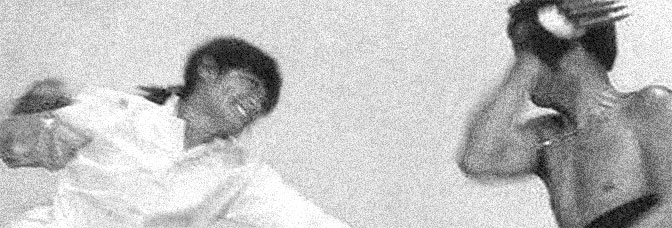
Sister Street Fighter should be campy. With the constant horns in Kikuchi Shunsuke’s score, lead Shiomi Etsuko’s colorful outfit, villain Amatsu Bin doing an Elvis impersonation, the countless and intentionally weird martial arts villains… it ought to be campy. But it’s not, because somehow Sister Street Fighter manages to keep its melodrama sincere. Lead Shiomi…
-
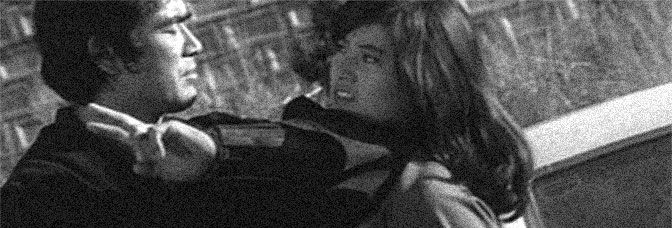
The title, The Street Fighter’s Last Revenge, doesn’t really refer to anything in the film itself. The Street Fighter is Sonny Chiba. He’s gone for psychotic killer karate man (from the first film, Last Revenge is the third) to suave, romantic ladies man. Complete with a secret room to put on his disguises. He also…
-

Return of the Street Fighter almost stages a third act rally. It comes so close, then it doesn’t. After a string of boring fight scenes, director Ozawa finally gets in a couple good ones. Lead Sonny Chiba against one adversary, instead of a half dozen, two dozen, or four dozen. The failure to do big…
-
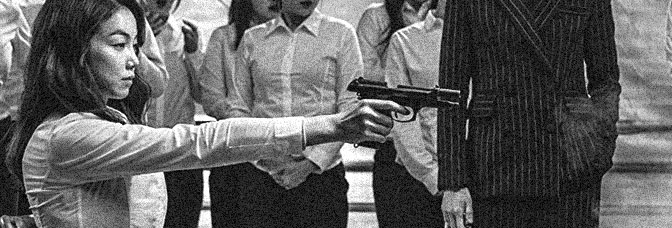
The Villainess manages to be technically superior without ever being technically impressive. Despite editor Heo Sum-mi and cinematographer Park Jung-hun cutting together extravgent action sequences–the finale is protagonist Kim Ok-bin chasing down a bus, jumping onto it, attacking the bad guys within, getting inside, and going through multiple different fistfights. The camera is fluid–with director…
-
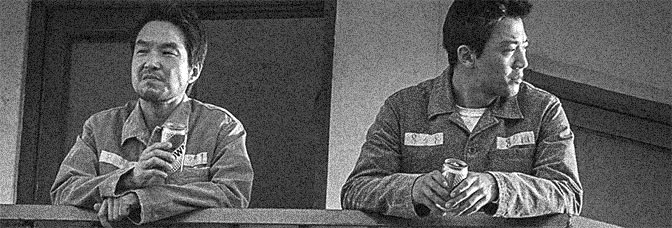
The Prison takes place in 1995. Is it because smartphones would ruin the execution of the premise? Or maybe something has changed in the South Korean prison system to no longer make the premise plausable? I don’t know. It’s a pointless and somewhat distracting detail. The premise pretends to be high concept. Han Suk-kyu is…
-

Bluebeard runs just under two hours. The last forty-five minutes of it basically undo–or seem to undo–everything in the first seventy-five minutes. Writer and director Lee doesn’t want to answer the questions the film’s mysteries raise, but reveal entirely new mysteries with entirely new answers. With some exception. It’s a shame, because until that point–and…
-

Even the Rain has a particular narrative distance as it starts, then changes to another one a little later on. Director Bollaín doesn’t transition gradually between these two vantage points; she keeps the pacing of scenes and how they flow into each other, just from the new distance. The film has an ambitious narrative juxtapositioning…
-

Wild Strawberries is about a septuagenarian doctor (Victor Sjöström) being awarded an honorary degree. Sjöström’s narration sets it up in the first scene, before the opening titles. Director Bergman’s script, through the narration, lays out the entire ground situation before the titles, in fact. Sjöström is a widower, he has an adult son, he has…
-
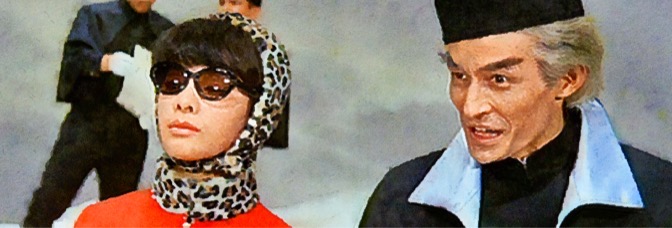
Charming Toho (paired with Rankin-Bass) KING KONG features a lot of homage to the original, great villains, appealing romantic leads (albeit chaste ones because 1967 and interracial romance), and an excellent fight scenes. Drawbacks include bland white guy lead Rhodes Reason and the King Kong suit. Also Ifukube Akira’s self-derivative score (reusing classic GODZILLA themes)…
-
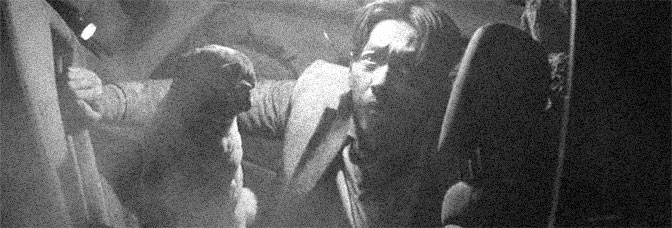
Tunnel is a small scale disaster movie. It’s also not. It’s about a small scale response to a big disaster. Writer and director Kim takes some time introduce threads about craven reporters, craven government officials, craven capitalists, but most of the movie is lead Ha Jung-woo stuck in a tunnel. The first ninety minutes of…
-
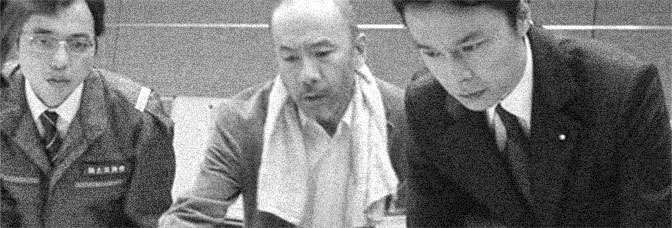
Shin Godzilla is the story of hard-working bureaucrats responding successfully to a national crisis. When the giant monsters invade, you can’t do better than the able public servants of Shin Godzilla. And for most of the film, directors Higuchi and Anno pull it off. The first act of the film, with the introduction of the…
-

Three is about a dirty cop (Louis Koo), a determined doctor (Zhao Wei), and an injured criminal (Wallace Chung). It’s not real time, but its present action is probably seven hours–in an under ninety minute runtime–so it’s close. Zhao is supposed to be getting more and more tired because she refuses to go home from…
-
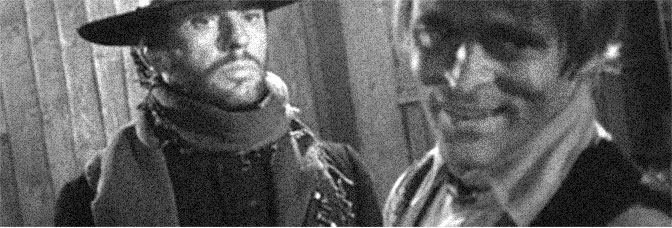
The first act of The Great Silence at least implies some traditional Western tropes. Jean-Louis Trintignant is a gunslinger who fights with evil bounty hunters. Frank Wolff is the new sheriff. Klaus Kinski is one of the evil bounty hunters. Wolff’s got political stuff, or at least the script implies there’s going to be political…
-

There’s no indication there’s a better movie anywhere in Operation Chromite. Director Lee just doesn’t have a handle on it. The script’s an uncomfortable mix of predictable and manipulative–director Lee and co-writer Lee Man-hee lay on the war movie jingoism so thick, it actually takes a while to realize Lee Beom-su’s giving a legitimately great…
-

Right away, Djano sets itself to have a problem–gunfighter Franco Nero is just way too good. Just when he’s too unstoppable, too unbeatable, the film finds a way to make him even more unstoppable, more unbeatable. The first act of the film has him taking on a band of Confederate soldiers who have rallied behind…
-

Just over the first half of Neon Genesis Evangelion: Death & Rebirth is all right. It’s a compilation of episodes from the “Neon Genesis Evangelion” television show, expertly edited by Miki Sachiko. There’s very little exposition, with all the backstory on the giant monster fighting–but not really giant monsters, kind of giant cyborgs–coming in as…
-

The Seventh Seal has a lot of striking imagery. Gunnar Fischer’s cinematography is peerless, but it’s more–it’s how the photography works with the shot composition, how the shots work with one another (Lennart Wallén’s editing is simultaneously amiable and stunning). And then there’s how it all works with Erik Nordgren’s music. Bergman’s going for theatrics…
-

SlowWhat a stupid movie. Sure, The Wailing isn’t all bad. The cinematography from Hong Kyung-pyo is fine. It’s not great because, even its better moments, director Na never does a particularly good job. He likes long shots, he likes three shots, but he doesn’t like actually trying to scare the audience. It’s supposed to be…
 The Stop Button