Category: Foreign
-
The One-Percent in One-Percent Warrior’s title does not refer to the super-rich, but rather when someone transcends in their film-related martial arts excellence. The majority of the film is just a forty-minute action sequence with star Sakaguchi Tak roaming around an abandoned zinc factory—on its own little CGI island—and kicking various butt. A lot of…
-
The Moon runs about two hours, but it’s got enough story for eight. About the only way to tell all the story it’s got overflowing would be a miniseries remake. And even then, you could probably toss on another couple of episodes to even it all out. The film concerns South Korea’s second attempt at…
-
Until the third act, when it suddenly becomes clear the film never really had anywhere to go (at least not in this installment), Dr. Cheon is mostly delightful. Even the listless ending isn’t not entertaining, it’s just listless. After a magic-heavy dream sequence opening, Cheon settles into the gag–Gang Dong-won is a “doctor” who solves…
-
For the first half or so, The Childe ostensibly has three lead characters. The protagonist is Kang Tae-ju; he’s a half-Korean, half-Filipino illegitimate son of a Korean rich guy. Life has sucked, leading to Kang becoming an underground boxing champ (which has so shockingly little to do with the movie it’s like they forgot it…
-
Somewhere near the end of the second act, Good Bye Lenin! starts having some narration problems. At first they seem like a little bit too lazy writing or, given Lenin has five screenwriters, a too many hands situation. There’s just a disconnect between protagonist and narrator Daniel Brühl’s experience and what the film’s doing. Then,…
-

For a micro-budget horror movie, Gangnam Zombie isn’t unsuccessful, but it also isn’t much of a success. The setting is decent—locked in a trendy office building on Christmas Eve, except Zombie doesn’t have the money for Christmas decorations. It also doesn’t have money for zombie special effects, so it’s more like they’re rabid vampires (complete…
-
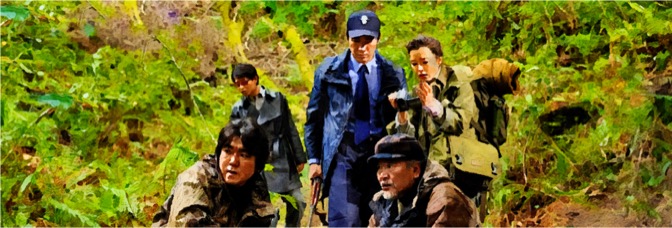
Chaw tells the familiar tale of a man-eating wild boar and the brave villagers who confront it. The boar’s descended from the mutant boors the Japanese created when they invaded Korea. These abominations have been low-key terrorizing the countryside for decades and as the hipsters started doing weekend trips from Seoul into the countryside, things…
-
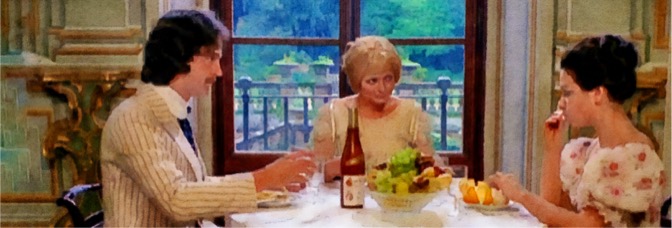
Until Death Smiles on a Murderer gets so inane it’s exasperating, at least the music (by Berto Pisano) isn’t terrible, and the editing (Piera Bruni and Gianfranco Simoncelli) is excellent. I don’t think either of them get worse once the rest of the movie does, but at that point, the film’s so bad it’s not…
-
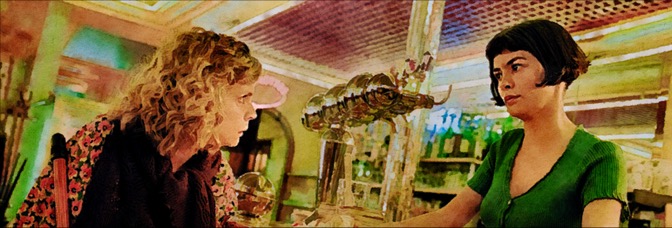
I’m hesitant to call Amélie whimsical, though it’s the closest adjective. The film’s kind of a French New Wave-inspired fairy tale, except instead of being about magic magic, it’s about the magic of the everyday and, especially, its residents. There’s also something decidedly not fairy tale about protagonist Audrey Tautou’s quests. Broadly, Amélie is about…
-
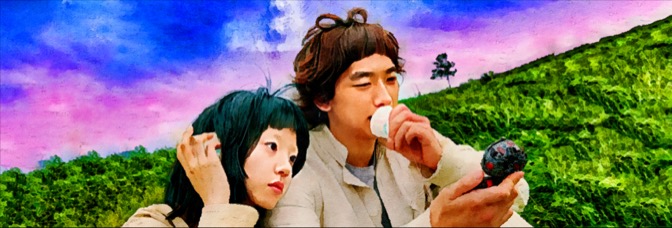
I’m a Cyborg, But That’s OK gets some points for not wrapping things up with a neat little bow, but they do little to offset the film’s more significant issues. Cyborg’s got a lead performance problem and a stakes problem, something the film tries to avoid acknowledging, which ends up creating an infinite loop. Im…
-
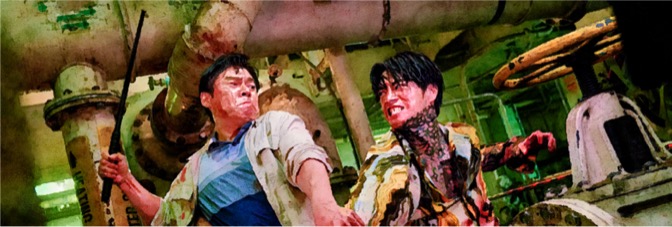
Watching Project Wolf Hunting (sadly not a Good Will Hunting reference), I kept wondering if the human body holds as much blood as the film suggests. It’s violent to the extremis, with every mutilated corpse creating a standing river of blood. It takes the film a while—well, at least ten minutes—to start gushing blood everywhere,…
-
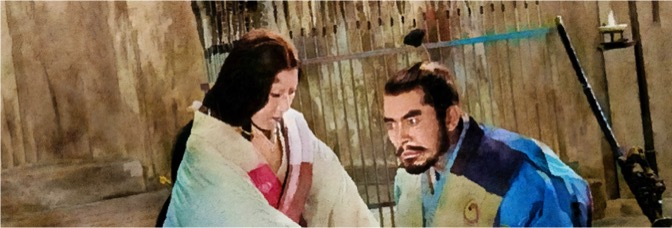
Co-producer, co-writer, director, and editor Kurosawa loves himself some Macbeth. Throne of Blood is Macbeth in feudal Japan, with Mifune Toshiro and Yamada Isuzu as the doomed couple. Kurosawa and his co-writers structure the film as a historical war epic, with modern-day bookends, and then fit Mifune and Yamada’s Macbeth into the war epic. But…
-
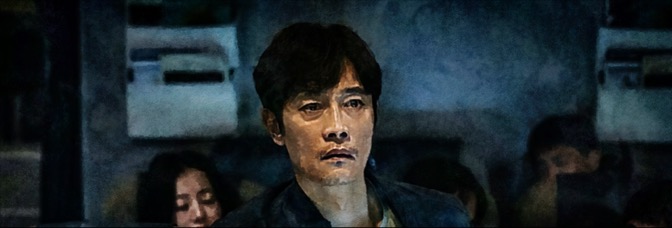
Emergency Declaration is a disaster movie made like a horror movie. It’s not just any disaster movie, either; it’s Airport meets Airplane but with bioterrorism. The bioterrorism doesn’t have to do with the horror movie; it’s all the investigation procedural. The horror movie experience is entirely reserved for the victims (and the audience). Declaration doesn’t…
-
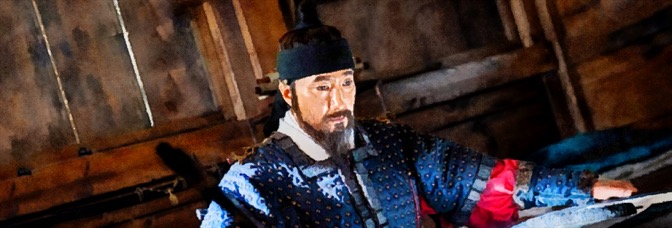
About half of Hansan is a naval battle. The second half. The first half is a combination history lesson, period espionage and turgid war thriller, and naval warfare theory symposium. The film’s about Admiral Yi Sun-shin, who kicked the invading Japanese navy’s ass in the sixteenth century. Despite being in command, lots of folks questioned…
-
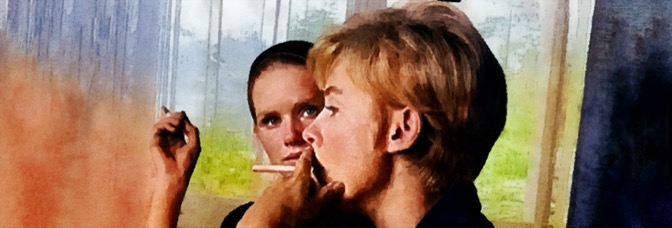
Persona begins with a series of unrelated, sometimes startling, sometimes disturbing images. It’s leader on the film reel, and it establishes the film’s narrative distance. We’re not just removed from the action; the action’s on display at multiple levels, including one involving a young boy, played by Jörgen Lindström, who provides bookends for the film.…
-
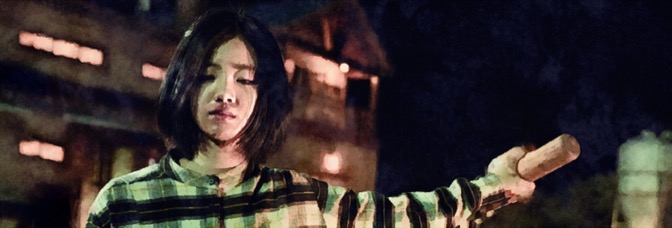
The Witch: Part 2. The Other One starts with a flashback to the very late nineties or very early aughts—someone’s still got a cassette walkman, but MP3 players do exist. Now, The Other One is a sequel, but it’s a “start from scratch” sequel, so for a while, it seems like this story will be…
-

El Topo means “The Mole.” There’s some opening text explaining it, but it’s not until the film's second half where the title really makes sense. There are some earlier nods—the nameless protagonist (played by director Jodorowsky) starts the film telling his son to bury his childhood. Then later, Jodorowsky will magically find just what he…
-
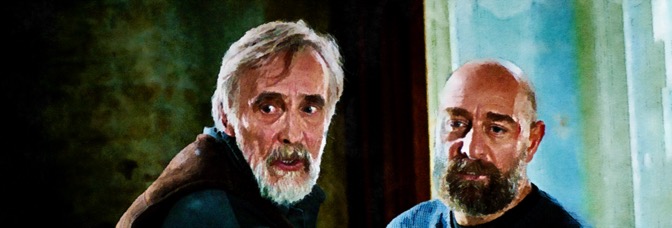
Tangerines has such a profoundly straightforward plot and limited cast I expected it to be a stage adaptation. It’s not; writer and director Urushadze just knows how to perturb character development without theatrics. The film’s about the War in Abkhazia, but its protagonist isn’t Georgian or Abkhaz, rather an Estonian. The film itself does a…
-
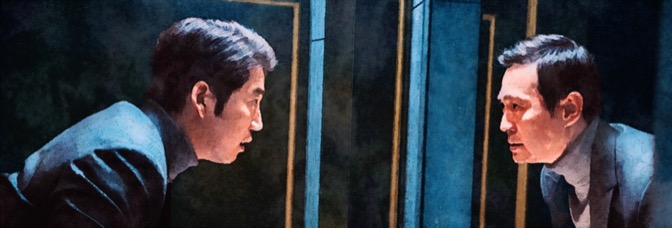
I was expecting Spiritwalker’s MacGuffin to disappoint, but I wasn’t expecting it to completely derail the film. Spiritwalker is a high-concept action thriller about an amnesiac, Yoon Kye-sang, who discovers he is quantum leaping from person-to-person every twelve hours. He also has a very particular set of skills. Those skills come in handy because everyone…
-

The Desert of the Tartars is a warless war epic. Set at a remote desert fort, a young officer (Jacques Perrin) discovers army life isn’t what he was expecting. The film opens with Perrin leaving home, ready for the great fortune awaiting him, only to learn he’s been assigned to the ass-end of nowhere. The…
-
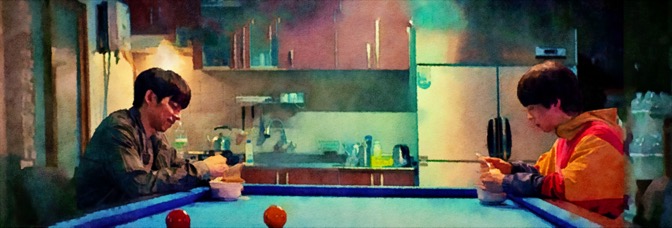
The first act of Seobok is an espionage thriller (or the first act of one), the second act is a buddy action road picture, the third act is a Sturm und Drang superhero movie. Well, superhuman movie, at least. The best part is the second act when spy-who-tried-to-get-out-but-they-pull-him-back-in Gong Yoo is teaching new charge Park…
-
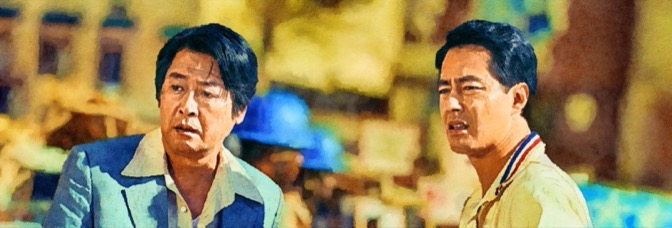
Escape from Mogadishu is almost incalculably problematic. I can't do the math, and I'm sure there's a bunch I don't even see, but it's a doozy. It's a South Korean "inspired by a true story" about the Somali Civil War, specifically the South Korean diplomats and the North Korean diplomats working together to get out.…
-

Miss Hokusai is the story of real person Katsushika Ōi. Well, stories of real person Katsushika Ōi. The anime is an episodic memoir mostly about Ōi (voiced by Anne Watanabe) and her younger sister, O-Nao (voiced by Shimizu Shion). The film doesn’t specify but they’re half-sisters, daughters to famous Japanese Edo period artist Katsushika Hokusai…
-

Departures suffers for its DV photography. Suffers. Hamada Takeshi cannot figure out how to light for the video and, as a result, the film never looks good. Maybe if director Takita were somehow taking it into account, but no, Takita just pretends it doesn’t look like an ornate Hi8 camcorder production. With some competent mise-en-scène,…
-

The evil in Deliver Us from Evil is specifically Lee Jung-jae’s sadistic villain but generally the entire world of the film, which features drug kingpins, child kidnapping, government assassins turned hitmen, human traffickers, real estate swindlers, organ thieves, and crooked cops. At one point the film gets super-judgy about Park Jeong-min’s cabaret singer complaining about…
-

Buñuel arranges The Discreet Charm of the Bourgeoisie as a series of vignettes. Occasionally there will be a surreal bridging device—the cast walking in search of a meal on a highway in the country—sometimes it will turn out to be a dream, sometimes it will be another layer (a narrated flashback, a dream-in-a-dream), sometimes it…
-
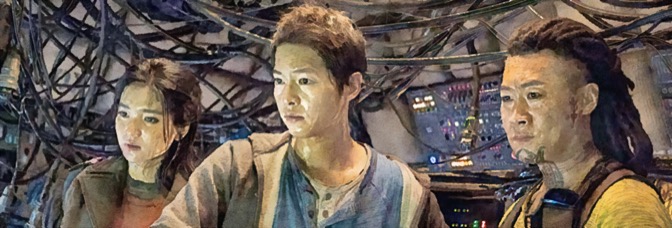
Space Sweepers is a special effects spectacular. Director Jo keeps up the pace during the CGI space battles, but always takes the time to be excited at how the scene plays. The film’s set in a post-climate change future where all the rich people live on a giant satellite (with Richard Armitage as the “casting…
-
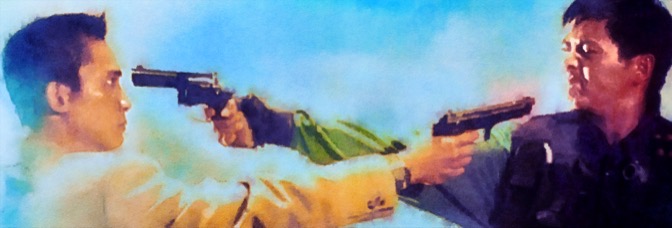
The first act of Hard Boiled is fantastic. Between Woo’s glossy, smooth jazz but with bite tone and Chow Yun-Fat’s glorious lead performance; it’s all like butter. There’s a big, intricate shootout with Woo (and his editors Ah-Chik, Kai Kit-Wai, and David Wu) doing masterful work, there’s some workplace humor with cop Chow being on…
-

The Famous Sword Bijomaru is a tragedy. Well, at its best, it’s a tragedy. The film—which runs sixty-five minutes and has zero subplots, very few close-ups, and no establishing shots or sequences—opens with apprentice swordsmith Hanayagi Shôtarô presenting his benefactor, Oya Ichijirô, with a new sword. Hanayagi is an orphan, Oya took him in at…
-
Many years ago, Val Kilmer talked about how the original Tombstone director got replaced and one of that guy’s crimes was making the actors wear accurate textiles, which doesn’t matter on film. You can have a lightweight poncho and it’ll look the same on screen. Welp. I don’t know if it’s the benefits of shooting…
 The Stop Button