Category: Drama
-
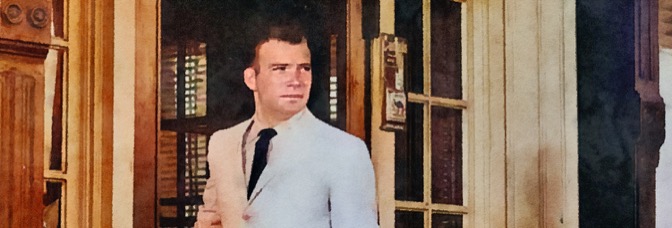
The Intruder has third act problems of the deus ex machina nature, and they’re actually welcome. If the film figured out how to finish better, it’d be more challenging to talk about. It’s already an exceptionally unpleasant experience. William Shatner gets top-billing as the title character. He’s a slick, charming, clean-cut Northern (well, Western—he’s originally…
-
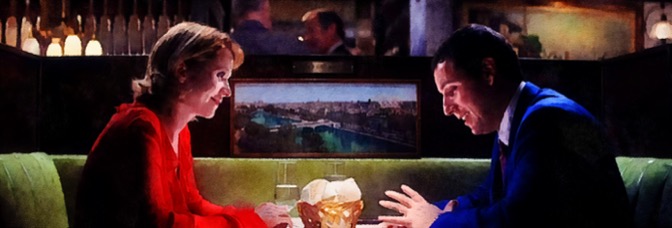
There are probably better movies with seven-minute end credits than Punch-Drunk Love but I doubt there are any where those seven-minute end credits are padded to give the film a more respectable run time. Punch-Drunk Love is an approximately eighty-eight-minute marathon where writer and director Anderson hones in on his protagonist, played by Adam Sandler,…
-

Towards the end of the first act, Ralph Macchio and Pat Morita have a potentially great scene. The best friends have traveled to Okinawa so Morita can see his dying father (Charlie Tanimoto, in a less than nothing part). Morita’s sad, pensively looking out at the ocean, and Macchio’s got some perspective to share. Macchio’s…
-
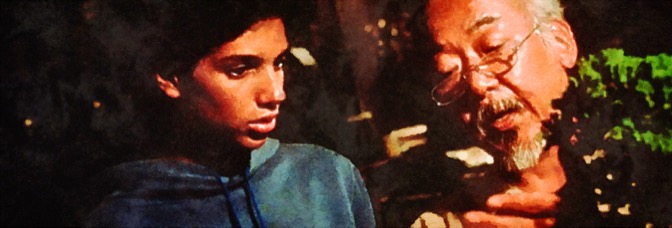
The Karate Kid runs out of movie before it runs out of story. The film’s been steadily improving on its way to the third act, culminating in a showdown between Jersey transplant (to L.A.) Ralph Macchio and his bully, William Zabka. There’s a lot of angst to the rivalry; they first tussled when “alpha” Zabka…
-

The actual chain gang sequence of Girl on a Chain Gang is in the third act. There are no actual chain gang sequences; all of that action happens off-screen, almost as though producer, screenwriter, and director Gross couldn’t afford enough chain to make it happen. But getting there is quite the ordeal for characters and…
-

If Lenny has a single highlight scene, it’s at the end of the second act, when comedian Lenny Bruce (played by Dustin Hoffman) does a set on dope. The film’s got a fractured narrative, simultaneously showing posthumous interview clips with the people in his life—ex-wife Valerie Perrine, mom Jan Miner, and agent Stanley Beck—recounting Bruce’s…
-
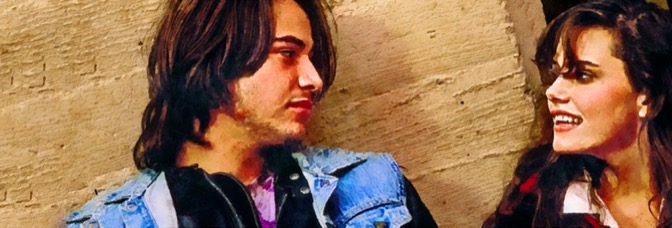
River’s Edge hinges on a few things. First, Joshua John Miller’s performance. The film’s about a group of teenagers reacting (and not reacting) to one of them killing another and showing off the body. Miller is protagonist Keanu Reeves’s little brother, who emulates and identifies with his brother’s worst traits. Second, Jürgen Knieper’s score. The…
-
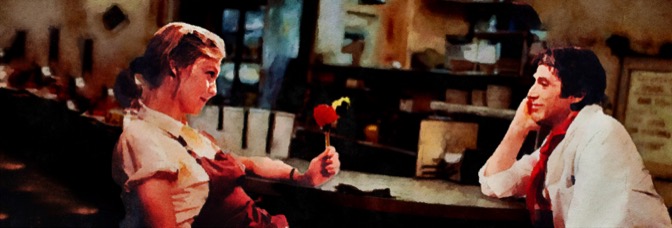
Besides the sex scene, set to Rickie Lee Jones singing, “It Must Be Love” (which means Al Pacino sings it later as he gleefully reminisces), Frankie and Johnny avoids revealing too much about the private tenderness between Pacino and romantic interest Michelle Pfeiffer. At one point, he says something to her as their first date…
-

Scarface is a film with a lot of problems. Most consequentially, there’s no character development for Al Pacino; any time there’s ostensibly character development, the film cuts ahead a month or three, or there’s a montage sequence. But the film is incredibly hands-off with Pacino’s character and arc. It leaves Pacino to vamp throughout to…
-
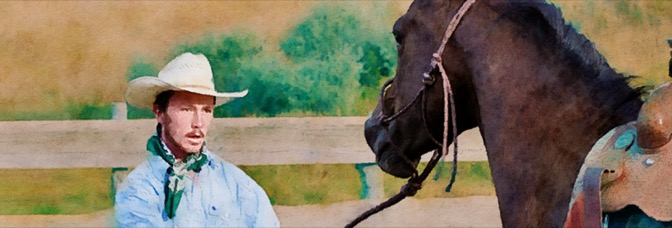
The Rider is a harrowing experience. The film establishes its stakes from the second or third scene; rodeo cowboy Brady Jandreau is recovering from a head injury. His horse threw him and stomped on his head, requiring a metal plate. He can never ride again, except his entire life has been about being a cowboy.…
-
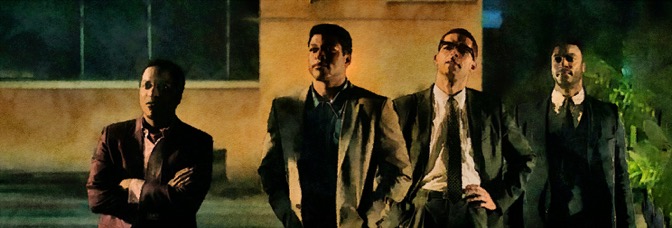
I fully expected One Night in Miami to end with a real-life picture of the film’s historical subjects. The film recounts—with fictional flourish—the night of February 25, 1964, when Muhammad Ali (then still Cassius Clay) defeated Sonny Liston to become the world heavyweight champion. He celebrated his win with Malcolm X, Jim Brown, and Sam…
-
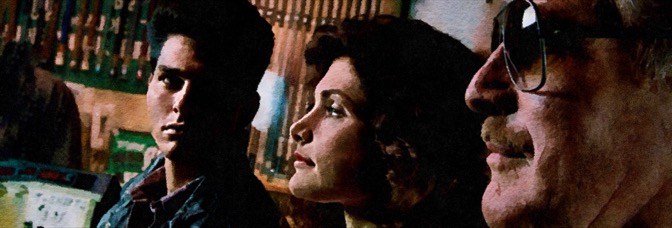
The Color of Money opens with a brief narration explaining the pool game variation nine-ball. Director Scorsese does the narration, which is the most interest he ever shows in the game of pool for the rest of the movie. The narration serves a straightforward purpose—it lets the audience know when to know the game is…
-
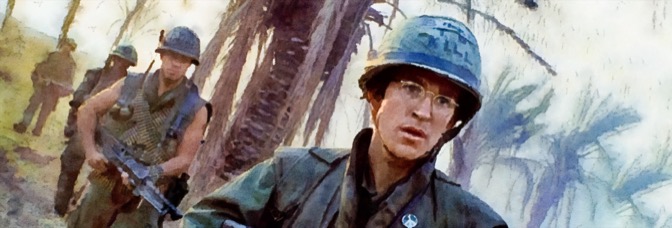
Full Metal Jacket is a film of big swings. Director and co-writer Kubrick hits them all. The three most prominent are the structure, the character study, and the whole arc. The structure and arc are different because the film's got two distinct sections. Minutes one to forty-five or so is a "We're in the Marines…
-
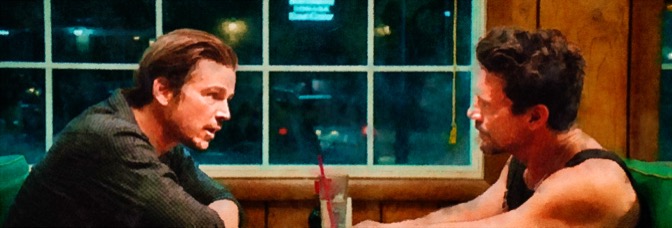
I don’t think I’d ever have foreseen the Heartland Family Crime Saga genre. Or how it basically employs every white actor who isn’t in a Marvel movie (currently) or once tangentially appeared in some East or West Coast Crime Saga. For example, I didn’t recognize George Carroll from his Ben Affleck Boston Crime Sagas. And…
-
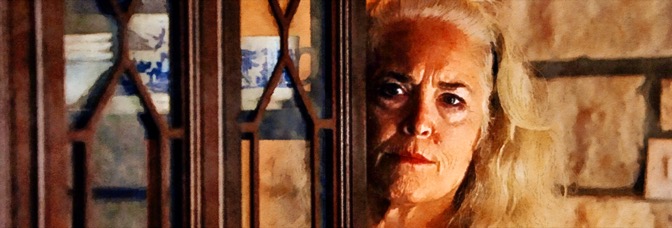
Krisha is an eighty-minute film with a present action of maybe twelve hours. It’s about a family’s black sheep (Krisha Fairchild) coming to Thanksgiving after some time away. There’s no big exposition dump—it isn’t until the third act the film confirms the basic information the characters have all been dealing with—and for the first half…
-

Sylvester Stallone’s director’s cut of Rocky IV arrives four sequels and thirty-five years after the film’s original release. Stallone says it’s for the thirty-fifth anniversary; Robert Doornick (who voiced Burt Young’s robot in the original cut and owns the copyright on the robot) says it’s because Stallone didn’t want to renew with him and had…
-

Ondine is very committed to the bit. The film opens with Irish owner-operator fisherman Colin Farrell bringing a woman up in his nets. A beautiful woman. She seems very confused to be breathing air and doesn’t tell him very much about herself. Alicja Bachleda plays the woman. She refuses to go to a hospital, and…
-
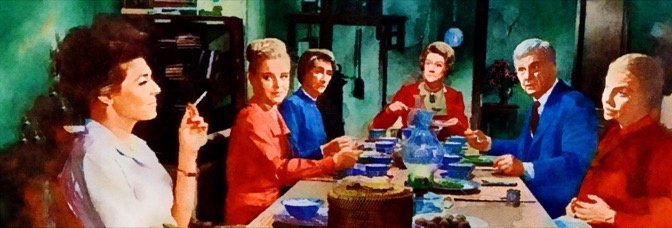
First, it’s actually 8 Women; Jane Chang doesn’t count because she’s not white. Though I suppose it could just be counting good Christian women, then Anne Bancroft doesn’t count. Women is a Western, just one set nearer to modernity and not in the American West. Instead, it’s about a mission in China on the border…
-
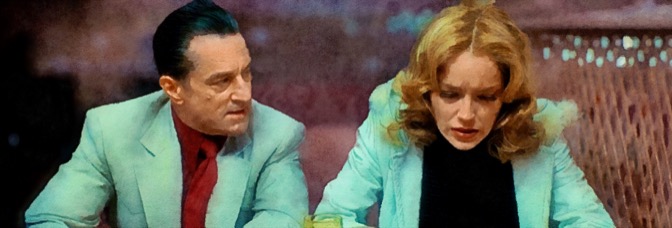
The best part of Casino isn’t my favorite part of Casino because the best part is James Woods bickering with Erika von Tagen. It’s mainly in the background, and it’s the only time anywhere in the film anyone shows any personality not expressly required for their scenes. Director (and co-screenwriter) Scorsese doesn’t believe in background…
-

The first act of Cabaret is about introducing British guy Michael York to Weimar-era Berlin and to the life and times of his neighbor Liza Minnelli. Minnelli’s an American ex-pat; she’s landed in a cabaret and is trying to sing, dance, and sleep her way into movies. York’s there to teach English and get some…
-

Lone Star is Texas Gothic. There’s nowhere else the story plays the same way except a border town, at no time other than when it does; it’s all about the sins of the mothers and fathers playing out. Actual sins, imagined sins, hidden sins. It’s about heroes and villains and how they’re the same thing.…
-
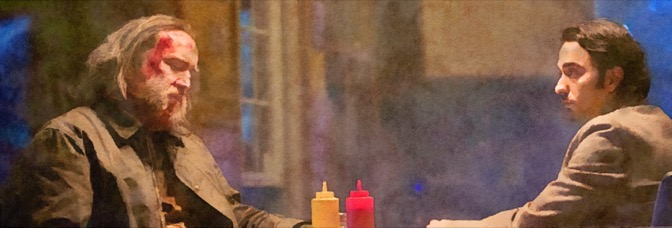
Pig is an anti-noir. Writer and director Sarnoski sets it up as something of a neo-noir in the first act, with seemingly inscrutable modern-day hermit Nicolas Cage having to travel back to civilization and civilization being scared of him. And even though Cage’s adventure routes through shady settings, they’re just background to the actual journey…
-

Joe is a story of white male friendship. The Joe in the title is Peter Boyle, a racist working-class Vietnam vet. The film doesn’t open with Boyle though, it begins with Susan Sarandon. She’s a rich girl turned hippie who’s slumming with a drug-dealing boyfriend (Patrick McDermott) in the Village. The “prologue” (for the entirety…
-

I’m late on BlacKkKlansman. It plays a little differently in 2021 versus 2018 (or even 2019), because now there’s no difference in the rhetoric of the seventies racist garbage and today’s Republicans. The film opens with Alec Baldwin playing the host of a KKK newsreel and doing multiple takes as to take the racism up…
-

The incredible thing about Pi is how well director Aronofsky is able to compensate for his lead. Pi is about mathematician Sean Gullette discovering a pattern hidden in the stock market—or so he thinks—and trying to navigate the repercussions of his discovery. Wall Street firm lady Pamela Hart is after him for the equation, so’s…
-

Avalon is not a success. It very frustratingly waits until the very end of the picture to clearly not succeed. After trying real hard, there’s just nothing to it. Writer and director Levinson makes a whole bunch of big swings in how he directs the narrative, which is an attempt at doing lyrical structure–just one based…
-
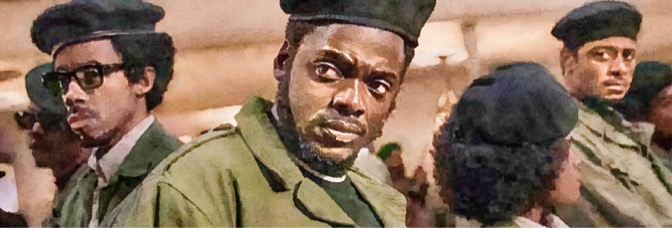
Judas and the Black Messiah has some third act problems. They end up drawing too much attention to LaKeith Stanfield’s character—the Judas—not having enough, well, character. Especially since director King uses footage of the real guy (it’s a true story) in the denouement, after opening the film with Stanfield in old age makeup playing the…
-

Nomadland becomes even more of an achievement when you find out the supporting cast is entirely amateur. The film’s a character study of lead Frances McDormand as she adjusts to her life as a modern nomad, traveling the country in her van (where she also lives), working seasonal jobs, and coming across a variety of…
-

The Sicilian is based on a Mario Puzo novel about a real person and real events. The director’s cut runs about thirty minutes longer than the original theatrical version, which no doubt desperate distributors and financiers took away from director and co-producer Cimino in hopes of recouping some of their cost. Alas, no luck. It…
-

Year of the Dragon is going to be so racist it opens with a disclaimer from the distributor, Metro-Goldwyn-Mayer, basically saying they didn’t realize how racist director Cimino and co-screenwriter Oliver Stone were going to get and they’re sorry. Please enjoy the film. It came out in 1985. Year of the Dragon was too racist…
 The Stop Button