Category: Drama
-
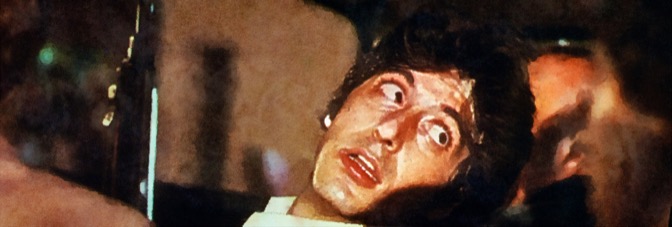
Besides Al Pacino, there are other actors in Dog Day Afternoon. Some of them give fantastic performances too. But, even with those fantastic performances, every time Pacino is alone on screen, whether closeup or not, monologue or not, it feels like there’s no one else in the film besides him. He doesn’t command it or…
-

When Richard Gere gives the best lead performance in a film, it’s definitely a problem. Gere doesn’t bring any gravitas to this role–a retiring police officer–and, when it gets to his redemption, it’s not clear why he needs redeeming. The film calls him a failure a lot, but it’s never clear why he’s a failure,…
-

I rarely worry about how I’m going to get 250 words about a film. Rocky IV probably features 251 words of dialogue. Well, closer to 251 than not, anyway. Really, what is there to say about this one? Stallone directs it poorly? Stallone substitutes montages and music videos for actual narrative content? It’s a ludicrous…
-
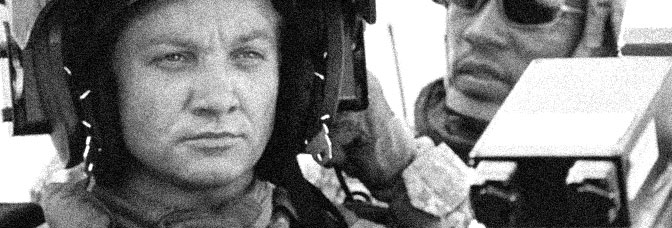
When The Hurt Locker gets predictable, it gets into trouble. Of the super predictable events, there was only one thing I didn’t get right. The Hurt Locker, which uses its recognizable faces in bit parts better than any film in a while (I don’t know the last time Ralph Fiennes was so good–he ought to…
-
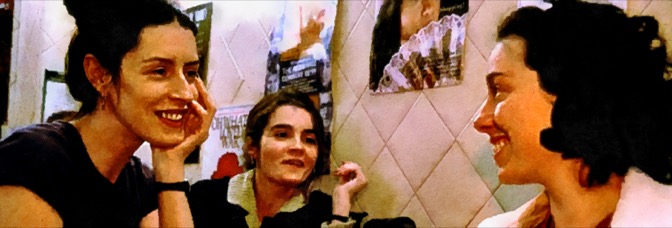
From a description–not even from a few minutes–Wonderland might appear to fit into (or create again) the British realism movement. It’s shot on video, natural lighting, natural make-up, no visible tripod shots, all hand-held, all very cinema verite. There’s no artificiality to it. Except the artificiality of being a filmed narrative. Wonderland even visibly bucks…
-

Okay, so Marty Denniss is a playwright. Erskineville Kings makes some more sense. Not a lot more sense, but some. It’s a peculiar picture, a human drama with a lot of dialogue–it’s set over a day–and it’s all in a few indoor locations. But Denniss, the writer, emphasizes himself, the actor, as the protagonist, when…
-
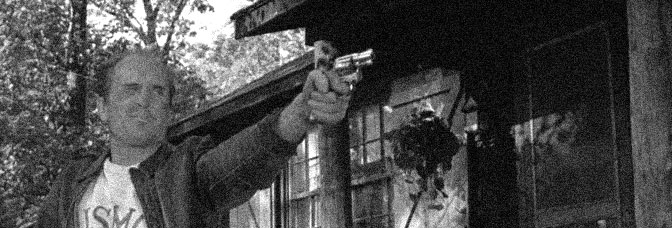
Badge 373 sounded good because it’s seventies Robert Duvall (before he was eighties and nineties Robert Duvall). My high hopes were quickly dashed. It’s poorly written, with lousy direction. It’s amateurish, far beneath Duvall’s abilities. I thought Howard W. Koch was somebody–I thought it was because of the New York mayor (Ed Koch), but it’s…
-

According to John Travolta (who was originally cast and probably wasn’t just making it up–as it was pre-Battlefield Earth and he was still somewhat legitimate), when ABC wouldn’t let him out of his “Welcome Back, Kotter” contract, Malick was forced to cast Richard Gere and shredded the majority of Days of Heaven‘s screenplay, instead going…
-
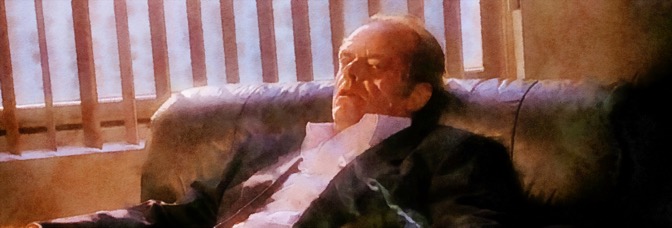
I can’t decide what moment of The Crossing Guard is my favorite. I have it narrowed down to two. It’s either the (louder) one at the end, where Jack Nicholson realizes where he is and how he got there, or it’s when I realized Anjelica Huston–who starts the film in a support group–has never spoken…
-

Boiling them down, three things ruin Blood and Wine. Stephen Dorff, the script and the approach. The last two are complicated, because it’s hard to see determine where the script and the approach differ. Blood and Wine was, at the time of its release, promoted as the conclusion of an informal trilogy for Rafelson and…
-
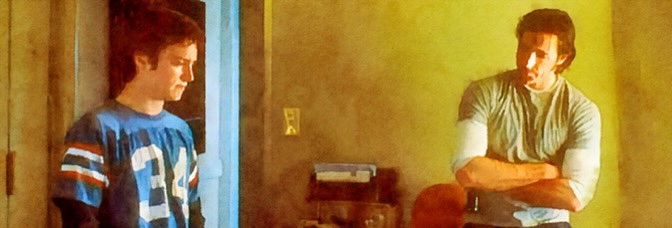
Burns must have cast Elijah Wood because of Lord of the Rings, figured his presence would boost Ash Wednesday‘s salability. At some point during filming, as Burns watched Wood’s useless, laughable, whiny performance… he must have regretted it. It’s not like the film’s only problem is Wood–far from it–but he’s just so terrible, so incompetent,…
-

I’d heard–read, actually, but maybe heard as well–the 1981 Postman Always Rings Twice was terrible. If I knew Rafelson directed it, I’d forgotten. I did remember David Mamet wrote it. For some reason, I always thought it was an in name only remake, not at all based on the Cain novel. The film opens with…
-
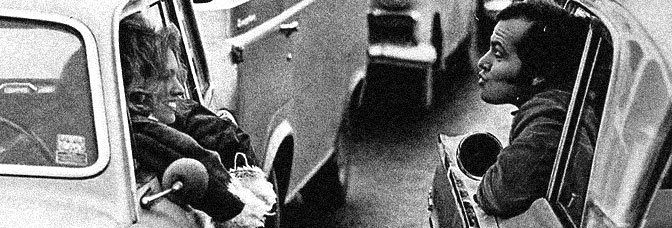
About half way into Five Easy Pieces, the film really hasn’t given any clue as to what it’s going to be. It’s an incredibly complex character study, both in its approach to the narrative and in terms of Jack Nicholson’s protagonist. The beginning of the film, set in the oil fields of Southern California, ends…
-

Halfway through The Indian Runner–I’m guessing at the location, but halfway sounds about right–there’s a stunning montage. It might be the best way to talk about the film, or at least to start talking about the film, because The Indian Runner resists any standard–or glib–entry angles. It’s a five character montage, taking place in the…
-

A story, based on its text and then the reader’s reading of that text, evolves. The reading is required to make the story complete. A film has a similar relationship with the viewer, but has the added complication of conflicting influences–there’s a director, actors, a composer, a gaffer… and a screenwriter. A script is the…
-

There are a few problems with The Man with the Golden Arm. It’s hard to think of the film actually having any defects, since it’s such a brilliantly made motion picture. It was one of the first Preminger films I saw and was I ever surprised when they all weren’t so beautifully put together. The…
-

I was in high school the first time I saw Badlands. I’d seen a lot of movies–I think by that time, I’d even made a top one hundred list. I know I’d seen True Romance, so I must have been at least fifteen. There’s nothing else like Badlands in cinema, which is a bit of…
-

For a film with pioneering use of widescreen composition–the shot with the cars moving past Natalie Wood–and one of the better film performances (James Dean), Rebel Without a Cause is a curious failure. It’s loaded with content–there’s the stuff with Dean and his parents, the stuff with Wood and her father, the gang, Sal Mineo,…
-
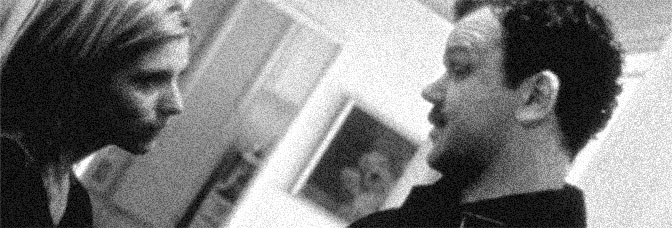
Writing about Magnolia seems a daunting prospect (I don’t think I’ve ever read a review of the film). Following the prologue, which one could (or could not) see as a way to ease the viewer into the genre–the multi-character, all connected genre (Magnolia‘s got to be the best of the genre… I can’t think of…
-
Fear and Desire‘s a mess to be sure, but it’s hard to understand why Kubrick later strove to have it willfully forgotten. The film’s greatest faults–the script and the acting–pale when compared to Kubrick’s success as a director and editor. He described the film as amateurish and that adjective certainly does describe the script well…
-

As Milk‘s opening titles ran, it occurred to me Danny Elfman scored it. It doesn’t sound anything like Elfman’s norm–you know, the modified Batman music–but it sounded like the kind of score Danny Elfman should be doing (and should have been doing for years). Milk‘s a biopic–and always feels like one, thanks in great part…
-
Maybe Darren Aronofsky actually gets it. As The Wrestler started, I marveled at what must have been Aronofsky’s longest shots to date until they kept getting longer and longer. His direction of the film is incredibly simple–put the camera on the actors, occasionally do an establishing shot. No medium shots. Long shot to close-up. The…
-
Boogie Nights is so well-made, so stunningly made–I’m not even thinking about Anderson’s wonderful, lengthy steadicam sequences, I’m thinking about Philip Seymour Hoffman alone in his freshly painted car–it’s hard to think about anything else while watching it. The omnipresent soundtrack–Nights is a combination of American Graffiti (the prolific use of songs), Goodfellas (the way…
-

Red‘s a really safe movie. I’ve seen Noel Fisher play a young creep multiple times on television–just a few weeks ago even–and I’ve seen Kyle Gallner play the sensitive kid who hangs out with the creep. Twice for him. And casting Brian Cox as a loner who loses his dog and relentlessly pursues justice… well,…
-

Once upon a time (in Hollywood), there was a bald director (who always wore a cap) who first got famous on television as an actor, then as a director of comedies, who then started making excellent mainstream Hollywood pictures. Then he started making mainstream crap and then it got worse. The question of Frost/Nixon is…
-

There’s a good movie somewhere in the idea of Doubt (a nun suspects a priest of molesting a child, but it’s 1964 and the patriarchy of the Church isn’t going to listen to her). The film’s full of almost detective moments (and faux-auteur Shanley pulls out some Hitchcock angles after the big reveal), but the…
-
With Slumdog Millionaire, Danny Boyle hasn’t just finally made his grand romance (something he’s wanted to do since A Life Less Ordinary–this time without the “acting” stylings of Miss Cameron Diaz), or given cinema its first great mainstream romance in nine years, he’s also made the best adaptation of a Charles Dickens novel (even if…
-

When Bruce Springsteen did his 9/11 response record, The Rising, he was in an odd position–given the gravity of his intent, he couldn’t misstep. He might get excused for it, but then the record would be (albeit well-meaning) propaganda. It wouldn’t be art. Clint Eastwood’s in a similar situation with Gran Torino. He’s dealing with…
-

For a while, somewhere in the late second act, Sam’s Song is really good. It has its characters established and it seems like it’s going to take an interesting path getting to its inevitable plot point. The film is mostly about Jennifer Warren, who has a husband (Jarred Mickey) apparently eager to philander; they’re wealthy,…
-

Little known fact: the British Tourist Authority actually funded for Straw Dogs. They were sick of Americans moving over. Obviously not true, but it would explain a lot. Not many films have such singularly evil human beings as those portrayed in Straw Dogs, but then few feature such textured evil human beings either. The film’s…
 The Stop Button