Category: Classics
-
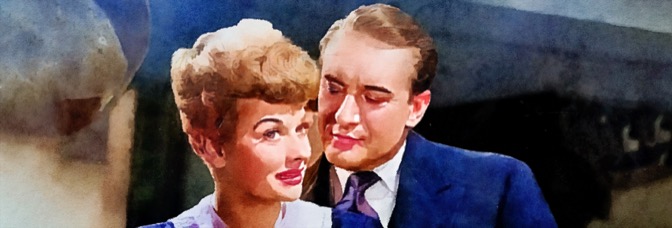
If Lured had gone just a little bit differently, it could’ve kicked off a franchise for Lucille Ball and George Sanders. He’s the high society snob, she’s the New York girl in London, they solve mysteries. But Lured isn’t their detective story; it’s Charles Coburn’s detective story, they’re just the guest stars. Coburn’s a Scotland…
-

While Yul Brynner easily gives the best performance in Ten Commandments, until the second half of the movie Anne Baxter gives the most amusing one. She's an Egyptian princess and she's going to marry the next pharaoh. The next pharaoh is either Brynner or Charlton Heston. Cedric Hardwicke is the current pharaoh and Brynner’s dad.…
-
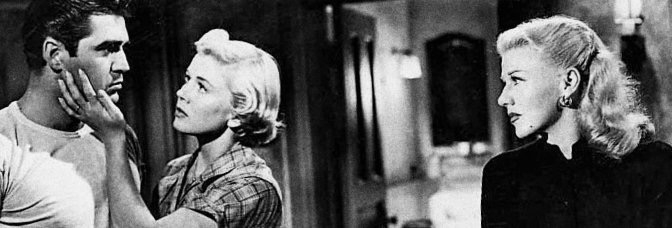
One of Storm Warning’s failings is its attempt to carefully navigate the story content so I’m just going to be lead-footed and get right to things, which probably would’ve helped the movie though not the ending. Storm Warning is about Ginger Rogers visiting sister Doris Day and witnessing the Ku Klux Klan murdering someone. Rogers…
-

For maybe the first ninety minutes of The Good Earth, it seems like the most interesting thing to talk about is going to be how the filmmakers were able to make the lead characters in the film appear sympathetic while they were being, frankly, un-American. It makes sense, since the main characters are Chinese. The…
-

The Emperor’s Candlesticks starts with an exceptional display of chemistry from Robert Young and Maureen O’Sullivan. They’re at the opera, it’s the late nineteenth century, it’s a masked costume ball, Young is a Grand Duke dressed as Romeo, and O’Sullivan is the sun. Then it turns out O’Sullivan is working with a bunch of Polish…
-

Not to be too obvious, but I really wasn’t expecting a twist ending for The Maltese Falcon. But only because I’ve… read the book, seen the 1941 version, seen spoofs of it; I sort of figured I’d be able to guess the plot turns. And I did, right up until the end, when Falcon shows…
-

At one point during Hostages, I thought there might actually be a good performance in it somewhere. Czech freedom fighter Katina Paxinou faces off with her mother over her Resistance work. It has the potential for a good moment, turns out it’s just an adequate one (amid the sea of inadequate ones in the film).…
-
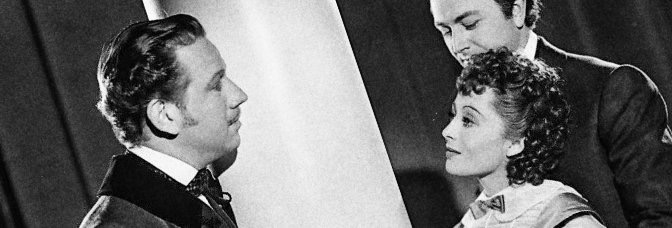
The only impressive thing about The Toy Wife (not good, not admirable) is the film’s ability to keep going professionally, no matter how stupid it gets. There are no easy outs in the picture; even when people start dying off to up the tragedy, there’s still a seemingly endless amount of run time remaining. The…
-

Given Dramatic School is all about top-billed Luise Rainer’s rise of stage stardom, it might help if she were actually the protagonist of the story, instead of its—occasional—subject. Because Rainer’s got to share the film with a bunch of other characters, none particularly interesting. There’s Rand Brooks, who’s the headmaster’s son and from a long…
-

The Incredible Shrinking Man is an enormous feat. It succeeds thanks to director Arnold, writer Richard Matheson, and star Grant Williams. Arnold’s arguably got the greatest successes; he carefully lays the groundwork for the film’s eventual startling visuals. To get to the startling ones, Arnold’s got to get through some absurd ones. Only the first…
-

It Happened in Hollywood is very nearly a success, which is surprising since most of the film is entirely mediocre. There’s a great lead performance from Richard Dix, as a silent movie cowboy who can’t make it in talkies (though, to be fair, the one bombed screen-test scene was more used to comment on the…
-

I’m not sure how much would be different about Red Dust if the film weren’t so hideously racist, particularly when it comes to poor Willie Fung (as the houseboy), but at least it wouldn’t go out on such a nasty note. Especially since the finale, despite being contrived, at least plays to the film’s strengths,…
-

Somehow Bend of the River manages to be too cluttered while running too short at ninety-one minutes. The film starts great; James Stewart is a former bad man of the West who’s trying to be a good guy and become a farmer (or rancher if he can get himself some cattle). He’s guiding a wagon…
-
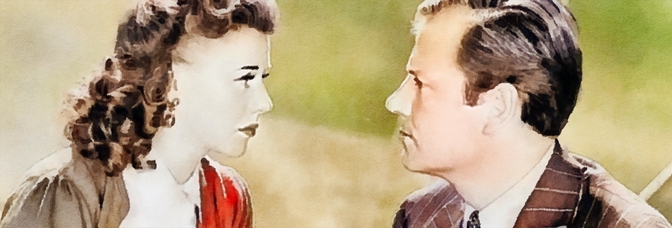
Primrose Path gets fun fast. Given the film opens with nine year-old Joan Carroll stealing a neighbor’s tamales (instead of buying them) for her and her grandmother, Queenie Vassar, it sort of needs to be fun. Vassar’s the maternal grandmother, not related to despondently alcoholic dad Miles Mander. Ginger Rogers is the older daughter, who…
-

The Trouble with Harry is very cute. It’s fine, the film’s intentionally cute, but it’s also somewhat frustrating. With the exception of the glorious Technicolor exteriors of Vermont leaves, director Hitchcock and photographer Robert Burks don’t do anything particularly interesting. John Michael Hayes’s screenplay is so confined it often feels like Harry is a stage…
-

For most of its seventy-ish minute run time, The Purchase Price does really well with the way it does summary. It does so well it never even seems possible the film’s just going to welch on everything in the third act… but rather unfortunately, it does. The big problem is how the film–specifically Robert Lord’s…
-

Even if you give The Buccaneer a lot of its historical absurdities and classic Hollywood whitewashing, even if you give it a motley crew of murdering (but not raping, good family men) pirates getting giddy and doing a singalong while they row themselves through the bayou to fight for Andrew Jackson against the British, even…
-

Having Wonderful Crime is a perplexing comedy-mystery. The mystery itself is perplexing because it’s so exceptionally convoluted; three screenwriters and four or five red herrings and the picture only runs seventy minutes. The comedy is perplexing because Crime hinges its comedic potential on lead Pat O’Brien. O’Brien is a skirt-chasing Chicago lawyer who lets rich…
-

Lawyer Man is a tad too streamlined. It runs around seventy minutes, charting neighborhood attorney–meaning he works with ethnic types and not blue bloods–William Powell’s rise and fall from grace. At the end, he says something about the events taking place over two years, which the film accomplishes through a variety of narrative shortcuts, usually…
-

The third act of All That Heaven Allows is all about agency. Who has it, how they avoid it, why they avoid it. For a while it seems like it’s about Jane Wyman having it, then about Rock Hudson having it. Wyman’s always implied agency, right from the start. Hudson, who doesn’t have a scene…
-

High Noon is a film all about courage and cowardice, so it’s appropriate the film starts with the most courageous thing it’s ever going to do and it does a few. It commits to its theme song. Not a piece of music from Dimitri Tiomkin, but a country song (written by Tiomkin, lyrics by Ned…
-

The Life and Death of Colonel Blimp runs two and three-quarters hours and takes place over forty years. The former’s passage is sublime, the latter’s is subtle. Directors Powell and Pressburger bookend the film in the present, then flashback. The lead at the start of the film is James McKechnie. He’s a lieutenant who gets…
-

Experiment Perilous is a strange film. Not the plot–well, some of how the plot is handled–but the strangeness comes from the result of how the film is executed. It’s a Gothic family drama set in twentieth century New York City without a lot of the family. There’s a flashback sequence, but Perilous is rather modestly…
-

The first forty-five minutes of Only Angels Have Wings is mostly continual present action. Jean Arthur arrives in a South American port town, looking around–followed by two possible ne’er-do-wells (Allyn Joslyn and Noah Beery Jr.)–and the film tracks her experience. Great direction from Hawks, beautiful cinematography from Joseph Walker. Pretty soon she discovers they’re not…
-

A lot goes unspoken in The Big Sleep. It’s very much set in a wartime Los Angeles, but there’s never much said about wartime conditions or Los Angeles. When private detective Humphrey Bogart goes around the city, investigating, he’s only ever encountering women (beautiful women at that, because director Hawks’s Los Angeles is solely populated…
-

The Lodger begins four murders into the Jack the Ripper killings (the film actually goes over the historical number but also makes some rather liberal changes to the history). Just after a murder occurs, which seems a rather unfortunate event since the victim passes a number of police officers and even a vigilante gang, a…
-

At the end of Gaslight, when all has seemingly been revealed, there’s only one question left. If Scotland Yard inspector Joseph Cotten isn’t an American in London, why doesn’t anyone notice his lack of accent. It’s a wise choice not to give Cotten an accent–presumably he couldn’t do one–but it also means there’s always something…
-
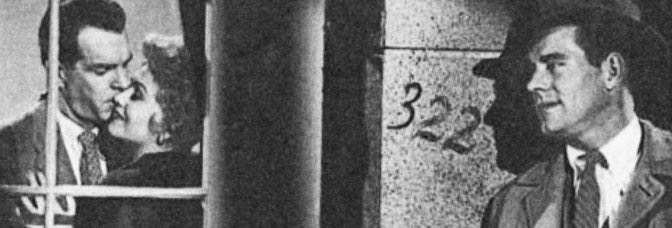
As far as suspension of disbelief goes, nothing in Pushover compares to the second scene of the film, when twenty-one year-old Kim Novak makes goggly-eyes over forty-eight year-old Fred MacMurray. Both actors handle it straight, which is impressive on its own, but clearly MacMurray realizes how lucky he’s got it. Turns out he’s a cop…
-

You Can’t Take It with You has three major plot lines, all interconnected, but separate enough the film often feels stretched. There’s the rather lovely romance between stenographer Jean Arthur and her boss, bank vice president James Stewart. There’s Edward Arnold’s attempt to create a munitions monopoly to take advantage of the coming world war.…
-
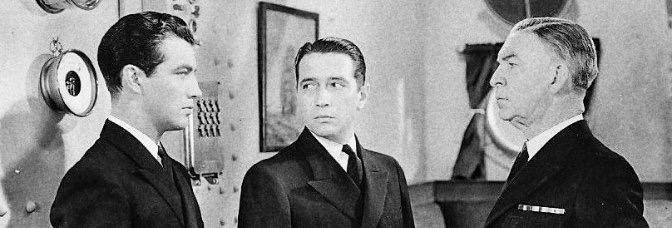
Murder in the Fleet is a reasonably diverting little B murder mystery; Frank Wead and Joseph Sherman’s script is almost better than the film deserves, given it doesn’t even run seventy minutes and doesn’t even bother pretending it’s got subplots. Well, outside top-billed and sort of lead Robert Taylor’s romantic troubles with blue blood Jean…
 The Stop Button