Category: Classics
-

There are a handful of Pre-Code elements in Professional Sweetheart it doesn’t seem like the Code broke so much as saved movies from. For instance, when Ginger Rogers needs to break out of her Stepford Wives mindset—Kentucky cracker Norman Foster has beaten her into it—all the city boys need to do is put her former…
-
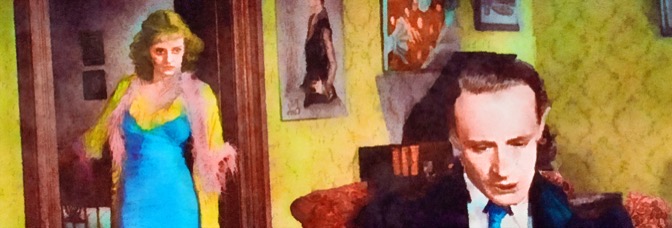
The best performance in Of Human Bondage is Frances Dee; despite doing a lot of close-up one-shots with the actors staring directly into the camera, the only time director Cromwell ever gives one anything to do is Dee. She’s mooning over Leslie Howard, which just draws attention to how little Howard mooned over anyone in…
-

The Strawberry Blonde is a period piece within a period piece. It opens in the past, then there’s a flashback to the further past. It recalls a time when WASPs couldn’t figure out how to eat spaghetti and the political corruption machine was easier to crack. Director Walsh is very enthusiastic about the time period…
-

Even with some first and third act problems and a peculiar present action–Millie’s a solid melodrama. It works up actual suspense, actual danger, and finds true villainy amid the pat shittiness of men. In addition to passing Bechdel—briefly but definitely—the film ends up fully confronting all the things it seems like it’d be safer to…
-
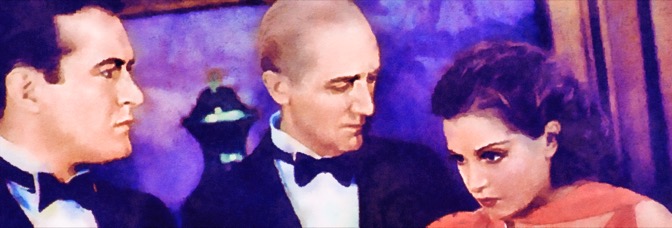
The Woman Between ought to be the most scandalous, salacious Pre-Code soap possible given the tawdry subject matter—trophy-ish wife Lili Damita (it’s complicated, she’s got her own business and she’s French) cheats on her husband on her latest voyage back from Europe and it turns out she’s shacked up with his son, Lester Vail. Now,…
-
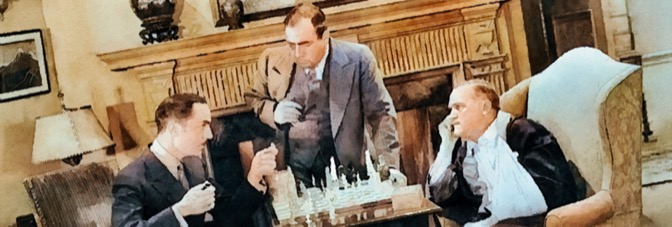
The most interesting part of The Benson Murder Case is the Black Tuesday setting. I missed the newspaper dates for the montage about the stock market crash so I’m not sure if they do the Black Tuesday or just a Black Tuesday, but the movie opens with broker Richard Tucker selling off all his clients’…
-

Jewel Robbery is a delightful mostly continuous action not-even-seventy minute picture; it’s a play adaptation but never feels stagy, just enthusiastic. Especially once William Powell shows up, then the film revels in his performance. Until he arrives, director Dieterle toggles between showing off filmmaking techniques (with some able cutting courtesy editor Ralph Dawson) and showing…
-

About two minutes after I had the thought, “Oh, no, what if the morale of Fixed Bayonets! is ‘it isn’t the generals who are the heroes but the men,’” the film reveals the morale to be it isn’t the generals who are the heroes but the men. The film opens with a title card establishing…
-

As intentional as Kazan gets with his direction of James Dean, he’s orders of magnitude more intentional on Julie Harris. Harris is top-billed and the natural protagonist, but Dean’s a supernova. He’s the lead, he’s the star, he’s dynamite, a press agent’s dream. Only he’s got a really quiet part for most of the movie;…
-

Dr. Jekyll and Mr. Hyde—it’s pronounced Gee-kyl, incidentally, as in Fronkensteen—is a stunning disappointment. It’s difficult to know where to begin, given the film is about a scientist, Fredric March, who’s really horny for his fiancée, Rose Hobart (and she’s horny for him too), but her dad, Halliwell Hobbes, thinks March’s a no good horn-dog…
-

The Eagle and the Hawk starts light and ends very heavy. Astoundingly—and appropriately—heavy. Eagle is a WWI flying ace picture, all about a group of British fliers who go to France only to discover war isn’t like playing polo actually. Right after an inventive segue from opening titles to the present action, the film has…
-

We don’t see John Dall court Peggy Cummins in Gun Crazy. We get to see them meet cute when Dall—back home after the Army (and reform school before the service)—and his pals go to carnival and see Cummins’s shootist act. Dall was in reform school for breaking into a store to steal a pistol and…
-

Smack-dab in the middle of The Informer is a romance between IRA commander Preston Foster and his gal, Heather Angel, sister to an IRA man (Wallace Ford). Foster and Angel steal moments together on one fateful night, tragic circumstances giving them unexpected time with one another, but those same circumstances sort of foreshadowing their very…
-

Until the action-packed last thirty minutes, Stagecoach is a class drama. A group of strangers and acquaintances are in a stagecoach, traveling West, post-Civil War. It takes fifteen minutes at the start of the film to get them in the coach, with some of the time spent on establishing the characters (and why they’re traveling),…
-

Not even halfway through Mad Love’s sixty-seven minute runtime it’s clear all the film’s going to have to do to succeed is not to fail, which isn’t going to be easy. The film’s about a brilliant surgeon (Peter Lorre) who’s sort of publicly stalking married stage actress Frances Drake. Now, he falls in love with…
-
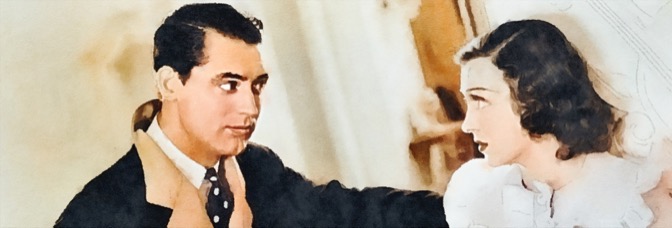
There’s a funny moment in Ladies Should Listen. As in a singular one funny moment. I can’t remember the joke because it wasn’t very good and was too busy being shocked at something vaguely amusing in the film, especially coming from Rafael Corio, who has the distinguished honor of giving the worst performance in a…
-

The Suspect is the unlikely tale of middle aged shopkeeper Charles Laughton, who forms a friendship with a young woman in need (Ella Raines), which gets him in trouble with his wife, Rosalind Ivan. There are complications—the film’s established Ivan has been a horrible wife to Laughton and a bad mother to their son, Dean…
-

The Lady Refuses gets frustratingly close to making it to the finish. It collapses in its final moments, though it’s barely been keeping it together through the third act, when everything (by everything the main plot and the single directly related subplot) comes together and profoundly fizzles. The only reason it provides any tension at…
-

There are a lot of great shots in Destry Rides Again, with director Marshall finding a lot of raw human emotion in a comedic Western; it starts with opening titles, which are a long tracking shot introducing the setting—the town of Bottleneck. The tracking shot is at night (cinematographer Hal Mohr’s black and white photography…
-
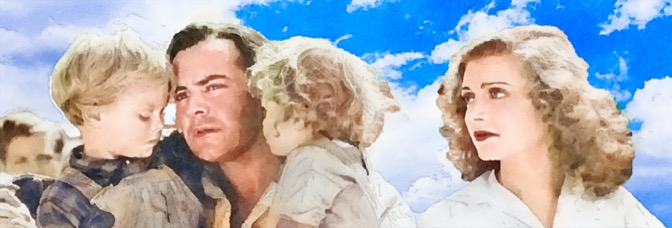
If it weren’t for the “fallen woman” third act, Deluge would probably stay afloat at the end. Instead, it flops out in the really protracted finale, which involves a survivor camp deciding on a credit system in an effort to get capitalism back. It’s a real let down considering the second act is all about…
-

Mr. Smith Goes to Washington runs two hours and nine minutes, with the last thirty minutes and change giving star (but second-billed) Jimmy Stewart a big, long scene; sure, it’s intercut with various asides but as far as Mr. Smith Stewart is concerned, it’s a single long scene. Stewart’s had some significant scenes before, but…
-
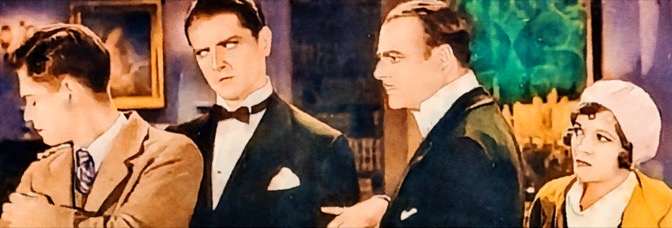
The Pay-Off opens with young lovers William Janney and Marian Nixon in Central Park, snuggle-napping on a bench in the middle of the night because they’re got to maintain their chastity. Everything’s about to change for them because Janney’s finally saved up enough money they can get married, only he talks about it too loud…
-

When Leon Errol saves lead Jon Hall from drowning, even though they’ve previously established The Invisible Man’s Revenge takes place in England, I was sure they’d teleported to Australia. Errol is very Australian. Openly Australian. He’s also the closest thing to amusing as Revenge gets. Despite being the fourth in the series, starring the same…
-

Just about an hour into Invisible Agent, Axis allies Cedric Hardwicke and Peter Lorre have a falling out. See, Lorre’s smart, actually, while Hardwicke’s just devious. The film had been establishing those traits from the first scene—when they try to strong-arm the Invisible Man formula out of Jon Hall—but what I didn’t realize was Lorre…
-
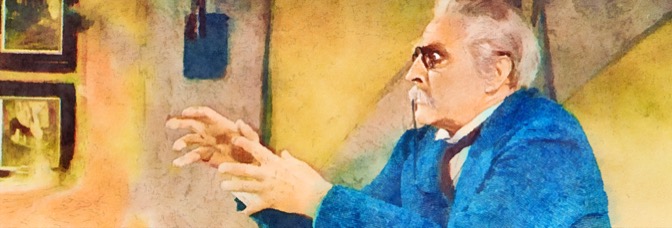
It’s entirely possible The Invisible Woman’s concept is a good one—instead of a horror movie, doing a screwball comedy where the female lead is invisible most of the time. Woman is—at best—indifferently acted, poorly directed, atrociously written, without even reasonable special effects. But the idea itself isn’t necessarily bad. The film opens with suffering butler…
-

The best thing about The Invisible Man Returns is quite obviously Cecil Kellaway. He’s a Scotland Yard inspector who’s spent the eight years since the last movie preparing for another invisible man attack, making sure the Yard’s ready to go technologically. Worst thing about The Invisible Man Returns? It’s a little long? There’s nothing really…
-

It makes sense director Lorenze never made any other films after Back Page because there’s no easy way to describe the disinterested direction. Well, outside Lorenze and cinematographer James S. Brown Jr. using the same exact camera composition for what seems like ninety percent of the film. When there’s an actual reaction close-up of someone…
-

Murders in the Rue Morgue buries the ledes a little too often. First, it hides it’s Expressionist until we get to Bela Lugosi’s mad scientist lair and then the production design is absurdly Expressionist. There’s eventually a scene with Noble Johnson (who I thought was in white face, but I guess not based on his…
-

In the third act of Notorious, director Hitchcock and screenwriter Ben Hecht (who had some uncredited and quite exquisite help) figure out a way to get maximal drama out of a rather mundane situation. Well, mundane as far as the possibilities of American agents in Rio de Janeiro (with the permission of the government) trying…
-

There’s not a lot to say about Plan 9 from Outer Space. It’s comically inept on almost every level—the uncredited sound editor (unless it’s also director Wood, who wrote, produced, and edited) does all right. The chirping crickets in the graveyard as the cast mugs their way through an alien zombie invasion give it a…
 The Stop Button