Category: Classics
-

The Mummy is a strange horror movie. While there’s a definite villain–a monster–in Boris Karloff’s resurrected mummy, he poses a danger specifically to only one cast member–Zita Johann. She’s the reincarnation of his lost love and her exact importance to him isn’t clear until the last act. There’s a somewhat goofy moment where Edward Van…
-

For The Bride of Frankenstein, director Whale takes a contradictory approach. It's either more is more, or less is less. More music, all the time. Franz Waxman's frequently playful music rarely fits its scenes, unless Whale is going for a melodramatic farce, which he really doesn't seem to be doing. I kept hoping he would…
-

The Old Dark House is a strange film about strange people doing strange things. Director Whale and screenwriter Benn W. Levy rarely let the film get a set tone–unless one counts the consistent mix of comedy and horror. It’s not straight comedy; the comic elements tend to be either absurdly strange or pedestrian. Husband and…
-
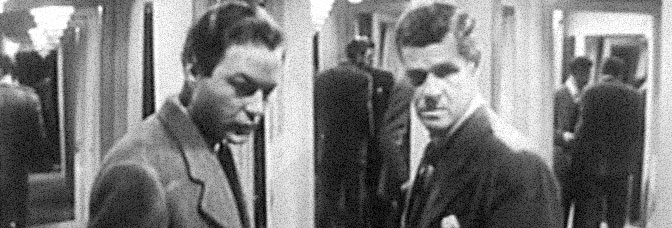
Fear in the Night shows just how far something can get on the gimmick. Bank teller DeForest Kelley wakes up one morning from the dream he killed someone. He then discovers evidence of his crime and, as he suspects he’s going mad, starts going a little mad. If not totally mad, he does make some…
-
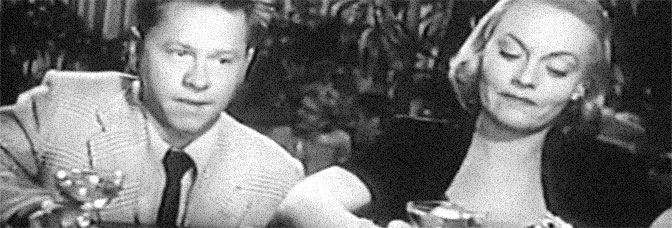
Quicksand is a film noir with room for cream and about five sugars. The genre often has a morality element to it, but this entry goes way too far with it. Or it might just be how the film treats lead Mickey Rooney. Most film noir male protagonists are overconfident simpletons taken in by devious…
-
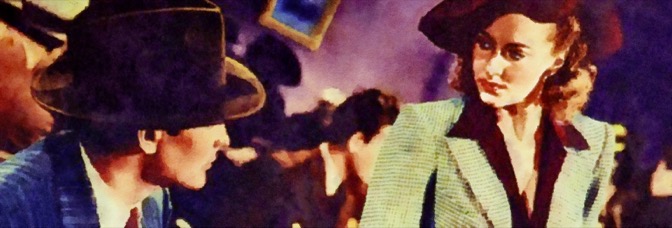
Busses Roar is a slight propaganda film. It doesn’t fully commit to any of its subplots, not even the patriotism. With the exception of the establishing the villainous Japanese, German and the gangster at the opening and the flag-waving speech at the end, it’s not too heavy on it. Most of the film’s almost an…
-
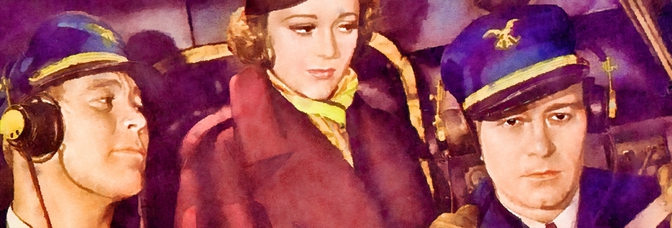
Without Orders has enough story for a couple movies or at least one twice as long–it runs just over an hour. Instead, everything gets abbreviated. There's flight attendant Sally Eilers who has a sturdy fellow in pilot Robert Armstrong, but he's too concerned about helping her with her career and not enough with sweeping her…
-
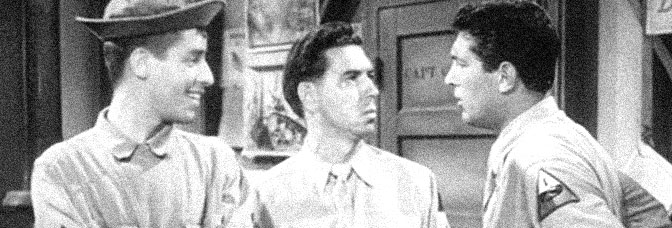
I wonder what At War with the Army would be like if it were funny. I also wonder what it would be like if director Walker could figure out how to open up a scene. Sure, the whole thing is shot on limited exteriors and then the same interiors–it takes place on an army base–but…
-

While a lot of The Brighton Strangler meanders, there are some rather effective moments in the film. It's a B picture, with John Loder as an actor suffering from amnesia who imagines himself his latest role–a murderer. The film's set in London, with blackouts and air raids–not to mention service people–all part of the setting…
-

Detour should be episodic, but it's not. The film chronicles the misadventures of Tom Neal's night club pianist, who's stuck not being good enough for Carnegie Hall and having a fickle fiancée (Claudia Drake) from the outset. When he does decide to follow her out to her dreams in California, instead of saving bus fare,…
-
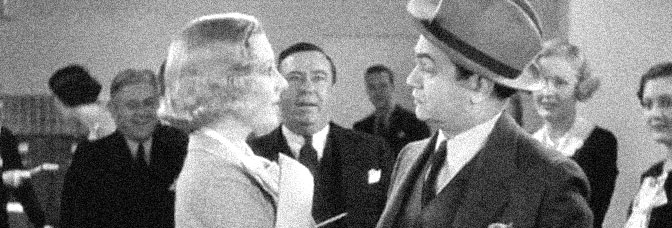
The Whole Town’s Talking has some peculiar third act problems, but it also has this extraordinary first act set over three scenes and twenty-some minutes, which evens things out. Some of the problem might stem from Town’s plot–mild-mannered office clerk Edward G. Robinson just happens to look like a famous gangster and is falsely arrested.…
-

Sabotage demands the viewer's attention. It opens with a dictionary definition of Sabotage, forcing the viewer to read something and then immediately relate it to the rapidly edited sabotage of a power station. This sequence, which sets off the first act of the film, takes place in maybe a minute, maybe less. Charles Frend's editing…
-

Supernatural is a strange little film. I say little just because it's just over an hour; it has a great pace, however, and always feels full. Maybe because it introduces two subplots before getting to top-billed Carole Lombard. Then Lombard sort of encounters one of the subplots and the other one merges with her own…
-
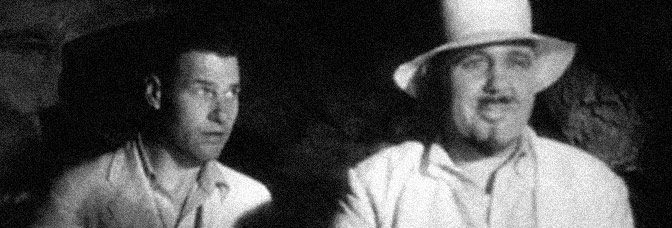
What’s so incredible about Island of Lost Souls is how Charles Laughton doesn’t overpower the entire picture. Laughton’s take on the mad scientist role–playful, gleeful, callous, cruel–is a joy to watch and it definitely contributes but it doesn’t make Souls. Even with Laughton, Kenton’s direction is still a must, as are the performances of Richard…
-

The Invisible Man is a filmmaking marvel. First off, R.C. Sherriff’s screenplay sets things up speedily and without much exposition. The film introduces Claude Rains’s character through everyone else’s point of view–first the strangers he meets, then his familiars–all while Rains is front and center in the film. Even though he is, after all, invisible.…
-

The Strange Woman opens with Dennis Hoey as a drunken widower and Jo Ann Marlowe as his evil little daughter. Herb Meadow's script is real bad in this opening, but it's nineteenth century kids playing and one of them is a psychopath, how good is the script going to be? But then it jumps forward…
-

Scaramouche is a deliberately constructed film. I’m curious if screenwriters Ronald Millar and George Froeschel followed the source novel’s plot structure, because it’s a very peculiar series of events. It doesn’t open with the leading man, instead starting out with villain Mel Ferrer. Janet Leigh, as his love interest, gets introduced long before Eleanor Parker–who’s…
-
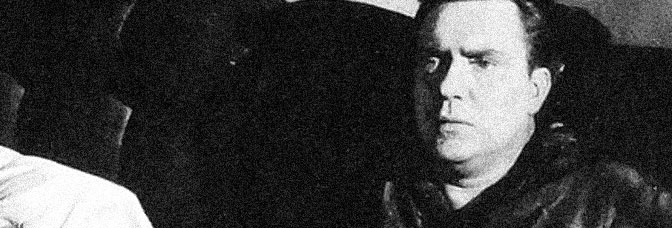
With a sensational title like The Bigamist, one might expect something lurid and exploitative from the film. Definitely from the titular lead, Edmond O’Brien. But, no, poor O’Brien is just a married traveling salesman with a barren, work-oriented wife (Joan Fontaine) so who can blame him for stepping out. And he only did it once;…
-
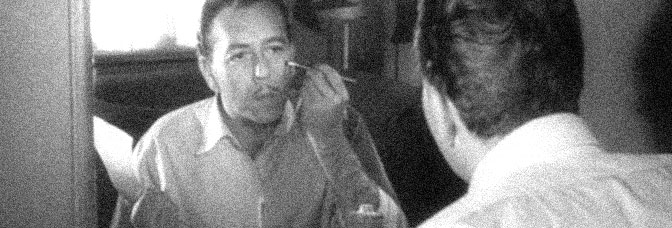
Calling Hollow Triumph a vanity project for star (and producer) Paul Henreid might be a little too easy. He does play a guy who decides to murder someone who looks just like him–sadly, Daniel Fuchs’s script doesn’t have much fun with Henreid in the dual roles. In fact, Fuchs only gets in one joke–at the…
-

Father of the Bride is such a constant delight, it’s practically over before its problems become clear. First off, it’s definitely about the titular Father–a wonderful Spencer Tracy–who not only narrates but is in almost every scene. The wedding reception, when he’s chasing around daughter Elizabeth Taylor to say goodbye, is about the only time…
-

For a while it seems like the third act of Garden of Evil will make up for the rest of the film’s problems. Or at least give it somewhere to excel. Sadly, director Hathaway and screenwriter Frank Fention inexplicably tack on a terrible coda–tying into the title no less–and effectively wash away any advances they’ve…
-
I went into The Monster Walks with what I consider reasonable expectations. I thought it would be bad. I thought it would be a bad, low budget, rainy night in a mansion with a killer ape loose movie. It is all of those things, but it’s also awful. Director Strayer apparently had such a low…
-

Before it stumbles through its third act, I Walked with a Zombie’s biggest problem is the pacing. It’s exceedingly boring during the second act. Its second biggest problem is it’s too short. The second act plays so poorly because there’s not enough going on, there’s just not time for it in sixty-eight minutes. Otherwise, the…
-

Bedlam is about a third of a good picture. It’s like writers Val Lewton and (director too) Robson didn’t quite know how to make it work, what with having to have Boris Karloff in it. Karloff’s the villain, the head of a mental institute in the eighteenth century. Karloff’s so evil–and surrounded by so many…
-
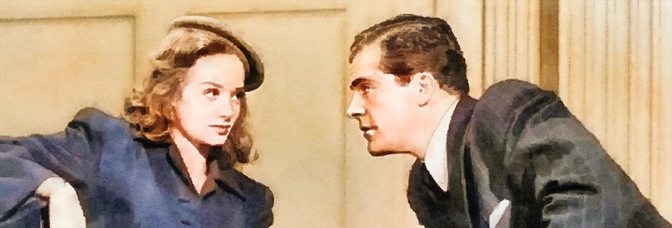
Boomerang! is a mess. The first half of the film is a misfired docudrama, the second half (or so) is a fantastic courtroom drama. Richard Murphy’s script is such a plotting disaster not even beautifully written scenes and wonderful performances can make up for its problems. And director Kazan doesn’t help. He embraces the docudrama…
-

The Curse of the Cat People is apparently Kent Smith. Well, him and writer DeWitt Bodeen. Smith and Jane Randolph return from the first film, this one set over six years later. They have a daughter–Ann Carter in an almost perfect performance–who’s a lonely child. She eventually imagines herself a friend, personified by Simone Simon…
-

When the politics of a murder mystery are more interesting than the mystery, there’s a bit of a problem. The Phantom of Crestwood involves a woman of the world (Karen Morley) blackmailing her former lovers so she can get out of the professional mistress life. Why’s it so easy to blackmail them? They’ve all been…
-

The Devil and Miss Jones has three or four stages in the narrative, but director Sam Wood basically has three. The first phase–covering the first two narrative stages–feature this singular composition technique. For close-ups, Wood either gives his actors a lot of headroom (fifty percent of the frame) or almost none. Harry Stradling Sr. shoots…
-
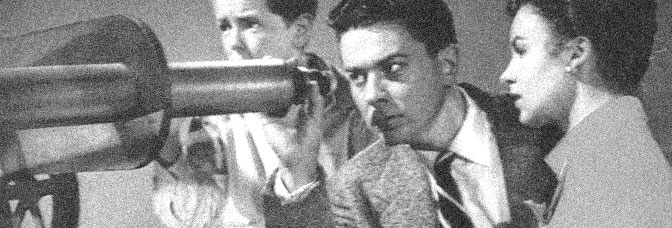
About halfway through Invaders from Mars, the army mobilizes to come to the aid of the protagonists (who have discovered an alien invasion). These mobilization scenes are all stock footage–later tank footage is stock too–but director Menzies uses it for a long time, like an actual scene. While dragging down the midsection of the picture,…
-

The Ghost of Frankenstein is pretty bad stuff. Running less than seventy minutes, it’s unbearably boring from the twenty-five minute mark, once the picture focus on Cedric Hardwicke. Ghost opens with villagers pursuing Bela Lugosi’s evil hunchback. Though awful, Lugosi’s at least an enthusiastically vile character. Hardwicke–playing a neurosurgeon with his own castle (he’s a…
 The Stop Button